
Font size
 Worksheets
Classification Quiz Practice #1
Total questions: 43
Worksheet time: 31mins
Is the process of arranging organisms into groups based on similarities.
Classification
Kingdom
bacteria
protists
Is the largest/broadest classification category?
Phlyum
Class
Order
Kingdom
Is the smallest, most specific classification category
Genus
Phylum
Species
class
Which of the following is the correct order from broadest to smallest?
Kingdom, Class, Order, Family, Genus, Species, Phylum
Species, Genus, Family, Order, Class, Phylum, Kingdom
Kingdom, Phylum, Order, Class, Family, Genus, Species
Kingdom, Phylum, Class, Order, Family, Genus, Species
Binomial nomenclature is made up of :
Family and Order
Phylum and Class
Kingdom and Species
Genus and Species
Which of the following is a reason scientists use scientific names as opposed to their common names? CHECK ALL THAT APPLY
Scientists around the world use the same names so there is no language barrier
No two species have the same name, so there is no confusion about which organism is being studied
Scientific names can help you know which organisms are related if they share a common genus name
None of these
Why do scientists classify living things?
It helps scientists trap species to study
It is easier to study organisms when grouped
It is a good way to keep organisms calm
It is helpful when dissecting an organism
An early classification system had two groups: Plants and Animals. What is wrong with that system?
It is too specific
They are not groups
too broad
None of these
An early classification system had two groups: Plants and Animals. What is wrong with that system?
It is too specific
They are not groups
too broad
None of these

What species is Leaf S?
Eastern white pine
balsam poplar
sweet gum
ginko
The science of describing, classifying and naming living things is known as _______.
Biology
Taxonomy
Sortology
Phylogeny

Animals can be unicellular or multicellular?
Unicellular
Multicellular
HOW MANY KINGDOMS ARE THERE?
4
5
6
7

A cell with nucleus is
Autotrophic
Prokaryotic
Eukaryotic
Heterotrophic

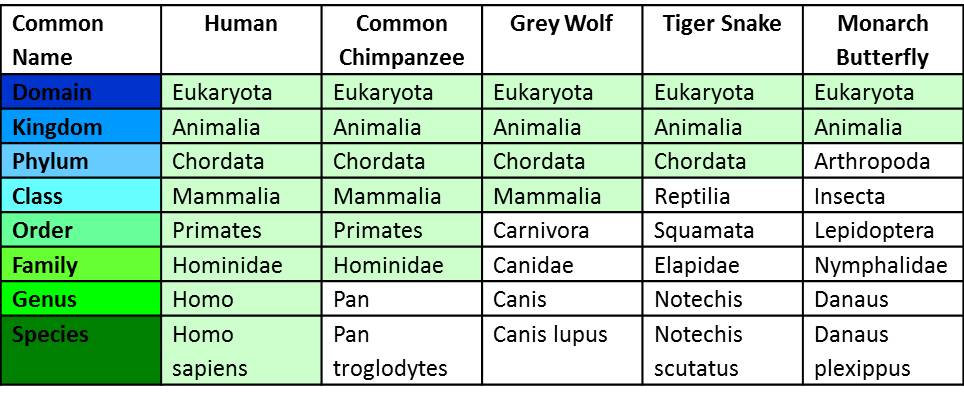
If two organisms are in the same class, they must also be in the same (a)
Multicellular; undergoes photosynthesis
Archaebacteria
Eubacteria
Fungi
Plantae
Protista
Unicellular, live in extreme/harsh environments
Archaebacteria
Eubacteria
Fungi
Plantae
Protista
Unicellular, lives in soil & inside your body
Archaebacteria
Eubacteria
Fungi
Plantae
Protista
Multicelluar, eukaryotic organisms that are heterotrophs
Archaebacteria
Plantae
Fungi
Animalia
Protista
Multicellular, eukaryotic organisms that are heterotrophs with chitin in their cell walls
Archaebacteria
Plantae
Fungi
Animalia
Protista
Decomposers, growing on dead leaves/wood/logs
Archaebacteria
Eubacteria
Protista
Fungi
Plantae

__________________ are consumers that eat BOTH Plants and Animals for food.
Omnivores
Producers
Herbivores
Carnivores
Which of the following organisms recycle materials from dead organisms and their waste products?
autotrophs
heterotrophs
scavengers
decomposers
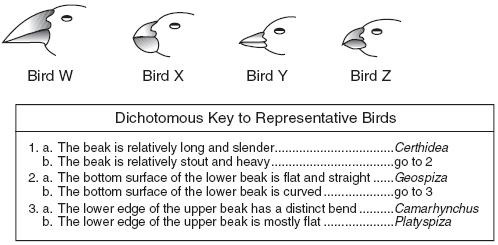
Domain, (a) , Phylum, Class, (b) , (c) , Genus, (d)
The (a) taxonomic group would contain plants with the greatest amount of variety and differences?

A table of arachnid and insect characteristics is shown. Which characteristic could be used to distinguish between arachnids and insects?
Jointed legs
Body segments
Presence of eyes
Presence of antennae



