
 Worksheets
Kennedy- Quarter 1 Final Exam review
Total questions: 161
Worksheet time: 8hrs 3mins
Which scientist discovered the electrons?
Dalton
Thomson
Atristotle
Bohr
Bohr discovered that electrons are located in
the nucleus
inside protons
electron cloud
circular orbits around the nucleus
What is a particle with one negative charge called?
electron
proton
quark
neutron
The smallest particle of an element that still represents that element.
Nucleus
electron
proton
atom
What is a particle with one positive charge called?
proton
electron
neutron
quark
What is the center of an atom called?
nucleus
electron cloud
proton center
photon center
What is the neutral particle found in the nucleus called?
proton
neutron
electron
quark
Who was the Greek philosopher who called the smallest particle of matter an "atom"?
Democritus
Aristotle
J.J Thompson
Einstein
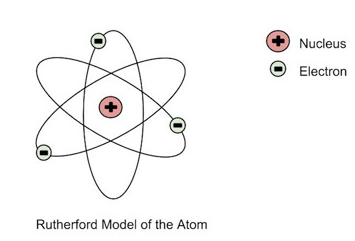
Which of the following is/are conclusions based on Rutherford’s gold foil experiment?
Atom is mostly empty space
The nucleus is positively charged
The atom has a small dense nucleus
All answers are correct



The majority of an atom's mass exists where?
In the nucleus
In the electron cloud
In the space between the nucleus and the electrons
In the neutrons
Which subatomic particle is not found in the nucleus of an atom?
Proton
Neutron
Electron
All of the above are found in the nucleus
Isotopes of an element have a different number of...
Protons
Neutrons
Electrons
Mass
Potassium-39 has how many neutrons?
19
18
20
21
Nickel-59 has how many neutrons?
30
31
32
33
Bromine-80 has how many neutrons?
41
42
44
45
76 protons and 114 neutrons
Osmium-114
Osmium-76
Osmium-190
Osmium-190.23
12 protons and 13 neutrons
Mg-12
Mg-13
Mg-25
Mg-24.305
9 protons and 9 neutrons
Fluorine-18
Fluorine-9
Fluorine-16
Fluorine-18.998
Rubidium has two common isotopes, 85Rb and 87Rb. If the abundance of 85Rb is 72.2% and the abundance of 87Rb is 27.8%, what is the average atomic mass of rubidium?
85.468 amu
37 amu
85.6 amu
86.4 amu
There are two primary isotopes found in any sample of copper: copper-63 and copper-65. The isotope 65Cu composes 69.2% of the sample and 63Cu comprises the other 30.8%. Based on this data, what is the atomic mass of copper?
29 amu
63.546 amu
64.4 amu
63.6 amu
How do you calculate mass number?
Mass x percent
Protons + Electrons
Protons + Neutrons
Neutrons + Protons + Electrons
What is the name of group number 2?
transition metals
halogens
metaloids
alkaline earth metals
What is the name of group number 1?
halogens
noble gases
alkali metals
alkaline earth metals
where are the metaloids found
far left, vertical
stair step/diagonal
far right horizontal
at the bottom
What group number are the halogens found?
18 (8A)
1
2
17 (7A)
Periodic law states that the elements are arranged according to their atomic ________ so that elements with similar chemical properties are in the same ________ and properties repeat periodically.
numbers, rows
masses, rows
masses, column
numbers, column
A row on the Periodic Table of Elements
family
period
row
isotope
Metals (select all that apply)
are found on the right side of the periodic table.
are found on the left side of the periodic table.
are good conductors of heat and electricity.
are brittle.
are malleable and ductile.
Nonmetals (select all that apply)
are found on the right side of the periodic table.
are found on the left side of the periodic table.
are good conductors of heat and electricity.
are brittle.
can be solid, liquids, or gases at room temperature.
Which element has similar chemical properties as sodium but has 7 energy levels?
Francium (Fr)
Cesium (Cs)
Rubidium (Rb)
Potassium (K)
Elements that have the same number of energy levels are said to be in the same ______.
group
period
family
classification
Element symbols have _____ capital letter(s).
1
2
3
4
lithium
2 energy levels
helium
1 energy level
aluminum
3 energy levels
bromine
4 energy levels
strontium
5 energy levels
Match the following elements to the group they belong to.
sodium
alkali metal
calcium
alkaline earth metal
chlorine
halogen
argon
noble gas
Put the groups of the periodic table in order from group 1A to group 8A (18).
alkali metals
alkaline earth metals
halogens
noble gases
What do the periods (rows) represent?
an additional energy level
an additional proton
an additional group
an additional electron


The blue elements (left side) are called
The yellow elements (right side) are called
Find an element with similar chemical properties to Barium (Ba).
Ca an Ra, because they are in the same group and have similar chemical properties.
Cs and La, b/c they are in the same period number.
Ca and Y, b/c they are 90 degree angle and have similiar properties.
Elements in the same group have : (2 correct answers)
Similar chemical properties
Similar names
Same number of outer (valence) electrons)
The same number of protons

Mendeleev was the first person to arrange the elements into a table. How did he arrange the rows?
According to the Octet Rule, to achieve stability atoms attempt to fill the outer S and P orbitals. How many electrons are required to accomplish this?
2
4
6
8
Which of the following elements will most likely form cations?
Oxygen
Iodine
Magnesium
Sulfur
Which of the following has the greatest Atomic Radii?
Rb
In
Sb
Xe
Which property describes the measure of an atom's attraction for another atom's electrons?
atomic radii
electronegativity
electron affinity
ionization energy
Which of the following groups of elements have the highest ionization energy?
alkali metals
alkaline earth metals
halogens
noble gases
Definition of ionization energy is
The energy required to remove an electron
The energy required to add an electron
The ability to attract an electron
The distance from the nucleus to the outermost electron
What group contains elements with 7 valence electrons
Noble Gasses
Alkali Earth Metals
Halogens
Transition Metals
Select the element that has 3 valence electrons
Calcium
Sodium
Aluminum
Sulfur
Select the element below that is least reactive
Hydrogen
Chlorine
Lithium
Neon
Select the group that is the most reactive metals
Transition Metals
Alkali Earth Metals
Alkali Metals
Halogens
What is a negatively charged atom called?
Anion
Cation
The element with the highest electronegativity is -
At
F
Cl
Br
How does electronegativity change from top to bottom in a group in the periodic table?
It decreases
It remains constant
It increases
It fluctuates randomly
How does electronegativity change from left to right within a period in the periodic table?
It decreases
It increases
It fluctuates randomly
It remains constant
What is electronegativity?
The number of protons in an atom
The measure of an atom's attraction to electrons
The amount of energy needed to remove an electron from an atom
The size of the atom
If an electron is closer to the nucleus, it will be (harder, easier) to remove that electron and its ionization energy will be (high, low )
Easier, High
Easier, Low
Harder, High
Harder, Low
How does ionization energy change from top to bottom in a group in the periodic table?
It remains constant
It decreases
It increases
It fluctuates randomly
How does ionization energy change from left to right within a period in the periodic table?
It fluctuates randomly
It increases
It decreases
It remains constant
What is ionization energy?
The measure of an atom's attraction to electrons
The number of protons in an atom
The amount of energy needed to remove an electron from an atom
The size of the atom
Atomic radius decreases from left to right across a period because from left to right there is
increasing number of valence electrons
increasing shielding
increasing effective nuclear charge (from increasing protons in the nucleus)
increasing number of electron shells
What happens to the atomic radius as you go from left to right within a period in the periodic table?
It fluctuates randomly
It increases
It remains constant
It decreases

What is atomic radius?
The number of protons in an atom
The amount of energy needed to remove an electron from an atom
The size of the atom
The measure of an atom's attraction to electrons
Ionic Bonding involves...
the transfer of protons
the transfer of neutrons
the transfer of electrons
none of these choices
What do atoms that form positive ions tend to do?
tend to lose electrons
tend to lose protons
tend to gain electrons
tend to gain protons

What elements generally compose a covalent bond?
metal and nonmetal
2 or more nonmetals
metal
none of the above
Magnesium Bromide is a (an) ________ compound
metallic
covalent
ionic
organic
How is the bond in F2 different from the bond in KCl ?
F2 is covalent and KCl is ionic
F2 is ionic and KCl is covalent
F2 is ionic and KCl is ionic
F2 is ionic and KCl is ionic
When naming COVALENT/MOLECULAR compounds, you use ______ to indicate the amount of each element in the name.
prefixes
coefficients
subscripts
superscripts
Phosphorous trichloride
PCl3
P3Cl
P3Cl3
PCl
The formula for the ionic compound of magnesium and nitrogen would be
MgN2
MgN
Mg3N2
MgN3
What is the formula for magnesium phosphide?
Mg3P2
Mg2P3
Mg2PO4
Mg3(PO4)2
What is the chemical name for NI3 ?
Nitrogen hydroxide
Nitrogen trinitride
Nitrogen triiodide
Triiodide mononitrogen
Why do elements bond?
To be friends
To create a new element
To become stable
To get bigger


What is the reason why Noble gases are so stable?
They have an even number of electrons
They have no electrons
They have a full outer shell of electrons
They bond with other atoms
Covalent bonds are formed between...
2 non-metals
a metal and a non-metal
2 metals
2 ions

Why are there two sodiums (Na), in the formation of this ionic compound?
There always has to be 2 metals
The overall charge needs to add up to 4
The overall charge has to be 0
It needs to have more metal atoms than nonmetal

Using the model for the formation of Scandium Fluoride (an ionic compound), write the chemical formula.
Sc3F
Sc3F3
Sc+3F-1
ScF3

Using the model, write the chemical formula for an ionic compound that has Mg and Cl.
MgCl2
Mg2Cl2
Mg+2Cl-1
Mg2Cl2
Contrast polar and nonpolar bonds.
A polar bond will unequally share electrons and a nonpolar bond will equally share electrons
A polar bond will share electrons equally and a nonpolar bond will unequally share electrons
Polar bonds are covalent and nonpolar bonds are ionic
None of the above
A student wants to combine Zn and HCl to form NEW compound. What would likely form?
ZnH2 + Cl2
ZnCl2 + H2
There will be no reaction
CuH2 + Cl2
Water is a polar covalent molecule. Which of the following applies
Sugar dissolves easily in water. Polar substances dissolve in other polar substances
Sugar DOESN'T dissolve in water. Polar substances dissolve in other polar substances.
Sugar dissolves easily in water. Polar substances DON'T dissolve easily in other polar substances
Sugar DOESN'T dissolve in water. Polar substances dissolve in nonpolar substances.
What makes a covalent bond polar?
One atom has a HIGHER electronegativity than the other- so it hogs electrons
One atom has a LOWER electronegativity than the other- so it hogs electrons
The are the same element and have the same electronegativity
They are found at the North Pole
There are 3 substances on the table. Substance A is a white powder with a high melting point and conducts in a solution. Substance B is a silver gray solid with a high melting point. Substance C is a white solid with a low melting point that doesn't conduct. Based on the properties, what are the bonds of each material.
A has covalent bonds, B has ionic bonds, and C has metallic bonds
B has covalent bonds, C has ionic bonds, and A has metallic bonds
C has covalent bonds, A has ionic bonds, and B has metallic bonds
Not enough information
What is happening to the electrons during a covalent bond?
The electrons are being shared
One element is taking electrons, another is giving away electrons
The electrons don't move
Both atoms give away electrons
What is happening to the electrons during an ionic bond
They are sharing electrons
The electrons don't move
One atom takes the electrons, one gives them away
They both give away electrons
Which is of the following is NOT true about ionic compounds?
Ionic compounds are brittle
Ionic compounds melt easily
Ionic compounds conduct electricity in water
Ionic compounds are made of positive and negative ions
Why do ionic bonds form?
They share electrons
The two anions have the same change, so they are attracted to each other
The two cations have an opposite charge, so they are attracted to each other
The cation and anion have opposite charges, and opposite charges attract.
What is the definition of a covalent bond?
A covalent bond is a chemical bond that involves the repulsion of like charges between atoms.
A covalent bond is a chemical bond that involves the attraction of opposite charges between atoms.
A covalent bond is a chemical bond that involves the transfer of electron pairs between atoms.
A covalent bond is a chemical bond that involves the sharing of electron pairs between atoms.
What is a synthesis reaction?
A synthesis reaction is a type of chemical reaction in which two or more complex substances combine to form a simpler substance.
A synthesis reaction is a type of chemical reaction in which two or more substances combine to form a substance with the same properties as the original substances.
A synthesis reaction is a type of chemical reaction in which two or more simple substances combine to form a more complex substance.
A synthesis reaction is a type of chemical reaction in which two or more substances break down into simpler substances.
What is a decomposition reaction?
A decomposition reaction is a type of chemical reaction where a compound releases energy in the form of heat and light.
A decomposition reaction is a type of chemical reaction where a compound breaks down into simpler substances or elements.
A decomposition reaction is a type of chemical reaction where a compound combines with other substances to form a more complex compound.
A decomposition reaction is a type of chemical reaction where a compound undergoes a phase change from solid to liquid.
What is a double replacement reaction?
A double replacement reaction is a chemical reaction where two compounds exchange atoms to form two new compounds.
A double replacement reaction is a chemical reaction where two compounds break down into multiple compounds.
A double replacement reaction is a chemical reaction where two compounds combine to form a single compound.
A double replacement reaction is a chemical reaction where two compounds exchange ions to form two new compounds.

The difference in electronegativity affects the type of bond will be formed. What type of bond would be formed with a difference of 0.8?
Nonpolar Covalent
Polar Covalent
Ionic
__________ bonds involve an unequal sharing of electrons, while __________ bonds involve an equal sharing of electrons.
Nonpolar, polar
Polar, metallic
Metallic, nonpolar
Polar, nonpolar
Which electrons are involved in a chemical bond?
Valence electrons
Inner shell electrons
Electrons are not involved in bonding
If sodium and oxygen formed a bond, it would be classified as --
polar covalent
nonpolar covalent
ionic
metallic
Which bond involves an unequal sharing of electrons?
Ionic bond
Nonpolar covalent bond
Polar covalent bond
Metallic bond
Which one of the following statements is true?
The salt solution conducts electricity.
The sugar solution conducts electricity.
The pure water conducts electricity.
Which of the following statements describes a polar molecule?
because electrons are transferred between atoms, the molecule conducts electricity
electrons are equally shared between atoms, giving them a negative charge
molecule has unequal sharing of electrons, atoms have slightly positive or negative charge
a polar molecule is perfectly symmetrical, electrons travel freely around atoms
Water is polar. Which bonds will it dissolve (more than 1 must be checked)?
ionic
metallic
nonpolar
polar
How is a chemical change different from a physical change?
there is no difference
a physical change creates a new substance
a chemical change creates a new substance

A precipitate is a ___________ that forms when 2 liquids react together.
solid
liquid
gas
plasma
Which of the following observations would indicate a chemical change has happened? Select ALL correct answers.
a solid precipitate forms
heat energy is released
breaks into smaller pieces
folded in half
a gas is produced
Bubbles form when water boils. Is this evidence of chemical change?
Yes, because water is changing.
Yes, because the water is reacting.
No, because the vapor is still water.
No, because water doesn't react with anything.
Every chemical change involves __________.
dissolving substances
the release of light and heat
an increase in density
the formation of a new substance
What is the Law of Conservation of matter?
Matter is created in a chemical reaction
Matter is created in a physical change
New chemicals formed from a chemical reaction have a larger overall matter than the original reactants
Matter is never created or destroyed
If the mass of a chemical reaction's product is 15 grams, what would the mass of the reactants be?
20 g
15 g
10 g
3 g

Why does this picture demonstrate the Law of Conservation of Matter?
the number of atoms of each element are the same on both sides
they start out separate and end up combined
the same elements are used
it doesn't demonstrate the Law of Conservation of Matter
Is the following reaction balanced?
Yes
No
Is the following reaction balanced?
Yes
No
Is the following reaction balanced?
Yes
No
Which number is needed to balance the following equation?
2K + MgBr2 ⟶ …KBr + Mg
3
1
2
4
Which number is needed to balance the following equation?
2Na + 2H2O ⟶ 2NaOH +…H2
2
1
3
4
Classify:
2H2 + O2 ---->2H2O
synthesis reaction
decomposition reaction
single replacement reaction
double replacement reaction
Classify:
2KClO3 ---->2KCl + 3Os
synthesis reaction
decomposition reaction
single replacement reaction
double replacement reaction
Classify:
Mg + 2HCl ----> MgCl2 + H2
synthesis reaction
decomposition reaction
single replacement reaction
double replacement reaction
Classify:
2HCl + 2NaOH -----> NaCl + H2O
synthesis reaction
decomposition reaction
single replacement reaction
double replacement reaction
Classify:
CH4 + O2 → CO2 + H2O
single replacement
double replacement
synthesis
combustion
Cu+ AgNO3-->
K + HCl -->
Mg + CuCl2 -->
Predict the products for the this Double Replacement reaction:
AgNO3 + KCl →
AgCl + KNO3
AgK + ClNO3
KAg + NO3Cl
AgCl + 3 KNO
If an element is diatomic it should have a subscript of___
1, always
2, only when it is an element
it shouldn't have a subscript, it should have a coefficent
2, when bonded in a compound
For the following equation, identify the reaction and predict the products: (SELECT TWO ANSWERS)
Single Replacement
Decomposition
Double Replacement
BeF2 +RbNO3
BeRb2 +F(NO3)2

Which box has a higher density?
A
B
They are the same
An object has a volume of 6 cm3 and a mass of 42 g. What's it's density?
7 g/cm3
48 g/cm3
42 g/cm3
6 g/cm3

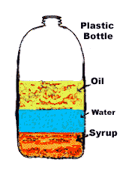

Which has the greatest density?
A
B
C
All the same density

Let's practice! Before reads 50 mL. After we drop in the object, the new water level goes up to 60 mL. What is the volume of the blocks?
8 mL
10 mL
60 mL
5 mL



