wayground logo

Free Printable Worksheets

Font size

S
M
L
XL
Worksheets

Chem February 16 Classwork

Total questions: 161

Worksheet time: 3hrs 8mins

Name
Class
Date
1.

What are the columns referred to on the Periodic Table of Elements?

a)

Families or groups

b)

Periods

2.

What are the rows referred to on the Periodic Table of Elements?

a)

Families or groups

b)

Periods

3.

Atomic Mass equals the combined number of

a)

Protons and Electrons

b)

Electrons and Neutrons

c)

Protons and Neutrons

4.

The number of valence electrons ________ by 1 as you move across the period.

a)

increases

b)

decreases

5.

Valence electrons are

a)

the electrons in the outer most energy level

b)

all the electrons in the atom

6.

The chemical symbol for an element is always represented by only 1 letter

a)

True

b)

False

7.

The first letter of the chemical symbol is always a capital letter and the second is always lowercase

a)

True

b)

False

8.

Match the following

a)

Elements

1.

Contain only one type of atom

b)

Molecules

2.

at least 2 atoms combined together

c)

Compounds

3.

At least 2 DIFFERENT atoms combined together

d)

Mixture

4.

2 or more substances that are NOT chemically combined

9.

Match the following

a)

Located in the nucleus; have a positive charge; and a mass of 1 amu

1.

Protons

b)

Located outside of the nucleus; have a negative charge; and a mass of 1/2000th of an amu

2.

electrons

c)

located in the nucleus; have no charge; and no charge

3.

neutrons

10.
How many neutrons are in a Gold atom?
a)
79
b)
196
c)
118
d)
275
11.
What atom matches this electron configuration?
1s22s22p63s23p64s23d10
a)
Zinc
b)
Copper
c)
Nickel
d)
Germanium
12.
What electron configuration matches an oxygen atom?
a)
1s22s22p63s2, 3p64s23d104p5
b)
1s22s22p4
c)
1s22s22p6
d)
1s22s22p63s23p64s23d1
13.
The electron configuration of an atom is 1s22s22p6.  The number of electrons in the atom is 
a)
3
b)
6
c)
8
d)
10
14.
Which electron configuration belongs to Chlorine (Cl)?
a)
1s2s2p3s3p5
b)
1s2s2p3s3p6
c)
1s2s2p3s3p7
15.
How many electrons can the d sublevel hold?
a)
14
b)
10
c)
2
d)
6
16.
How many electrons can the s sublevel hold?
a)
14
b)
10
c)
2
d)
6
17.
What atom matches this electron configuration?
1s22s22p63s2
a)
Neon
b)
Magnesium
c)
Aluminum
d)
Potassium
18.

Choose the correct shortcut configuration for iodine.

a)

[Ar]4s24d104p5

b)

[Kr]5s24d105p5

c)

[Xe]5s25d105p5

d)

none of the above

19.

Each row on the periodic table represents:

a)

an energy level

b)

a sublevel

c)

an electron

d)

an orbital

20.

Which area on the periodic table represents the electrons in the "d" sublevel?

a)

representative elements

b)

columns 3-8

c)

rare earth elements

d)

transition elements

21.

Energy levels are denoted by:

a)

letters

b)

numbers

c)

a combination of letters and numbers

d)

subscripts

22.

Which of the following is not a correct designation for a sublevel?

a)

zz

b)

p

c)

d

d)

f

23.
How many electrons can the s sublevel hold?
a)
14
b)
10
c)
2
d)
6
24.
There are 4 different types of subshells (orbitals) s,p,d,f.
a)
true
b)
false
25.
Which periodic table family could have electrons filling orbitals in the s-block?
a)
Alkaine Earth 
b)
Halogens
c)
Noble Gases
d)
Transition Metals
26.

Match the elements with their electron configuration! (3 minutes)

a)

1s2 2s2 2p3

1.

Nitrogen, N

b)

1s2 2s2 2p6 3s2 3p3

2.

Phosphorus, P

c)

1s2

3.

Helium, He

d)

1s2 2s2 2p6 3s2 3p6

4.

Argon, Ar

e)

1s2 2s2 2p6 3s2 3p6 4s2 3d5

5.

Manganese, Mn

27.

Choose the correct electron configuration for Beryllium (Be).

a)

1s1

b)

1s2 2s2

c)

1s2 2s2 2p1

28.

Choose the correct electron configuration for Krypton (Kr).

a)

1s2 2s2 2p6 3s2 3p6 4s8 3d8

b)

1s2 2s2 2p6 3s2 3p6 4s2 3d8 4p3

c)

1s2 2s2 2p6 3s2 3p6 4s2 3d8 4p6

29.

Choose the correct electron configuration for Terbium (Tb).

a)

1s2 2s2 2p6 3s2 3p6 4s2 3d10 4p6 5s2 4d19 5p6 6s2

b)

1s2 2s2 2p6 3s2 3p6 4s2 3d10 4p6 5s2 4d10 5p6 6s2 4f9

c)

1s2 2s2 2p6 3s2 3p6 4s2 3d10 4p6 5s2 4d10 5p6 6s2 4f5

30.
What atom matches this electron configuration?
[Xe] 6s2 4f14 5d9
a)
Mercury
b)
Gold
c)
Platinum
d)
Thallium
31.
What is the shorthand electron configuration for Sulfur atom?
a)
[Ar] 3p4
b)
[He] 3s23p4
c)
[Ne] 3s23p4
d)
[Na] 3s23p3
32.
How many valence electrons does Chlorine have?
a)
5
b)
2
c)
7
d)
5
33.
How many valence electrons does phosphorus have?
a)
5
b)
2
c)
8
d)
15
34.
What element has the valence shell configuration
3s2 3p2
a)
Al
b)
B
c)
Si
d)
Ga
35.
Which element is pictured?
a)
neon
b)
fluorine
c)
magnesium
d)
argon
36.
What noble gas should be used to write the shorthand configuration for Te?
a)
Ar
b)
Kr
c)
Xe
d)
Sb
37.
Identify the element in Period 5 that has 1 valence electron?
a)
Rb
b)
Nb
c)
Ag
d)
Sb
38.
What element in Period 4 has 5 valence electrons?
a)
Zr
b)
As
c)
V
d)
Sb
39.
Which of the following is a p block element?
a)
Ca
b)
Ar
c)
Re
d)
Au
40.
Electron arrangement that uses arrows
a)
Electron configuration
b)
Shorthand configuration
c)
Lewis dot structure
d)
Orbital diagram
41.
Electrons occupy orbitals of lowest energy first is part of what electron configuration rule?
a)
Hund’s Rule
b)
Aufbau Principle
c)
Pauli Exclusion Principle
42.
What do you start electron configuration with?
a)
1s2
b)
1d10
c)
1f14
d)
1p6
43.
What does Pauli exclusion principle state ?
a)
states that each electron occupies the lowest energy orbital available
b)
states that a maximum of two electrons can occupy a single atomic orbital, but if only if the electros have opposite spins
c)
states that single electrons electrons with the same spin must occupy each-energy orbital before additional electrons with opposite spins can occupy the same orbitals
44.
What does Hund's rule states ?
a)
states that single electrons electrons with the same spin must occupy each-energy orbital before additional electrons with opposite spins can occupy the same orbitals
b)
states that each electron occupies the lowest energy orbital available
c)
states that a maximum of two electrons can occupy a single atomic orbital, but if only if the electros have opposite spins
45.

Type of mixture that has the SAME COMPOSITION in every part.

a)

Homogenous

b)

Heterogeneous

46.

Type of mixture that DOESN'T HAVE the same composition in every part.

a)

Homogeneous

b)

Heterogeneous

47.

An example of...

a)

mixture

b)

element

c)

compound

48.

Pure oxygen is an example of...

a)

element

b)

mixture

c)

compound

49.

Air is an example of...

a)

element

b)

mixture

c)

compound

50.

Which of the following is a compound?


(circles of different colors represent different types of atoms)

(circles that are touching are chemically bonded)

a)
b)
c)
51.

Which of the following is a mixture?


(circles of different colors represent different types of atoms)

(circles that are touching are chemically bonded)

a)
b)
c)
52.

Which of the following are mixtures

a)

tap water

b)

bread flour

c)

blood

d)

beach sand

53.

Water, H2O, can be broken down by chemical means.

a)

True

b)

False

54.

Which of the following are elements?

a)

He 

b)

O2 

c)

S8

d)

Fe2O3

e)

O3

55.
a)

Element

b)

Compound

c)

Mixtures of Elements

d)

Mixture of Compounds

e)

Mixture of Elements and Compounds

56.
a)

Element

b)

Compound

c)

Mixtures of Elements

d)

Mixture of Compounds

e)

Mixture of Elements and Compounds

57.
a)

Element

b)

Compound

c)

Mixtures of Elements

d)

Mixture of Compounds

e)

Mixture of Elements and Compounds

58.
a)

Element

b)

Compound

c)

Mixtures of Elements

d)

Mixture of Compounds

e)

Mixture of Elements and Compounds

59.
a)

Element

b)

Compound

c)

Mixtures of Elements

d)

Mixture of Compounds

e)

Mixture of Elements and Compounds

60.
a)

Element

b)

Compound

c)

Mixtures of Elements

d)

Mixture of Compounds

e)

Mixture of Elements and Compounds

61.
a)

Element

b)

Compound

c)

Mixtures of Elements

d)

Mixture of Compounds

e)

Mixture of Element(s) AND Compound(s)

62.

Which are NOT considered PURE substances? (Choose ALL that apply)

a)

Element

b)

Compound

c)

Mixtures of Elements

d)

Mixture of Compounds

e)

Mixture of Element(s) AND Compound(s)

63.

Which ones can have FORMULAS? (Choose ALL that apply)

a)

Element

b)

Compound

c)

Mixtures of Elements

d)

Mixture of Compounds

e)

Mixture of Element(s) AND Compound(s)

64.

Which one is made and separated through CHEMICAL CHANGE?

a)

Element

b)

Compound

c)

Mixtures of Elements

d)

Mixture of Compounds

e)

Mixture of Element(s) AND Compound(s)

65.

Which one is made and separated through physical change?

a)

Element

b)

Compound

c)

Mixtures

66.
Two classifications of a pure substance are
a)
homogeneous and heterogeneous
b)
atoms and elements
c)
elements and compounds
d)
solutions and colloids
67.
If an unknown substance CANNOT be broken down into simpler substances, it is 
a)
a compound
b)
an element
c)
a homogeneous mixture
d)
a heterogeneous mixture
68.
Which of the following is NOT a pure substance?
a)
milk
b)
oxygen
c)
water
d)
carbon dioxide
69.

_______ is used to separate a solid from a liquid in which it is suspended.

a)

filtration

b)

distillation

c)

suspension

d)

colloid

70.
Which of these is a pure substance?
a)
bread
b)
table salt
c)
garden soil
d)
sea water
71.

Electrons orbit a certain distance from the nucleus. Either radiate or absorb energy when jumping orbitals.

a)

Dalton

b)

Thomson

c)

Rutherford

d)

Bohr

72.

The atom is mostly large empty space with a small, dense nucleus at the center

a)

Dalton

b)

Thomson

c)

Rutherford

d)

Bohr

73.

Atom is a positively charged cloud with embedded negative electrons

a)

Dalton

b)

Thomson

c)

Rutherford

d)

Bohr

74.

Atoms are indivisible (cannot be broken down)

a)

Dalton

b)

Thomson

c)

Rutherford

d)

Bohr

75.

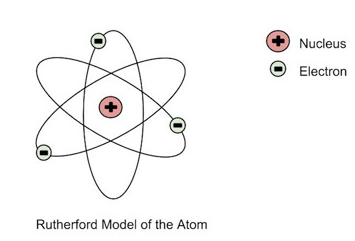
What scientist proposed this atomic model?

a)

Dalton

b)

Thomson

c)

Rutherford

d)

Bohr

76.

What scientist proposed this atomic model?

a)

Dalton

b)

Thomson

c)

Rutherford

d)

Bohr

77.

In a famous experiment conducted by Ernest Rutherford, positively charged alpha particles were scattered by a thin gold foil. Which of the following is a conclusion that resulted from this experiment?

a)

The nucleus is negatively charged

b)

The atom is a dense solid and is indivisible

c)

The mass is conserved when atoms react chemically

d)

The nucleus is very small and the atom is mostly empty space

78.

What subatomic particle was discovered in the cathode ray tube experiment?

a)

Proton

b)

Neutron

c)

Electron

d)

Nucleus

79.
Which scientist developed the atomic theory?
a)
JJ Thomson
b)
Ernest Rutherford
c)
John Dalton
d)
James Chadwick
80.
Electron cloud is based on
a)
Quantum Mechanics
b)
Gold Foil Experiment
c)
Matter is made up of small particles called atoms
d)
Nuclear Theory
81.
He developed the planetary model of the atom.
a)
Rutherford
b)
Bohr
c)
Chadwick
d)
Dalton
82.
James Chadwick discovered the ________.
a)
proton
b)
neutron
c)
electron
d)
nucleus
83.
What did Thomson discover?
a)
electron
b)
proton
c)
neutron
d)
electron cloud
84.
A tiny but very dense, positively charged portion of the atom that holds most of the atomic mass
a)
Electron Shells
b)
Orbitals
c)
Electron Cloud
d)
Nucleus
85.
Where electrons are likely to be found as they travel around the nucleus
a)
Nucleus
b)
Electron Cloud
c)
Within a Proton
d)
Within a Neutron
86.

He claimed that matter was made of small, hard particles that he called “atomos.”

a)

Democritis

b)

Dalton

c)

Moseley

d)

Einstein

87.
The scientist responsible for "discovering" the nucleus is:
a)
Bohr
b)
Rutherford
c)
Schroedinger
d)
Einstein
88.

John Dalton stated:

a)

Atoms are tiny, invisible particles.

b)

Atoms of one element are all the same.

c)

Atoms of different elements are different.

d)

Compounds form by combining atoms.

e)

All of the statements listed.

89.

What does an electrons location depend on?

a)

how fast it is moving

b)

how much energy it has

90.
How did Rutherford discover the proton?
a)
Cathode tube ray experiment
b)
Gold Foil Experiment
c)
Planetary Model
d)
Plum Pudding Model
91.
True or False: The majority of an atom is made up of empty space
a)
True
b)
False
92.
Which is the correct sequence of the scientists who made major changes in the model of the atom?
1-JJ Thomson
2-Erwin Schrodinger
3-John Dalton
4-Niels Bohr
5-Ernest Rutherford
a)
2, 1, 4, 3, 5
b)
3, 1, 5, 4, 2
c)
5, 3, 2, 1, 4
d)
4, 3, 2, 1, 5
93.
How did each model of the atom help to develop the atomic theory? 
a)
Each model provided opinions that were added.
b)
Each model showed different properties of the same structure. 
c)
Each model showed new particles that had been discovered.
d)
Each model built upon the other to show new particles or properties of previously discovered particles. 
94.
His atomic model was depicted similar to a planetary/solar system
a)
Niels Bohr
b)
Joseph Thomson
c)
Ernest Rutherford
d)
Democritus
95.
Rutherford's gold foil experiment provided evidence that...
a)
negative and positive charges are spread evenly throughout the atom.
b)
alpha particles have a positive charge.
c)
gold is not a dense as previously thought.
d)
there is a dense positively charged nucleus at the center of an atom.
96.
1.  What is the shape of an s orbital?
a)
sphere
b)
dumbbell
c)
double dumbbell
d)
TOO COMPLEX TO KNOW IT.
97.
How many d orbitals are there in a given sublevel?
a)
1
b)
3
c)
5
d)
7
98.
How many p orbitals are there in a sublevel?
a)
2
b)
1
c)
4
d)
3
99.
Which is associated with more energy? 
a)
2p
b)
2s
c)
3p
d)
1s
100.
How many total electrons can the f orbitals in a sublevel hold?
a)
2
b)
14
c)
6
d)
10
101.
Which orbital has the least amount of energy? 
a)
p orbital
b)
d orbital
c)
s orbital 
d)
What is an orbital?
102.
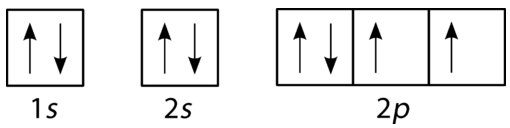
This orbital diagram represents:  
a)
C
b)
B
c)
N
d)
O
103.
This orbital diagram represents:  
a)
C
b)
B
c)
N
d)
O
104.
What is incorrect about this orbital diagram?
a)
Both arrows in the 2p box should be pointing up
b)
There is nothing incorrect with this diagram
c)
In the there should only be 1 orbital in the first 2p box and one in the 2nd 2p box
d)
All the arrows should be pointing up.
105.
Which orbital shows a violation of the Pauli Exclusion Principle?
a)
A
b)
B
c)
C
d)
D
106.
Which orbital shows a violation of the Aufbau Principle?
a)
A
b)
B
c)
C
d)
D
107.
Which orbital shows a violation of Hund's Rule?
a)
A
b)
B
c)
C
d)
D
108.
What is the Pauli Exclusion Principle?
a)
An atomic orbital can only hold a maximum of 2 electrons, each with opposite spins
b)
An atomic orbital can hold a minimum of 6 electrons, each with opposite spins
c)
An atomic orbital can hold a maximum of 6 electrons, each with the same spin
d)
An atomic orbital can hold a minimum of 2 electrons, each with opposite spins
109.
Which element is depicted from this orbital diagram
a)
Fluorine
b)
Neon
c)
Chlorine
d)
Argon
110.

This shape is that of a/n:

a)

s orbital

b)

p orbital

c)

d orbital

d)

f orbital

111.
What is the correct electron configuration for a ground-state atom with 7 electrons? 
a)
 a. 1s2 2s2 2p3
b)
 b. 1s2 2s2 2p2 3s1
c)
c. 1s2 2s3 2p2
d)
 d. 1s2 2s5
112.
 The diagram above represents two electrons with 
a)
a. opposite spins.
b)
 b. the same spin.
c)
c. different energies.
d)
d. different energy levels.
113.

Carbon monoxide, a deadly gas, has a chemical formula of CO (one carbon atom with one oxygen atom). If you look at the total atomic mass of CO, does carbon or oxygen make up more of the mass?

a)

carbon

b)

oxygen

c)

they are exactly the same

d)

it is impossible to tell

114.
An element has two naturally occurring isotopes. One is 10.013 amu and is 19.9% abundant. The other is 11.01 amu and is 80.1% abundant. What is the average atomic mass? What element is it?
a)
9.012, Beryllium
b)
12.011, Carbon
c)
6.941, Lithium
d)
10.812, Boron
115.

Calculate the average atomic mass of this element.

a)
106.38649amu
b)
111.91896amu
c)
107.8677amu
d)
121
116.

Compute the average atomic mass for this element.

a)
27.977
b)
28.09
c)
28.976
d)
The average mass cannot be determined from provided information.
117.

Calculate the average atomic mass of the element using the following data:

[Isotope / % abundance]

[X- 54 / 6% ] [X- 56 / 92% ] [ X-57 / 2% ]

a)

53.7 amu

b)

54.9 amu

c)

5592.0 amu

d)

55.9 amu

118.
An isotope has three forms.  30% have a mass of 4 amu, 20% have a mass of 5 amu and 50% have a mass of 3 amu.  Average atomic mass will be closest to
a)
2 amu
b)
3 amu
c)
4 amu
d)
5 amu
119.
What is the name of the atom pictured here?
a)
Nitrogen
b)
Nitrogen-15
c)
Nitrogen-7
d)
Nitrogen-8
120.
Which of the following could have 82 neutrons?
a)
W-182
b)
Ta-181
c)
Cs-132
d)
Ba-138
121.

What is the identity of the atom?

a)

Aluminum

b)

Silicon

c)

Cobalt

d)

Zirconium

122.

Which is the best nuclear symbol for a potassium atom with 21 neutrons?

a)
b)
c)
d)
123.

Which of the following is the nuclear symbol for lithium-6

a)
b)
c)
d)
124.

The correct hyphen notation for the nuclear symbol given is

a)

chromium - 24

b)

chromium - 50

c)

chromium - 74

d)

chromium - 26

125.

The hyphen notation of an atom of calcium with 20 protons, 20 electrons, and 22 neutrons is

a)

calcium - 20

b)

calcium - 40

c)

calcium - 62

d)

calcium - 42

126.

The number 84 in strontium - 84 represents

a)

the atomic number

b)

the mass number

c)

the average atomic mass

d)

the number of electrons

127.
What is an ion?
a)
A Charged Atom
b)
A Large Atom
c)
A Small Atom
d)
A Cute Atom
128.
What do carbon-12 and carbon-14 have in common?
a)
they have same number of protons
b)
they have the same number of neutrons
c)
they have the same atomic mass
d)
they have the same atomic weight
129.
If a hydrogen atom has 1 proton, 1 electron, and 1 neutron, its atomic number is:
a)
1
b)
2
c)
3
d)
4
130.
If a sulfur atom has 16 protons, 16 electrons, and 16 neutrons, its atomic mass is:
a)
16
b)
32
c)
48
d)
64
131.
If neutral copper atom (atomic number 29) becomes an ion that has a charge of 2+, how many electrons does the resulting ion have?
a)
27
b)
28
c)
29
d)
31
132.
A neutral atom of the isotope 2612Mg would consist of
a)
12 protons, 26 neutrons, 26 electrons
b)
26 protons, 12 neutrons, 26 electrons
c)
26 protons, 14 neutrons, 14 electrons
d)
12 protons, 14 neutrons, 12 electrons
133.
Do the following atoms belong to the same element? Explain
       Aluminum-27
       An atom with 14 protons and 13 neutrons
a)
Yes because they have the same number of protons
b)
Yes because they have the same mass
c)
No because they have different number of protons
d)
No because they have different number of neutrons
134.

Which has more protons?

a)

neither

b)

carbon - 12

c)

carbon - 13

135.

Which has more electrons?

a)

neither

b)

carbon - 12

c)

carbon - 13

136.

Which has more neutrons?

a)

neither

b)

carbon - 12

c)

carbon - 13

137.

How many electrons?

a)

36

b)

17

c)

18

d)

19

138.

How many neutrons?

a)

9

b)

4

c)

5

d)

2

139.

How many electrons?

a)

9

b)

4

c)

5

d)

2

140.

How many electrons would a Nitrogen ion gain/lose? If it has 5 valence electrons.

a)

lose 5

b)

gain 5

c)

lose 3

d)

gain 3

141.

What is the ion formed from Sulfur? If it has 6 valence electrons.

a)

S+2

b)

S-2

c)

S+6

d)

S-6

142.

How many electrons would a Calcium ion gain/lose? If it has 2 valence electrons.

a)

lose 1

b)

gain 1

c)

lose 2

d)

gain 2

143.

If an atom loses electrons, the charge will be positive.

a)

true

b)

false

144.

A Bromine ion gains 1 electron, which of the following is the correct symbol for a Bromine ion?

a)

Br-1

b)

Br+1

c)

Br+7

d)

Br-7

145.

If an element has 3 valence electrons, what charge will likely form on its ion ?

a)

+3

b)

+5

c)

-3

d)

-5

146.

P has 5 valence electron. It will have a charge of _______

a)

+3

b)

-3

c)

+2

d)

-2

147.
Atoms are most stable when their outer shell is filled with electrons.
a)
true
b)
false
148.

Properties that DO depend on the amount of matter present.

a)

Mass

b)

Hardness

c)

Extensive

d)

Intensive

149.

Properties that depend on the identity of substance.

a)

Mass

b)

Hardness

c)

Extensive

d)

Intensive

150.

Which of the following is an extensive property?

a)

Hardness

b)

Boiling Point

c)

Density

d)

Weight

151.

Which of the following is an extensive property?

a)

Color

b)

Mass

c)

Odor

d)

Luster

152.

Which of the following is an intensive property?

a)

Color

b)

Mass

c)

Volume

d)

Weight

153.

What kind of physical property is this? Number of Atoms

a)

intensive

b)

extensive

154.

What kind of physical property is this? Odor

a)

intensive

b)

extensive

155.

What kind of physical property is this? Volume

a)

intensive

b)

extensive

156.
Ability to rust is this type of property:
a)
Physical property
b)
Chemical property
157.
The mass of a lead cube is 64 grams. This is an example of 
a)
physical intensive property
b)
physical extensive property
c)
chemical change
d)
physical change
158.
What happens in ALL chemical changes?
a)
Change in state of matter
b)
A new substance is formed
c)
Bubbles are produced
d)
An explosion
159.
Is sharpening a pencil a physical or chemical change?
a)
Physical 
b)
Chemical
160.

do you change the substance when identifying the length of a substance?

a)

yes

b)

maybe so

c)

no

161.

Which set of properties, intensive or extensive, are based on the size of a sample?

a)

intensive

b)

extensive