
Font size
 Worksheets
unit 4 compound review
Total questions: 70
Worksheet time: 3hrs 55mins

The positive ions tend to _____________ electrons.
lose
gain
The negative ions tend to _____________ electrons.
lose
gain
Will a chlorine atom gain or lose electrons?
gain
lose
Will a sodium atom gain or lose electrons?
gain
lose
Why are sodium and chlorine attracted to each other?
they have opposite charges
they both have negative charges
they both have positive charges
How does oxygen become an oxide ion?
it loses 2 electrons
it gains 2 electrons
How does magnesium become an magnesium ion?
it loses 2 electrons
it gains 2 electrons
How many valence electrons does hydrogen have?
1
2
3
4
When an atom loses an electron, it becomes a
positive ion
negative ion
neutral ion
neutral atom
Why do all bonds form?
so the number of protons equals the number of electrons
so an atom can become unstable
to fill the outermost energy level
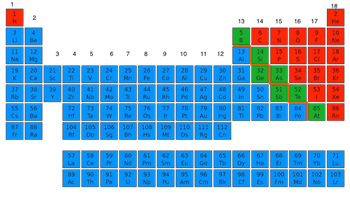
Cations
Gain electrons, has an overall positive charge
Lose electrons, has an overall positive charge
Lose electrons, has an overall negative charge
Gain electrons, has an overall negative charge
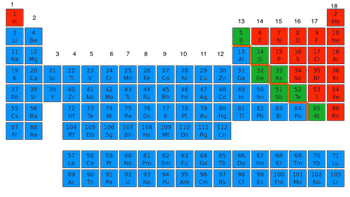
Anions
Gain electrons, has an overall positive charge
Lose electrons, has an overall positive charge
Lose electrons, has an overall negative charge
Gain electrons, has an overall negative charge
If a negative ion is polyatomic, its name usually ends in ___ OR ___.
-ate
-ite
-ide
If the negative ion is a single element, the end of its name changes to ___.
-ide
-ate
-ite
Al3+ O2-
Aluminum will react spontaneously with oxygen in the air to form aluminum oxide. Write the formula for the compound that is produced in this reaction.
AlO
Al2O3
O3Al2
Al6O3
Which of the following is the correct ionic formula for calcium sulfide?
Ca2S2
CaS
S2Ca2
SCa
Name the compound from it's formula: BaI2
Iodine barium
Iodine bariumide
Barium iodine
Barium iodide
When magnesium burns in oxygen it produces MgO. Use the ionic formula to name the compound produced.
Magnesium oxygen
Oxygen magnesium
Magnesium oxide
Oxygen magnesiumide
Dilithium monoxide
Lithium (II) oxide
Lithium (I) oxide
NaBr
Disodium sulfide
Disodium sulfide
What is the formula for: aluminum phosphide
AlP
AlP3
Al3P3
Al3P2
None of these.
Name the following compound: Na2S
sodium sulfide
disodium sulfide
sodium sulfur
sodium monosulfide
None of these.

Beryllium and sulfur will form a ______ bond
ionic
covalent
metalloid
Nitrogen and Oxygen will make a ____________ bond
ionic
covalent
metallic
What is the formula for Calcium Chlorate?
Ca(ClO3)2
CaCl2
CCl
Identify Cesium Nitrate
CsNO3
Cs2(NO3)3
Cs2NO3
Cs3NO3
Identify Gallium(III) Sulfate
GaSO4
Ga2(SO4)3
Ga3(SO4)2
Ga2SO4
What is the name of AgNO3?
Silver(III) Nitrate
Silver Mononitrate
Silver(I) Nitrate
Monosilver Nitrate
If copper(II) and phosphate bond together, the formula would be:
Cu2(PO4)3
CuPO4
Cu3(PO4)2
Cu3PO4

chlorine dioxide
ClO2
ClO
ClO3
HClO2
tetraphosphorus heptoxide
K₄O₁₀
P₄O7
KO
P₁₀O₄
hexaboron monosilicide
B6Si
BSi
BSi6
B6Si6
SO₃
sulfate
sulfur oxide
sulfur trioxide
monosulfur trioxide
P₄S₁₀
tetrapotassium decasulfide
phosphorus decasulfide
tetraphosphorus decasulfide
phosphorus (X) sulfide
Enzymes belong to which class of macromolecules?
lipids
carbohydrates
proteins
nucleic acids

Which macromolecule is shown?
lipid
protein
nucleic acid
carbohydrate



