
 Worksheets
Quiz #7 - Waves and Newton
Total questions: 91
Worksheet time: 1hrs 8mins
Waves that need to travel through matter are known as
Medium waves
Mechanical waves
Air waves
Heat waves
A high point of a wave is known as a
upside
crest
peak
flip
A low point of a wave is known as a
downside
well
trough
flop

Height of a wave from resting position
crest
trough
amplitude
wavelength

The distance between two corresponding parts of a wave is the ____.
crest
trough
amplitude
wavelength

The lowest point on a transverse wave is called ____
rarefaction
crest
trough
compression
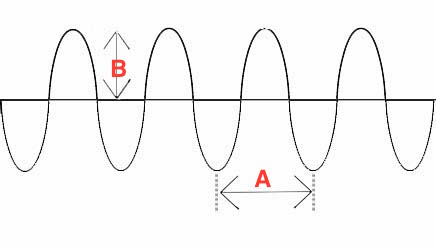
What do waves transfer?
Energy only
Energy and matter or particles
Matter or particles but not energy
Matter only
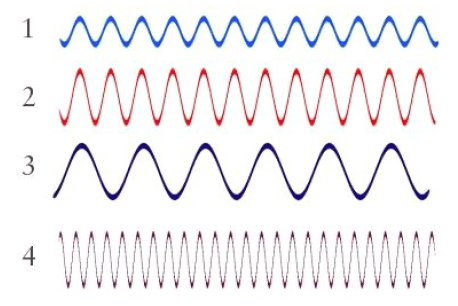
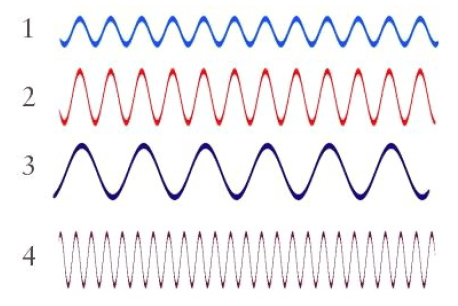
The matter (solid, liquid, or gas) through which mechanical waves travel.
medium
vibration
disturbance
energy
What is the relationship between frequency and sound?
Frequency affects a sound's volume.
Frequency affects a sound's amplitude.
Frequency affects a sound's loudness.
Frequency affects a sound's pitch.
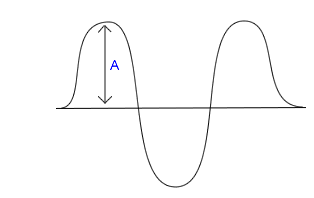
Waves that require a medium are known as
Medium waves
Mechanical waves
Air waves
Heat waves
The material through which a wave travels is?
a rope
water wave
snaves
medium
In science, the ability to do work is defined as
sleep
micronuclearism
energy
synergy
A disturbance involving the transfer of energy
ocean
wavelength
wave
snapes
A wave that vibrates medium at right angles
longitudinal
crest
trough
transverse
A repeated back and forth up and down motion
sensation
creation
vibration
the nation
The high point of a transverse wave is called a
crest
peak
gnarly wave
sloth
A wave that vibrates the medium in the same direction it travels
transverse
longitudinal
latitudinal
wave
A low point of a transverse wave is known as a
downside
well
trough
flop
An area where coils are close together
compression
compressor
conductor
composer
An area where coils are far apart
rarefaction
raresteak
rarefind
faction
What are the two categories of mechanical waves based on the motion of particles?
Longitudinal and transverse waves
Crest and trough waves
Amplitude and frequency waves
Wavelength and energy waves
In transverse waves, the direction of the wave is perpendicular to the direction of what?
The wave's amplitude
The wave's frequency
The energy transfer or vibrations
The wave's wavelength
Which components are included in all transverse waves?
Wavelength, crest, trough, amplitude, and frequency
Amplitude, energy, wavelength, and direction
Frequency, energy, amplitude, and speed
Direction, speed, wavelength, and energy
How is wavelength defined in a transverse wave?
The distance from one crest to the next trough
The height from the crest to the resting position
The distance from one crest to the next crest
The time it takes to move from one crest to the next trough
What does a greater amplitude in a wave indicate?
The wave carries less energy
The wave is moving faster
The wave carries more energy
The wave has a longer wavelength
What is the definition of frequency in the context of waves?
The speed at which a wave travels through a medium
The number of waves that pass a fixed point in one second
The height of a wave from crest to trough
The distance between two consecutive crests or troughs of a wave
What is meant by the term 'hertz' in the study of waves?
The amplitude of a wave
The speed of a wave
The unit of frequency of a wave
The wavelength of a wave
What happens to the frequency of a wave if its wavelength increases?
The frequency increases
The frequency remains the same
The frequency decreases
The frequency is not related to wavelength
Which term describes the bending of a wave when it enters a different medium?
Reflection
Refraction
Diffraction
Transmission
What is the term used to describe the phenomenon when waves bend around corners or spread out after passing through a small opening?
Reflection
Refraction
Diffraction
Transmission
What is the result called when two or more waves overlap and combine?
Reflection
Refraction
Diffraction
Interference
Which of the following is NOT an application of wave-based technology?
Ultrasonic technology
WiFi waves
Vehicle parking sensors
Solar panel energy conversion
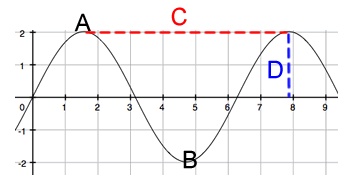
Label the Transverse Wave.
Wavelength
Crest
Amplitude
Rest / Origin
Trough

A large rock is motionless on a flat sidewalk.
Which statement best explains why the rock remains motionless?
There are no forces acting on the rock
The only force acting on the rock in directed toward the sidewalk
The forces acting on the rock are all balanced
The sidewalk exerts an unbalanced force on the rock

A pitcher throws a ball toward a player holding a baseball bat. The player uses the bat to hit the ball with a 10 N force. Which statement correctly describes the reaction force between the bat and ball?
The reaction force is the force...
that causes the ball to move toward the bat
applied to the bat by the player holding the bat
that pulls the ball toward the ground
of the ball on the bat

The picture shows an aerialist walking on a tightrope and holding a balancing bar.
An action-reaction pair of forces exists between -
the aerialist's feet and the rope
the rope and the balancing bar
the two ends of the rope
the aerialist's arms and legs

Four boxes are sliding with constant speed before each box experiences an unbalanced force of 8N.
Which box would experience the greatest acceleration when the unbalanced force is applied?
The box with a mass of 2 kg
The box with a mass of 4 kg
The box with a mass of 6 kg
The box with a mass of 8 kg

The unusual strength of glue makes it able to hold a heavy object, or load, as shown in the diagram below.
If the load exerts a strong downward force, the glue -
destroys the force
exerts a stronger downward force
causes the load to accelerate upward
exerts an upward force that is equal to the downward force
Which 3 objects on the list are experiencing an unbalanced force?
(Select 3)

How can Newton's law of action-reaction best be applied to explain the movement of a rocket?
As the fuel burns, ...
gases push against the rocket, making it move upward
escaping gases reduce air resistance
the rocket moves slower
the mass of the rocket increases
A student jumps off a sled toward the west after it stops at the bottom of an icy hill.
Base don the law of action-reaction, in what direction will the sled most likely move as the student jumps off?

Two cars with different masses travel at the same speed down a hill toward a stop sign. What will happen when both cars apply brakes at the same time to stop?
The car with the smaller mass will require less forces to stop than the larger mass car
The car with the larger mass will maintain its velocity while traveling down the hill
The car with the smaller mass will take longer to stop than the larger mass car
The car with the larger mass will have less inertia than the car with the smaller mass.

The sudden movement of tectonics plates, known as earthquakes, are caused by -
the mass of the plates
the weight of the plates
unbalanced forces
gravitational force

According to Newton's second law (F=ma), if you increase the force applied to an object :

F=m/a
F=a/m
F=mxa
F=mxF

The risk of injury in a car accident is much greater if occupants do not wear a seat belt. Which of Newton's laws explains why this is true?
Law of force and acceleration
Law of gravity
Law of action and reaction
Law of inertia
When an unbalanced force acts on an object, the force ______________________.
changes the motion of the object
is cancelled by another force
does not change the motion of an object
is equal to the weight of the object
When two equal forces act in opposite directions on an object, they are called ______________________.
frictional force
balanced force
centripetal force
gravitational force
The resistance of an object to any change in its motion is called ______________________.
inertia
friction
gravity
weight
According to Newton’s second law of motion, force is equal to mass times ______________________.
inertia
weight
acceleration
direction
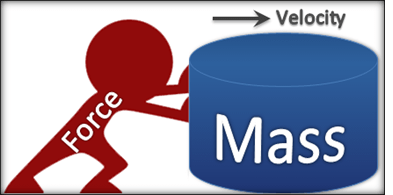
The picture is an example of Newton's...
1st Law
2nd Law
3rd Law

The picture is an example of Newton's...
1st Law
2nd Law
3rd Law


If a piece of equipment is not working, stop, turn it off, and......
tell the principal
Tell your lab partner
throw it away
Tell your teacher
What does PASS stand for?
Pull Aim Squeeze Sweep
Push Aim Sweep Squeeze
Please always stand silently
Pull Aim Sweep Squeeze
PPE stands for....
Passing People eventually
Personal Protective Equipment
Please put everything away
I must wear goggles when working with
glass
chemicals
heat
paper
I can take whatever I want to the lab station.
TRUE
FALSE
I can go to a friend's lab station to see what they are doing?
TRUE
FALSE
All materials in the science classroom must be handled carefully, including PPE
TRUE
FALSE
After lab
run out of the room
leave the mess for the custodian to clean up
let my partner clean it all up
work with my group to clean up
It is important to know...
how to use the eyewash station
where and how to use fire extinguisher and blanket
everything in science
where my friends are
Before beginning the lab experiment I must
visit with friends at other stations
go to the lab and start right away
play with the equipment
read all of the procedures carefully
The following is allowed in the lab...
drinking water
Eating a cookie
chewing gum
on task behavior
When you finish working with chemicals and other substances always...
wipe your hands on a towel
wash your hand with soap and water
use germ-ex
go to the next class
If a fire erupts (not on a person) immediately..
throw water on the fire
tell the teacher
get the fire extinguisher or blanket
run out the door
If you do not understand a direction or part of a lab procedure you should....
skip it and go on to the next part
figure it out as you go
ask the teacher before proceeding
make up own directions
After completing an experiment, all chemical waste should be
disposed of according to teachers directions
dumped in the sink
taken home
mixed and experiment more with
You have been injured in the lab, first you should
run out the door
tell the teacher or have someone get you help
go to the nurse after class
scream
Long hair in the lab must be
curled
cut short
tied back
a mullet
Which should NOT be worn during a lab activity?
sandals
loose clothes
dangling jewelry
lab apron
Horseplay, practical jokes, or pranks in the classroom are....
ok if you include the teacher
not dangerous
funny
always against the rules
If you break glass during a lab experiment you should
clean it up
tell your teacher
throw it in the trash
yell at your partner

