wayground logo

Free Printable Worksheets

Font size

S
M
L
XL
Worksheets

vectors

Total questions: 36

Worksheet time: 28mins

Name
Class
Date
1.
Which of the following is always positive?
a)
vector
b)
scalar
c)
direction
d)
magnitude
2.
A scalar is a magnitude _____.
a)
With direction.
b)
Without direction.
3.
What is a magnitude?
a)
A numeric value.
b)
A direction.
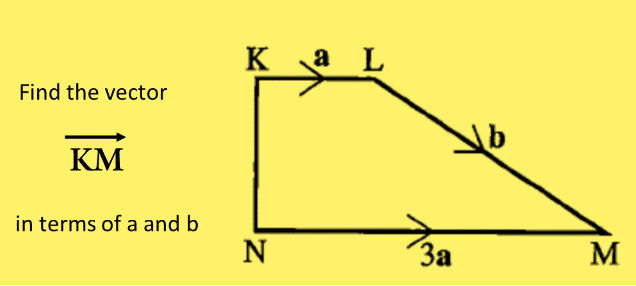
4.
a)

b

b)

a

c)

3a

d)

-b

5.
a)

ab

b)

b + a

c)

3a + b

d)

4a

6.
a)

a

b)

b

c)

2a

d)

-a

7.

A force of 6.0 Newtons north and a force of 8.0 Newtons east act concurrently on an object. The magnitude of the resultant of the two forces is

a)

1.3 N

b)

2.0 N

c)

10 N

d)

14 N

8.

Two forces, A and B, act simultaneously at point O as shown on the diagram. The magnitude of the resultant force is closest to

a)

8.0 N

b)

11 N

c)

15 N

d)

16 N

9.

Which vector best represents the resultant of forces F1 and F2 acting concurrently on point P, as shown in the diagram?

a)

b)

c)

d)

10.

It's an example of scalar quantity

a)

Momentum

b)

Weight

c)

Energy

d)

Acceleration

11.

These kinds of quantities have only magnitute

a)

physical quantities

b)

vector quantities

c)

scalar quantities

d)

vecorial quantities

12.

A vector represents:

a)

physical quantities

b)

scalar quantities

c)

vector quantities

d)

the three previous answers

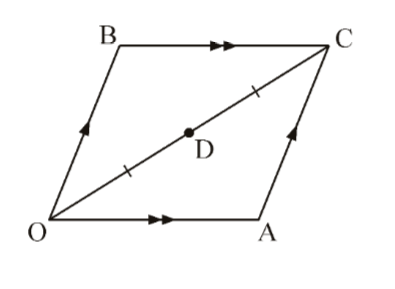
13.
a)

OB + BC = OC

b)

OA + AC = OC

c)

CB + B0 = -OC

d)

OD = 0.5(OA + AC)

14.
a)

a is the position vector of point A

b)

b is the direction vector of line L

c)

r is the position vector of all points in L, represented by P(x,y)

15.

Vector is a quantity with:

a)

magnitude and direction

b)

magnitude

c)

direction

d)

none of the above

16.

Given the vector u, give the vertical and horizontal components.

a)

<3,4><3,4>

b)

<4,3><4,3>

c)

<3.5,4.5><3.5,4.5>

d)

Cannot be determined

17.

Given that v= <2.5,7.5><2.5,7.5> , what is the directional angle of v?

a)

18.4

b)

71.6

c)

70.5

d)

19.5

18.

Given vector u=<4,5>u=<4,5>  find  2u2u  

a)

 <8,10><8,10>  

b)

 <2,52><2,\frac{5}{2}>  

c)

 <6,7><6,7>  

d)

 <8,5><8,5>  

19.
Find the dot product of <1, -2> and <3, 2>.
a)
1
b)
<3, -4>
c)
<4, 0>
d)
-1
20.
Find the direction of the vector <-3, -5>.
a)
59.03°
b)
239.03°
c)
210.96°
d)
120.96°
21.
Find the magnitude of the vector <2, -3>.
a)
√11
b)
13
c)
√-4
d)
√13
22.
Given an initial point A ( 2, 4 ) and terminal point B ( -8, 7 ), find the component form of the vector AB.
a)
〈-10,3〉
b)
〈-6,3〉
c)
〈10,11〉
d)
〈-6,-3〉
23.
Given the magnitude & direction of the resultant, find the horizontal & vertical components.
a)
Horizontal 63.9
 Vertical 44.7
b)
Horizontal 7.3
 Vertical 34.2
c)
Horizontal -63.9
 Vertical 44.7
d)
Horizontal -7.3
 Vertical 34.2
24.
Given the magnitude & direction of the resultant, find the horizontal & vertical components. Direction: 287° Magnitude: 422mph
a)
Horizontal -403.6
 Vertical 123.4
b)
Horizontal 123.4
Vertical -403.6
c)
Horizontal 123.4
Vertical 403.6
d)
Horizontal -123.4 
Vertical -403.6
25.

Describe the translation using a column vector

a)

A

b)

B

c)

B

26.

Write the vector from B to A...

a)

AB

b)

- a

c)

a

27.

Write the vector from A to B...

a)

a

b)

- a

28.

A method used to add vectors together

a)

Tip to Tail Method

b)

Resultant Vector

c)

Pythagorean Theorem

d)

a2+b2=c2a^2+b^2=c^2

29.

What is this Equation: a2+b2=c2a^2+b^2=c^2  

a)

Standard Vector Form

b)

Resultant Vector

c)

Pythagorean Theorem

d)

Equation of a Circle

30.

An Arrow with a Magnitude and Direction

a)

Scalar

b)

Vector

c)

Refractor

d)

Tip to Tail

31.

How should you add two vectors? Select all that apply

a)

Add them head to tail

b)

Add them tail to tail

c)

don't why bother

d)

Use the parallelogram method

e)

Add them head to head

32.
A vector is a mathematical structure that has both _______ and _______.
a)
direction, magnitude
b)
scope, sequence
c)
meat, potatoes
d)
scalar, vector
33.

Which are equivalent vectors?

a)

u and -u

b)

u and a

c)

u and v

d)

u and b

34.
In practice A of the figure, What is  the magnitude of the  resultant displacement?
a)
5 km 
b)
8 km
c)
11 km
d)
15 km
35.
A car travels 90 meters due north in 15 seconds. Then the car turns around and travels 40 meters due south.  What is the magnitude and direction  of the car's resultant displacement?  
a)
40 metres, South
b)
50 metres, South
c)
50 metres, North
d)
40 metres, North 
36.
Which statement describes a vector?
a)
It has magnitude but no direction
b)
It has direction but no magnitude
c)
It has both direction and magnitude
d)
It has constant magnitude but no
 direction