
 Worksheets
NEWTON'S LAWS
Total questions: 110
Worksheet time: 1hrs 26mins
A person’s body is thrown outward as a car rounds a curve on a highway.
Newton's 1st Law
Newton's 2nd Law
Newton's 3rd Law
None of them
Pushing a child on a swing is easier than pushing an adult on the same swing, because the adult has more mass.
Newton's 1st Law
Newton's 2nd Law
Newton's 3rd Law
None of them
Which law states that the acceleration of an object depends on the force exerted on it and its mass?
1st Law
2nd Law
3rd Law
Which law states that for every action there is an equal and opposite reaction?
1st Law
2nd Law
3rd Law
Which law states that an object at rest stays at rest and an object in motion stays in motion unless an unbalanced force acts on it?
1st Law
2nd Law
3rd Law
Henry sees a basketball and decides to put in motion. What kind of force does Henry use to move the ball?
small
balanced
equal
unbalanced
Which activity would BEST demonstrate Newton's law of Inertia?
A plate sits on a table top.
A lady pushes a grocery cart.
A child jumps on a trampoline.
A boy swings a baseball bat.
Which activity would BEST demonstrate the Law of Action/Reaction?
A car traveling down the road.
A rocket launching to space.
A soccer ball sitting on the ground.
A lady pushing a grocery cart.
Which activity would BEST demonstrate the Law of Force and Acceleration?
A lady pushes a grocery cart.
A boy swings a baseball bat.
A soccer ball sits on the ground.
A rocket launches into space.
What is the name of Newton's 1st Law of Motion?
Law of Force and Acceleration
Law of Action / Reaction
Law of Inertia
What is the name of Newton's 3rd Law of Motion?
Law of Force and Acceleration
Law of Inertia
Law of Action / Reaction
What is the name of Newton's 2nd Law of Motion?
Law of Force and Acceleration
Law of Inertia
Law of Action / Reaction
A force that opposes motion between objects that are touching is called...
motion
friction
velocity
acceleration
When there is an INCREASE in MASS of an object you will have a DECREASE in ______________.
friction
acceleration
force
gravity
A jellyfish swims through the water by pulling in water and then pushing the water back out in the opposite direction. This is an example of which law of motion?
1st Law
2nd Law
3rd Law
Billy pushes his little brother on a sled through the snow. He then tries to push his father on the the same sled. He noticed that it was much harder to push his father. Which law is this an example of?
1st Law
2nd Law
3rd Law

Which law is this picture an example of?
Law of Inertia
Law of Force and Acceleration
Law of Action / Reaction
Ted is playing with a yoyo outside. When he pushes the yoyo downward it returns back to him with the same force. Which law is this an example of?
1st Law
2nd Law
3rd Law


1st
Law of Motion
2nd
Law of Motion
3rd
Law of Motion

A cannonball with a mass of 0.5 kg is flying at an acceleration of 10 m/sec/sec. What is its force?
50 Newtons
5 Newtons
20 Newtons
9.5 Newtons
A lamp sitting on a table is demonstrating Newton's ___ Law.
1st
2nd
3rd
4th
30 mph west is an example of _________.
force
speed
acceleration
velocity
A car traveling 65 mph is an example of its ________.
force
speed
acceleration
velocity

What will be the effect on the boy in the picture if the driver stops quickly?
Because of inertia he will remain in the same position.
He will be pushed back into the car seat.
He will move from one side of the car seat to the other.
He will move forward pressing against the seatbelt.
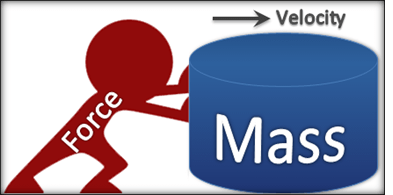
The picture is an example of Newton's...
1st Law
2nd Law
3rd Law

The picture is an example of Newton's...
1st Law
2nd Law
3rd Law
Acceleration is due to a force put on an objects mass.
1st Law
2nd Law
3rd Law
A soccer ball is sitting in the middle of a field. The ball will remain at rest until an outside force like a players foot or the wind acts upon it. Which of Newton's laws is represented by this?
1st
2nd
3rd
Think about pushing a shopping cart and a car. If you apply the same amount of force to both, the shopping cart will travel fast, but the car will hardly move. To move the car yo would need a larger force. Which of Newton's laws is being represented?
1st
2nd
3rd
Sally jumps on her trampoline. She exerts a force on the trampoline and the trampoline exerts an equal but opposite force back on Sally. This represents
Law 1
Law 3
Law 2

What Newtons law does this picture represent
Newtons 1st law
Newtons 2nd law
Newtons 3rdt law
Newtons 4rth law

Which law explains that it would take more force to push the car than the lawnmower?
1st
2nd
3rd
There is a skateboard rolling and then Billy steps on it and it stops. What Law of motion is this?
3rd
2nd
1st
When you are running. your foot exerts force on the ground and the ground exerts force back onto you. Which of Newton's laws is represented
1st
2nd
3rd
If we put the same force on a bowling ball and a soccer ball, the soccer ball will move faster! Which law explains this?
1st
2nd
3rd

Which way would a swimmer push to move forward in the water?
To the left
Forward
Backward

The reason a ball bounces up when it hits the ground:
The ball and ground repel each other.
The ball exerts a force on the ground, and the ground exerts a force on the ball.
Observe what happens to the motion of the penny. Which of Newton's Laws does this represent?
Newton's 1st Law, inertia
Newton's 2nd Law, Force = m x a
Newton's 3rd Law, action/reaction
Watch as Blake pushes the 2 cars of different masses with about the same force. Observe what happens. Which of Newton's Laws does this represent?
Newton's 1st Law, inertia
Newton's 2nd Law, Force = m x a
Newton's 3rd Law, action/reaction
Watch as I propel the washers across the desk. Observe what happens as I use different amounts of force.
Newton's 1st Law, inertia
Newton's 2nd Law, Force = m x a
Newton's 3rd Law, action/reaction
Watch as I send the car down the track. What happens as I increase the force that I am using? Which of Newton's Laws does this represent?
Newton's 1st Law, inertia
Newton's 2nd Law, Force = m x a
Newton's 3rd Law, action/reaction
Watch as Blake begins to run. What happens to the sheets of paper under his feet? Why? Which of Newton's Laws does this represent?
Newton's 1st Law, inertia
Newton's 2nd Law, Force = m x a
Newton's 3rd Law, action/reaction
Observe the motion of the washer as I quickly pull the card out from under it. What happened to the washer? Why? Which of Newton's Laws does this represent?
Newton's 1st Law, inertia
Newton's 2nd Law, Force = m x a
Newton's 3rd Law, action/reaction
Which of Newton’s Laws explains a rocket’s movement during launch?
Newton's First Law of Motion
Newton's Second Law of Motion
Newton's Third Law of Motion
Newton's Fourth Law of Motion
Newton's (a) Law states that objects in motion tend to stay in motion, and objects at rest tend to stay at rest unless acted upon by an outside force.

The girl on the sled will remain in motion unless
her motion is changed by magnetic forces.
she is stopped by an outside force.
she accelerates at a constant speed.
the force of friction forcer her to move faster.


A car is driving at a constant velocity of 75 m/s on the highway headed to Tucson, on a windy day. What is the force acting upon it to continue it's state of motion?
0 N, due to "the constant velocity" which means the car is already moving. It does not need force to continue it's state of motion.
Really? This question again? Obviously it is 75 m/s because of one of Newton's Laws.
Wait, I do know, I just don't know how to explain it. But, It is one of the laws... right?
75 N to the right, due to action and reaction, as well as inertia.
1st
Law of Motion
2nd
Law of Motion
3rd
Law of Motion
1st
Law of Motion
2nd
Law of Motion
3rd
Law of Motion
What is required for an object to begin moving from rest?
A balanced force
An unbalanced force
No force
A decrease in mass
What is inertia?
The force that keeps an object moving in a circle
The tendency of an object to resist changes in its velocity
The force that pulls objects toward the center of the Earth
The reaction force that occurs in response to an action force
Which of the following scenarios best illustrates Newton's First Law of Motion?
A ball rolling down a hill speeds up.
A car comes to a stop gradually when the brakes are applied.
A book remains at rest on a table until someone moves it.
A rocket launches off the ground when its engines fire.
What does it mean when forces are balanced?(Select all that are correct)
The object is accelerating.
The object is moving at a constant velocity.
The object is at rest.
What is the effect of mass on inertia?
More mass means less inertia.
Mass has no effect on inertia.
More mass means more inertia.
Only shape, not mass, affects inertia.
If an object is moving with a constant velocity, what can we infer about the forces acting on it?
There are no forces acting on it.
The net force acting on the object is zero.
The object is experiencing a constant force in the direction of motion.
The object is accelerating.
Letting go of a balloon full of air is demonstrating Newton's ______ _______ ________ _________ because the air comes out of the back and the balloon moves forward.
1st law of motion
2nd law of motion
3rd law of motion
13th law of motion
In referring to how much matter a body contains, we use the term:
Volume
Weight
Mass

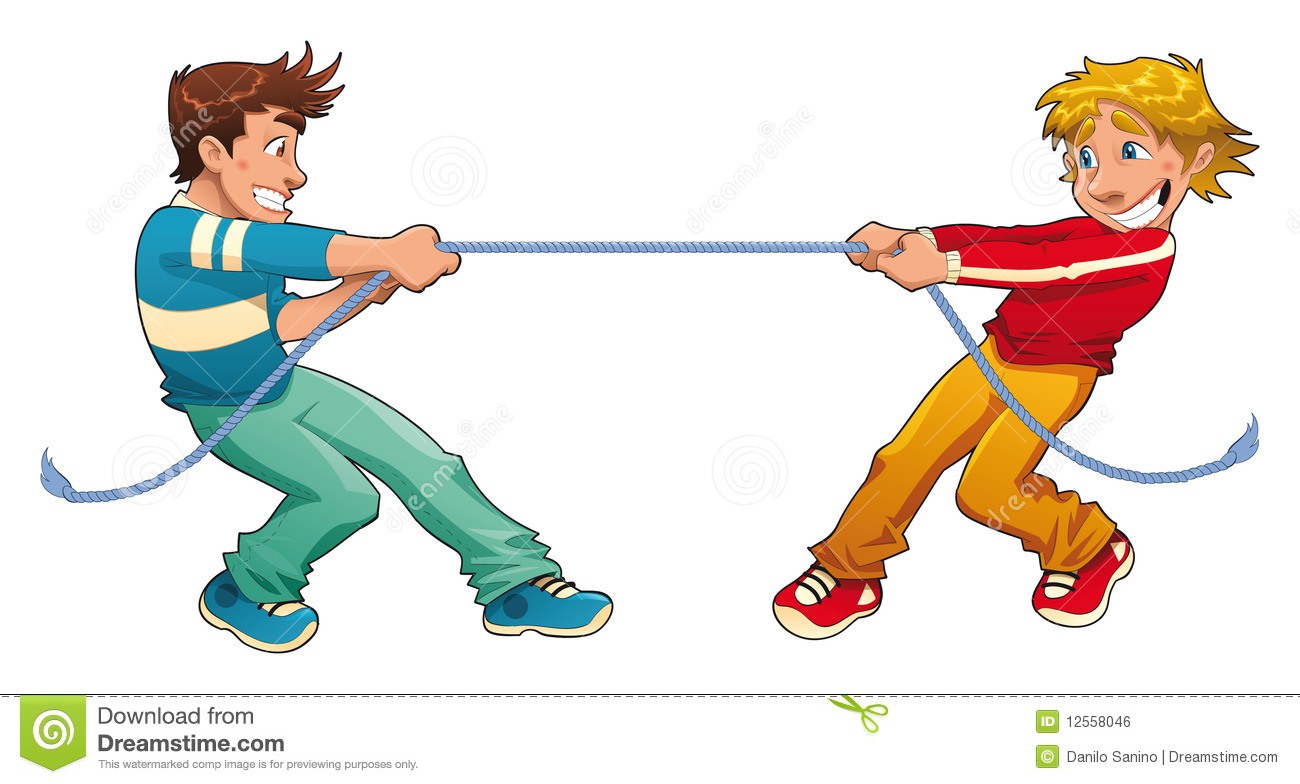
1st
Law of Motion
2nd
Law of Motion
3rd
Law of Motion
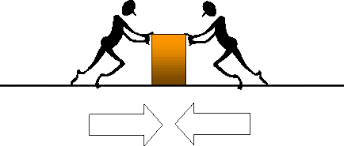


What Unit do we Measure Force in?
Newtons
Joules
Force
Kilograms
If a 10 kilogram object accelerates suddenly at 15 m/s2, how much force was applied to the object?
150 Newtons
15 Newtons
150 kilograms
100 kilograms

What is the formula for force?
F=m/a
F=a/m
F=ma
F=Fm

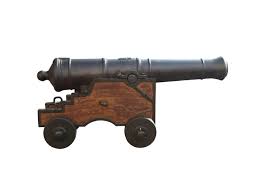


How does Friction act when compared to the motion of an object?
Friction acts in the same direction as the motion of the object
Friction acts in the opposite direction as the motion of the object
Friction is not related to the motion of the object
Friction is equal to the motion of the object
A change in velocity is called
Inertia
Acceleration
Net Force
Speed
In a collision, what is the force strength of these objects:
Object A: 40kg
Object B: 100kg
They don't have a force strength
40kg
They have the same force strength
100kg
Which of the following is not an acceleration?
a. Turning your bike around a corner
b. Applying the breaks as you approach an intersection
c. Pedaling faster to beat a read light.
d. Riding your bike straight down the street at a constant speed.

