
 Worksheets
PS Final Exam Review
Total questions: 67
Worksheet time: 59mins
What does the Law of Conservation of Mass state?
Matter is created and destroyed in a chemical reaction.
Matter is neither created nor destroyed, just transferred.
Matter is only destroyed in a chemical reaction.
Matter can be transformed into energy.
What are the coefficients that would properly balance this equation?
__Al + __O2--> __Al2O3
4,1 --> 2
4,3 --> 4
3,4 --> 1
4,3 --> 2
4Fe + 3O2 --> 2Fe2O3

Elements in the same group or column have the same ...
# of valence electrons
# of shells
# of protons
Mass Number

Which color on the image of the periodic table corresponds with the metalloids.
bright yellow
gold
teal
light blue
Cations are metals that form ____________ ions by __________ electrons.
negative, losing
negative, gaining
positive, gaining
positive, losing
Anions are nonmetals that form ____________ ions by __________ electrons.
negative, losing
negative, gaining
positive, gaining
positive, losing
Which is the correct name for CaBr2?
Calcium Dibromide
Calcium bromate
Calcium Bromide

Which type of reaction does the diagram illustrate?
Fission
Fusion
Alpha Decay
Beta Decay
________ is the combining (joining) of two small nuclei to create a large nucleus.
Nuclear Fission
Nuclear Fusion
The is family has properties of both metals and nonmetals.
Alkali
Halogens
Nonmetals
Metalloids
Sulfur is a...
metal
nonmetal
metalloid
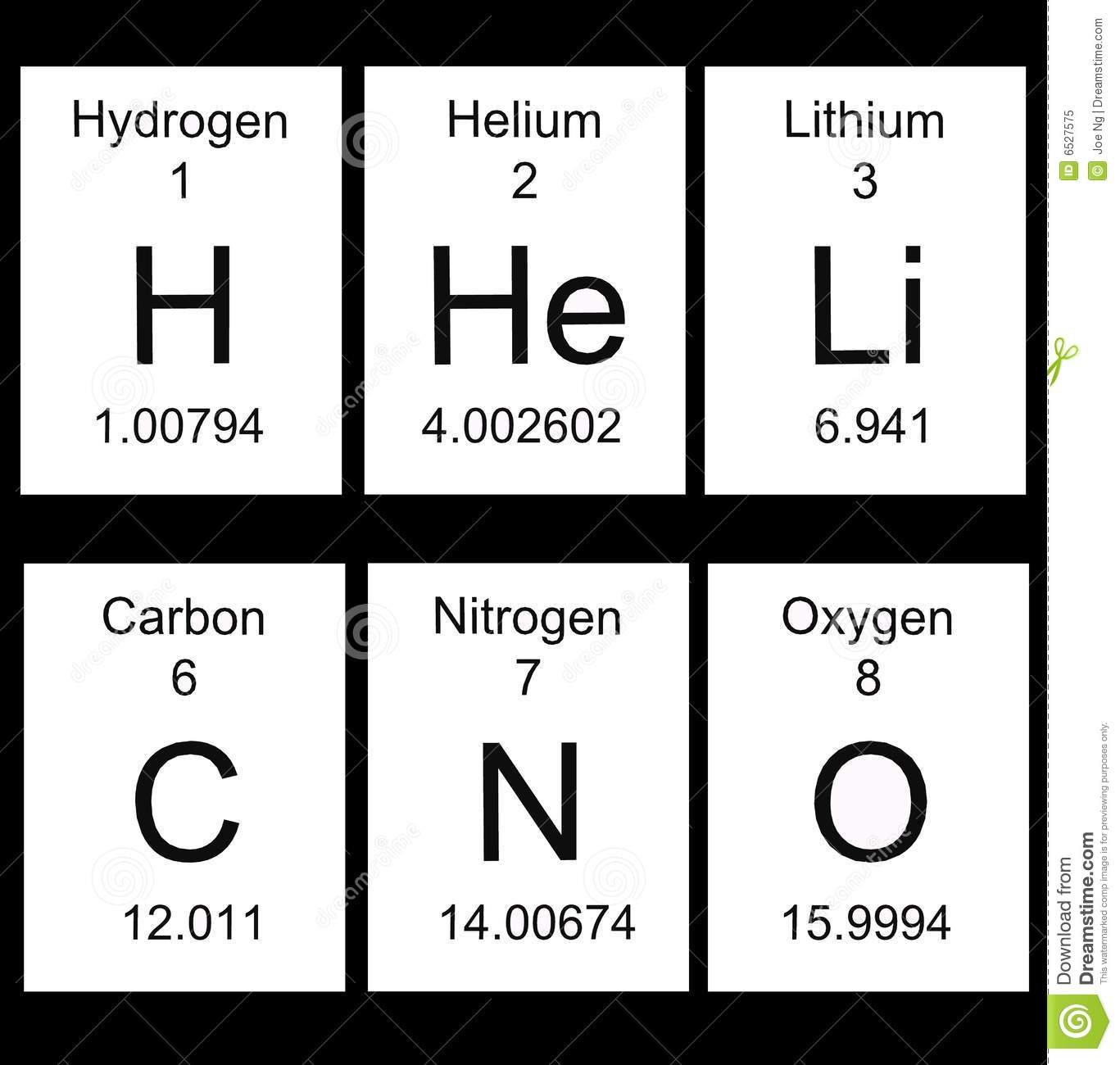

If you have 12 kg of Polonium and it decays to 3 kg of polonium, how many half lives have passed?
4
1
2
3
The half-life of Zn-71 is 2 minutes. If you had 100 g at the beginning, how many grams would be left after 6 minutes has elapsed?
100 g
50 g
25 g

How many grams of K2Cr2O7, are soluble in 100 g of water at 95 ºC?
83 grams
75 grams
40 grams
12 grams

Which substance is MOST soluble at 0 ºC?
KI
NaNO3
NaCl
Ce2(SO4)3

When the temperature of a gas decreases, the volume will
increase
decrease
If a gas is at constant volume, what will happen to the pressure when the temperature increases?
Increases
Decreases
When the volume increases what will happen to the pressure
Increases
Decreases

Which of the following is NOT an ionic compound:
NaCl
Cl2
CaF2
KOH

Lemon juice is an example of -
a base
an acid
a neutral substance

Is this equation balanced?
Yes
No
_____ waves have vibrations that run parallel to the direction the wave travels, and _____ waves have vibrations that run perpendicular to the direction the wave travels.
transverse, longitudinal
longitudinal, transverse
_______ is the distance between waves, measured from one crest to the next crest.
Wavelength
Frequency
Amplitude

The _______ of a wave is how many waves pass a given point every second.
Frequency
Wavelength
Amplitude

Examples of ________ waves include visible light, xrays, ultraviolet, and radio waves.
transverse
longitudinal

In this diagram of a transverse wave, A is showing the wave's _____ and B is showing the wave's _____.
amplitude, trough
amplitude, crest
wavelength, trough
wavelength, crest

In this diagram of a transverse wave, C is showing the wave's _____ and D is showing the wave's _____.
crest, amplitude
trough, amplitude
crest, wavelength
trough, wavelength
Voltage is
the potential electrical energy or push that makes electrons flow
causes a short circuit with electrical energy
is the term used for rate of charge flow
Wastes energy by allowing current to flow
A parallel circuit has ________ pathway(s) and a series circuit has ____________ pathway(s)
multiple, a single
a single, multiple
multiple, multiple
a single, a single
A north pole of a magnet is attracted to a ...
South pole of a magnet
North pole of a magnet
You can increase the strength of an electromagnet are increasing the current, adding iron to the core, and .....
increasing the number of coils on the magnet
Decreasing the number of coils on the magnet
Dividing the number of coil
A generator converts.....
Mechanical Energy to Chemical Energy
Mechanical Energy to Nuclear Energy
Electrical Energy to Sound Energy
Mechanical Energy to Electrical Energy
What do you call a push or pull on an object?
Chemical
Force
Magnet
Which force holds us to earth's surface?
Friction
Mass
Gravity
What force keeps the moon in orbit around the Earth?
weight
mass
gravity
What will happen if you try to put the south pole of one magnet and the south pole of another magnet together?
The magnets will attract or move together
The magnets will repel or move away.
The magnets will not attract or repel
Objects in motion tend to stay in motion, objects at rest tend to stay at rest, unless acted upon by a force.
gravity
friction
inertia
States that force equals mass x acceleration
Newtons 1st law
Newtons 2nd law
Newtons 3rd law
The swing of a hammer drives a nail partially into a piece of lumber until it comes to a rest. The lumber exerts an opposite force of resistance.
Newtons 1st law
Newtons 2nd law
Newtons 3rd law
Force equals...
mass x volume
mass x accelleration
change in direction
velocity x mass



