
 Worksheets
Organisational Development
Total questions: 89
Worksheet time: 1hrs 12mins
Which value of OD emphasizes the importance of teamwork and collective problem-solving?
Humanism
Empowerment
Collaboration
Integrity
What does the value of continuous learning imply for organizations?
Employees should only focus on their current roles.
Organizations should avoid change to maintain stability.
Opportunities for professional development and training should be created.
Employees should not be encouraged to share knowledge.
According to OD assumptions, what is the belief about people?
They are generally unmotivated.
They are inherently good and want to contribute positively.
They require constant supervision.
They are only motivated by financial incentives.
Which value of OD emphasizes the importance of teamwork and collective problem-solving?
Humanism
Empowerment
Collaboration
Integrity
What does the value of continuous learning imply for organizations?
Employees should only focus on their current roles.
Organizations should avoid change to maintain stability.
Opportunities for professional development and training should be created.
Employees should not be encouraged to share knowledge.
According to OD assumptions, what is the belief about people?
They are generally unmotivated.
They are inherently good and want to contribute positively.
They require constant supervision.
They are only motivated by financial incentives.
What does the assumption "Change is Constant" suggest for organizations?
Organizations should resist change to maintain efficiency.
Organizations should be agile and prepared to adapt.
Change should only be implemented when necessary.
Employees should not be involved in the change process.
Why is diversity and inclusion considered valuable in OD?
It makes compliance easier.
It simplifies decision-making.
It reduces costs.
It enhances creativity and innovation.
Which of the following is true?
Empowerment in OD means giving employees the authority to make decisions.
Systems thinking in OD means that changes in one area of the organization do not affect other areas.
Learning is seen as a process in OD, and mistakes are viewed as failures rather than learning opportunities.
None of these
What is the role of social scientists in the process described?
a) They conduct research about organizational problems
b) They implement solutions directly
c) They train employees
d) They manage the organization
What is the cycle of action research?
Plan, Act, Observe, Reflect
Collect data, Analyze, Implement, Evaluate
Research, Plan, Implement, Collect feedback
Identify problem, Collect data, Implement solution, Check results
How does the process benefit both organizations and social scientists?
Organizations solve problems, scientists gain research data
Scientists get paid, organizations get free labor
Organizations learn research methods, scientists gain management experience
It doesn't benefit both parties
In the Blake and Mouton Managerial Grid, what are the two major factors considered?
Profit and Loss
Employee Satisfaction and Customer Satisfaction
Concern for Production and Concern for People
Innovation and Efficiency
What is the main goal of participative management systems?
To increase productivity at the expense of employee satisfaction
To prioritize employee satisfaction over productivity
To minimize communication between management and employe
To balance productivity with employee well-being and satisfactiones
What does the document suggest about the relationship between communication and management style in participative systems?
Communication flows only from top to bottom
Communication is limited to within departments
Communication flows vertically and horizontally across departments
Communication is discouraged to maintain hierarchy
Blake and Mouton Managerial Grid, what does a (1,9) rating represent?
Low concern for both production and people
High concern for production, low concern for people
Low concern for production, high concern for people
High concern for both production and people
What is a potential drawback of focusing solely on production?
Neglect of employee well-being
Increased employee satisfaction
Higher overall productivity
Improved communication within the organization
Role of managers in a participative management system?
They make all decisions independently
They involve employees in goal-setting and decision-making processes
They focus solely on production targets
They avoid all interaction with employees
Which of the statement is not correct?
In a participative management system, communication flows both vertically and horizontally across different departments.
The Blake and Mouton Managerial Grid considers only one factor: concern for production.
The ideal position on the Blake and Mouton Managerial Grid is a balance between concern for production and concern for people.
None of these
What does "overlapping group membership" refer to?
Duplication of job responsibilities
Managers having multiple roles
Employees working in multiple departments
Conflict between different groups
What is a key characteristic of the benevolent authoritative management system?
High employee participation in decision-making
Complete employee autonomy
No concern for employee welfare
Some concern for employees, but decisions made by management
Which of the statement is true?
The document suggests that focusing solely on production without considering employee well-being can be problematic.
According to the document, giving employees some degree of freedom can potentially improve productivity.
The consultative management style allows for employee input, but final decisions are still made by management.
All the above
How does the consultative management style differ from the participative style?
It involves no employee input
It focuses only on production
It is identical to the participative style
It allows some employee input, but management makes final decisions
(a) There was not a “big bang” or “blessed event.” Thus, considering three forerunners or precursors will help us to understand the beginnings, that is, where OD came from. These three precursors are sensitivity training, sociotechnical systems, and survey feedback.
Who said? (a) O.D is the tendency to the improvement in the interpersonal relationships to boot the organization
(a) O.D Is the respond to the change, a strategic that use the education to change the beliefs attitude values and organization structure looking for better ways to adapt the new technologies and new challenges of the inevitable change.
(a) It is a planes effort that cover from above the entire administrative organization to increase your efficiency and the heath trough planned intervention in the processes organizational and that use the knowledges of the behavioral sciences.
What is a Sytem?
Set of interrelated elements that act in an orderly manner. Example: en our body the heart has the function of "pumping" the blood in our body, the lungs distribute the oxygen we inhale from the outside, etc. What would happen if any of the components of the organism will not perform its function properly.
Organizational development is a critical and science-based process that helps organizations build their capacity to change and achieve greater effectiveness by developing, improving, and reinforcing strategies, structures, and processes.
Responsible, along with senior management, for carrying out the DO program. Coordinate and promote the process. Also known as a change agent or facilitator. Can be
internal or external to the organization
A person or organization using the services of a lawyer or other professional person or company
Responsible, along with senior management, for carrying out the DO program. Coordinate and promote the process. Also known as a change agent or facilitator. Can be
internal or external to the organization. This definition belong to?
Company
Cliente
Consult
Development.
(a) is a critical and science-based process that helps organizations build their capacity to change and achieve greater effectiveness by developing, improving, and reinforcing strategies, structures, and processes.
"a person from inside or outside an organization who helps the organization transform by focusing on improving organizational effectiveness, improvement, and development.
Agent
Employee
Change Agent
Change employee
Refers to consistencies in the form and content of lower order system that exist, or could exist at the level of the subculture or culture as a whole, along with any belief system or ideology.
Macrosystem
Exosystemic
Microsystem
System is one that regularly exchanges useful feedback with all of its important external stakeholders, for example, its customers, collaborators, leaders in the community and researchers in the industry.
Dinamic
Open
Close
subsystem
Year where appear work Team, research and feedback system, T group?
1982
1920
1960
1980
In this year the Organization development was focus in change to the social system.
1930
1952
2000
1940
Describe the three stages of theKurt Lewin's Model of Change
Mention the subsystem that are use in three -dimensional diagnostic model of patrick williams.
Mention the name of the six component that are used to diagnostic in the Marvin Weisbord model.
This model divide in five subsystems, the central subsystem is culture, bearing in mind that this set of beliefs and values are commonly accepted by all members of the organization and is closely related to its design. ; it can be modified by the action of the environment and influence the changes and results of the other subsystems.
Kurt Lewins
Three- Dimentional.
Six boxes model
Sensing Type Diagnostic
Organization development merupakan program yang di dalamnya mengutamakan jalan keluar untuk memperbaiki,dan meningkatkan kinerja. Hal tersebut merupakan karakteristik Organization Development yaitu....
Focus whole organization
System orientation
Problem solving
Use of change agent
Learning by exprience
According to Harold Rush, organizational development is a
planned, managed and systematic process to change the culture of an organization
characteristic of how employees need to be treated.
key answer of how to implement a good role as a leader
important role of how to communicate with your employees.
What is the first step in the OD process?
Entering and contracting
Diagnosing
Pengembangan
Organisasi
What is the purpose of diagnosing in OD?
To collect information
To analyze data
To understand the current functioning of the organization
All of the above
What is the role of the model in diagnostic needs?
To understand the organizational system
To simplify the reality
To analyze the relationship within the organization
All of the above
2
3
4
5
Overcoming resistance to change are
2
3
4
5
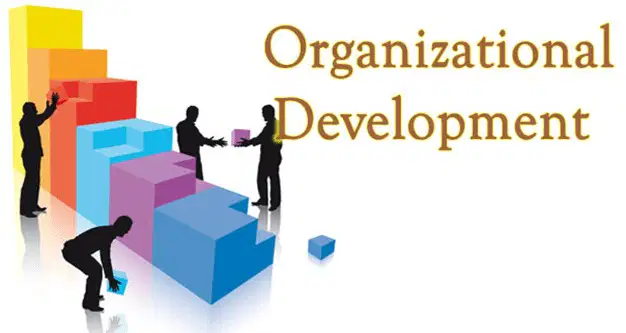
Organisational development process is based on __________.
handling conflicts
human resource
organization improvement
none of the above
The competencies of an organizational development practitioner is (a)

The _________ strategy focuses to reduce scope and size of a business through shrinking selective strategy.
turnaround
renewal
retrenchment
replacement
______ is the movement of an organization from one state of affairs to another.
Organisational change
Organisational renewal
Organisational development
Organisational growth
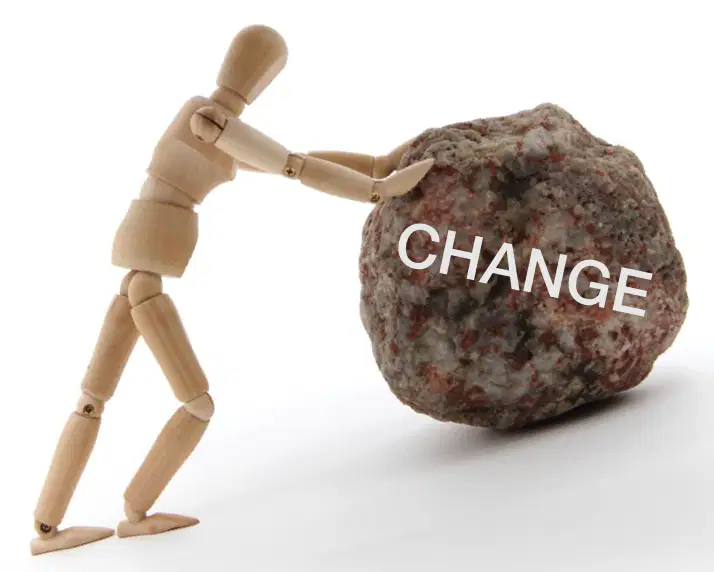
Change agents gain support for the initiative and engage people to participate.

