
Font size
 Worksheets
Understanding the Circulatory System
Total questions: 117
Worksheet time: 1hrs 10mins
What are the four main chambers of the heart?
Right atrium, left ventricle, left atrium, pulmonary artery
Left atrium, left ventricle, right ventricle, vena cava
Right atrium, right ventricle, left atrium, left ventricle
Right atrium, right ventricle, aorta, left atrium
Describe the function of the left ventricle.
The left ventricle receives deoxygenated blood from the body.
The left ventricle pumps oxygenated blood to the body.
The left ventricle regulates blood pressure in the heart.
The left ventricle pumps blood to the lungs for oxygenation.
What is the role of the aorta in the circulatory system?
The aorta is responsible for filtering blood in the kidneys.
The aorta regulates blood pressure in the lungs.
The aorta carries oxygenated blood from the heart to the body.
The aorta carries deoxygenated blood to the heart.
Name two common cardiovascular diseases.
Asthma
Diabetes
Coronary artery disease, Hypertension
Osteoporosis
What is hypertension and how does it affect the heart?
Hypertension is a type of heart disease that has no impact on blood pressure.
Hypertension is low blood pressure that improves heart function.
Hypertension is high blood pressure that can lead to heart disease and other cardiovascular issues.
Hypertension is a condition that only affects the lungs.
Explain the process of blood circulation in the body.
Oxygen is absorbed directly from the skin into the bloodstream.
Blood circulation is the process of blood being pumped from the heart to the body and back, involving oxygenation in the lungs.
Blood is filtered through the kidneys before reaching the heart.
Blood circulation only occurs in the brain.
What is the difference between arteries and veins?
Veins transport blood from the lungs to the heart; arteries carry blood from the heart to the lungs.
Arteries carry carbon dioxide-rich blood to the heart; veins transport oxygen-rich blood away from the heart.
Arteries transport oxygen-rich blood away from the heart; veins return oxygen-poor blood to the heart.
Arteries and veins both carry oxygen-rich blood, but arteries are thicker than veins.
How does the heart's electrical system work?
The heart's electrical system is controlled by hormones released from the brain.
The SA node is located in the ventricles and initiates blood flow directly.
The heart's electrical system controls the heartbeat through a sequence of electrical impulses generated by the SA node, transmitted through the AV node, and distributed to the ventricles.
The heart beats solely due to muscle contractions without any electrical impulses.
What lifestyle factors can negatively impact heart health?
Poor diet, lack of exercise, smoking, excessive alcohol, and chronic stress.
Balanced diet
Regular exercise
Moderate alcohol consumption
How does smoking affect the cardiovascular system?
Smoking negatively impacts the cardiovascular system by causing blood vessel damage, increased heart rate, and higher blood pressure, leading to a greater risk of heart disease and stroke.
Smoking reduces the risk of heart disease and stroke.
Smoking improves blood circulation and heart health.
Smoking has no effect on the cardiovascular system.
What is the significance of cholesterol levels in heart disease?
Cholesterol levels have no impact on heart disease.
High HDL cholesterol is a major risk factor for heart disease.
Cholesterol levels are only relevant for liver health.
Cholesterol levels are significant as high LDL cholesterol increases the risk of heart disease.
List three preventive measures for heart disease.
Excessive alcohol consumption
High sugar intake
Sedentary lifestyle
1. Regular exercise 2. Healthy diet 3. Avoid smoking
How does regular exercise benefit the heart?
Regular exercise causes heart palpitations.
Regular exercise increases cholesterol levels.
Regular exercise benefits the heart by strengthening it, improving circulation, and reducing risk factors for heart disease.
Regular exercise leads to heart muscle deterioration.
What dietary changes can help reduce the risk of heart disease?
Add more processed foods; eliminate fruits and vegetables.
Increase red meat consumption; reduce fiber intake.
Increase fruits, vegetables, whole grains; reduce saturated fats, trans fats, sodium, and added sugars.
Increase sugar-sweetened beverages; reduce whole grains.
Explain the term 'atherosclerosis'.
Atherosclerosis is the process of blood clot formation in veins.
Atherosclerosis is the inflammation of the lungs.
Atherosclerosis is the buildup of plaque in the arteries, leading to narrowed arteries and reduced blood flow.
Atherosclerosis is a type of cancer affecting the blood cells.
What is the impact of stress on heart health?
Stress only affects mental health, not physical health.
Stress negatively impacts heart health by increasing heart rate and blood pressure, and promoting unhealthy lifestyle choices.
Stress has no effect on heart health.
Stress improves heart health by lowering blood pressure.
How can obesity influence cardiovascular diseases?
Obesity has no effect on cardiovascular diseases.
Obesity decreases the risk of heart disease.
Obesity only affects respiratory health.
Obesity increases the risk of cardiovascular diseases through factors like high blood pressure, high cholesterol, inflammation, and insulin resistance.
What role does genetics play in heart disease?
Genetics only affects the severity of heart disease symptoms.
Genetics has no impact on heart disease.
Heart disease is solely caused by environmental factors.
Genetics plays a significant role in determining the risk factors and susceptibility to heart disease.
What is a heart attack and what are its symptoms?
A heart attack is a blockage of blood flow to the heart, with symptoms including chest pain, shortness of breath, and nausea.
A heart attack is caused by high blood pressure, with symptoms including headaches and dizziness.
A heart attack is a type of stroke, with symptoms including slurred speech and confusion.
A heart attack is a sudden increase in heart rate, with symptoms including sweating and fatigue.
How can regular health screenings help in preventing heart disease?
Regular health screenings are only necessary for older adults.
Health screenings can cure heart disease completely.
Regular health screenings help prevent heart disease by identifying risk factors early and enabling timely interventions.
Regular health screenings are primarily for detecting cancer.
What is the function of the right atrium in the heart?
The right atrium pumps oxygenated blood to the body.
The right atrium receives deoxygenated blood from the body and pumps it to the right ventricle.
The right atrium filters blood before it enters the heart.
The right atrium regulates the heart's electrical impulses.
Which valve is located between the left atrium and left ventricle?
Tricuspid valve
Pulmonary valve
Mitral valve
Aortic valve
What is the role of the coronary arteries?
Coronary arteries carry deoxygenated blood to the lungs.
Coronary arteries supply oxygen-rich blood to the heart muscle.
Coronary arteries remove waste products from the heart.
Coronary arteries regulate the heart's electrical activity.
What is coronary artery disease and how does it affect the heart?
Coronary artery disease is a condition where the heart muscle becomes inflamed.
Coronary artery disease is a type of cancer affecting the heart.
Coronary artery disease is the narrowing or blockage of the coronary arteries, usually caused by atherosclerosis, leading to reduced blood flow to the heart.
Coronary artery disease is a condition that only affects the lungs.
What is angina and what are its symptoms?
Angina is a type of heart attack with symptoms including severe chest pain and loss of consciousness.
Angina is a condition characterized by chest pain or discomfort due to reduced blood flow to the heart muscle.
Angina is a respiratory condition with symptoms including coughing and wheezing.
Angina is a type of stroke with symptoms including slurred speech and confusion.
What is heart failure and how does it differ from a heart attack?
Heart failure is a sudden blockage of blood flow to the heart, similar to a heart attack.
Heart failure is a condition where the heart cannot pump enough blood to meet the body's needs, unlike a heart attack which is a sudden blockage of blood flow.
Heart failure is a type of cancer affecting the heart cells.
Heart failure is a condition that only affects the brain.
What is atrial fibrillation and how does it affect the heart?
Atrial fibrillation is a type of heart attack that causes severe chest pain.
Atrial fibrillation is a condition where the heart beats irregularly and often rapidly, leading to poor blood flow and increased risk of clots.
Atrial fibrillation is a respiratory condition that affects lung function.
Atrial fibrillation is a type of cancer affecting the heart cells.
What are common symptoms of atrial fibrillation?
Severe headaches and dizziness.
Chest pain, palpitations, and shortness of breath.
Slurred speech and confusion.
Sudden weight loss and fatigue.
Which of the following is a potential complication of untreated atrial fibrillation?
Increased risk of stroke.
Improved heart function.
Decreased blood pressure.
Enhanced lung capacity.
What is the role of the right atrium in blood circulation?
The right atrium receives oxygenated blood from the lungs.
The right atrium pumps blood to the left ventricle.
The right atrium receives deoxygenated blood from the body.
The right atrium pumps blood directly to the aorta.
Which valve prevents backflow of blood into the right ventricle?
Mitral valve
Pulmonary valve
Aortic valve
Tricuspid valve
How does blood flow from the heart to the lungs?
Through the aorta
Through the pulmonary arteries
Through the vena cava
Through the coronary arteries
What is the function of the pulmonary veins in the circulatory system?
The pulmonary veins carry deoxygenated blood from the heart to the lungs.
The pulmonary veins carry oxygenated blood from the lungs to the heart.
The pulmonary veins filter blood in the kidneys.
The pulmonary veins regulate blood pressure in the heart.
What is the primary function of red blood cells?
Red blood cells are responsible for fighting infections.
Red blood cells transport oxygen from the lungs to the rest of the body.
Red blood cells produce hormones for the body.
Red blood cells store nutrients for energy.
Which lifestyle change can most effectively reduce high blood pressure?
Increasing salt intake
Reducing physical activity
Quitting smoking and reducing alcohol consumption
Increasing sugar intake
What is the primary function of the coronary arteries in cardiac circulation?
To carry deoxygenated blood to the lungs.
To supply oxygen-rich blood to the heart muscle.
To remove waste products from the heart.
To regulate the heart's electrical activity.
Which chamber of the heart receives oxygenated blood from the lungs?
Right atrium
Left atrium
Right ventricle
Left ventricle
What is the first chamber of the heart that receives blood from the vena cava?
Left atrium
Right atrium
Left ventricle
Right ventricle
Which valve prevents backflow of blood from the right ventricle to the right atrium?
Mitral valve
Pulmonary valve
Tricuspid valve
Aortic valve
Label the heart
mitral valve
Superior Vena cava
Aorta
inferior vena cava
tricuspid valve
What are the four chambers of the heart?
Label the heart
pulmonary artery
pulmonary veins
right atrium
right ventricle
LEFT ventricle
4
2
1
6
The Aorta
5
2
6
1

What part of the heart is circled in yellow?
Left atrium
Right atrium
Left ventricle
Right ventricle

The pulmonary artery in this figure is structure
12.
13.
4.
7.
6.

Identify number # 7
Right atrium
septum
aorta
Right ventricle
What part of the heart is circled in yellow?
Left atrium
Right atrium
Left ventricle
Right ventricle
What is the primary function of the heart in the circulatory system?
To filter blood
To produce blood cells
To pump blood throughout the body
To store blood
Match the following cardiovascular terms with the correct definition.
Irregular heartbeat in which the heart twitches in an uncoordinated way
Afibrillation
Disease in which fat-like substances are deposited inside artery walls
Atherosclerosis
Blood-filled weak spot ballooning out from the artery wall
Aneurysm
Recording of the heart's electrical activity
Electrocardiogram
Happens when a part of the heart muscle lacks blood supply
Myocardial Infection
What is the main cause of coronary artery disease?
High blood pressure
Smoking
Atherosclerosis
High cholesterol
What is the function of the aortic valve?
To prevent blood from flowing back into the left atrium
To prevent blood from flowing back into the right atrium
To prevent blood from flowing back into the left ventricle
To prevent blood from flowing back into the right ventricle
What is the effect of high cholesterol on the cardiovascular system?
It decreases the risk of heart disease
It has no effect on the cardiovascular system
It increases the risk of atherosclerosis and heart disease
It improves blood flow and reduces blood pressure
Which of the following does blood help transport throughout the body?
undigested food
Nutrients
Gases (oxygen and carbon dioxide)
hormones like adrenaline

What is the main function of the heart?
Make blood
Strengthen body cells
Filter wastes
Pump Blood


The diagram shows part of the human circulatory system. Which part carries deoxygenated blood at high pressure?
A - Pulmonary Artery
B - Pulmonary Vein
C - Aorta
D - Left Ventricle
What are the common symptoms of a stroke?
Sudden numbness or weakness in the face, arm, or leg, especially on one side of the body
Gradual onset of fever and chills
Persistent cough and sore throat
Slow heart rate and low blood pressure
What is the primary cause of an ischemic stroke?
A blood clot blocking a blood vessel in the brain
Excessive alcohol consumption
High levels of physical activity
Low cholesterol levels
Which lifestyle change can help reduce the risk of stroke?
Increasing salt intake
Regular physical exercise
Smoking more frequently
Consuming high-fat foods
Which of the following is a common symptom of CHF?
Sudden weight gain, shortness of breath, and swelling in the legs.
Frequent headaches and dizziness.
Increased appetite and energy levels.
Improved breathing and reduced fatigue.
What is an aneurysm and how does it affect the body?
An aneurysm is a type of cancer that affects the blood cells.
An aneurysm is a localized enlargement of an artery caused by a weakening of the artery wall, which can lead to rupture and internal bleeding.
An aneurysm is a condition that only affects the lungs.
An aneurysm is a sudden increase in heart rate, causing fatigue.
Which of the following is a common location for an aneurysm to occur?
The liver
The brain and abdominal aorta
The skin
The heart
What are the potential risk factors for developing an aneurysm?
High blood pressure, smoking, genetic factors, and high cholesterol.
Low blood pressure, regular exercise, and a healthy diet.
Excessive water intake and high fiber diet.
Frequent sun exposure and high vitamin D levels.

Veins are blood vessels containing blood going to the heart
True
False

Which blood vessel carries oxygenated blood?
Veins
Arteries
Heart
Capillaries
What type of blood vessel is responsible for the exchange of gases, nutrients, and waste products between the blood and the tissues?
Arteries
Veins
Capillaries
Arterioles
What is the normal range for adult human heart rate at rest?
50-70 beats per minute
60-100 beats per minute
70-110 beats per minute
80-120 beats per minute
What is the correct sequence of blood flow through the heart and lungs?
Right atrium → right ventricle → lungs → left atrium → left ventricle
Left atrium → left ventricle → lungs → right atrium → right ventricle
Right ventricle → right atrium → lungs → left ventricle → left atrium
Left ventricle → left atrium → lungs → right ventricle → right atrium
These are the risk factors for coronary heart disease EXCEPT


What are some factors that contribute to cardiovascular disease?

Smoking

Lack of Exercise

Obesity

Eating Healty
What is the primary function of the circulatory system?
To digest food
To support the skeletal system
To move blood throughout the body
To control the nervous system
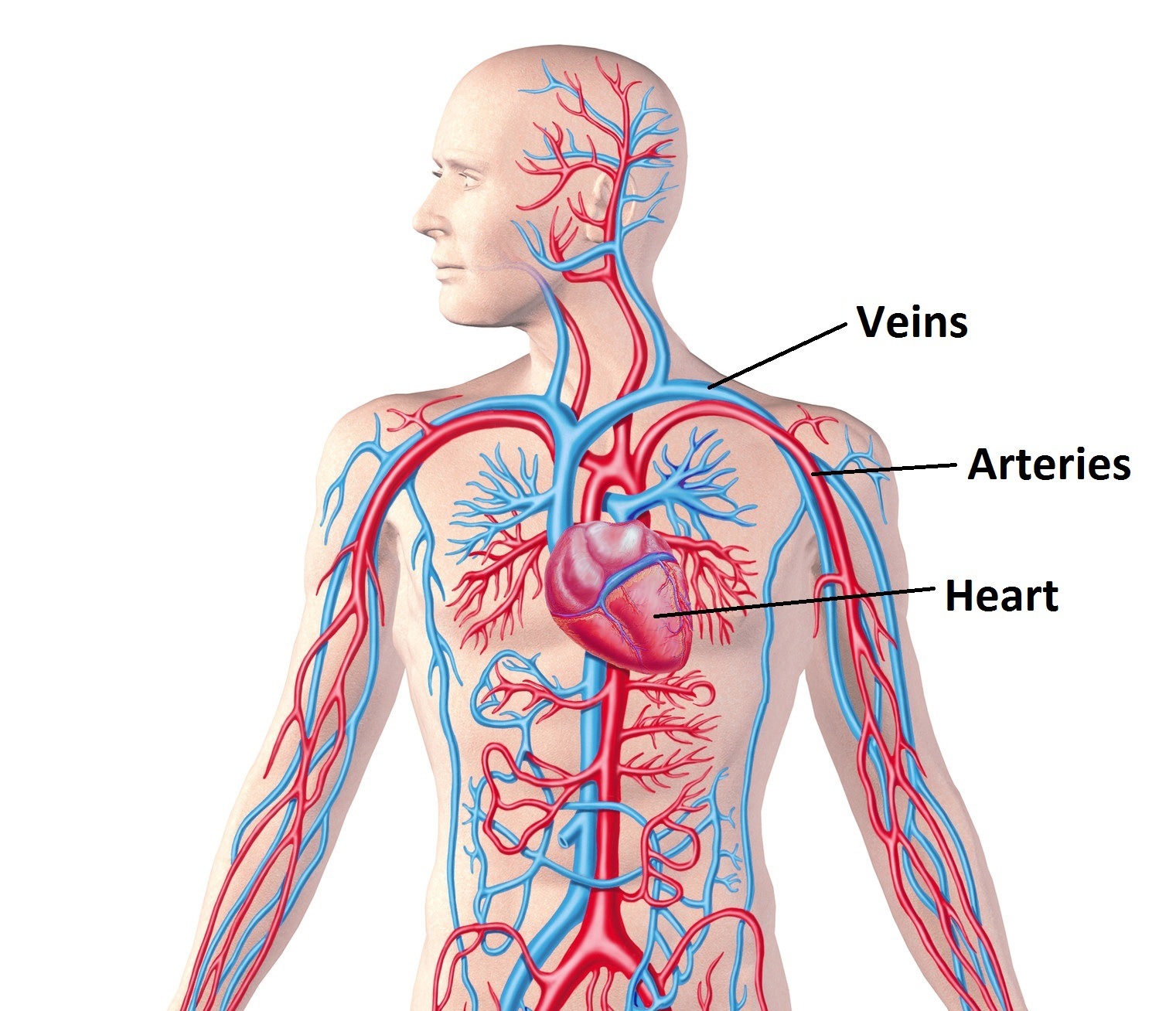
The body has several organ systems. Which organ system is pictured here?
muscular system
skeletal system
digestive system
circulatory system
respiratory system
nervous system
Select the artery that pumps red blood cells carrying carbon dioxide into the lungs.
Which part of the heart if the "left atrium"?
Which vessel brings blood from the brain to the heart?

What is the primary function of this body system? The primary function of the (a) system is to deliver (b) and (c) to the body
Place the following on the correct area of the body.
Select 3 points where oxygenated blood passes through
Identify the blood vessels
(Not all are used)
Brachiocephalic artery
Jugular vein
Carotid artery
Subclavian vein
Select the vein that pumps red blood cells carrying carbon dioxide into the heart.

Match the system to its function.
respiratory
to exchange 02 and CO2
immune
to fight pathogens and illnesses
endocrine
to use hormones to send our body message
muscular
to help us move and protect our organs
Label the inferior vena cava.
This chamber of the heart RECEIVES blood from the body.
Which of the following is a common symptom of atrial fibrillation?
Sudden weight gain
Irregular or rapid heartbeat
Blurred vision
Persistent cough
What is a typical treatment option for managing atrial fibrillation?
Antibiotics
Blood thinners (anticoagulants)
Insulin injections
Physical therapy
Which of the following is a risk factor for developing atrial fibrillation?
Low salt intake
Young age (under 20)
Frequent exercise
High blood pressure
What is an aneurysm?
A type of heart rhythm disorder
A type of heart valve
A bulge or ballooning in the wall of a blood vessel due to weakness
A blood clot in the leg
Which of the following is a common risk factor for developing an aneurysm?
Young age
High blood pressure
Low cholesterol
Frequent exercise
What is a possible complication if an aneurysm ruptures?
Severe internal bleeding and potentially life-threatening consequences
Improved blood flow
Increased heart rate only
Lower blood pressure
Which of the following is a common trigger for angina symptoms?
Sleeping
Drinking water
Eating fruits
Physical exertion or emotional stress
What is the main difference between stable angina and unstable angina?
Stable angina is relieved by rest or medication, while unstable angina may occur unpredictably and is not easily relieved.
Unstable angina is not related to heart disease.
Stable angina causes severe chest pain, while unstable angina does not cause pain.
Stable angina occurs at rest, while unstable angina only occurs during exercise.
Which medication is commonly used to relieve angina attacks?
Insulin
Paracetamol
Nitroglycerin
Antibiotics
What is arteriosclerosis?
A genetic disorder affecting red blood cells.
An infection of the heart valves.
A disease that affects only the veins in the body.
A condition where the arteries become narrowed and hardened due to a buildup of plaque.
Which of the following is a common risk factor for developing arteriosclerosis?
Low blood pressure
High cholesterol levels
Frequent exercise
Young age
What is a possible complication of untreated arteriosclerosis?
Increased flexibility of arteries
Improved blood flow
Enhanced immune response
Heart attack or stroke
Which of the following is a major risk factor for developing atherosclerosis?
Young age
Low blood pressure
High levels of LDL cholesterol
Regular physical activity
What can atherosclerosis in the coronary arteries lead to?
Stroke
Heart attack (myocardial infarction)
Asthma
Kidney stones
Which lifestyle modification is most effective in slowing the progression of atherosclerosis?
Engaging in regular exercise and eating a healthy diet
Reducing fruit and vegetable consumption
Smoking cigarettes
Increasing saturated fat intake
What is hypertension?
A condition where blood sugar levels are elevated.
A condition where blood pressure is consistently higher than normal.
A condition affecting only the lungs.
A type of heart valve disease.
What can be a potential complication of uncontrolled hypertension?
Kidney damage
Improved vision
Increased energy levels
Stronger bones
What is considered a normal range for adult systolic blood pressure?
90-120 mmHg
160-180 mmHg
70-80 mmHg
130-150 mmHg
Which of the following best describes normal diastolic blood pressure in a healthy adult?
Above 100 mmHg
60-80 mmHg
Below 60 mmHg
90-100 mmHg
Why is it important to maintain normal blood pressure levels?
To cause frequent headaches
To increase cholesterol levels
To reduce the risk of heart disease and stroke
To slow down metabolism

Match the following
The amount of force per unit area when the heart contracts.
Systole
The amount of force per unit area when the heart relaxes.
Diastole
Heart rate measured in beats per minute (bpm).
Pulse
The force per unit area exerted on a vessel wall by the blood inside.
Blood pressure
The sound associated with the heart valves closing during the cardiac cycle.
Heartbeat
Match part of the blood with its job
red blood cells
carry oxygen and nutrients to the body
white blood cells
fight pathogens
plasma
water, nutrients, minerals
platelets
clot the blood so you stop bleeding
Blood flowing between the heart and lungs is (a) .
Blood flowing around the body is (b) .
Match the following cardiovascular terms with the correct definition.
Procedure is done to open up clogged arteries
Balloon angioplasty
A disorder of the valves of the heart
Heart murmur
A condition where the arteries harden and lose their elasticity
Arteriosclerosis
A clot of platelets, proteins, and blood cells forms at the site of blood vessel damage
Thrombosis
A piece of a thrombus breaks free and travels through the bloodstream
Embolism
Three Types of Blood Vessels
Vein
Carry oxygen poor blood to the heart
Artery
Carry blood AWAY from the heart
Capillary
One cell thick
Match the description to the cardiovascular disease symptom.
High Blood Pressure
Hypertension
Plaque build up on the artery walls
Atheroscelerosis
When the heart stops beating
Cardiac arrest
Low amount of red blood cells
Anemia
(a) of blood vessels in skeletal muscles prepares the body to run faster or fight better.
Which blood vessel has valves and which blood vessel take blood away from the heart
vein
artery

Universal Reciever
No Antibodies
Universal Donor
No Antigens
Coronary Circulation
The heart and parts of the heart
Which blood group is considered the universal donor in blood transfusions?
B-
AB+
O-
A+
Why is it important to match blood types before a transfusion?
To avoid the risk of blood clotting
To increase the speed of recovery
To prevent allergic reactions
To prevent the recipient's immune system from attacking the donor blood
Which component determines whether a person is Rh positive or Rh negative?
The level of platelets in the blood
The presence or absence of the Rh antigen on red blood cells
The amount of hemoglobin in the blood
The number of white blood cells

