
 Worksheets
Chapter 9 - Constitution PRACTICE
Total questions: 35
Worksheet time: 20mins

The U.S. Constitution it has changed with time - because of this it is often called_____________
A. a 'living document'
B. the Supreme Law of the Land
C. WRONG - it hasn't changed!
D. the Bill of Rights

First words of the Constitution...
A. "Four score and seven years ago"
B. "We the People..."
C. "In the Course Human Events..."
D. "I was a ghost, I was alone
In the dark"
E. "It was the best of times, it was the worst of times"

What is the primary work of Congress?
A. to argue for their political party
B. to debate whether laws are constitutional
C. to determine who will be the candidate for president
D. to be the chief executives of the states they represent
E. to make laws for the country
What is the final step before a national bill becomes a law?
A. It is signed by the president.
B. It is voted on by the citizens.
C. It is passed by the Supreme Court.
D. It is approved by the state legislators
E. the Senate votes for it

Why does each state have two senators?
A. to balance the rights of large and small states
B. so the Senate does not become overcrowded
C. to assure there are enough people to pass the laws
D. so that one can take over if the other is unavailable
E. WRONG! the number of Senators is based on the Population of the state
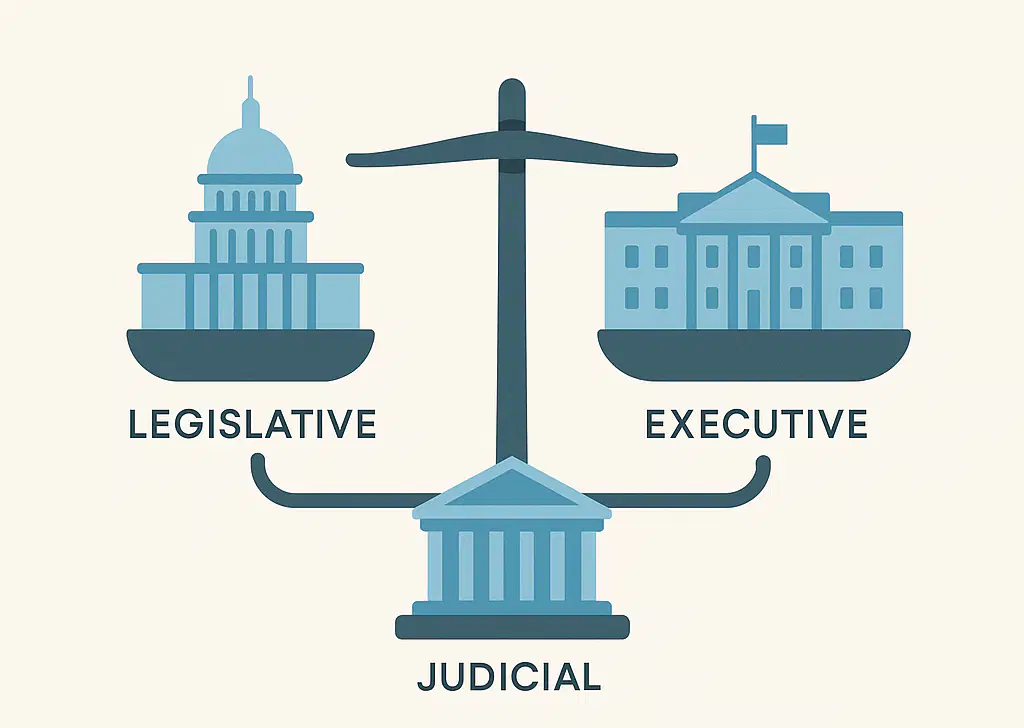
What is the purpose of the system of checks and balances?
A. to list the responsibilities of elected officials
B. to make it difficult to amend the Constitution
C. so the President has unyielding power
D. to share power between state and national governments
E. to prevent any one branch from becoming too powerful

All of these are duties of the executive branch except
A. negotiating treaties.
B. carrying out the laws.
C. proposing new taxes.
D. nominating federal judges.
E. choosing a cabinet
Why does the Constitution establish the principle of majority rule?
A. so decisions are based on what the president wants
B. so decisions represent what most of the people want
C. so decisions are made only when more than half of the people vote
D. so decisions are made when most of the members of Congress are present
Which of these describes the responsibility of the judicial branch?
A. to put laws into effect
B. to resolve disputes under the law
C. to veto decisions of the Supreme Court
D. to propose bills needed to achieve justice
What name is given to the Supreme Court’s power to declare a law unconstitutional?
A. federalism
B. veto power
C. impeachment
D. judicial review

The U.S. population can directly participate in government in all of these ways except through
A. passing laws.
B. joining interest groups.
C. participating in elections.
D. belonging to political parties.
Which of these powers is shared by state and national governments?
A. raising taxes
B. declaring war
C. printing money
D. negotiating treaties
Which of these refers to the sharing of power between national and state governments?
A. bicameral
B. federalism
C. commerce
D. nationalism

A (an) ________________ to the Constitution can be ratified by three-fourths of the state legislatures.
A. article
B. preamble
C. amendment
D. epilogue
Which of these can propose an amendment to the Constitution?
A. Congress
B. governors
C. presidents
D. Supreme Court
The number of representatives each state has in the House depends on
A. how big the state is
B. the population of the state
C. when the state was admitted
D. how rich the state is
The Electoral College was established by the Founders because
A. they wanted to keep the common people from making a mistake
B. they wanted a longer election period
C. they wanted to confuse the people
D. none of the above
There are _______ judges on the Supreme Court.
A. seven
B. nine
C. eleven
D. fifteen
The Legislative Branch checks on the Executive Branch by
A. using the veto
B. reducing the President’s salary
C. declaring laws unconstitutional
D. passing laws over a veto by a 2/3 vote
Who appoints justices to the Supreme Court?
A. the President
B. the Chief Justice
C. the Senate
D. the Vice President
The system of Checks and Balances was established to
A. Protect the people’s freedom of expression.
B. Control government spending.
C. Prevent branches of government from abusing power.
D. Protect states’ rights.
Who appoints Cabinet members?
A. The President
B. The Supreme Court
C. The House
D. The states
How long is the length of term of a member of the House of Representatives?
A. 2
B. 4
C. 6
D. 8
The Constitution forbids states to
A. tax
B. make laws
C. coin money
D. keep a militia
The Amendment which gave women the right to vote is the
A. 19th
B. 13th
C. 22nd
D. 26th
Label the following items on the illustration of the checks and balances of the branches of the federal government
Declares orders unconstitutional
Declare laws unconstitutional
Veto
Override a veto
Appoints new justices
Confirms new justices
Overiding a veto, is a check the (a) Branch has over the (b) Branch
Match the following checks and balances of the US government
Veto Laws
Executive over Legislative
Laws unconstitutional
Judicial over Legislative
Impeach the President or Judge
Legislative over Executive and/or Judicial
Calling a congressional special session
Executive over Legislative
Approve Federal Judges
Legislative over Judicial
One way the Judicial Branch checks the power of the Legislative Branch is (a) .

Why did Congress pass the War Powers Resolution?
Congress wanted to expand its power to provide funding to the military.
Congress wanted to limit the president's power to send US troops into armed conflicts.
Congress wanted to regain control over its treaty-making powers.
Congress wanted to give the president the power to make battlefield decisions.

Which is a "check" the president has over the judicial branch?
deciding the meaning of a law
making a treaty with another country
nominating a Supreme Court justice
rejecting a law passed by Congress

An example of Congress checking the President is what?
overriding a veto by 2/3
saying laws are illegal
vetoing bills

Which is an example of the President checking Congress?
Picking a judge
Questioning Laws
Vetoing (saying no) bills

An example of the Supreme Court checking the President is what?
Vetoing bills
Approving judges
Saying presidential acts are unconstitutional/ illegal

