
 Worksheets
Unit 2 Review
Total questions: 60
Worksheet time: 40mins

What is Cohesion?
Water molecules ability to stick to each other
Water molecules ability to stick to other surfaces
Water molecules ability to conduct electricity
Water molecules ability to melt
What is Adhesion?
Water molecules ability to stick to each other
Water molecules ability to stick to other surfaces
Water molecules ability to conduct electricity
Water molecules ability to melt

What water phenomenon can be observed in this photo?
Water dissolving
Capillary Action
Chemical Reaction
Photosynthesis

Which TWO water properties can be observed in this picture?
Capillary Action
Cohesion
Adhesion
Freezing

How is this lizard able to run across water?
Capillary Action
The lizard is really light
The water is a little frozen
Surface Tension
Why does water ice have a lower density than liquid water?
Because it floats
Because it is a crystal
Because the molecules expand in volume as water freezes into a crystal
Because ice is colder than water
A substance that is more basic has a _____ pH than a substance that is acidic.
In a test of pH levels, a baking soda has a pH of 9 and bleach has a pH of 12. What is true about there relationship?
Both of the solution are Bases
Both of the solution are Acids
The Baking soda is an acid and the Bleach is a base
The baking soda is a base and the Bleach is an Acid.
An acid
is a substance that releases H+ ions when dissolved in water
is a substance that does not release any ions when dissolved in water
is a substance that releases OH- when dissolved in water
releases an equal amount of OH- and H+ ions when dissolved in water


An ionic bond is formed when
Valence electrons are shared.
Valence electrons surround the cations.
Valence electrons are transferred between atoms.
Valence electrons are completely transferred between two metals.
What is a valence electron?
an electron that is found in the outermost shell of an atom
an electron found in the innermost shell of an atom
an electron found in the middle shell
an electon found in the nucleus
The chemical bond formed when two atoms share electrons is call a(n)
covalent bond
ionic bond
metallic bond
electron bond
An atom with 1 valence electron 'needs' a full shell, so it can either gain 7 electrons or lose 1. Which is more likely to occur?
nothing
gain 7
lose 1

How many valence electrons are shown in the diagram?
16
7
6
2
In an endothermic reaction, energy is _________.
absorbed
released
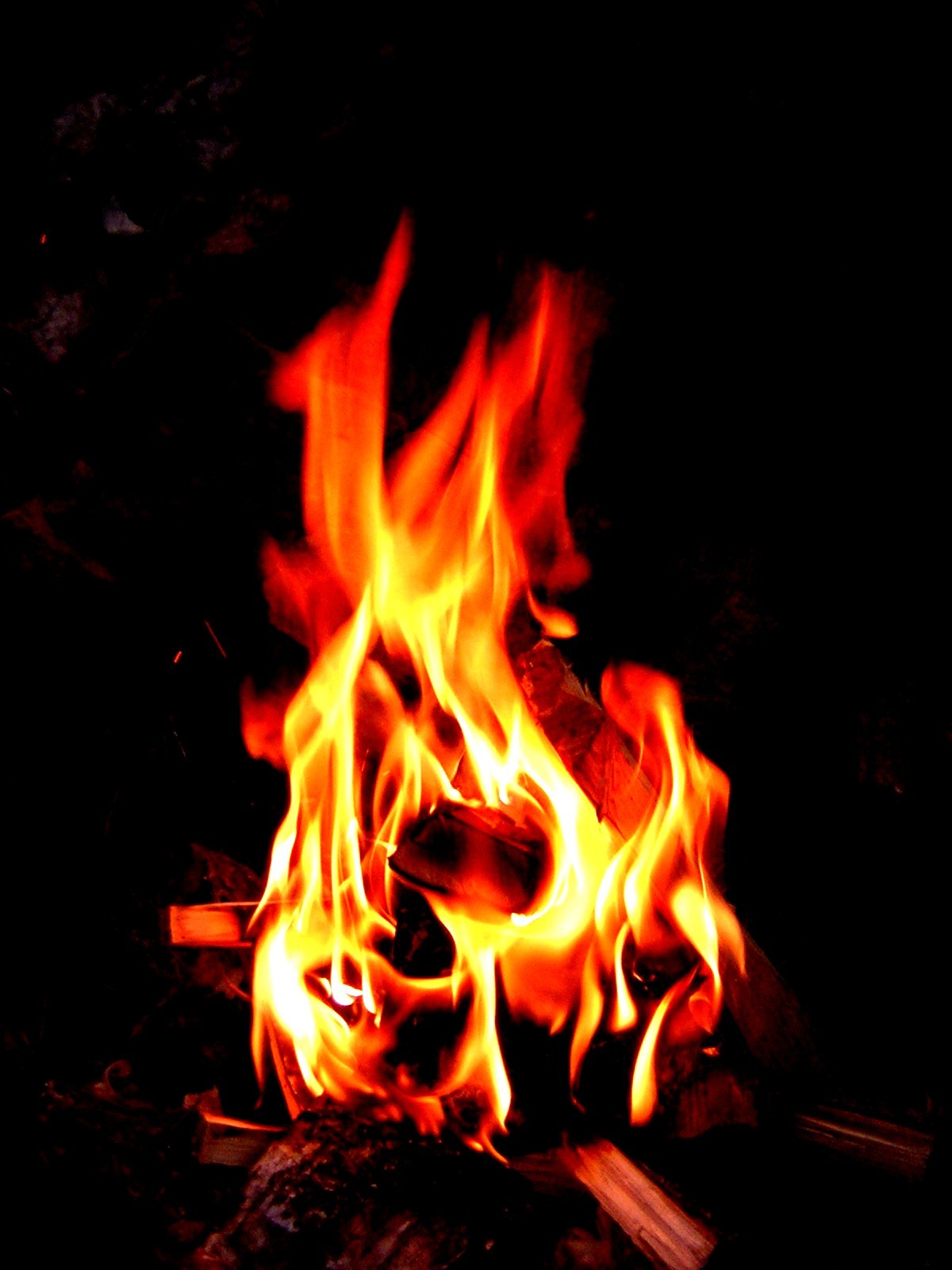
_____ reactions usually feel hot!
endothermic
exothermic
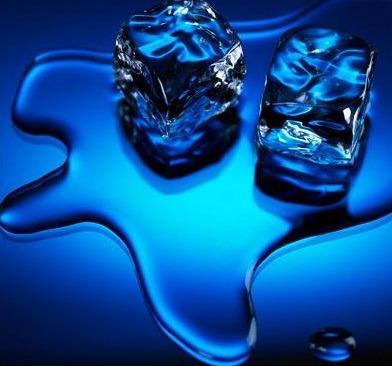
____ reactions usually feel cold.
endothermic
exothermic
What instrument would you use to detect an endothermic or exothermic reaction?
triple beam balance
ruler
thermometer
The initial temperature was measured to be 20oC and the final temperature was 45oC. The reaction was
exothermic
endothermic
The initial temperature was measured to be 20oC and the final temperature was 10oC. The reaction was
exothermic
endothermic

View Figure 1 (if not visible)


Which macromolecule is shown?
lipid
protein
nucleic acid
carbohydrate
How how carbohydrates and lipids similar?
both contain C, H, O, N, P and store energy
both contain C, H, O, N and give energy
both contain C, H, O, N, S and store energy
both contain C, H, O and give energy
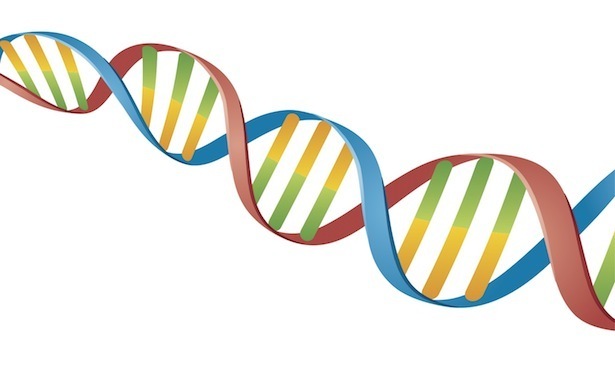
What is the monomer of lipids?
Amino Acids
Monosaccharides
Fatty Acids
DNA/RNA
What is the function of lipids?
Control rates of reactions and forms muscle and bones.
Main source of energy.
Energy storage, protection, waterproofing and insulation.
Store and transmit genetic information.
What is the function of proteins?
Main source of energy.
Energy storage, protection, waterproofing and insulation
Store and transmit genetic information.
Control rates of reactions and form muscles and bones.
What are examples of carbohydrates?
triglycerides, waxes, fat, and oils
form polypeptides such as antibodies, enzymes, and hormones
glucose, fructose, cellulose, and lactose
DNA and RNA
What are examples of proteins?
triglycerides, waxes, fats, and oils
form polypeptides such as antibodies, enzymes, and hormones
glucose, fructose, cellulose, and lactose
DNA and RNA
What are examples of lipids?
triglycerides, waxes, fats, and oils
form polypeptides such as antibodies, enzymes, and hormones
glucose, fructose, cellulose, and lactose
DNA and RNA
Which of these is the maintenance of constant internal conditions in an organism?
adaptation
homeostasis
cell
structure speciation
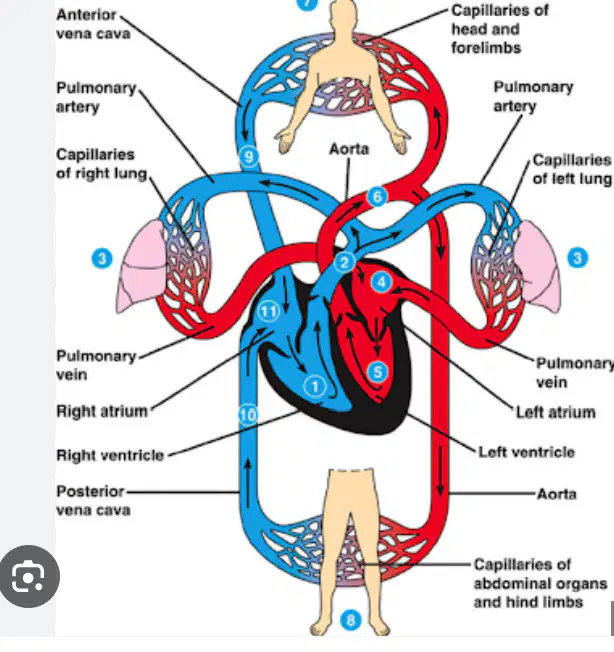
How does the circulatory and respiratory system work together?
The respiratory system makes the red blood cells and the circulatory system filters the air.
The respiratory system carries the oxygen around the body and the circulatory system provides the oxygen.
These two systems do not work together.
The respiratory system gets the oxygen and the circulatory system carries the oxygen around the body.
What would happen to the stomata of a plant in case of sudden drought?
closure of the stomata to prevent excess water lost.
closure of the stomata to allow excess water to leave the plant.
open of the stomata to prevent excess water lost.
open of the stomata to allow excess water to leave the plant.
Which system from our body makes our blood?
circulatory system
digestive system
nervous system
skeletal system
These are three systems that work together to bring oxygen and nutrients to the body.
endocrine, integumentary, and circulatory system.
nervous, digestive, and circulatory system.
circulatory, respiratory, and digestive systems.
The structure of a human skin cell differs from that of a human muscle cell. The two cells most likely have different __________.
genes
functions
life processes
ways of dividing
What is the role of a receptor in helping an organism maintain homeostasis?
receives messages sent by the control center
carries out a response to restore internal conditions
detects stimuli and sends information to the control center
compares current conditions with ideal values for those conditions
On a hot day, which of these is an outward sign that your body is working to maintain its internal temperature (thermoregulation)?
sunburn
sweating
dry mouth
slow breathing
Which of the following statements correctly describes the relationship between tissues and organs?
Several organs interact to help a tissue carry out a specialized function
One type of specialized tissue is found in each organ.
Organs are made up of different types of tissue that work together.
Tissues compete with each other to carry out the main function of the organ.
The ____________ have the following organs: the mouth, pharynx (throat), esophagus, stomach, small intestine, large intestine, rectum, and anus.
digestive system
nervous system
circulatory system
integumentary system

