
 Worksheets
Unit 4 review
Total questions: 70
Worksheet time: 55mins
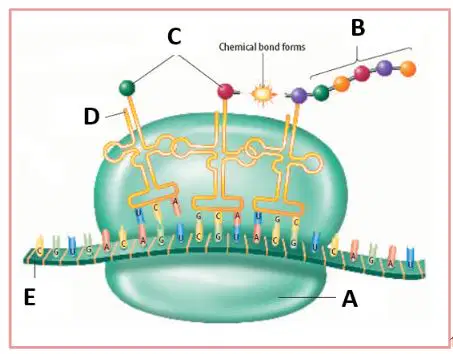
Match the following parts of Translation in the picture.
A
Ribosome
B
Protein
C
Amino Acid
D
tRNA
E
mRNA
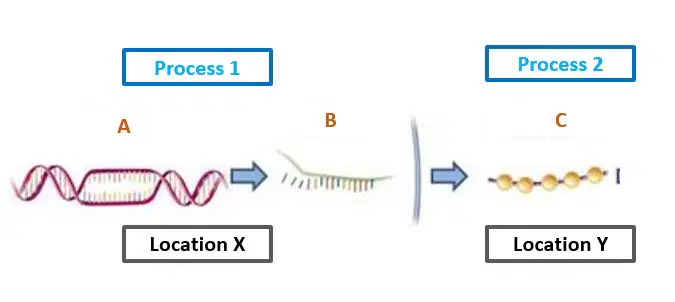
Match the letters in the diagram to what each represents in the process of protein synthesis
A
DNA
B
mRNA
C
Protein
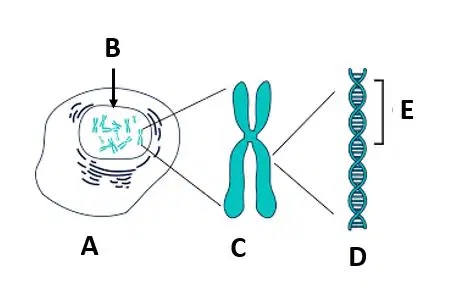
Match the following
A
The Cell
B
The Nucleus
C
Chromosome
D
DNA
E
Gene
Organize these options into the right categories. Does the term match TRANSCRIPTION or TRANSLATION?
DNA turns into mRNA
mRNA turns into a protein
Happens in the nucleus
Happens in the cytoplasm
The ribosome builds proteins
The first step of protein synthesis
The second step of protein synthesis
tRNA brings amino acids to the ribosome
Which of the following is the complementary DNA sequence to this DNA strand:
AGCTTATCGG
TCGAATAGCC
UCGAAUAGCC
GACAATCGTT
Which of the following is the complementary mRNA sequence to this DNA strand:
AGCTTATCGG
TCGAATAGCC
UCGAAUAGCC
GACAATCGTT
Match the letters in the diagram to what each represents in the process of protein synthesis
Process 1
Transcription
Process 2
Translation
Location X
Nucleus
Location Y
Cytoplasm
Identify the types of mutations in the pictures

Substitution

Inversion

Deletion

Insertion
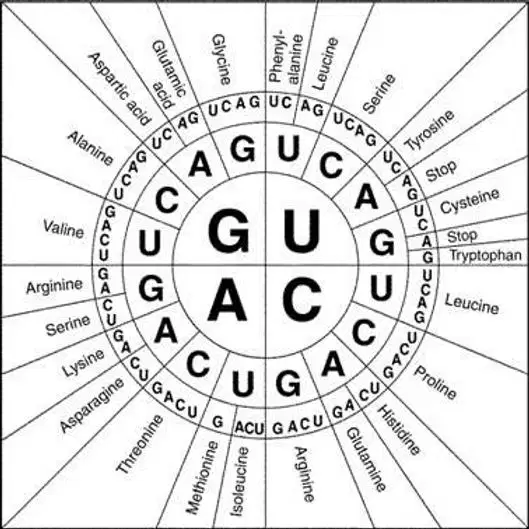
Which amino acid is made by the codon CCA?
Proline
Threonine
Glutamine
Asparagine
DNA replication would have to occur in the
Nucleus
Cytoplasm
Ribosome
Nucleolus
Which molecule brings amino acids to the ribosome?
tRNA
mRNA
the rough ER
rRNA
Which of the following is a type of RNA?
mRNA
tRNA
rRNA
All of these are types of RNA
Which organelle contains rRNA and reads the mRNA to synthesize a protein?
Ribosome
Nucleus
Cytoplasm
Nucleotide

What brings the amino acids to the ribosome to assemble a protein?
DNA

What type of RNA is shown in this image?
rRNA
mRNA
tRNA
What is the role of RNA?
It helps in the digestion of proteins.
It uses coded DNA instructions to direct production of proteins.
It is the master blueprint for cellular function.
It acts as a storage molecule for genetic information.
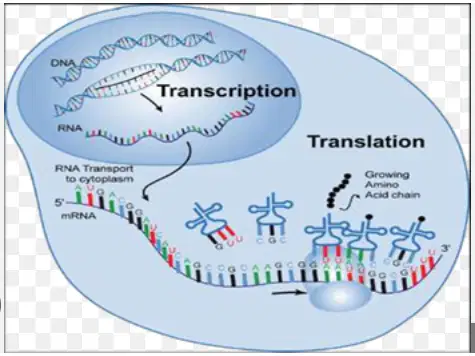
What happens during RNA transcription?
DNA is replicated to form a new strand of DNA.
mRNA is decoded to make a protein.
DNA makes a copy of itself.
DNA is used to make an mRNA to carry a message to the ribosome.
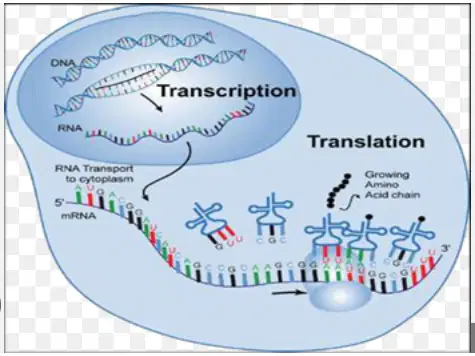
What is the process called when mRNA is decoded to make a protein?
DNA Replication
RNA Transcription
Translation
Protein Synthesis
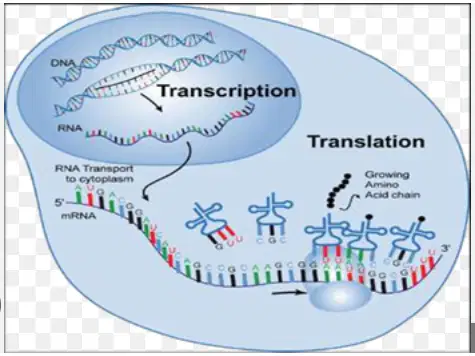
During protein synthesis, what is the function of tRNA?
It carries amino acids to the ribosome.
It transcribes DNA into mRNA.
It forms the structure of ribosomes.
It modifies mRNA before translation.
Where does tRNA attach to the mRNA?
At the ribosome
At the amino acid
At the anticodon
At the codon

tRNA molecules match the mRNA codons with a(n):
Codon
Anti-Codon
Intron
Methylated Cap

Translation is a process that produces
mRNA
chromosomes
proteins
tRNA

As the MRNA and TRNA meet in the ribosomes, amino acids bond together making a (a) AKA protein
What is the order for Protein Synthesis?
Transcription -> Translation -> Protein
Translation - > Transcription -> Protein
Protein -> Transcription -> Translation
Translation -> Protein -> Transcription

AGU


What does semi-conservative mean?
both strands are old
one strand is old and one strand is new
both strands are new
both strands are half made

The picture below shows the steps of DNA replication beginning with step one and ending with step three.
Because you are reusing the old, or parent, DNA strand DNA replication is said to be
Semi- Conservative
Semi-discontinuous
Continuous
Fully-Conserveative
The mutated DNA segment is TTCGCAAG. This is an example of ___ mutation.

GAG-CTC-GAC-AGA
Mutant
GAG CTC-CAC-AGA
Which statement best defines a mutation?
a physical trait that negatively impacts the organism
an adaptive trait that allows the individual to be better fit for survival
a change in the order, number, or type of bases in the genetic code
an identical copy of the original DNA strand
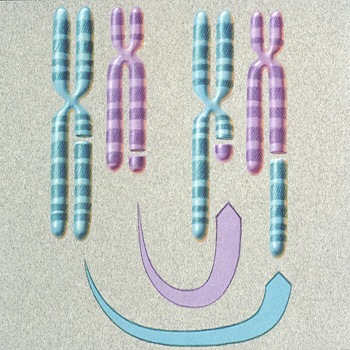
______________________________________ is a type of chromosomal mutation when part of the chromosome breaks off and attaches to another chromosome.
duplication
translocation
subtraction
deletion
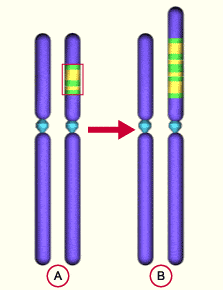
This type of chromosomal mutation produces an extra copy of all or part of the chromosome:
multiplication
replication
duplication
inversion
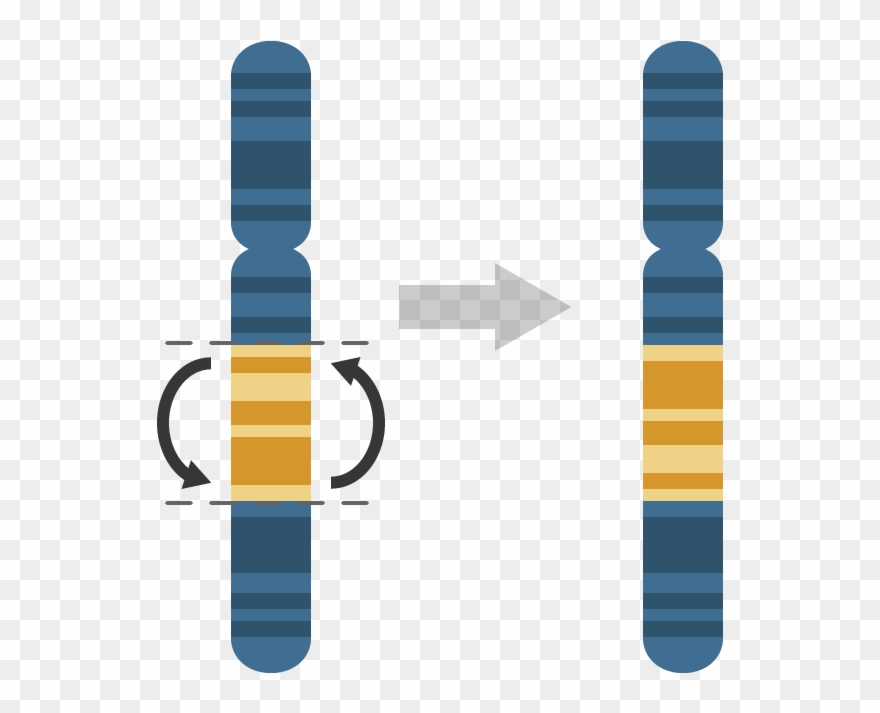
If part of the chromosome is turned around in the opposite direction this is called:
inversion
translocation
deletion
duplication
When large sections of a DNA molecule get altered (duplicated, deleted, broken off and attached to other DNA molecules, etc).
mutation
gene mutation
chromosomal mutation
somatic mutations
When small sections of a DNA molecule get altered it is called a(n) _________
mutation
gene mutation
chromosomal mutation
somatic mutations
Which of the following applies to GERM-LINE MUTATIONS
They are only found in some body cells
They are found in gametes
They can be inherited or passed on
They are not inherited or passed on

What mutation has occurred here?
T-G-A-C-C-A
T-G-A-G-C-A
Substitution
Deletion
Insertion
Frameshift

ATT-TGA-GCC- Original
ATT-GAG-CC - Mutated
The example above is an example of a
Insertion- Frameshift
Deletion- Substitution
Deletion -Frameshift
All of the above

This is a(n)
translocation
insertion
duplication
inverson

This is a(n)
translocation
insertion
duplication
inverson

This is a(n)
translocation
insertion
duplication
inverson

Part of a chromosome
is deleted.
This is an example of
Substitution - Gene Mutation
Translocation - Chromosomal Mutation
Deletion - Chromosomal Mutation
Insertion - Gene Mutation

Part of a chromosome is reversed.
Inversion - Chromosomal Mutation
Deletion - Gene Mutation
Translocation - Chromosomal Mutation
Insertion - Gene Mutation
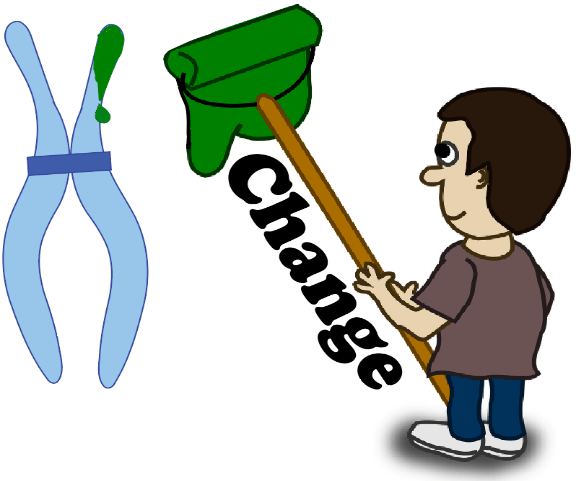
Mutations that involve parts of or all of
a chromosome
Replication
Deletion Mutation
Chromosomal Mutation
Transcription

Name the process happening at number 1 in the diagram.
DNA Replication
Translation
Mutation
Transcription

What do you think is the correct order of DNA replication?
Which is the first step of DNA Replication?
DNA Helicase unwinds original DNA strand
RNA Primase lays down RNA primer for new nucleotide bases.
DNA polymerase builds new strands by bring in new nucleotide bases.
Ligase knits together fragments on lagging strand
Which is the second step of DNA Replication?
DNA Helicase unwinds original DNA strand
RNA Primase lays down RNA primer for new nucleotide bases.
DNA polymerase builds new strands by bring in new nucleotide bases.
Ligase knits together fragments on lagging strand
Which is the third step of DNA Replication?
DNA Helicase unwinds original DNA strand
RNA Primase lays down RNA primer for new nucleotide bases.
DNA polymerase builds new strands by bring in new nucleotide bases.
Ligase knits together fragments on lagging strand
Which statement is true about RNA?
RNA is usually single stranded and contains the base uracil
RNA is usually double stranded and contains the base thymine
RNA is made in the nucleus and stays there to carry out its function
All of the above are true.
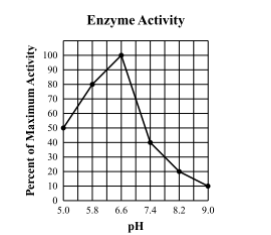

What is indicated by letter C?
enzyme
product
substrate
active site
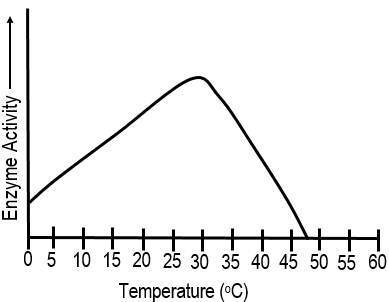
What is the role of mRNA in protein synthesis?
It carries genetic information from DNA to the ribosome.
It forms the structure of ribosomes.
It brings amino acids to the ribosome.
It modifies proteins after synthesis.
Which type of mutation involves the addition of one or more nucleotide base pairs into a DNA sequence?
Substitution
Deletion
Insertion
Inversion
What is the complementary DNA strand for the sequence: ACGTACG?
TGCATGC
UGCAUGC
ACGTACG
CGTACGT

