
 Worksheets
Personal Finance Semester 1 test
Total questions: 60
Worksheet time: 3hrs 18mins
What is the primary difference between a job and a career?
A job is a long-term professional journey, while a career is a short-term employment position.
A job is a short-term employment position, while a career is a long-term professional journey.
A job requires a college degree, while a career does not.
A career is always more financially rewarding than a job.
Which of the following is a benefit of paying for post-secondary education?
It guarantees a high-paying job immediately after graduation.
It increases the likelihood of higher lifetime earnings.
It eliminates the need to pay taxes.
It ensures job security in any field.
What is the purpose of income taxes?
To fund personal savings accounts.
To provide financial support for government services and infrastructure.
To discourage people from earning too much money.
To ensure everyone has the same income.
What is a key aspect of managing your income effectively?
Ignoring all expenses and focusing only on income.
Creating and sticking to a budget.
Spending more than you earn to maintain a high lifestyle.
Avoiding any form of savings.
What does the term "voluntary compliance" refer to in the context of taxes?
Choosing whether or not to pay taxes.
The expectation that individuals will report their income and pay taxes honestly.
Paying taxes only if you agree with government policies.
Volunteering to pay extra taxes to support government projects.
What is the relationship between income and taxes?
Income is not affected by taxes.
Taxes are a percentage of income that individuals and businesses must pay to the government.
Taxes increase income for individuals.
Income and taxes are unrelated financial concepts.
How can goal setting benefit personal financial management?
It allows for random spending without consequences.
It provides a clear plan for saving and spending, helping to achieve financial objectives.
It ensures that all income is spent immediately.
It eliminates the need for budgeting.

Who primarily uses our tax money?
Your employer
Large corporations
Federal and state government
Local Businesses

Our tax money is spent on all of the following EXCEPT:
Social Security
The Military
Private School Education
National Parks

Which of the following taxes is applied to wages, salaries, dividends, and interest earned?
Corporate Income Tax
Income Tax
Estate Tax
Excise Tax
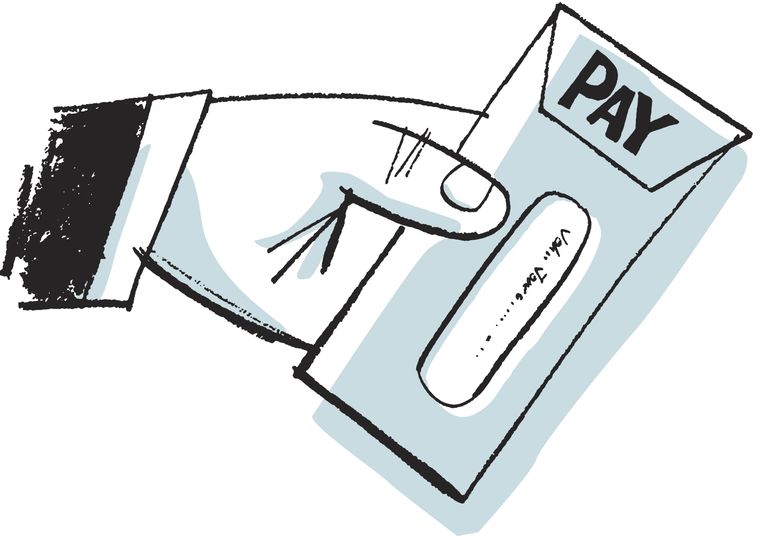
What item would you DEFINITELY see on a paystub?
Retirement
Healthcare
Gross Pay
Your occupation/role
Which is TRUE if you do not pay your taxes?
You owe twice as much the following year
You're more likely to be approved for low interest loans
You cannot go to jail (but you will be heavily fined)
Your credit score may be impacted
Taxes are collected by
Businesses
Parents
Foreign countries
Government
IRS stands for
Internal Revenge Service
International Revenue System
Internal Revenue Service
Inspection Ravioli Sauce
A financial institution that provides compensation in case of a disaster or accident is called a(n)
bank.
credit union.
insurance company.
investment bank.
A stock broker is BEST described as a
company that provides advice on insurance.
business that provides financial services to others.
person who makes loans to people who need to borrow money.
person who assists others in buying investments such as stocks and bonds.
Which of the following options would provide the GREATEST protection for your coin collection?
Buying an insurance policy
Burying it in the backyard
Buying a lock box to keep in the closet at home
Getting a safety deposit box at your bank
The primary difference between a bank and a credit union is
there is no primary difference between a bank and a credit union.
a credit union provides financial services for individuals and a bank provides financial services for businesses.
a bank is a for-profit financial service provider and a credit union is a non-profit financial service provider.
a credit union provides services to anyone who wants to use it and a bank requires you to have a membership.
The purpose of overdraft protection is to
allow you to write checks for insufficient funds without getting caught.
allow you to write checks when you do not have enough money in the bank.
borrow money from the bank when you need more money.
allow you to move money from your savings account when your checking account is too low to cover your payments.
A company than specializes in home loans is called a(n)
mortgage company.
insurance company.
bank.
credit union.
Financial service providers charge fees to
take advantage of their customers.
offset the cost of low interest rates.
make increased profits for their stockholders.
cover the cost of providing services to their customers.
The PRIMARY difference between a debit card and a credit card is
credit cards charge interest and debit cards pay interest.
credit cards pay interest and debit cards change interest.
credit cards charge interest and debit cards directly deduct funds from your account.
credit cards directly deduct funds from your account and debit cards allow you to buy now/pay later.
A check is defined as
a written document showing the balance in your checking account.
an automated order transferring money from your savings to your checking account.
a written document that allows you to buy goods and services today and pay for them in the future.
a written document ordering a financial institution to transfer money from your account to someone else.
When you receive your monthly bank statement, it is recommended that you
file it with your other personal records.
use it to reconcile your checking account
use it to record all of your transactions for the past month.
review it carefully, then shred it before throwing it in the trash.
Writing a check for insufficient funds (commonly called a “hot check”
can be easily avoided if you do not use an ATM
is impossible as long as you have checks in your checkbook.
can result in expensive fees, fines and even jail time, if convicted.
is really no big deal as long as you pay the fees and cover the check amount.
In which format would you write the amount of the check in the small space that starts with the dollar sign?
100.00
One hundred dollars and no/100
100 dollars and 00 cents
One hundred dollars and no cents
Deposits represent
money that is subtracted from your checking account.
money that is available in your checking account.
money that is added to your checking account.
purchases made with a debit card.


A key difference between saving and investing is
Saving is for everyone, investing is for the wealthy
Your money is insured when investing, it is not in savings
Investing has a guaranteed return, savings does not
Saving is for emergencies & goals, investing is for long-term wealth

Which would be considered the highest risk investment type?
Stock
Mutual Fund
Bond
Money Market Account

The relationship between risk and return can be stated as
Higher risk indicates higher return
Higher risk indicates lower return
Lower risk indicates higher return
No relationship exists between risk and return
Which of the following is true with regard to gross pay and net pay?
Net pay is gross pay minus savings.
Gross pay is usually less than net pay.
Net pay is gross pay minus deductions.
Net pay is gross pay plus Social Security contributions.

Life expectancy refers to
Your perception of how long you expect to live.
An estimate of how much money you need for retirement.
A statistical estimate of the number of years you will live in retirement.
A statistical measure of the average life span of a specific population.
When planning for retirement, you need to determine
how much money you need to live in a nursing home or retirement center.
how much money you want your children to inherit.
how much money you will need and how many years you will need it.
where you plan to live after you quit working.
Which of the following statements about Social Security is the MOST accurate?
Even if you do not start saving and planning for retirement, you will earn enough money from Social Security to maintain your current lifestyle.
Social Security was originally designed to be a supplemental income for people over the age of 65.
Because Social Security is a government program, it is guaranteed to be there when you retire.
The average income from Social Security is about $40,000.
If you are concerned about your investment losing money instead of appreciating, then you are worried about ______________ risk.
market
inflation
fraud
financial
Diversification refers to
the portion of your retirement investment in stocks versus bonds.
your ability to eliminate risk from your retirement planning strategies.
a risk management strategy where you include a wide variety of investments within your portfolio.
selecting investment options that you know the most about to increase your rate of return.
The potential risk that you will lose your money due to a company going bankrupt is called _______________ risk.
market
fraud
corporate
financial
The BEST way to protect yourself from fraud risk is to
invest only with reputable companies.
ask your friends for suggestions before investing.
keep your money is a savings account at a local bank.
invest heavily in jewelry and gold.
IRA's are
Individual Retirement Accounts.
Integrated Retirement Accounts.
Inflation Resistant Accounts.
. Individual Retirement Authorities.
The risk that you have been tricked or deceived when making an investment is called
market price risk.
financial risk.
fraud risk.
inflation risk.
When borrowing money, the interest is
how interested you are in borrowing money
the cost you must pay in order to borrow money
the extra money you gain when borrowing money
the amount of money that you need to borrow
Using a person’s name or personal information without permission to make purchases or get loans is called
fraud.
acting.
identity theft.
impersonation.
If you become the victim of fraud or identity theft, you should
have a good laugh because it happens to everyone.
call the police immediately and report what happened.
contact the person or persons involved and tell them to stop.
keep quit about it because you made a bad choice and it is your fault.
“Dumpster Diving” refers to the practice of
going through someone’s trash to find any hidden treasures.
a new video game where you race dumpsters through a junk yard.
going through someone’s trash looking for personal information on it.
throwing a prize in a dumpster, then everyone jumps in to see who can
find it first.
One of the BEST ways to protect yourself from identity theft is
keeping your Social Security card in your billfold.
shredding all papers with personal information.
throwing away all credit card offers without opening them.
using your Social Security number as your driver’s license or ID number.

