
 Worksheets
Alberta Basic Licence Drivers Assessment
Total questions: 59
Worksheet time: 30mins
This sign indicates:
Lane ends, loss of right lane
Added lane (free flow)
Curve right
Dual turn lane ahead
Under the Graduated Driver Licensing program, a learner with a Class 7 licence is not permitted to drive a vehicle between the hours of:
9:00 A.M. and 5:00 P.M.
Midnight and 5:00 A.M.
10:00 P.M. and 6:00 A.M.
Midnight and 7:00 A.M.
What does a flashing yellow traffic light mean?
The traffic light will turn green
Stop until the light stops flashing
The traffic light will turn red
Proceed with caution
Unless otherwise posted, the school zone speed limits are in effect on school days during the following hours:
8:30 A.M. to 1 hour after sunset
8:00 A.M. to 9:30 A.M., 11:30 A.M. to 1:30 P.M. and 3:00 P.M. to 4:30 P.M.
8:30 A.M. to 9:30 A.M., 12:00 P.M. to 1:00 P.M. and 3:30 P.M. to 4:00 P.M.
8:00 A.M. to 4:30 P.M.
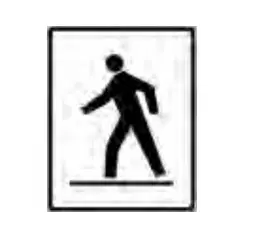
This sign indicates:
Playground zone
Pedestrian crosswalk
Designated school bus stop
School zone
When driving in the right lane on a highway, what should a driver do if another vehicle attempts to merge from an acceleration lane on the right?
Stop to allow the other vehicle in
Accelerate to close any gap in the traffic flow
Move into the left lane if it is safe to do so, or be prepared to adjust speed
Insist that the other vehicle yield the right-of-way
Which direction should a vehicle’s front wheels be turned when parked uphill on a two-way road with a curb?
Parallel to the curb
To the left
To the right
Straight ahead
When approaching the rear of a stopped school bus that has its alternately flashing red lights activated, a driver must:
Sound the horn to alert any pedestrians and pass at a slow rate of speed
Stop behind the bus and wait until the alternating red lights stop flashing
Move to the left lane, reduce speed to 30 km/h and pass cautiously
Stop behind the bus, look carefully for pedestrians and, if clear, drive past the bus slowly
When travelling in urban areas, drivers should scan the road approximately:
25 to 30 seconds ahead
12 to 15 seconds ahead
20 to 30 seconds ahead
1 to 6 seconds ahead
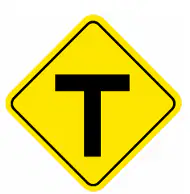
This sign indicates:
T intersection
Traffic lane ends
Concealed intersection
Trucks entering highway ahead
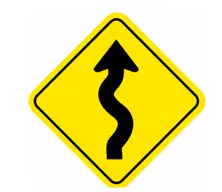
This sign indicates:
Winding road ahead
Weave zone ahead
Slippery when wet
Lane changing permitted
Before leaving a parallel parking space on the right side of a road:
Turn on the right signal
Shoulder check to the left
Shoulder check to the right
Use an arm signal straight out and up
When approaching the top of a hill on a two-lane highway:
Exceeding the speed limit is permitted
Flash the headlights to warn oncoming vehicles
Stay to the right portion of the lane
Keep close to the centre line to prevent others from passing
Playground zones are in effect:
From 8:30 A.M. to 1 hour after sunset
From 8:00 A.M. to 8:00 P.M.
During daylight hours and until 11:00 P.M.
Only when school lets out at noon and after 4:30 P.M.
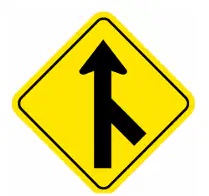
This sign indicates:
“T” intersection
Winding road ahead
Merging traffic
Road narrows to the right
According to the Basic Licence Driver’s Handbook, most skids are the result of:
Bad brakes
Icy roads
Bad tires
Driver error
How close can a driver legally park a vehicle to a Stop sign?
10 metres
5 metres
3 metres
1.5 metres
Parking in a space reserved for persons with disabilities is permitted:
When all other parking spaces are filled
While the driver is waiting in the vehicle
When a driver stops for less than 5 minutes
When the vehicle has a proper identifying placard or licence plate
At what minimum distance must headlights be dimmed at night when approaching another vehicle from behind?
60 metres
300 metres
150 metres
100 metres
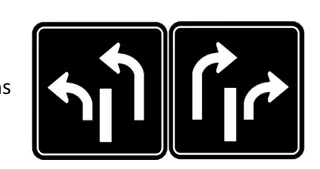
When are dual turns permitted at an intersection?
Only when turning from a one-way road onto a one-way road
Only when indicated by pavement markings or traffic control signs
Any time there are at least 2 lanes on the road being entered
Only when the road has 6 or more lanes
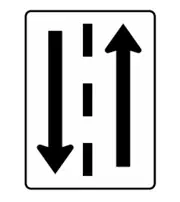
This sign indicates:
Through lane only
Passing permitted
No turns permitted
Two-way traffic
Under the Graduated Driver Licensing program, a learner with a Class 7 operator’s license is suspended when they accumulate:
15 demerits
12 demerits
8 demerits
7 demerits
Speed limit signs indicate:
The speed you should travel under all driving conditions
The minimum speed permitted on all highways
The maximum speed permitted when conditions are favourable
The maximum speed permitted except when passing
an "uncontrolled intersection":
has a flashing yellow light for one direction of traffic and a flashing red light for the other direction of traffic
has traffic signs but no traffic control signal lights
has no traffic control signal lights or traffic signs
has yield signs but no stop signs

This sign indicates:
Sharp left curve in the road ahead
Left turns are prohibited
Vehicles may turn left or go straight
Double lane left turn
When facing a Merge sign a driver should:
Stop at the entrance to the other highway and wait until a gap in traffic occurs before proceeding
Watch for a gap in traffic on the highway they are entering, adjust to highway speed in the acceleration lane and blend in smoothly
Stop and yield the right-of-way to traffic already on the highway
Reduce speed and proceed with caution
In reduced visibility due to fog, smoke or snow, use the:
Park lights
Headlights on high beam
Headlights on low beam
Daytime running lights
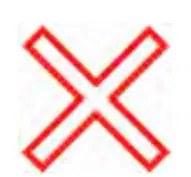
This sign indicates:
Emergency vehicles entering roadway
The designated lane is closed
Railway crossing
Do not enter
Is a driver allowed to turn right at a red traffic control light?
Yes, but only when a sign permits such a turn
Yes, if the driver reduces speed and there is no traffic or pedestrian in the intersection, and no sign that prohibits such a turn
Yes, if the driver stops and there is no traffic, pedestrian or sign that prohibits such a turn
No, right turns on a red traffic light are never permitted
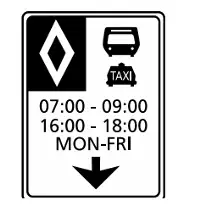
This sign indicates:
Lane is reserved for use by the specified vehicles
One-way traffic only
Car pool vehicles only
Lane can be used for dangerous goods vehicles
When a vehicle is stopped to allow a pedestrian to cross the road, other vehicles that are approaching from the rear:
May pass the stopped vehicle if there is no oncoming traffic that may impede passing safely
Must not pass the stopped vehicle. It is illegal
May pass the stopped vehicle when eye contact is made with the pedestrian and the pedestrian stops
May pass the stopped vehicle when the pedestrian crossing signal has changed to 'Don’t Walk'
When a head restraint is raised to the proper position, the centre of the head restraint is:
Level with the top of the ears
Level with the top of the shoulders
Level with the neck
Level with the top of the head
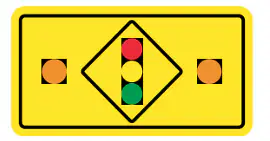
This sign indicates:
School zone ahead
Caution log trucks turning
Traffic control signal advance warning
Pedestrian crosswalk ahead
When a 'PASSING LANE AHEAD' sign is posted, the driver of a slower moving vehicle should:
Use the right lane and reduce their speed to half the posted speed limit
Use the left lane only
Increase speed
Move into the right lane when safe
When approaching the rear of a school bus that is displaying alternating flashing amber lights, a driver should:
Be prepared to stop as this is a warning that the alternating flashing red lights will come on once the bus has stopped
Be prepared to stop as this could be a warning that there is a collision ahead and the traffic flow has stopped
Stop immediately because the school bus is loading or unloading students
Use caution as the school bus is approaching a railroad crossing and is about to stop
In the Basic Licence Driver’s Handbook, 'nighttime' is defined as the period of time:
Beginning 1 hour before sunset and ending 1 hour after the following sunrise
Beginning at sunset and ending at the following sunrise
Between 7:00 P.M. and 7:00 A.M.
Beginning 1 hour after sunset and ending 1 hour before the following sunrise
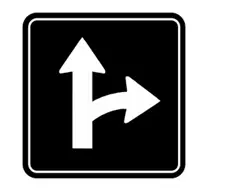
This sign indicates:
No through traffic or right turns
Turn left or go straight through
Turn from a one-way road onto a one-way road
Straight through or right turn
A vehicle exiting a parking lot onto a roadway:
Must stop only if there is a Stop sign
Must come to a complete stop
Must stop before crossing the sidewalk only if there are pedestrians present
Is not required to stop
When approaching a railway crossing that has the flashing red light and bell activated:
Cross the tracks if the train is a minimum of 250 metres away
Reduce speed, check for trains, and then proceed across the tracks
Do not stop and do not change gears while crossing the tracks
Stop at least 5 metres from the nearest rail until the train has passed
The recommended method for travelling through a curve on a highway is:
Reduce speed before the curve, stay in the lane and gently accelerate after entering the curve
Maintain speed before the curve, brake in the curve, look ahead and accelerate out of the curve
Cover the brake pedal before the curve, counter-steer toward the outside of the lane and accelerate when exiting
Accelerate before the curve, cover the brake pedal in the curve and accelerate after leaving the curve
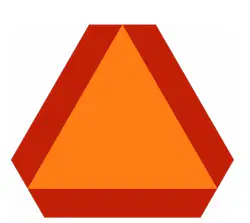
This sign indicates:
Yield the right-of-way to pedestrians and traffic
Dangerous goods vehicle placard: flammable gas
Slow moving vehicle
Warning, Yield sign ahead
Why is it not safe to pass a loaded log-haul truck that is turning?
The driver of the truck needs to fully concentrate on the turn and does not need the added responsibility of a passing vehicle
Loaded log-haul trucks obey the 6-second rule for turns
A danger zone exists as the overhang of the logs from the tail end of the truck could block all the lanes on a highway during the turn
It is illegal to do so
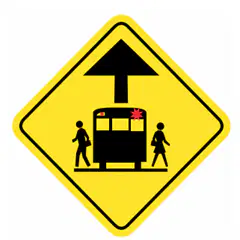
This sign indicates:
Playground zone ahead
Pedestrian crossing ahead
School bus stop ahead
School zone ahead
When encountering a funeral processions that is crossing an intersection:
Sound the horn before proceeding
Proceed through the funeral procession only when there is sufficient space between vehicles
Yield the right-of-way and do not break through the procession
Flash the high beam headlights before proceeding
If the vehicle’s right tires travel off the paved portion of the roadway:
Apply the brakes and counter-steer to return to the paved portion of the roadway
Keep a firm grip on the steering wheel, ease off the gas pedal, and then gradually return to the paved portion of the roadway
Accelerate slightly, then turn the steering wheel sharply to return to the paved portion of the roadway
Move the vehicle completely off the paved portion, then steer back onto the paved portion of the roadway

The sign indicates:
A school zone
School crosswalk ahead
Playground zone
Pedestrian activated lights ahead
When completing an angle park, the vehicle’s front wheel must be within what maximum distance from the nearest curb?
100 cm
50 cm
25 cm
75 cm
In an urban area, when a pedestrian is standing at a crosswalk with their arm raised at approximately right angles to their body and pointing to the opposite curb, what does this mean?
Drivers must stop and yield to the pedestrian
The pedestrian is visually impaired and needs assistance to cross the road
Drivers do not have to yield to the pedestrian until they step off the curb
Drivers should reduce speed to 20 km/h and be cautious when passing the pedestrian
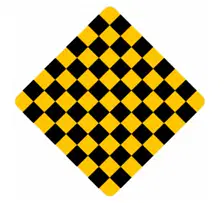
This sign indicates:
Pavement ends
Construction zone ahead
Dead end
Hazard marker
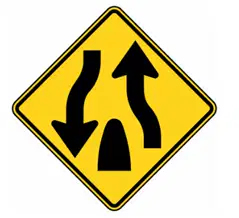
This sign indicates:
Divided highway ends
Divided highway begins
Obstruction – pass on the left
Two-way traffic
When approaching an intersection displaying a steady yellow traffic light:
Proceed since the light is about to turn green
Yield to vehicles on the right
Stop before the intersection unless the stop cannot be made in safety
Increase speed to clear the intersection
A solid yellow line together with a broken yellow line marked on the centre of a highway means:
The road narrows ahead
If the solid line is on your side, passing is permitted
If the broken line is on your side, passing is not permitted
If the broken line is on your side, passing is permitted
At 9:00 A.M. on a school day, what is the maximum speed permitted in a school zone in a rural area, unless otherwise posted?
50 km/h
20 km/h
40 km/h
30 km/h
On a two-lane highway, when passing other vehicles travelling in the same direction, a driver:
Should pass on the left when safe
Should pass on the right when safe
Should always travel 30 km/h faster than the vehicle being passed
Should not pull out to pass until they are within 3 metres of the vehicle being passed

This sign indicates:
Off-road facilities
Hospital services
Hotel services
Primary highway route marker
What minimum distance from a fire hydrant must a vehicle be parked?
3 metres
4 metres
2 metres
5 metres
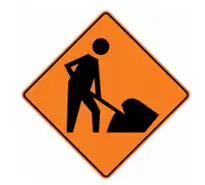
This sign indicates:
Construction sign, flag person ahead
Construction sign, detour ahead
Caution, falling rock ahead
Construction sign, people working ahead
If a driver is being followed by a vehicle that is attempting to pass on a two-way road, the driver should:
Stay in the lane and move to the left portion of the lane
Stay in the lane and move to the right portion of the lane
Turn on the left signal and stay in the lane
Turn on the right signal and drive in the parking lane
Unless otherwise posted, what is the basic speed limit outside a city, town or village on a primary highway?
100 km/h
90 km/h
110 km/h
80 km/h

