
Font size
 Worksheets
Yr 9 EOS2 Exam Revision
Total questions: 67
Worksheet time: 1hrs 12mins
An electron is
positively charged
neutral
negatively charged
atomic number is
the number of protons
the number of electrons
the number of neutrons
the location of an atom on the periodic table
Atomic Mass is the number of
protons and neutrons in the nucleus of an atom
protons and electrons in the nucleus of an atom
neutrons and electrons in the nucleus of an atom
Conservation of mass means
all the atoms present before a chemical reaction are not present after
atoms present before chemical reactions are present after
new substances and new elements are formed in a chemical reaction
An elements is
a substance that cannot be split into simpler substances
a substance that can be split into simpler substances
Signs of a chemical change include;
change of colour, change of temperature, precipitate (solid) formed, gas released.
change of colour, reversing back to original form, precipitate (solid) formed, gas released.
The type of reaction that releases energy as heat is called
endothermic
exothermic
respiration
photosynthesis
A Ph scale of7/8 is
acidic
neutral
basic
To neutralise an acid you add a
acid
base
Ph indicator
equal amount of water


Which best describes a chemical reaction?
Products --> Reactants
Reactants --> Products

The three types of nuclear radiation in order of increasing penetrating power are
alpha, beta, gamma
alpha, gamma, beta
beta, alpha, gamma
gamma, alpha, beta
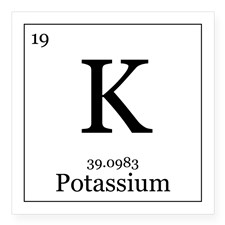
How many neutron are in the atom "K"?
7
2
39
12

What is the number of protons that the element in this image contain?
14
7
15
18

Identify the product(s) in this word equation
Sodium
Sodium chloride
Sodium and Chlorine
Sodium and sodium chloride
The new substances formed in a chemical reaction are called
Reactants
Atoms
Products
Reagents

What are the reactants in this word equation?
Carbon dioxide and oxygen
Carbon dioxide and water
Oxygen and glucose
Oxygen and water
Carbon is released into the atmosphere when fossil fuels are burned.
True
False
Global spheres operate together and flows of matter is moved between spheres.
True
False
Most carbon on Earth is stored in rocks and sediments
True
False

The
geosphere
magnetosphere
lithosphere
hydrosphere

What are the three layers of the earth called?
Crust, mantle, core
Crust, mental, crow
Crust, bread, loaf
Crust, epi-centre, seismic

Has permafrost; in the Arctic or Antarctic
taiga
savanna
desert
tundra


What are the two main reservoirs for carbon dioxide?
Ocean, fossil fuels
Ocean, atmosphere
Atmosphere, fossil fuels
Calcium Carbonate, ocean
Hydrosphere
Geosphere
Biosphere
Sun
Trees
Animal Respiration
Plant Respiration
Burning Fossil Fuel/Emissions
Dead Organisms
Fossils and Fossil Fuels
The process of changing a vapor into a liquid, which occurs when warm vapor mixes with cooler air in the atmosphere
Transpiration
Evaporation
Condensation
Precipitation
Plants giving off moisture and releasing water into the air
Precipitation
Evaporation
Transpiration
Runoff
Water running off the land surface
Evaporation
Sublimation
Transpiration
Run-off
When clouds get too heavy and water falls back to earth in the form of rain, snow, hail or other forms.
Precipitation
Evaporation
Percolation
Transpiration
Changes liquid and frozen water into water vapor gas which floats up into the skies to become clouds
Evaporation
Precipitation
Condensation
Runoff
The prefix "bio" comes from a Greek word that means what?
LIFE
WATER
AIR
GROUND
The prefix "geo" comes from a Greek word that means what?
LIFE
WATER
AIR
GROUND
The prefix "atmo" comes from a Greek word that means what?
LIFE
WATER
AIR
GROUND
The prefix "hydro" comes from a Greek word that means what?
LIFE
WATER
AIR
GROUND
The prefix "cryo" comes from a Greek word that means what?
FROST
WATER
AIR
EARTH
Which of the following is found in the earths Geosphere?
Minerals
Rocks
Soil
ALL of the Above
Clouds can be considered part of Earth's atmosphere and the (a) ?

Identify the interaction between which two of Earth's spheres shown in the picture.
Atmosphere - Biosphere
Hydrosphere - Atmosphere
Hydrosphere - Geosphere
Geosphere - Biosphere
The (a) includes the continents, the ocean floor, all the rocks on Earth's surface, and all of the sand in the deserts?
Which sphere is composed of all the living things?
atmosphere
hydrosphere
biosphere
geosphere
The body of air surrounding our planet is known as the (a)

When plants use energy from the sun and convert carbon dioxide from the air and water into oxygen and glucose sugars, which two main spheres are interacting?
Atmosphere - Biosphere
Geosphere - Atmosphere
Hydrosphere - Geosphere
Geosphere - Biosphere
Plants and animals are part of the (a) ?

