
 Worksheets
The Composition, Structure, and Properties of Substances
Total questions: 66
Worksheet time: 38mins

Which of the following is an example of a pure element?
Water (H2O)
Solid Gold (Au)
Saltwater
Air
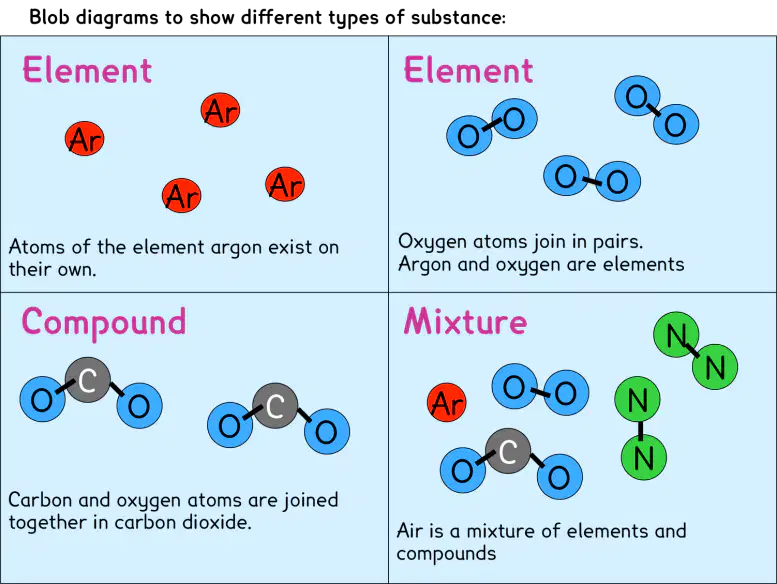
What do you call a sample of matter that contains only one substance, and that substance is made of two or more different elements connected by chemical bonds.
A pure compound
A pure element
A mixture
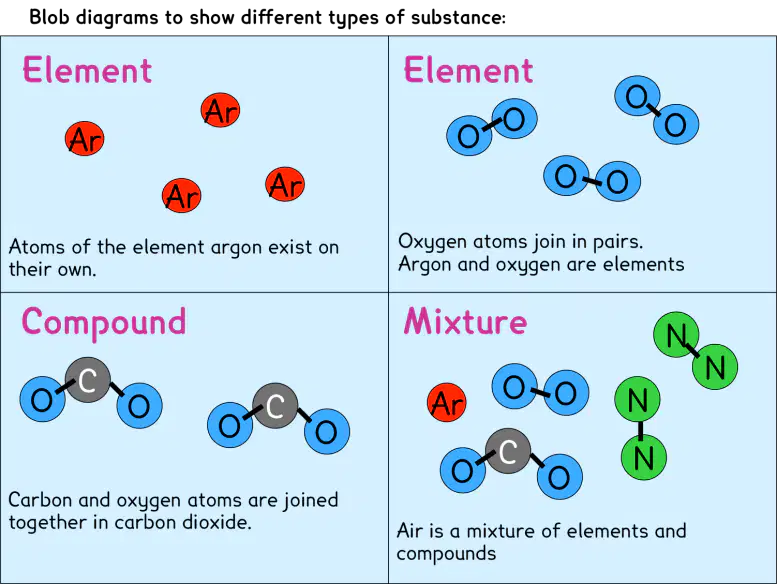
What is a mixture?
Somthing that looks like more than one thing.
A mixture is a sample of matter containing more than one substance.
A sample of matter containing only one element.
A sample of matter containing only one type of molecule made of a specific ratio of elements.
What forms when a metal bonds with a non-metal?
a Molecule
a Covalent Crystal
an Ionic Crystal
an Element
What type of bond involves the sharing of electrons between non-metals?
Ionic bond
Metallic bond
Covalent bond
Hydrogen bond
Which of the following is an example of a covalent substance forming a crystal?
Sodium chloride (NaCl)
Magnesium Oxide (MgO)
Frozen Water (H2O)
Calcium Chloride (CaCl2)
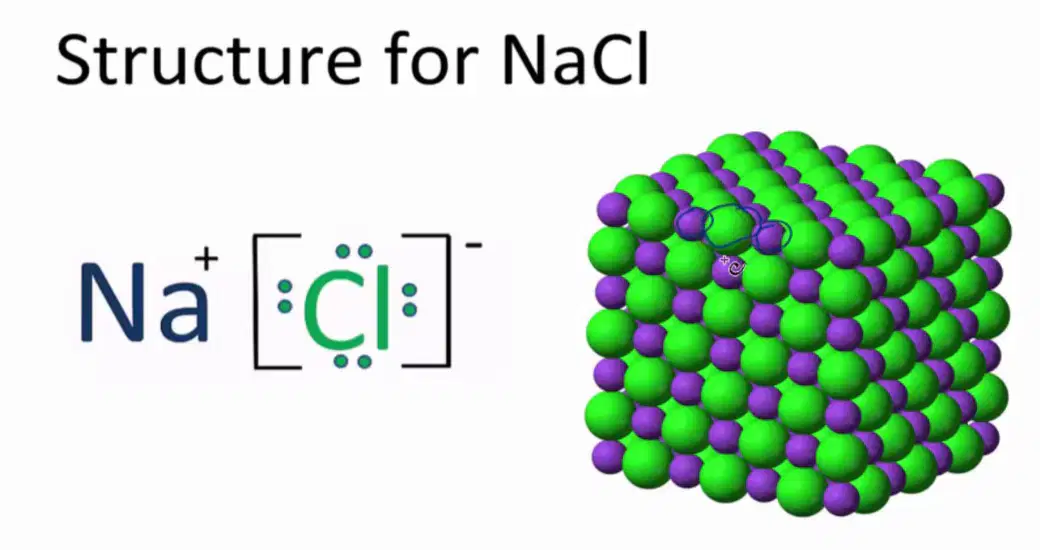
Which of the following are characteristics of ionic compounds?
They form molecules.
They dissolve in oil.
They only form crystals.
They are gases at room temperature.
They are composed of metals+
and nonmetals-
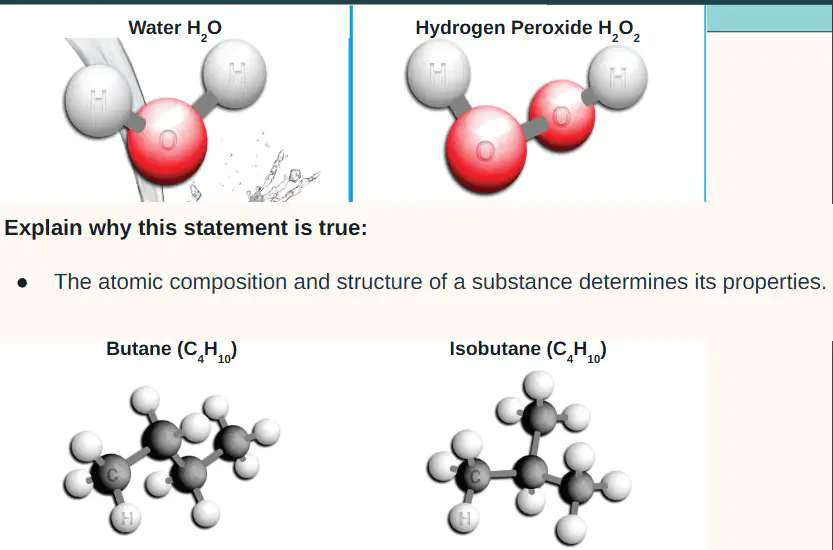
What is the main difference between atomic composition and chemical structure?
Atomic composition refers to the shape of the molecule, while chemical structure refers to the types of atoms.
Atomic composition is about the types and numbers of atoms, while chemical structure is about the shape formed how the atoms are connected.
Atomic composition and chemical structure are the same.
Atomic composition is about the molecule's energy, while chemical structure is about its color.
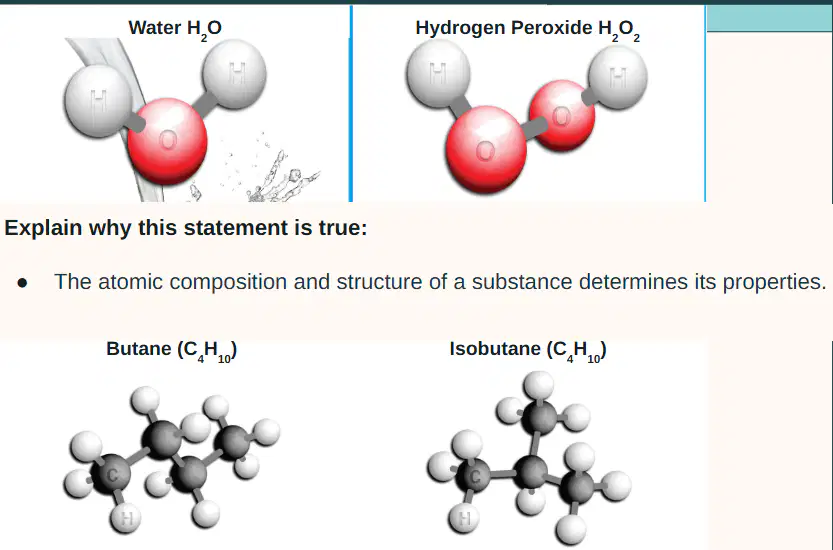
Which two molecules have the same atomic composition but different chemical structures?
Water and hydrogen peroxide
Butane and isobutane
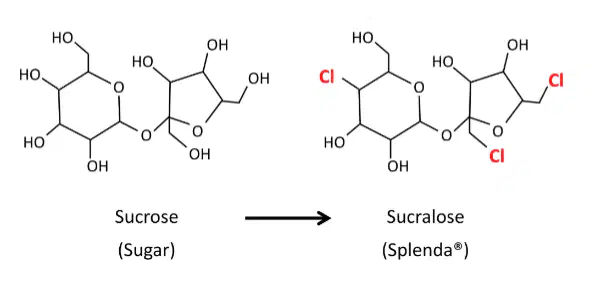
How does Splenda™ (sucralose: C₁₂H₁₉Cl₃O₈)
differ from ordinary sugar (sucrose: C₁₂H₂₂O₁₁)?
Sucralose and sugar have a similar atomic composition, but a different chemical structure.
Sucralose and sugar have a similar chemical structure, but a different atomic compsition.
What is the definition of appearance in the context of testing the properties of a substance?
The way a substance smells
The way a substance looks, including its color, shape, size, and texture
How well a substance dissolves in a liquid
The temperature at which a solid turns into a liquid
Which property of a substance can give clues about its chemical makeup through its smell?
Density
Solubility
Odor
Flammability
How is density defined in the context of testing the properties of a substance?
Density = Mass ÷ Volume
Density = Volume ÷ Mass
Density = Mass × Volume
Density = Volume × Mass
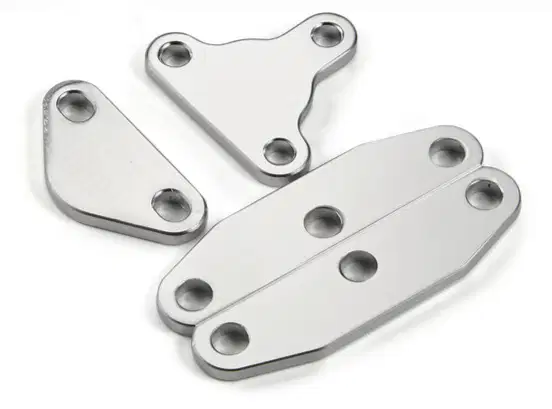
Each block is made of Pure Aluminum. After measureing the mass and volume of the small block you calculate it's density is 2.71 g/ml.
What is the density of the other two alumium blocks?
The density of the other two pieces are 2.71 g/ml
because they are also aluminum.
You don't konw because they are different sizes.
2.8 g/ml for the medium piece,
and 3.2 g/ml for the large piece.
What does solubility help determine about a substance?
Its color and texture
If two substances dissolve with each other.
Its melting point and boiling point.
Its flammability with oxygen.
A saltwater solution is made by dissolving a salt in water;
Salt and water can be separated by simply evaporating the water;
therefore saltwater is a ___________________ .
pure substance
mixture
Baking soda is the common name for sodium bicarbonate, or NaHCO3. It can be produced through chemical reactions involving carbon dioxide and sodium hydroxide.
pure substance
mixture
Which of these is an extended structure?


This is an example of...
a simple molecule
an extended structure

This extended structure is an example of...
a polymer
a crystal
An atom that is no longer neutral because it has lost or gained valence electrons.
Ion
The region surrounding an atoms nucleus where one or more electrons are most likely to be found.

Based on the picture shown, what can you conclude about water and hydrogen peroxide?
Since water and hydrogen peroxide are both made of oxygen and hydrogen atoms, they have the same properties.
Water and hydrogen peroxide have a different number of oxygen atoms, which means they are different substances and may have different properties.

What is the ATOMIC COMPOSITION of this molecular model?
CH
C4H
CH4
Ch4
Choose all that apply for extended structures such as crystals or polymers
contain only a few atoms bonded together
may contain thousand of atoms
often form a repeating pattern
only made up of one type of atom
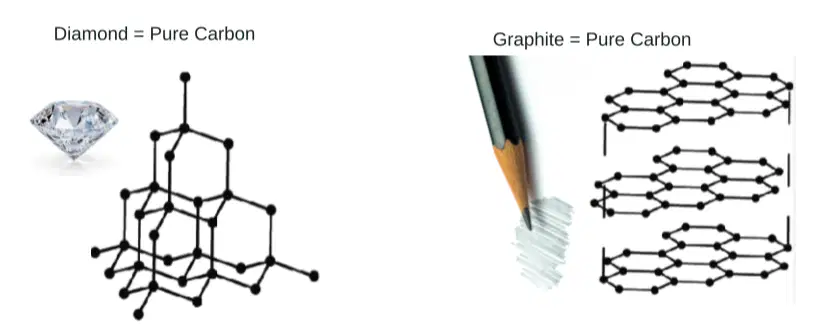
Diamond and Graphite are both made of only carbon atoms.
What causes them to have different properties?
their ATOMIC COMPOSITION
the arrangement of their atoms
their CHEMICAL STRUCTURE
the ratio of elements they contain
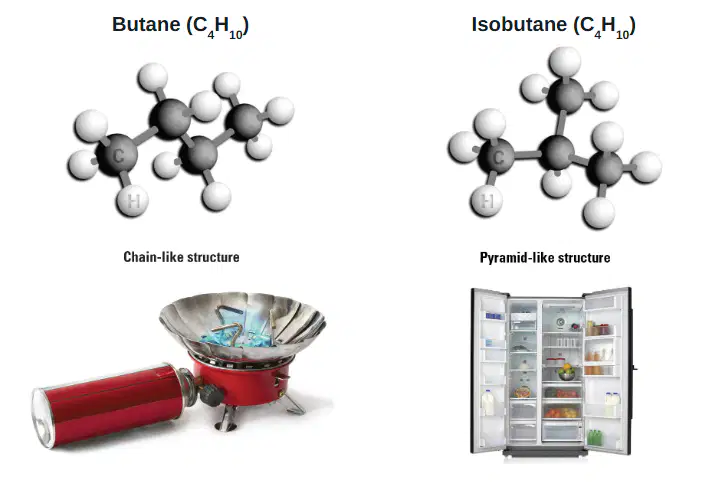
Both Butane and Isobutane are C4H10,
What causes them to have different properties?
their ATOMIC COMPOSITION
the arrangement of their atoms
their CHEMICAL STRUCTURE
the ratio of elements they contain

Look at Sucrose (Table Sugar) and Sucralose (Splenda)
What causes them to have different properties?
their ATOMIC COMPOSITION
the arrangement of their atoms
their CHEMICAL STRUCTURE
the ratio of elements they contain

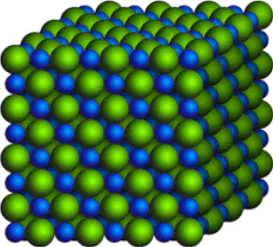
If the different colored spheres represent different elements, what is this structure?
ionic compound
covalent compound
mixture
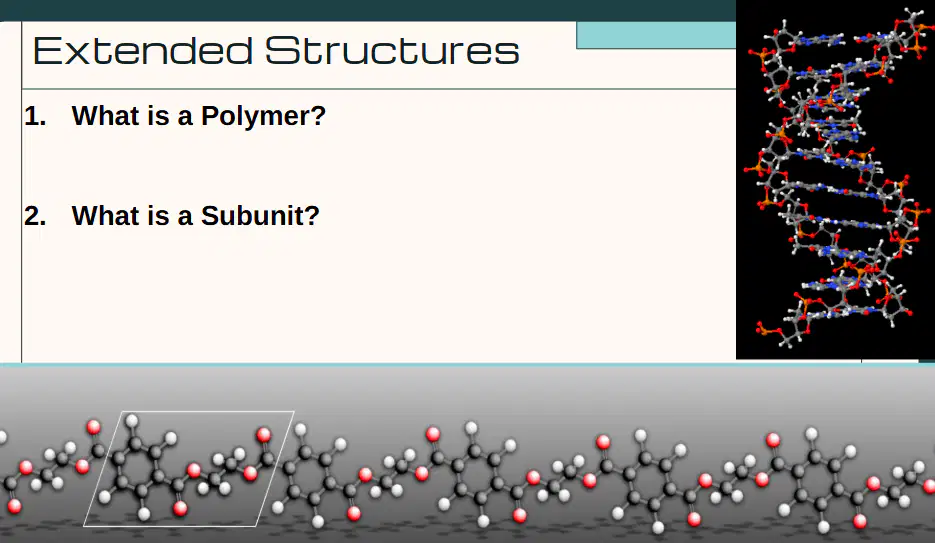
A polymer is...
a type of extended structure that is made of many smaller repeating subunits in a chain
the specific ratios of atoms of each kind of element that make it up
a group of mermaids
a a type of extended structure that extends in three directions in specific geometric prisms


NH3 has
an atomic composition of 1 atom of nitrogen and 3 atoms of hydrogen
an atomic composition of 3 atoms of nitrogen and 1 atoms of hydrogen
an atomic composition of 4 atoms of nitrogen and 1 atom of hydrogen
this is an extended structure

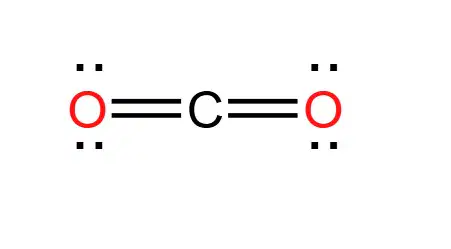
Carbon dioxide (CO2) contains how many atoms of oxygen?

A _________ is the attractive force that holds atoms together.
ratio
molecule
a compound
Flammability means the ability to _______ and is a _________ property.
melt; chemical
rust; physical
change; physical
burn; chemical
What is the best way to identify an unknown substance?
compare several of its properties to known substances
taste and smell it
calculate its density
ask someone smarter than you
neutral atoms
NOT neutral atoms
amount of protons = amount of electrons
Generally, atoms form bonds so that _______________.
Each atom loses its electrons
Each atom has a stable electron configuration and feel like a noble gas
Each atom has an unstable electron configuration
Each atom gains electrons

This image shows the bonding between Lithium and Fluorine. What does the red arrow show?
electrons being shared
electrons being transferred to Fluorine
electrons being transferred to Lithium
electrons being destroyed
An ionic bond is the attraction between: (Select ALL that apply)
oppositely charged ions
similarly charged ions
metals and nonmetals
neutral atoms
cations and anions

What group of elements do not combine since thye are already stable?
Noble Gases
Halogens
Transition Metals
Alkali metals
What do atoms have to do in order to form compounds and become stable?
Lose all their electrons
Get a full outer energy level (full valence electrons)
Get a full level of protons
break apart
What is the magic number of valence electrons to become full (except period 1)?
6
8
0
2
What type of bond shares valence electrons?
Ionic
Covalent
Metallic
Corporate
What type of bond transfers valence electrons?
Ionic
Covalent
Metallic
Corportate
What type of ion is formed when an atom loses electrons?
Covalent
Negative
Neutral
Positive
What type of ion is formed when an atom gains electrons
Covalent
Negative
Neutral
Positive
What two materials do ionic bonds occur between?
Metal and nonmetal
2 nonmetals
2 metals
metal and metalloid
What type of ion do metals always make?
Positive (always lose electrons)
Negative (always gain electrons)
Positive (always gain electrons)
Neutral (aways share electrons
What type of ions do nonmetals form?
Negative (always lose electrons)
Positive (always lose electrons)
Negative (always gain electrons)
neutral (share electrons)
When two atoms share valence electrons
Explain why chlorine and fluorine form covalent bonds
They are both metals
They are both non-metals
One is a metal and one is a non-metal
They are both semi-metals

Which is the correct molecular structure for carbon dioxide?


How many Valence Electrons are on a neutral Oxygen atom
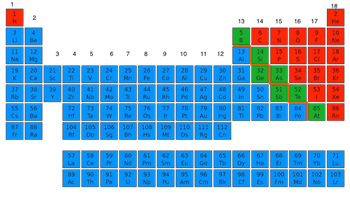

These elements are in a:
group
period
which elements have 4 valence electrons?
group 3
group 5 or 15
group 14 or 4
Neutral atoms of the elements in this group have 2 valence electrons that they push off less aggressively than the alkali metals do when they react:
Noble gases
Halogens
Alkali metals
Alkaline earth metals

