wayground logo

Free Printable Worksheets

Font size

S
M
L
XL
Worksheets

6th grade Science 1st Semester Exam

Total questions: 100

Worksheet time: 59mins

Name
Class
Date
1.
Chefs need pans that can go from the stovetop to the oven. Some materials that are used for the handles of pans can be damaged by the high temperatures in ovens. Which statement best defines the design problem?
a)
The problem is to design ovens that won’t reach high temperatures
b)
The problem is to design stovetops that won’t reach high temperatures.
c)
The problem is to design plastic handles that won’t be damaged by high temperatures.
d)
The problem is to design pans that have handles that won’t be damaged by high temperatures.
2.

Benjamin and Aria are exploring the wonders of elastic energy! Can you help them find an example of an object that stores potential energy when its shape is changed? Is it a

a)

pencil

b)

spatula

c)

rubber band

d)

fork

3.
Which diagram shows the direction heat will flow?
a)
Towards 223 degrees
b)
Towards 199 degrees
4.

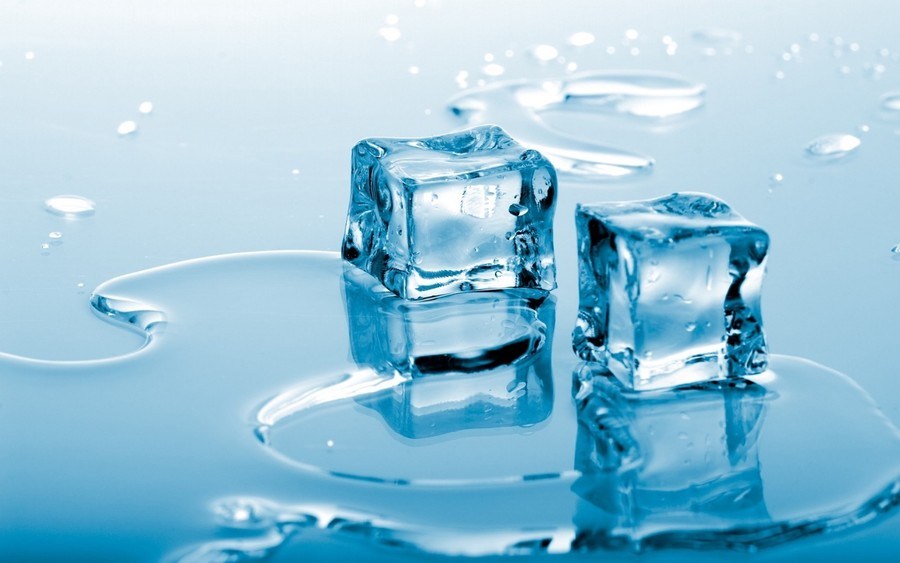
Imagine you're a wizard like Aria, and you have the magical power to transform ice into water. What is this enchanting change of state called?

a)

melting

b)

condensation

c)

evaporation

d)

freezing

5.

On a hot summer day, Aria and Priya are playing outside and start sweating. Which statement best explains how sweating helps cool them down?

a)

Water condenses on the skin, adding thermal energy to the body.

b)

Water from the body evaporates from the skin, removing thermal energy from the body.

6.

As the sun shines brightly, Oliver and Mia watch the snow slowly melt. What magical transformation is happening to the water particles in the snow?

a)

Particle motion is decreasing.

b)

Particle motion is increasing.

7.
A scientist performed an experiment during which she measured the energy transferred in each step of her experiment. The total quantity of energy transferred in all of the steps was less than the amount she measured at the beginning. What is the most likely explanation for this result?
a)
Energy was destroyed during certain steps in the experiment.
b)
The steps in the experiment required more energy than was available.
c)
The experiments created energy that was then used up at a faster rate.
d)
Some energy was transformed into unwanted heat or sound that was not detected.
8.

When Charlotte uses her hair dryer to style her hair for a fun day out, what magical energy transformation is happening?

a)

Energy from the sun is transformed to chemical energy.

b)

Sound energy is transformed to thermal energy and electrical energy.

c)

Electrical energy is transformed to thermal energy and sound energy.

d)

Thermal energy is transformed to sound energy and mechanical energy.

9.

Imagine Mason zooming down the street on his bike. What type of energy is he using?

a)

sound energy

b)

heat energy

c)

mechanical energy

d)

potential energy

10.
How can you use energy to explain why pushing a small domino can cause larger and larger dominoes to fall?
a)
shape of the dominos
b)
size of the dominos
c)
energy transfer
d)
elastic potential energy
11.

Evelyn and Luna are on a thrilling roller coaster ride! As they reach the top of the hill, the coaster is packed with gravitational potential energy. As they zoom down, what type of energy does this transform into?

a)

kinetic energy

b)

sound energy

c)

light energy

d)

electrical energy

12.
Some materials transfer thermal energy very quickly. These materials are called thermal ____________.
a)
conductors
b)
insulators
13.

Isla and Sophia are on a camping adventure and need to sort through different materials for their projects. They want to design the ultimate campfire grill to cook their meals quickly and also figure out how to keep their leftovers cool overnight. They have data on the thermal conductivities of six materials. Which material would be best for cooking?

a)

Aluminum

b)

Glass

c)

Pine Wood

d)

Stainless steel

e)

Tin

14.
True or False: Modern life is dependent upon technology. Without engineered tools, scientists could not carry out research.
a)
True
b)
False
15.
Thermal____________________, transfer energy slowly
a)
conductors
b)
insulators
16.
True or False: Engineers make use of knowledge gained by scientific investigations.
a)
True
b)
False
17.
___________________generally explore phenomena to develop explanations and engineers generally solve problems.
a)
Students
b)
Scientists
c)
Historians
d)
Engineers
18.
_______________ can be used to represent complex systems and their many interactions.
a)
Maps
b)
Math
c)
Models
d)
Documents
19.

Join Charlotte and Samuel on a science adventure! Can you help them classify the matter of AIR as a gas, liquid, or solid?

a)

gas

b)

solid

c)

liquid

20.
_________________ is the total kinetic energy of all the particles in a substance.
a)
Kinetic Energy
b)
Thermal Energy
c)
Potential Energy
d)
Solar Energy
21.

Ethan and Mia are having a friendly debate about science. Can you help them settle it? What is the term for a measure of the average kinetic energy of the particles?

a)

Temperature

b)

Thermal Energy

c)

Kinetic Energy

d)

Heat Energy

22.

Imagine you're a detective like Benjamin, trying to solve the mystery of how ice cream turns into a delicious puddle on a hot day. What is the scientific term for the change of state from a solid to a liquid?

a)

melting

b)

condensation

c)

evaporation

d)

freezing

23.
A _______________of thermal energy can allow a solid to change to a liquid or a liquid to change to a gas.
a)
gain
b)
loss
c)
neither gain or loss
24.
a)
A
b)
B
c)
C
d)
D
25.
All of the images below are examples of.....
a)
freezing
b)
evaporation
c)
condensation
d)
melting
26.
Think about what happens when you put water in a freezer. The temperature of the liquid water is warmer than the temperature inside the freezer. As a result, energy from the water is lost to the air inside the freezer and the water particles ___________.
a)
slow down
b)
speed up
c)
do not move
27.
Indicate whether each statement describes a chemical or physical change: Hydrogen gas rises through oxygen gas.
a)
Chemical Change
b)
Physical Change
28.
_____________is a measure of the amount of space an object takes up.
a)
Volume
b)
Area
c)
Mass
d)
Density
e)
Weight
29.

Imagine you're a detective like Charlotte, trying to solve the mystery of a substance's identity. What property, being the ratio of mass to volume, remains unchanged no matter how much of the substance you have?

a)

Density

b)

Volume

c)

Mass

d)

Weight

e)

Area

30.
________________have definite volume but take the shape of their container. The particles in _____________are close together and can slide past each other.
a)
Solid
b)
Liquid
c)
Gas
d)
Volume
31.
True or False: Thermal energy always flows from warmer objects or regions to cooler objects or regions.
a)
True
b)
False
32.
The picture shows a spring toy moving down steps. What happens to the energy of the toy?
a)
The potential energy of the toy is greatest while the toy is falling.
b)
The kinetic energy of the toy is greatest when the toy is finished falling.
c)
Some kinetic energy of the toy changes to potential energy as the toy falls down the steps.
d)
Some of the potential energy of the toy changes to kinetic energy as the toy falls down the steps.
33.
______________________carries energy from the sun.
a)
Radiation
b)
Conduction
c)
Convection
34.
Heat.....
a)
rises.
b)
comes from only the sun.
c)
is also potential energy.
35.
_________________is a measure of the average kinetic energy of all the particles of an object or substance.
a)
Heat
b)
Temperature
c)
Convection
d)
All of the above
36.

Scarlett and Aiden are enjoying a sunny day at the park. When they step outside, they feel warm because energy flows ____________ the sun.

a)

towards

b)

away from

37.

In a thrilling race between Emma's giant boulder and Zoe's tiny pebble, both rolling down the hill at the same speed, which one has more kinetic energy?

a)

smaller

b)

lighter

c)

bigger

d)

heavier

38.
The passing of energy from one object to another is known as
a)
energy
b)
Newton's cradle
c)
energy transfer
d)
force
39.
A _________is a group of interacting parts that move or work together. Energy can be put into a system from its environment, resulting in changes in the system.
a)
machine
b)
Netwon's cradle
c)
system
d)
energy transfer
40.
When you turn on a light, you're converting electrical energy into _____ and _____ energy.
a)
light and heat
b)
light and electrical
c)
light and potential
41.

Evelyn and Aria are playing with a Newton's Cradle. What fascinating concept does it demonstrate?

a)

Energy is never lost.

b)

Energy can be transferred.

c)

Energy can be gained.

42.
The amount of kinetic energy depends on the object's _________.
a)
condition and speed
b)
mass and speed
c)
color and speed
d)
speed and joules.
43.
A bike parked in the vacant lot has potential energy. The energy will transform into ________ once a person starts riding it.
a)
kientic energy
b)
potential energy
44.
The truck and the car are moving at the same speed. Since the truck has more mass than the car, it has _______ kinetic energy.
a)
more
b)
less
45.
Energy is measured in
a)
joules
b)
pounds
c)
volume
d)
jewels
46.
True or False: Energy cannot be created or destroyed, it can change from one type of energy into another or change from one form of energy to another.
a)
True
b)
False
47.
True or False Engineers develop or improve technologies to meet people’s needs and wants that change over time.
a)
True
b)
False
48.
__________________is the application of science and mathematics to solve real-life problems.
a)
Engineering
b)
Scientific Method
c)
Criteria
49.
_________________ is any tool, process, or system designed to solve a problem.
a)
Enginnering
b)
Criteria
c)
Technology
d)
Computers
50.
An _________________describes steps that can be used to identify a problem and then propose, test, and optimize a solution to that problem.
a)
engineering design process
b)
enginnering exploration
c)
scientific method
51.

What happens to the kinetic energy of a car as it comes to a stop?

a)

It remains unchanged.

b)

It is converted into thermal energy due to friction.

c)

It is converted into potential energy.

d)

It is destroyed.

52.

Which material would be best for insulating a hot beverage to keep it warm?

a)

Copper

b)

Aluminum

c)

Plastic

d)

Glass

53.
What kind of energy is in a stretched rubber band?
a)
Potential
b)
Kinetic
54.
Energy can not be created or destroyed, only converted from one form to another.
a)
true
b)
false
55.
a)
Potential Energy
b)
Kinetic Energy
56.
a)
Potential Energy
b)
Kinetic Energy
57.
The faster an object moves, the ________ kinetic energy it has. 
a)
more
b)
less
c)
none of the above
d)
same
58.
__________ is stored energy. 
a)
Potential
b)
Kinetic
c)
None of the above 
d)
All of the above 
59.
What kind of energy is in a rock at the edge of a cliff?
a)
Potential
b)
Kinetic
c)
Both potential and kinetic energy
d)
none of the above
60.

Freezing is what happens when

a)

a liquid changes to solid

b)

gas changes to liquid

c)

solid changes to liquid

61.

A substance that can be observed without changing the identity of the substance is called

a)

molecule

b)

chemical property

c)

physical property

62.

A chemical change happens when

a)
the physical state of a substance changes.
b)

elements or compounds combine to form a new substance.

c)
the color of a substance changes.
63.

Melting happens when

a)

solids turn into liquids

b)

liquids turn into gas

c)
addition of water
64.

Condensation happens when

a)

gas changes to liquid.

b)

liquid changes to gas.

c)

water vapor changes to ice

65.

Match the following

a)

gas

1.

no definite shape or volume

b)

liquid

2.

no definite shape, definite volume

c)

solid

3.

definite shape and volume

66.

Match the following

a)

mass

1.

amount of material in a substance

b)

matter

2.

substance that has both mass and volume

c)

mixture

3.

2 substances physically combined

d)

volume

4.

amount of space an object takes up

67.

Match the following

a)

Graduated container

1.

Measures liquids

b)

Balance

2.

Measures mass

c)

Water displacement

3.

Can measure irregularly shaped objects

68.

Which is a Chemical change?

a)
Burning of wood
b)
Melting of ice
c)
Cutting a piece of paper
69.

Which is a physical change?

a)
Mixing salt and water
b)
Burning wood
c)

Cutting paper with scissors

70.

The definition of Mass is

a)

The temperature of an object.

b)

The force of gravity on an object.

c)

The amount of matter in an objects.

71.

The definition of Weight is

a)
The measure of the force of gravity on an object.
b)
The amount of food consumed by an organism.
c)
The distance between two points.
72.

What kind of energy is shown here?

a)

electrical

b)

thermal

c)

chemical

d)

nuclear

73.
Which is the best example of kinetic energy?
a)
a car parked on a steep hill 
b)
a tennis ball rolling across the court
c)
a picture hanging on the wall 
d)
a piece of coal before it's burned 
74.

When does a yo-yo have the most potential energy?

a)

When it's moving at its top speed.

b)

When it's moving between its highest and lowest points.

c)

When it's at its lowest point.

d)

When it's at its highest point.

75.

What is observation?

a)

Using your senses to gather information

b)

Communicating what you've learned with others

c)

Brainstorming solutions to a problem

d)

Creating a product to meet a need

76.

What does the picture represent?

a)

The Engineering Design Process

b)

Artificial Intelligence

c)

Newton's 2nd Law of motion

d)

Hyper Text Protocol

77.

You should only test your prototype one time to make sure it works correctly.

a)

True

b)

False

78.

What is a prototype?

a)

Model

b)

Question

c)

Idea

d)

Research

79.

What is a "constraint" in the Engineering Design Process?

a)

All the factors that make the solution harmful

b)

All the factors that make the solution expensive

c)

All the factors that limit a solution

d)

All the factors that make the solution better

80.

What are the "criteria" in the Engineering Design Process?

a)

All the factors that will not work

b)

All the factors that make the solution expensive

c)

All the factors that limit the solution

d)

All the factors the solution must have

81.

In which step of the Engineering Design Process do you experiment with the prototype and collect data?

a)

Test

b)

Improve or Iterate

c)

Select the Plan

d)

Brainstorm

82.
Which of the following are kinds of heat transfer.
a)
Conduction
b)
Convection
c)
Radiation
d)
All of the above
83.

In which direction does heat move?

a)

From warmer to cooler

b)

From cooler to warmer

c)

From north to south

d)

From east to west

84.

When energy increases, the speed of molecules ______.

a)

Increases

b)

Decreases

c)

Stay the same

85.

When molecules are heated, what happens to them?

a)

They speed up, becomes less dense, and rise

b)

They speed up, become more dense, and rise

c)

They slow down, become less dense, and sink

d)

They slow down, become more dense, and sink

86.

What is conduction?

a)

The transfer of heat through direct contact

b)

The transfer of heat through the rise of warm fluids and sinking of cool fluids

c)

The transfer of heat through electromagnetic waves

d)

The transfer of heat through fluids

87.

Which molecules have more energy?

a)

Cold

b)

Hot

88.

As fluids are ______, they become _____ dense and rise.

a)

Heated; more

b)

Heated; less

c)

Cooled; more

d)

Cooled; less

89.
a)

Conduction

b)

Convection

c)

Radiation

90.
a)

Conduction

b)

Convection

c)

Radiation

91.
a)

Conduction

b)

Convection

c)

Radiation

92.

When two objects are touching, heat is transferred from the warmer object to the cooler object by which process?

a)

Conduction

b)

Convection

c)

Radiation

93.
Water freezing into ice is an example of a...
a)
Physical Change
b)
Chemical Change
94.
A change that alters the physical properties of a substance without changing its composition.
a)
Physical Change
b)
Chemical Change
95.

Burning wood is a

a)

chemical change

b)

physical change

96.

Melting butter for popcorn is a

a)

chemical change

b)

physical change

97.

This picture is an example of the particles in a ______________.

a)

Solid

b)

Liquid

c)

Gas

98.

This picture is an example of the particles in a ______________.

a)

Solid

b)

Liquid

c)

Gas

99.

This picture is an example of the particles in a ______________.

a)

solid

b)

liquid

c)

gas

100.

When water changes from a liquid to a gas it ________________.

a)

Melts

b)

Evaporates

c)

Freezes