wayground logo

Free Printable Worksheets

Font size

S
M
L
XL
Worksheets

SNC2D Biology Review

Total questions: 64

Worksheet time: 52mins

Name
Class
Date
1.
This organelle absorbs energy from the sunlight and uses it to make food
a)
Nucleus 
b)
Vacuole
c)
Chloroplasts
d)
Golgi Apparatus
2.

The powerhouse of a cell is :

a)

Cytoplasm

b)

Rough ER

c)

Ribosome

d)

Mitochondria

3.
This is a jelly-like substance in which all of the organelles float around
a)
Cell Membrane
b)
Cytoplasm
c)
Cell Wall
d)
Smooth ER
4.
The DNA of a cell can be found here
a)
Nucleus
b)
Cytoplasm
c)
Rough ER
d)
Mitochondria
5.
Proteins that are used inside the cell are found here
a)
Chloroplasts
b)
Rough ER
c)
Ribosomes
d)
Vacuole
6.

This organelle is found only in animal cells

a)

Ribosome

b)

Cell Membrane

c)

Lysosome

d)

Chloroplast

7.

Identify letter H.

a)

nucleus

b)

mitochondria

c)

cell wall

d)

vacuole

8.

Identify letter B.

a)

mitochondria

b)

nucleus

c)

cell wall

d)

cytoplasm

9.

Structures in a cell that help with cell life processes.

a)

organ system

b)

cell wall

c)

organelles

d)

virus

10.

Contains instructions for everything the cell does

a)

cell wall

b)

cell membrane

c)

vacuole

d)

nucleus

11.
I am a protein packaging and shipping machine! Who am I?
a)
vacuole
b)
ribosome
c)
mitochondrion
d)
golgi apparatus
12.
In what phase of the cell cycle does DNA replication take place?
a)
G1
b)
S
c)
G2
d)
M
13.
DNA is replicated during the ______ phase of the cell cycle.
a)
G1
b)
Synthesis
c)
G2
d)
G0
14.

How many chromosomes are normally found in human body cells?

a)

46

b)

23

c)

26

d)

44

15.

Which is NOT a structural difference between plant and animal cells

a)

Plant cells have a cell wall and animal cells do not

b)

Plant cells have a chloroplast and animal cells do not

c)

Animal cells have centrioles and plant cells do not

d)

Animal cells have a cell membrane and plant cells do not

e)

Plant cells have a large vacuole and animal cells have small vacuoles

16.

The Cell Theory has 3 points. Which is not part of the Cell Theory?

a)

All cells come from preexisting cells

b)

The cell is the basic unit of life

c)

All living things are composed of one or more cells

d)

All living cells require water for survival

17.

Which cell is the cancerous cell?

a)

Cell on the Right

b)

Cell on the Left

18.

What is the levels of organization from most complex to simplest?

a)

organism, tissue, system, cell, organ

b)

cell, tissue, organ, system, organism

c)

organism, system, organ, tissue, cell

d)

cell, system, organ, tissue, organism

19.
Gases pass in and out of a leaf through the what?
a)
vascular tissue
b)
mouth hole
c)
stomata
d)
cell wall
20.
The function of a ___ is to absorb water, store food, and anchor plants. 
a)
phloem
b)
tissue
c)
xylem
d)
root
21.
The heart has ___ chambers.
a)
1
b)
2
c)
3
d)
4
22.
This chamber of the heart RECEIVES blood returning from the body
a)
Right Atrium
b)
Right Ventricle
c)
Left Atrium
d)
Left Ventricle
23.
The _________ PUMPS blood to the lungs.
a)
Right Atrium
b)
Right Ventricle
c)
Left Atrium
d)
Left Ventricle
24.
The _______ RECEIVES blood returning from the lungs.
a)
Right Atrium
b)
Right Ventricle
c)
Left Atrium
d)
Left Ventricle
25.
This chamber of the heart PUMPS blood to the body.
a)
Right Atrium
b)
Right Ventricle
c)
Left Atrium
d)
Left Ventricle
26.
When you breathe, your lungs take in ___ and remove ___. 
a)
air/oxygen
b)
oxygen/carbon dioxide 
c)
carbon dioxide/waste 
d)
waste/air 
27.
The air sacs that are covered with capillaries where gas exchange takes place
a)
bronchi
b)
lungs
c)
oxygen
d)
alveoli
28.
Cytokinesis is the creation of two identical cells called _____.
a)
children cells
b)
new cells
c)
daughter cells
d)
son cells
29.
a)
Cytokinesis
b)
Interphase
c)
Anaphase
d)
Metaphase
30.
a)
Cytokinesis
b)
Anaphase
c)
Telophase
d)
Prophase
31.
What is the first phase of mitosis?
a)
prophase
b)
anaphase
c)
metaphase
d)
interphase
32.
The causes of cancer may include which of the following?
a)
poor diet & activity levels
b)
UV radiation
c)
inheritance
d)
all of these
33.
What phase of mitosis is shown in the picture?
a)
Prophase
b)
Anaphase
c)
Telophase
d)
Metaphase
34.
What organelle controls and regulates cellular activity?
a)
Ribosome
b)
Nucleus
c)
Mitochondria
d)
Lysosome 
35.
A process where one cell forms two identical daughter cells is called...
a)
cell cycle
b)
cell division (mitosis)
c)
interphase
d)
cytokinesis
36.
After interphase is completed the cell moves into the next stage of the cell cycle called _________.
a)
anaphase
b)
cytokinesis
c)
metaphase
d)
mitosis
37.
What phase of mitosis is shown in the picture?
a)
Prophase
b)
Anaphase
c)
Telophase
d)
Metaphase
38.
Fruit fly body cells have 8 chromosomes. After mitosis, you would expect a resulting fruit fly daughter cell to have ...
a)
16 chromosomes.
b)
46 chromosomes.
c)
8 chromosomes.
d)
4 chromosomes.
39.
What do vacuoles do? 
a)
They actually do not have an important role
b)
They protect the cell
c)
They are the brain of the cell
d)
storage area for cells; water storage in plants 
40.
Which structures open and close stomata to allow gas exchange but prevent water loss in leaves?
a)
Epidermis
b)
Vascular tissue
c)
Guard cells
d)
Spongy mesophyll
41.
Which organ of a plant is specialized for photosynthesis?
a)
Palisade Mesophyll
b)
Chloroplast
c)
Leaf
d)
Flower
42.

#9 - Cell tissue that makes up part of each vein that transports water throughout the plant

a)

Epidermal cells

b)

Guard cells

c)

Phloem cells

d)

Xylem cells

43.

#8 - Cell tissue that makes up part of each vein that transports glucose and nutrients throughout the plant

a)

Epidermal cells

b)

Guard cells

c)

Phloem cells

d)

Xylem cells

44.

Which muscle type can contract rapidly with great force, BUT tires easily and must rest after short periods of activity.

a)

skeletal

b)

smooth

c)

cardiac

45.

Connective tissue is

a)

The tissue that protects, supports, and binds together other body tissue

b)

Tissue that is the lining, covering, and glandular tissue of the body

c)

Tissue that contracts and shortens to produce movement
46.
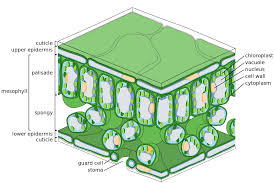
what is the function of cuticle?
a)
protects the underlying tissues
b)
transport water
c)
transport mineral and nutrients
d)
reduce loss of water through transpiration
47.

What is the process called when cells become specialized during an organism's development?

a)

Cell differentiation

b)

Gene expression

c)

Cellular respiration

d)

Gene regulation

48.

Apoptosis is

a)

the process of programmed cell death

b)

the process of programmed cell growth

c)

the process of programmed cell birth

d)

the process of programmed cell regulation

49.

(a)   is the transplantation of living cells, tissues or organs from one species to another.

50.
Name this structure
a)
spleen
b)
gall bladder
c)
pancreas
d)
jejunum
51.

What is the process of wave-like muscle contractions that moves food through the digestive tract?

a)

Pericardium

b)

Peristalsis

c)

Pepsin

d)

Pericoronitis

52.
The nervous system is composed of the ___, ___, and ___.
a)
heart, brain, kidneys
b)
lungs, liver, stomach
c)
brain, spinal cord, nerves
d)
eyes, pancreas, veins
53.
What are the main two parts of the central nervous system?
a)
Brain and Skull
b)
Brain and Spinal Cord
c)
Spinal Cord and Nerves
d)
Nerve Cells and Nerve Endings
54.

The nerves in your fingertips are part of the ___ nervous system

a)

central

b)

peripheral

55.

Which system controls the flow of blood?

a)

Respiratory

b)

Circulatory

c)

Nervous

d)

Muscular

56.

Which organ system includes the trachea, bronchi, lungs, and alveoli?

a)

Digestive system

b)

Circulatory system

c)

Respiratory system

d)

Nervous system

57.

Which organ system includes the esophagus, stomach, small intestines, and large intestines?

a)

Digestive system

b)

Circulatory system

c)

Respiratory system

d)

Nervous system

58.
What organ system has a cell that is specialized to protect the body/ organ from acid?
a)
Digestive System
b)
Stomach
c)
Lungs
d)
Respiratory System
59.
What is the function of the Endocrine system? 
a)
Protection
b)
Release Hormones
c)
Coordinate body actions
60.

Blood vessels carry nutrients (like glucose) and oxygen to the muscle cells that need them. Blood vessels take away carbon dioxide and waste from muscle cells.

Which two systems are working together?

a)

circulatory system

b)

nervous system

c)

respiratory system

d)

digestive system

e)

muscular system

61.

The brain checks up on the amount of carbon dioxide in the blood and adjusts the rate of breathing. The brain “communicates” with the lungs using nerves from the brain to the lungs.

Which two systems are working together?

a)

circulatory system

b)

nervous system

c)

respiratory system

d)

digestive system

e)

muscular system

62.

Blood vessels carry red blood cells to the lungs, to get rid of carbon dioxide and pick up oxygen that has been breathed in. The heart pumps red blood cells carrying oxygen from lungs to all cells in the body and back to the lungs once the oxygen has been used up.

Which two systems are working together?

a)

circulatory system

b)

nervous system

c)

respiratory system

d)

digestive system

e)

muscular system

63.

Blood vessels deliver nutrients and oxygen for all the intestinal cells to function. Blood in blood vessels picks up nutrients absorbed by the intestines and carries them away to other parts of the body that need them

Which two systems are working together?

a)

circulatory system

b)

nervous system

c)

respiratory system

d)

digestive system

e)

muscular system

64.

The brain tells the stomach, intestines, and liver when to be active and when to rest. Messages to and from the brain decide when it’s time to process food.

Which two systems are working together?

a)

circulatory system

b)

nervous system

c)

respiratory system

d)

digestive system

e)

muscular system