
 Worksheets
Unit 4: Latin America
Total questions: 58
Worksheet time: 45mins

All of the following islands are located in Latin America EXCEPT
Falkland Islands
Galapagos Islands
Greater Antilles
Hawaii

Which country is highlighted on the map?
Colombia
Argentina
Brazil
Chile

Name the country in red.
Bolivia
Chile
Ecuador
Suriname

Ecuador
Peru
Colombia
Bolivia

What formed the Atacama Desert?
A decade of drought
Global warming
It is in the rain shadow of the Andes Mountains
The Desert King

The arrow on this map is pointing to what physical feature?
Amazon River
Orinico River
Caribbean Sea
Nile River


What is the name of the purple continent?
South America
Australia
Antarctica
Europe


Equator
Prime Meridian
International Date Line
North Pole
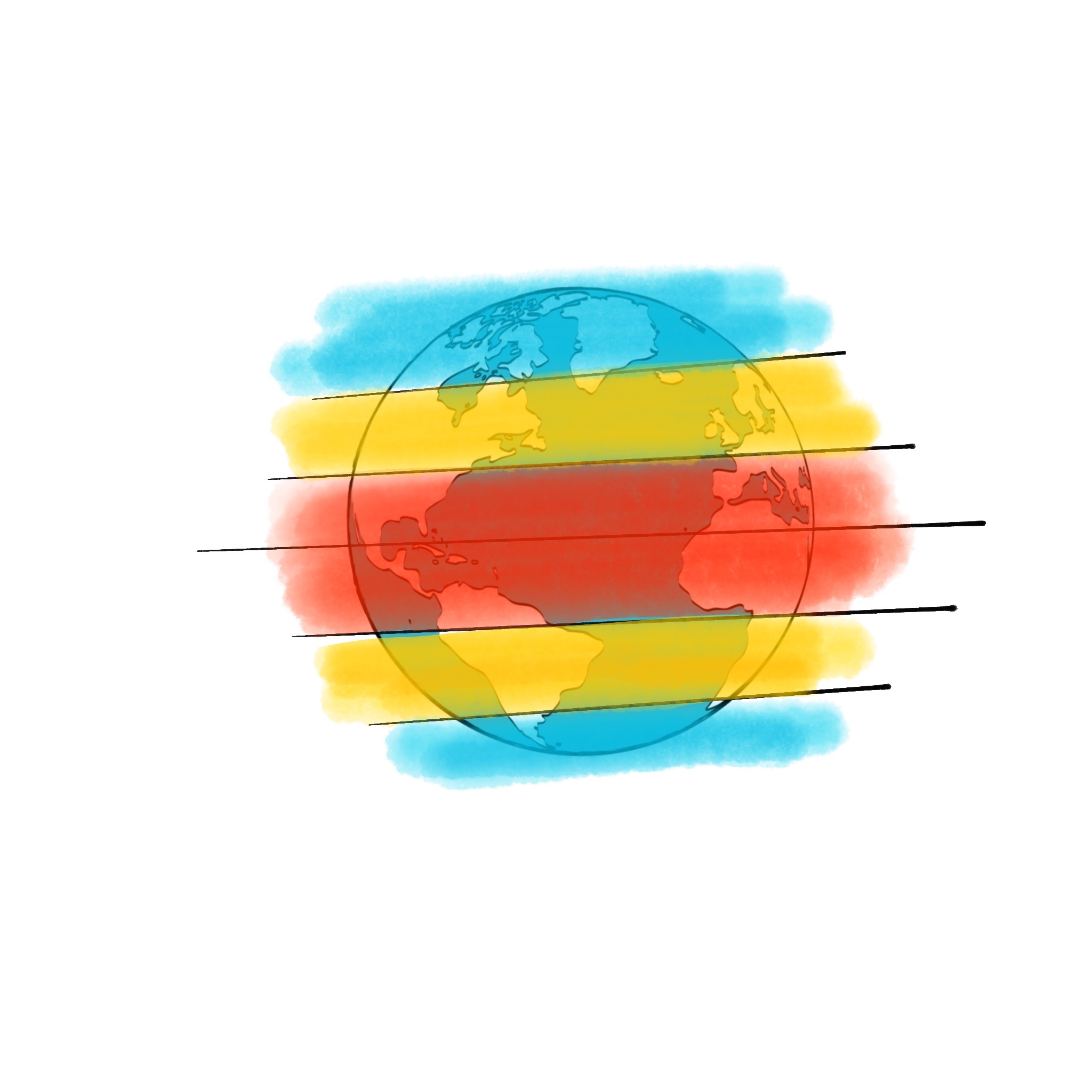
Look at the picture, which climate zone is in red?
Temperate zone
Polar zone
Tropical zone

The YELLOW climate is...
Temperate zone
Polar zone
Tropical zone
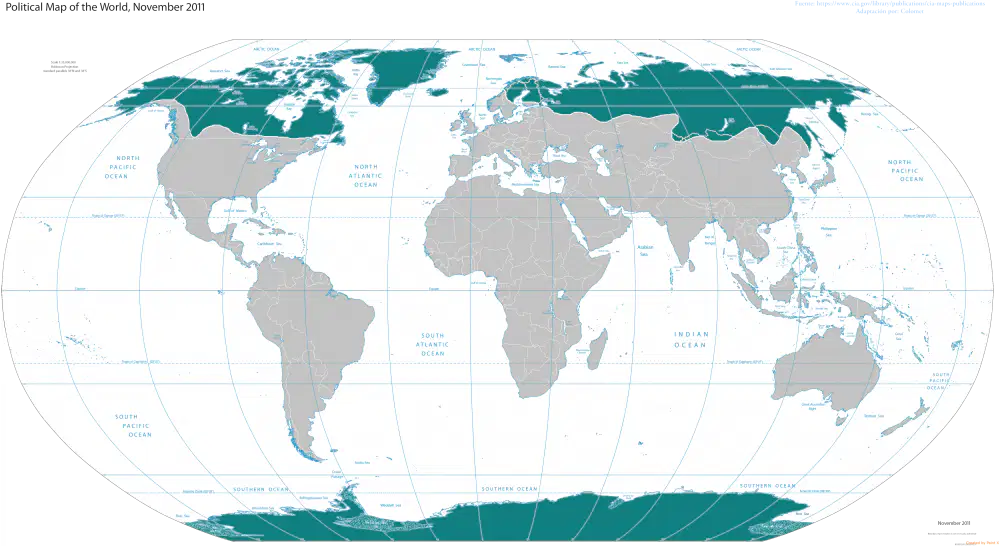
The climate zone on the map is called the
tropical zone
temperate zone
polar zone
taiga zone
Land where farmers can grow crops is called _________.
extraction
aquifer
deciduous
arable
Which of the following is an example of how people use land?
to harvest wood
to grow crops
to preserve native species
All of the above
Regardless of where people live, they are dependent on resources produced in
wilderness areas.
urban areas.
national parks.
rural areas.
Which of these groups is responsible for deforestation of the rainforest?
rubber tappers
native peoples
logging companies
environmental groups
A broadleaf evergreen forest found in wet and hot regions near the equator is called a
tropical rainforest
mixed forest
coniferous forest
deciduous forest
Check all that apply.
Where is the largest tropical rain forest located?
South America
The Amazon
most of it is found in Brazil

Which country is home to most of the Amazon rainforest?
Brazil
Congo
England
Indonesia

Is the Amazon Rainforest the largest rainforest in the world?
Yes
No
What percent of the Amazon Rain Forest is in Brazil?
40%
50%
60%
70%
Which of the following is an economic impact that resulted from the forced migration of enslaved Africans to Latin America?
Agricultural estates were created throughout Latin America.
Latin America became dominated by African Americans
The Amazon Rainforest is located in a tropical climate region, which indicates that it is located in latitudes that are —
near the equator
far from the equator
Increasing demand for beef exports from Brazil has resulted in increased deforestation and a higher the standard of living for ranchers in the Amazon region. Which of the following processes is most responsible for causing these changes?
Globalization
Urbanization
The forced migration of millions of Africans to Latin America resulted in cultural patterns that are characterized by —
blended customs
seperated customs
When did the Columbian Exchange take place?
Before AD Rome
During the European Dark Ages
After WW2
After 1492

Identify the level of economic activity: Logging
Primary
Secondary
Tertiary
Quaternary
Identify the level of economic activity: Gold mining
Primary
Secondary
Tertiary
Quaternary
Identify the level of economic activity: making furniture
Primary
Secondary
Tertiary
Quaternary
Identify the level of economic activity: selling furniture
Primary
Secondary
Tertiary
Quaternary
Identify the level of economic activity: accounting for a firm that sells crab and fish products
Primary
Secondary
Tertiary
Quaternary
Vocabulary: economic activities involve taking or using natural resources directly from Earth.
Primary
Secondary
Tertiary
Quaternary
Vocabulary: economic activities use raw materials to make a product that is new and more valuable.
Primary
Secondary
Tertiary
Quaternary
Vocabulary: economic activities provide services to people and businesses.
Primary
Secondary
Tertiary
Quaternary
What does NAFTA stand for?
North Atlantic Free Trade Agreement
North American Free Trade Agreement
North American Fundamental Trading Agreement
North Atlantic Fundamental Trading Agreement
Which of the following were some advantages about the agreement?
Agricultural trade increased
Free trade
Loss of higher- wage US jobs
Improvement quality of products
NAFTA eliminated tariffs on all the U.S. and Mexico trade items within 15 years
True
False
What did NAFTA improve?
health
safety
standards
nothing

