Worksheets
Practice Test 2 - 2022
Total questions: 53
Worksheet time: 27mins
flat areas that cover extensive portions of the deep-ocean basins
submarine canyon
ocean trench
continental shelf
abyssal plain
continental margin
narrow and deep valleys on continental slopes where sediments fall down to the deep ocean
submarine canyon
ocean trench
continental shelf
abyssal plain
continental margin
a generally flat zone extending from the shore to the shelf break
submarine canyon
ocean trench
continental shelf
abyssal plain
continental slope
Characteristics of PASSIVE continental margins include which of the following?
Chains of islands
Broad (wide) continental shelves
Deep-sea trenches
Thin sediment accumulation
Volcanic and earthquake activity
The steep area directly seaward of the continental shelf is called the ________.
abyssal plain
continental rise
continental slope
mid-ocean ridge
trench
Underwater avalanches of muddy water mixed with rocks and debris are ________.
deep sea fans
graded bedding
turbidity currents
coral deposits
white smokers
Deep-ocean trenches and volcanic arcs result from the collision of two plates at convergent plate boundaries and mostly occur along the margins of which of the following oceans?
Pacific Ocean
Atlantic Ocean
Indian Ocean
Arctic Ocean
Southern Ocean
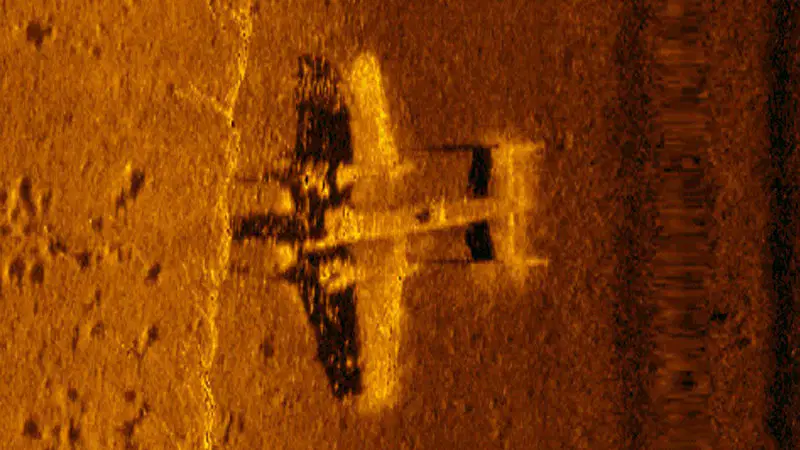
This technique provides the greatest detail when measuring ocean bathymetry.
Magnetometer
Multibeam Sonar
Seismic Reflection
Side-scan Sonar
Sounding
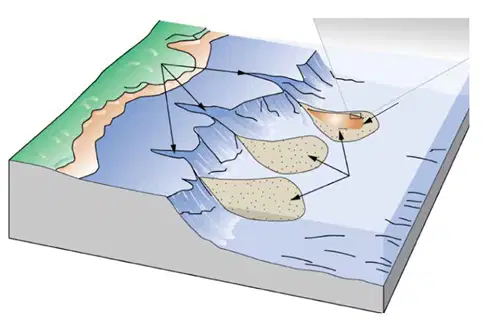
Which of the following continental margin features is illustrated in the image?
Deep-ocean trenches
Off-shore faults
Rift valleys
Hydrothermal vents
Submarine fans
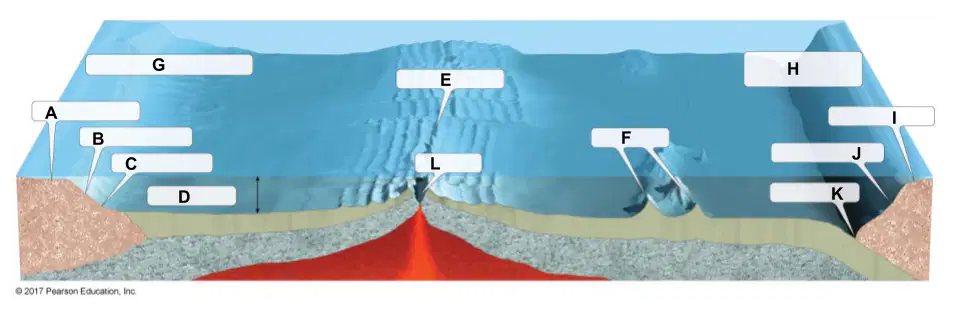
Which letter shows a continental shelf?
A
C
E
K
D
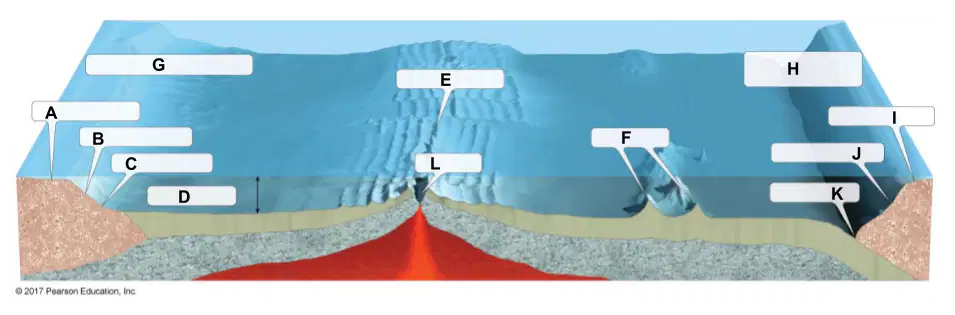
Which letter shows an abyssal plain?
A
C
E
K
D
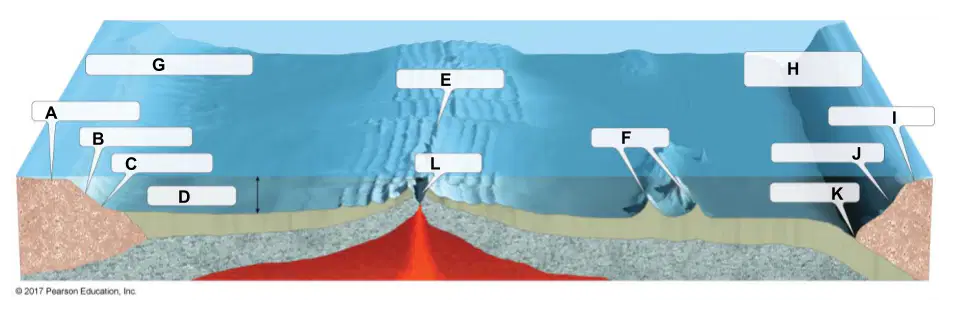
Which feature shows a deep-ocean trench?
A
C
E
K
D
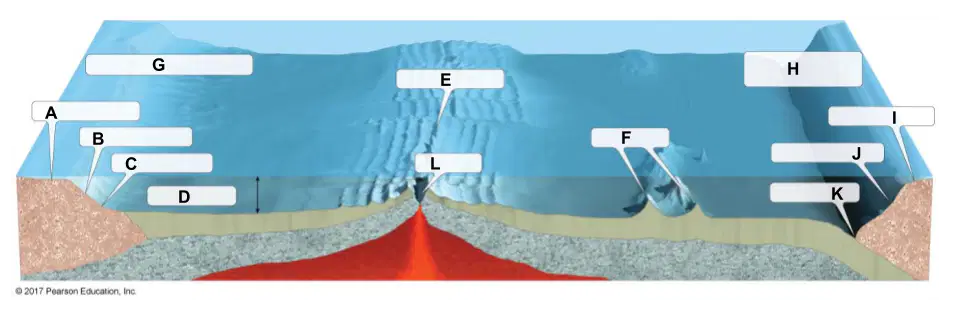
Which feature is an area that is likely to have submarine canyons?
B
F
E
K
D
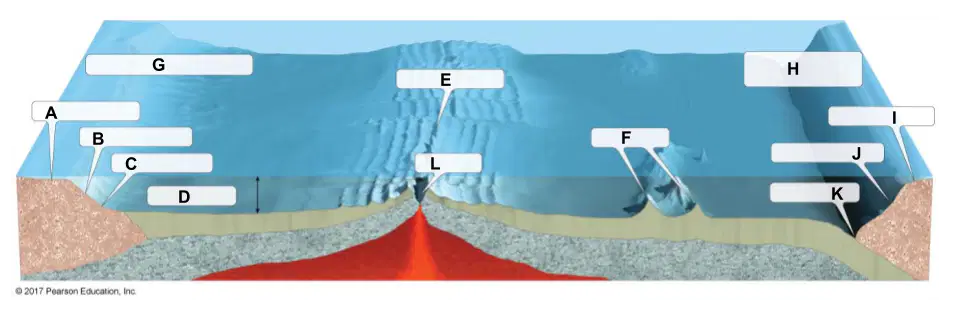
Which feature is likely to have hydrothermal vents?
A
C
E
F
K
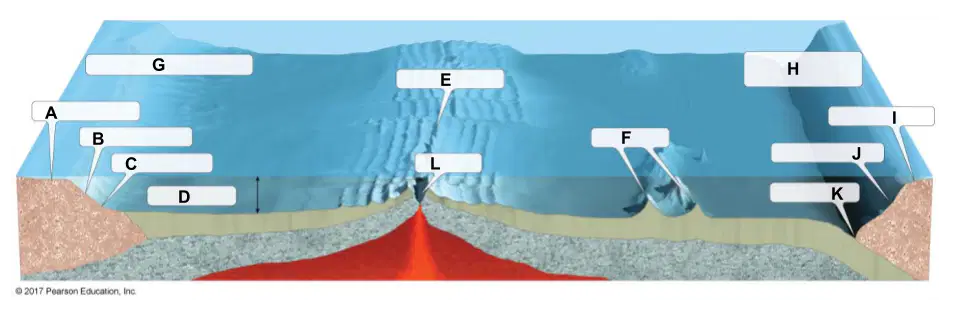
An ACTIVE continental margin is found where?
G
H
E
F
D
The most abundant mineral in lithogenous sediments is __________.
calcium carbonate
gypsum
basalt
quartz
Sediment that begins as rocks on continents is called ________.
lithogenous sediment
biogenous sediment
hydrogenous sediment
cosmogenous sediment
High-energy environments are most likely to deposit which one of the following?
Clay-sized particles
Cosmogenous sediments
Large particles such as gravel
Micro-fossils
Silt-sized particles
Low-energy environments are most likely to deposit which one of the following?
Boulders
Cosmogenous sediments
Large particles such as gravel
Glacial deposits
Silt-sized particles
Which of the following is a biogenous sediment?
River mouth sand
Coral pieces
Glacial deposits
Volcanic particles

The sediments found in the pan at the bottom of the sieves are likely
Gravel
Coarse Sand
Very Fine Sand
Silt

The sediments found in the 10 mesh sieve are likely
Gravel
Coarse Sand
Fine Sand
Silt

The sediments found in the 10 mesh sieve were likely deposited in a ______________
High-energy environment
Low-energy environment
There's no way to know
Wind often carries which type of sediment from deserts to the ocean?
Fine-grained lithogenous
Coarse-grained lithogenous
Fine-grained biogenous
Coarse-grained biogenous
Sediments produced by plants and animals in the sea are called ________.
cosmogenous
biogenous
hydrogenous
volcanic
True or False: The majority of lithogenous sediments are composed primarily of quartz BECAUSE quartz is resistant to abrasion (breaking) and can be transported long distances and deposited far from its source area.
True
False
From smallest to largest, which list of sediment particle sizes is in the correct order?
pebbles, sand, silt, clay
sand, silt, clay, pebbles
clay, silt, sand, pebbles
clay, sand, silt, pebbles
You add gravel, sand, and silt to a jar of water, shake the jar vigorously, and allow the sediment to settle. The last particles to reach the bottom are the ____________
gravel
sand
silt
they settle randomly
Which is NOT a reason to study sediment cores from the sea floor.
They can tell us about changes in earth's climate
They help us understand marine organism distribution (location)
They can be records of ocean floor movements
They provide information about mountain building
In a deep-sea sediment core, the lower sediments in the core were deposited _________ the upper sediments.
later than
earlier than
at the same time as
There is no way to know
Ocean sediments consist of particles that have slowly fallen to the bottom by which of the following the processes?
Grain lithification
Paleooceanography
Sediment compaction
Suspension settling
The two primary materials that BIOGENOUS sediments are made of are:
Quartz and Iron
Nitrogen and Phosphorous
Granite and Basalt
Silica and Calcium Carbonate
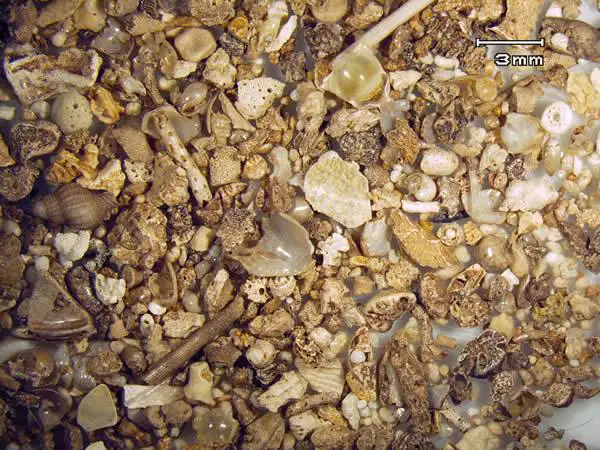
The picture below is made primarily of which type of sediment?
lithogenous (terrigenous) sediment
biogenous sediment
hydrogenous sediment
cosmogenous sediment
What process creates lithogenous sediments?
Precipitation from seawater
Weathering and erosion
Dissolution of carbonate shells
Evaporation

The picture below is made primarily of which type of sediment?
lithogenous sediment
biogenous sediment
hydrogenous sediment
cosmogenous sediment
The average salinity of typical seawater is ________ ppt
3.5‰
2.0‰
35‰
10‰
25‰
Which type of water is most dense?
frozen water
liquid water
water vapor
they are all the same density
As the salinity of seawater increases, its ________.
density decreases
density increases
temperature increases
temperature decreases
pressure changes
A layer of rapidly changing temperature with depth is called a ________.
barocline
halocline
isocline
pycnocline
thermocline
A layer of rapidly changing salinity with depth is called a ________.
barocline
halocline
isocline
pycnocline
thermocline
A CTD instrument measures __________.
Conductivity, Temperature and Depth
Compensation, Thermal output and Density
Construction, Thrombosis and Destination
Carbon, Thorium and Deuterium
Water density is highest at what temperature?
0 degrees Celcius
4 degrees Celcius
98.6 degrees Celcius
100 degrees Celcius
212 degrees Celcius
Which of the following processes causes sea surface salinity to increase in the Tropics?
Condensation
Evaporation
Freezing
Melting
Polarization
Which one makes up most of the salt in seawater?
potassium chloride
sodium chloride
sodium bicarbonate
calcium carbonate
We would expect the salinity of surface waters to be higher in regions where __________.
both precipitation and evaporation rates are low
both precipitation and evaporation rates are high
evaporation is much less than precipitation
evaporation is much greater than precipitation
river input
does not change seawater salinity
decreases seawater salinity
increases seawater salinity
sea ice formation
does not change seawater salinity
decreases seawater salinity
increases seawater salinity
As the salinity of water rises, it's freezing point _______
Lowers
Rises
Stays the same
We should expect a well-defined thermocline at ___________
High latitudes
Low latitudes
Near the poles
Deep in the ocean
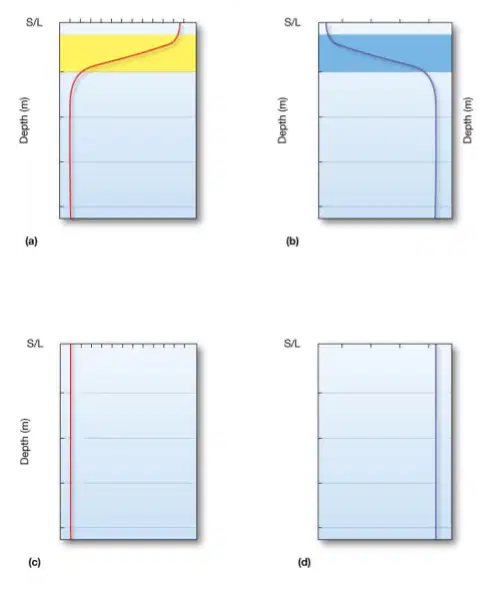
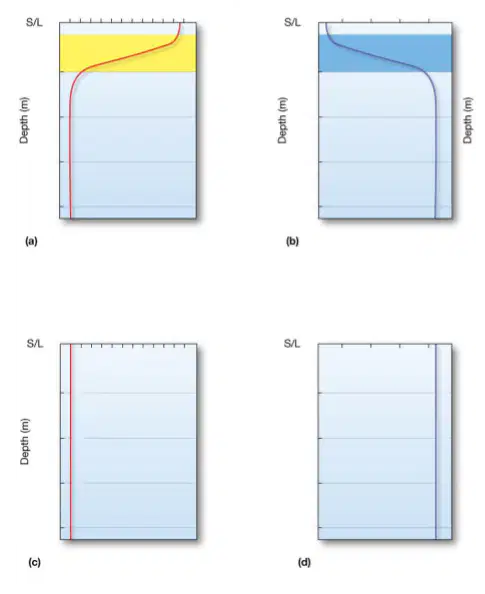
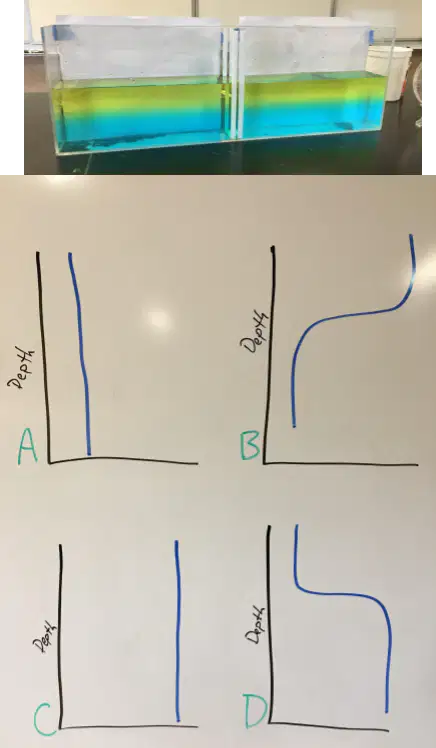
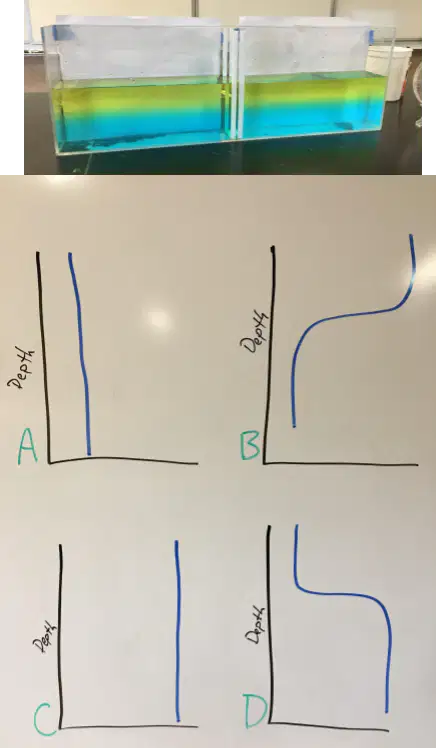
Which of these TEMPERATURE profiles is likely to occur in tropical oceans?
A
B
C
D