
 Worksheets
Nutrition Quiz
Total questions: 56
Worksheet time: 28mins
What is the definition of nutrition?
The body's ability to exercise regularly
All of the body's functions that relate to taking in and using food
The process of breathing and circulation
The body's ability to fight infections
Which of the following is a sign of good nutrition?
Dull hair
Clear skin and eyes
Frequent illness
Constant fatigue
Which of the following is NOT a sign of good nutrition?
Shiny hair
A well-developed body
Irregular sleep patterns
Proper appetite
What is the unit of energy obtained from food?
Joules
Calories
Watts
Volts
How many calories per gram do carbohydrates provide?
2 calories
4 calories
6 calories
9 calories
How many calories per gram do proteins provide?
2 calories
4 calories
6 calories
9 calories
How many calories per gram do fats provide?
2 calories
4 calories
6 calories
9 calories

Which of the following is not considered a nutrient that the body needs?
Carbohydrates
Lipids
Proteins
Fiber
What is the primary role of nutrients in the body?
To provide energy and support bodily functions
To increase body temperature
To eliminate waste
To reduce body weight
What is the body's main source of energy?
Proteins
Fats
Carbohydrates
Vitamins
What are simple carbohydrates?
Starches
Sugars
Fibers
Proteins
What are complex carbohydrates?
Sugars
Starches
Proteins
Fats
Which type of fat is primarily found in animal sources?
Cholesterol
Trans fats
Unsaturated fats
Saturated fats
Which of the following is a type of unsaturated fat?
Olive oil
Butter
Lard
Coconut oil
What is one of the primary functions of proteins in the body?
Store energy
Build, maintain, and repair cells
Regulate body temperature
Provide hydration
What type of proteins provide all of the essential amino acids?
Incomplete proteins
Complete proteins
Partial proteins
Non-essential proteins
From which sources are complete proteins typically obtained?
Plant sources
Animal sources
Mineral sources
Synthetic sources
Where are incomplete proteins typically found?
Animal sources
Plant sources
Mineral sources
Synthetic sources

Which of the following is a fat-soluble vitamin?
Vitamin C
Vitamin B6
Vitamin A
Thiamin

Which vitamin is water-soluble?
Vitamin D
Vitamin E
Vitamin K
Vitamin C
What is one of the functions of vitamins in the body?
Provide energy
Build, maintain, and repair cells
Store fat
Increase blood sugar
Which of the following minerals is important for building, maintaining, and repairing cells?
Calcium
Zinc
Copper
Selenium
What is one of the functions of minerals in the body?
Provide energy
Help the body function properly
Store fat
Produce hormones

Why is water essential for life?
It is used for cooking.
It carries nutrients and wastes.
It is a source of energy.
It provides flavor to food.
How many glasses of water are recommended to drink daily?
2-3 glasses
4-5 glasses
6-8 glasses
9-10 glasses
What happens to humans if they do not consume water for a few days?
They can live indefinitely.
They can only live a few days.
They become more energetic.
They gain weight.
What role does water play in the human body?
It helps body function.
It increases body temperature.
It decreases metabolism.
It reduces muscle mass.
What is fiber primarily composed of?
Proteins
Undigested plant material
Fats
Sugars
Which of the following is NOT a benefit of fiber?
Helps lower cholesterol
Provides essential vitamins
Helps digestive system work well
Found in whole grains and cereals
Where can fiber be commonly found?
Dairy products
Whole grains, cereals, rice, pasta, vegetables, fruits, dry beans, and nuts
Meat and poultry
Fish and seafood
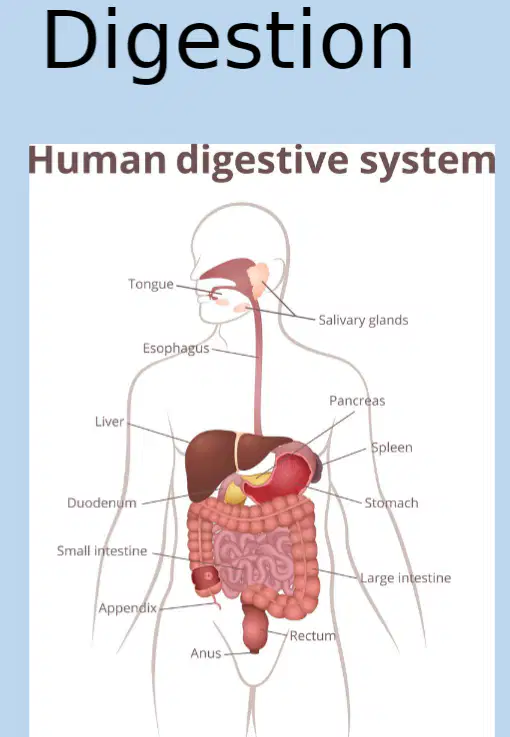
What is the primary function of the mouth in digestion?
Absorption of nutrients
Chewing and saliva
Enzymes and bile
Water absorption
Which part of the digestive system uses acids to break down foods?
Mouth
Duodenum
Stomach
Large bowel
What is the role of the duodenum in digestion?
Chewing and saliva
Absorption of nutrients
Enzymes and bile
Water absorption
Where does the absorption of most nutrients occur in the digestive system?
Mouth
Jejunum and ileum
Stomach
Large bowel
What is the primary function of the large bowel in digestion?
Chewing and saliva
Enzymes and bile
Absorption of nutrients
Water absorption
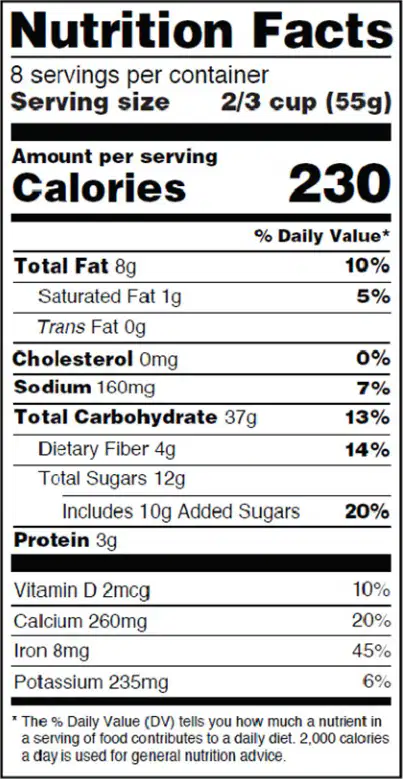
What is the serving size mentioned on the nutritional label?
1 cup (240ml)
2/3 cup (55g)
1/2 cup (120ml)
1/4 cup (60g)
How many calories are there per serving according to the nutritional label?
150
200
230
250
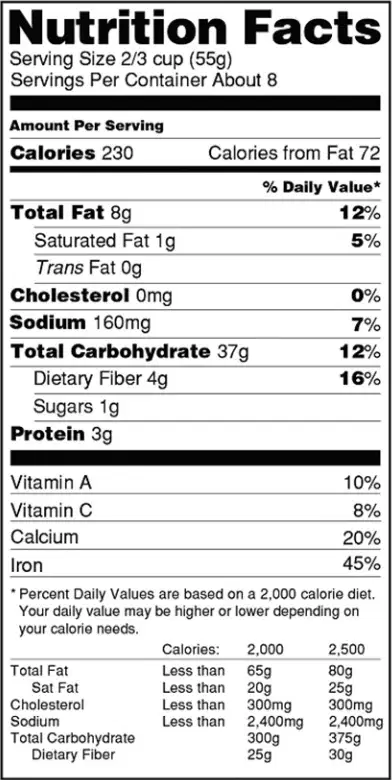
What is the total fat content per serving as shown on the nutritional label?
5g
8g
10g
12g
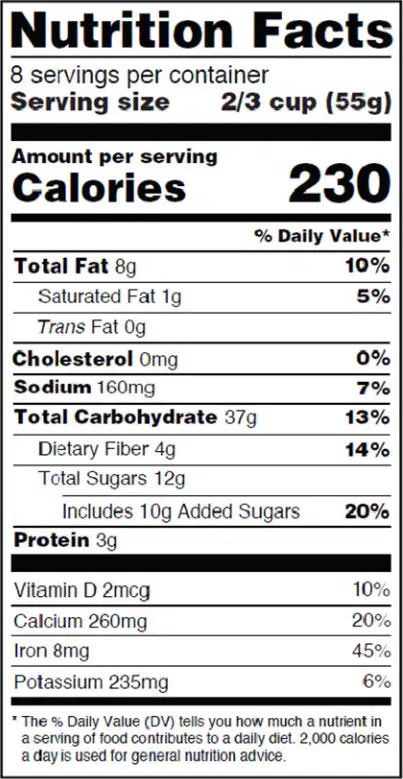
According to the nutritional label, what is the sodium content per serving?
100mg
160mg
200mg
250mg
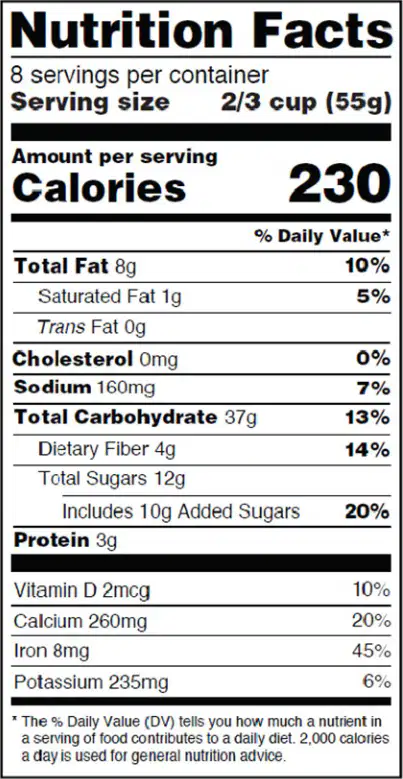
What is the dietary fiber content per serving as indicated on the nutritional label?
2g
3g
4g
5g
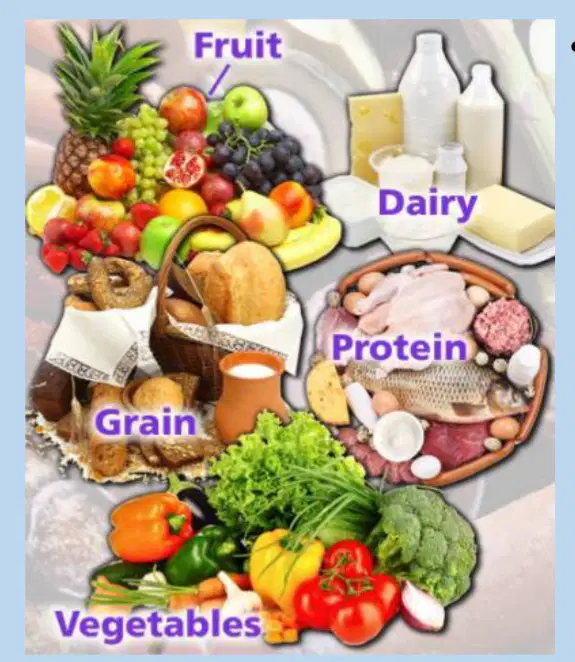
Which of the following is not one of the five food groups?
Grains
Vegetables
Sweets
Fruits
Which food group includes milk?
Protein
Dairy
Grains
Vegetables
Meat and beans are part of which food group?
Fruits
Vegetables
Protein
Dairy
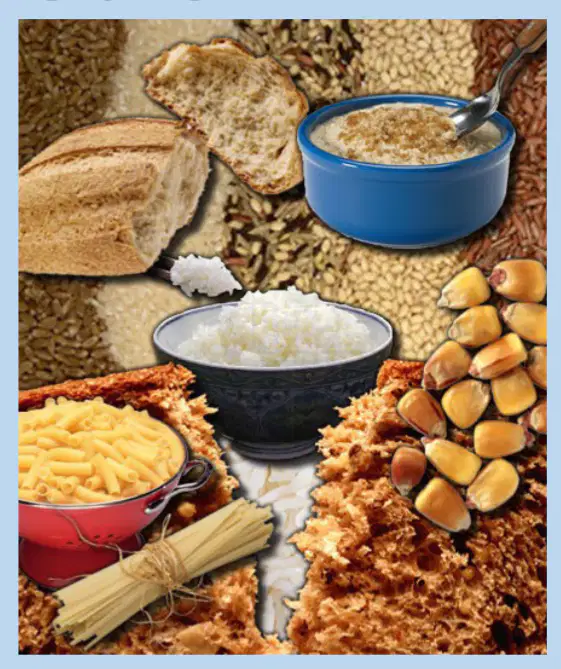
What is a characteristic of whole grains?
They contain the entire kernel
They are always refined
They have no fiber
They are low in B-vitamins
Which of the following is a type of whole grain?
Whole-wheat flour
White bread
White rice
Corn syrup
What happens to grains during the refining process?
The kernel is lost
The grains are enriched with fiber
The grains are left whole
The grains are made into flour
Why should whole grains be at least half of our diet?
They provide essential fiber, iron, and B-vitamins
They are low in calories
They are high in sugar
They are easier to digest
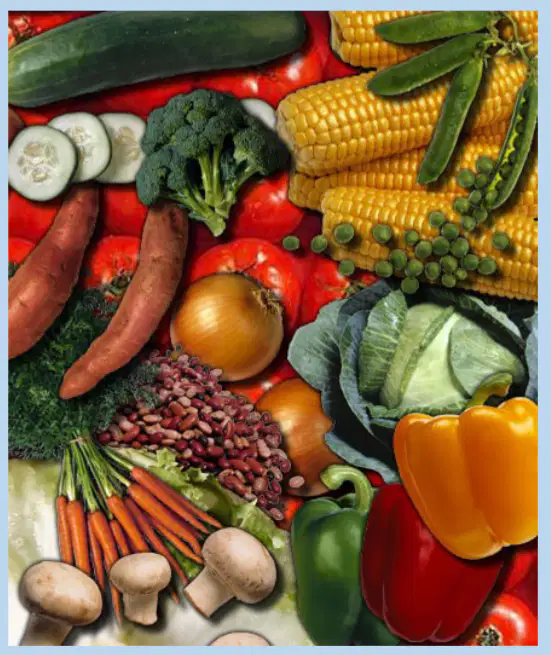
Which of the following is a dark green vegetable?
Carrots
Broccoli
Sweet potatoes
Mushrooms
Which category do sweet potatoes belong to?
Dark green
Orange
Starchy vegetables
Dry beans and peas
What is an example of a starchy vegetable?
Spinach
Tofu
Corn
Peppers
Why is variety important in a diet?
It helps in weight loss
It ensures a balanced intake of nutrients
It reduces food costs
It simplifies meal planning
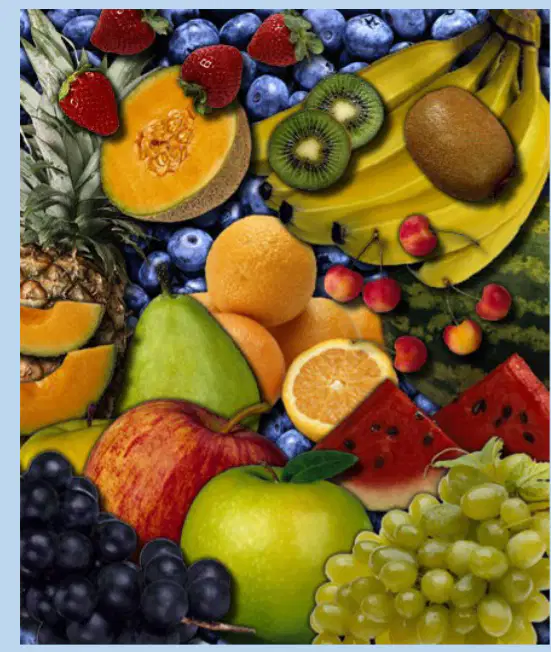
What is recommended regarding fruit consumption?
Eat only one type of fruit
Eat a variety of fruits
Avoid solid fruits
Consume fruits only once a week
Which nutrients are found in fruits?
Proteins and fats
Carbohydrates, vitamins, minerals, and fiber
Only vitamins
Only carbohydrates
How many servings of fruit are recommended per day?
1 serving per day
2 servings per day
4 servings per day
6 servings per day
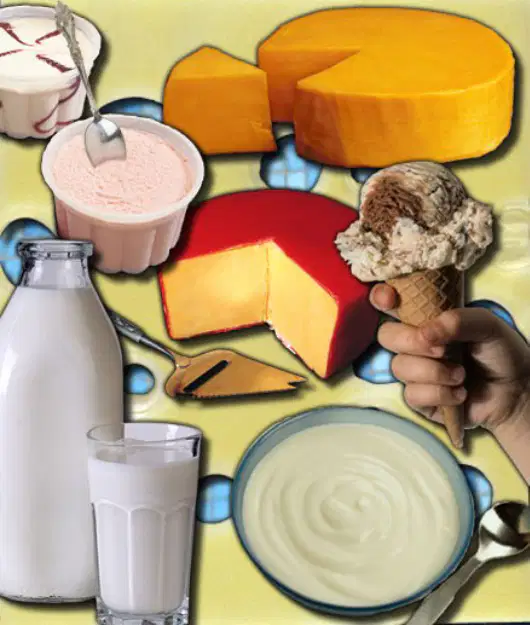
Which of the following is not included in the milk category?
Cheese
Yogurt
Cream
Pudding
What type of milk products should be chosen?
Full-fat
Fat-free or low-fat
Cream-based
Butter-based

