
NEW
Font size
 Worksheets
Science Final Exam Study Guide
Total questions: 33
Worksheet time: 3hrs 45mins
The unit of measure that is used when measuring the amount of force applied to an object is called?
net force
newton
pressure
tendency change
The tendency to resist change in motion is called?
weight
amplitude
mass
inertia
An object's' speed in a given direction is called?
instantaneous speed
average speed
acceleration
velocity
When a celestial object blocks another celestial object, it can cause a?
spring tide
earthquake
neap tide
eclipse
A transverse wave moves through a medium ____________ to the direction of particle movement.
angular
across
parallel
perpendicular
A longitudinal(compressional) wave moves through a medium ____________ to the direction of particle movement.
angular
across
parallel
perpendicular
In longitudinal waves, the parts where the coils are spread apart are called?
wavelengths
frequencies
rarefractions
compressions
Forces that are equal in magnitude but opposite in direction are _____ forces.
equilibrium
unbalanced
equinox
balanced
Forces You are pushing a box to the right with 20 N, while your friend is pulling the box to the left with 15N. What is the net force and which direction will the box move?
35 N to the right
35 N to the left
5 N to the right
5 N to the left
Forces Newton’s first law of motion best explains ______.
balanced forces
acceleration
friction
inertia
Which of Newton’s laws states that “for every action, there is an equal and opposite reaction”?
1st
2nd
3rd
4th
Which A feather falls through the air more slowly than a brick because of _____.
gravity
more mass
less mass
air resistance
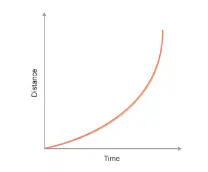
WhWhat is the BEST explanation for why the moon orbits around the Earth rather than the Earth orbiting around the moon?
constant speed
decreasing speed
deceleration
acceleration
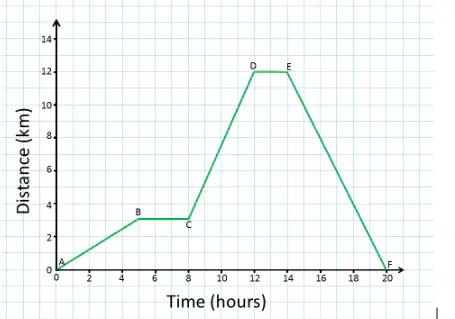
Use the graph below to answer the question: What motion is taking place between points BC and points DE? At these points the graphs lines are straight across horizontal
no motion
increasing speed
decreasing speed
constant speed
Bob’s dog can run 30 m in 6 seconds. Determine the dog’s speed.
180 m/s
36 m/s
5 m/s
24 m/s
Newton’s 1st Law of Motion states that an object stays at rest unless a(n) ________ force acts on it..
gravitational force
strong force
balanced force
unbalanced force
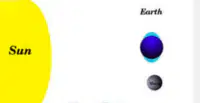
What type of tide would this arrangement of earth-moon-sun create? The arrangement is a 90 degree angle with the moon at the third quarter phase
new moon tide
full moon tide
neap tide
spring tide
What type of tide would this arrangement of earth-moon-sun create? The arrangement is a 90 degree angle with the moon at the third quarter phase
new moon tide
full moon tide
neap tide
spring tide
What moon phase is when a large section, not full, of the Moon facing Earth is lighted?
new
gibbous
full
crescent
What moon phase is when a small section, less than half, of the Moon facing Earth is lighted?
new
gibbous
full
crescent
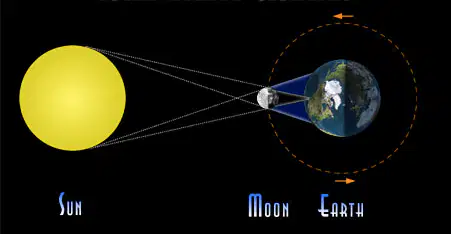
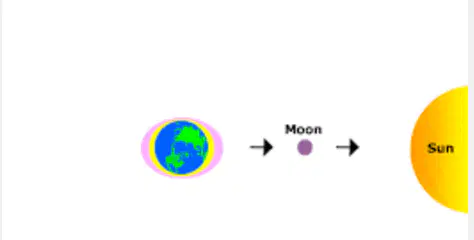
Which type of eclipse is shown in this diagram? Arrangement is SUN, MOON, EARTH in that order
narrow eclipse
solar eclipse
neap eclipse
lunar eclipse
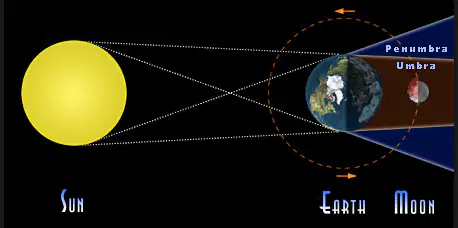
Which type of eclipse is shown in this diagram? Arrangement is SUN, MOON, EARTH in that order
narrow eclipse
solar eclipse
neap eclipse
lunar eclipse
Why do we experience the changing of the seasons on the earth?
distance from sun
different moon phases
solar output
tilt of Earth on its axis
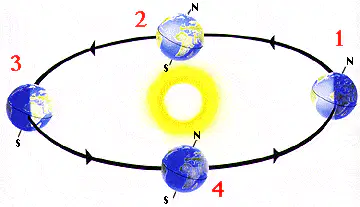
Which season is taking place in the Northern Hemisphere in position 3 of this diagram? The northern hemisphere is getting more direct sunlight in this picture
Spring
Summer
Fall
Winter
As the moon's shape appears to get smaller, we say that the moon is...
shrinking
waning
waxing
rarefaction
What causes the moon's phases
tilt of moon on its axis
tilt of Earth on its axis
light reflected from the sun onto the moon
gravitational changes in the moon's atmosphere
How does an atom become negatively charged?
losing electrons
gaining electrons
gaining metallic ions
losing metallic ions
Which of the following would be considered an electrical conductor?
rope
plastic straw
rubber hose
copper wire
Ethan claims that magnetism, electricity, and gravity are all non-contact forces. Which statement best supports his claim?
magnetic fields can create gravitational force
attraction and repulsion only occur with contact being made between forces
these forces exert a force on other objects without coming in to contact with them
these forces must be in contact with an object or exert a force
How is an electromagnet different than a regular magnet?
it is usually much larger in size than a regular magnet
a regular magnet needs an electric current to work properly
an electromagnet is magnetic when an electric current it ran through it
the law of electric charges only applies to regular magnets
According to Newton's second law of motion, a/an ________ force will cause an object to move in the direction of the force.
balanced
unbalanced
equal
gravitational
The acceleration of an object as produced by net force. F = m*a
Newton's 1st Law
Newton's 2nd Law
Newton's 3rd Law
Newton's Law of Gravitational force
For every action there is an equal and opposite reaction.
Newton's 1st Law
Newton's 2nd Law
Newton's 3rd Law
Newton's Law of Gravitational force

