
Font size
 Worksheets
Semester Exam Fall
Total questions: 228
Worksheet time: 5hrs 12mins
Which of the following is a example of physical change ?
burning of wood
photosynthesis
melting of ice-cream
ripening of fruit
Which of the following is a example of physical change ?
burning of wood
photosynthesis
melting of ice-cream
ripening of fruit

What does the picture represent ?
physical change
chemical change

Observe the picture and choose the correct option.
Irreversible physical change
Reversible physical change
Choose the picture that shows chemical change.


In physical change , the substance formed has different properties than the original substance.
True
False
A chemical change may involve
Evolution of gas
Change in temperature
Change in colour
All of the above
When a candle burns, both physical and chemical changes occurs.
True
False
Which of the following is an example of a physical change?
a bike rusting
toast burning
butter melting
food spoiling
Which of the following is an example of a chemical change?
a penny tarnishing
a mirror being scratched
hair being cut
water being boiled
Which of the following examples provides evidence of a PHYSICAL change?
Wood is burned and releases ash and smoke
Iron rusts over time
When mixed, baking soda and vinegar form gas bubbles
Boiling water bubbles when heated

A white tablet is dropped into water. The water becomes cloudy and bubbles are produced. What type of change has occurred?
Physical change
Chemical change
No change
Which observations prove a chemical change occurred
Dissolving and expected color change
Mixing and dissolving
State of matter change and boiling water bubbles
Unexpected color change and temperature change
What is physical change?
How two chemicals react with one another when combined
A property that we can measure or observe with our 5 senses or other tools
When two chemicals react with one another to form a new substance
When a change occurs but it does not result in the formation of a new substance
Which of these is a clue that a chemical change is happening?
Fizzing or bubbling
Color changes
Creation/loss of heat
All of these are clues that a chemical change is happening.

Which of the following is a sign that a chemical reaction (or change) has occurred?
change in shape
melting
formation of a gas
dissolving

Frying an egg to make an omelette is a _______________ change
Reversible change
Irreversible change

Students mixed two liquids in a beaker and listed their observations. Based on these observations, which statement contains the best evidence that a chemical reaction occurred?
There is a change in shape.
There is a change in volume.
The two liquids mix into a solution.
The two liquids form a new substance.
Which statement best describes evidence that a chemical reaction occurs as a cake bakes?
The water in the cake batter evaporates.
The cake rises as gas bubbles form in the baking cake.
The cake takes the shape of the container in which it is baked.
The water in the cake batter is used to keep the cake moist as it bakes.



We breathe oxygen. Its chemical formula is O2. Is this formula an element or a compound?
element
compound
neither
both
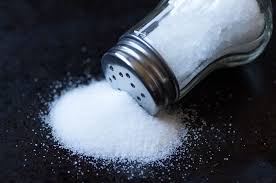
NaCl is the chemical formula for salt. Is NaCl considered a compound or an element?
element
compound
both
neither
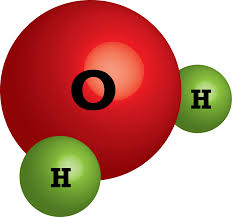
How many atoms of Hydrogen are in this compound?
1
2
3
4
What does the subscript in a chemical formula tell you?
How many molecules are present
How many atoms are present
How many elements are present
How many neutrons are present
three hydrogen (H)
one sulfur (S)
four oxygen (O)

How many total POTASSIUM atoms are in this formula?
8
2
4
12
How many Sodium atoms are in 6NaCl?
1
12
6
How many atoms are there TOTAL in H2SO4 ?
6
5
7
3
How many different elements are present in H2COCH2
5
4
3
2
Mg2As3COHNi2
H2SO4
How many Nitrogen atoms are in (NH₄)₂CrO₄?
1
2
8
16
How many Sodium atoms are in 6NaCl?
1
12
6
How many atoms are there TOTAL in H2SO4 ?
6
5
7
3

How many CARBONs are in this formula?
1
4
8
12
How many total POTASSIUM atoms are in this formula?
8
2
4
12

How many CARBON are in this formula?
5
2
10
20
How many chlorine atoms are in NaClO4 ?
1
2
4
What elements are represented in this chemical formula? Fe2O3
Iron, Oxygen
Francium, Europium, Oxygen
Ferrium, Oxygen
Berylium, Oxygen
What is the total number of atoms in this formula? H2O2
2
4
3
H2C3O4N5
Mg2As3COHNi2
How many total atoms in the following equation?
ClN6Fe2
6
8
10
9
The coefficient in 3H2O is:
6
5
3
2
The process of dissolving
dissolvability
Dissolution
Solution
Universal solvent

solvent
solute
solute + solvent =
solution
equation
Solutes dissolve quicker in _________ water.
cold
warm
The process of dissolving
dissolvability
Dissolution
Solution
Universal solvent
solvent
solute
solute + solvent =
solution
equation
Solutes dissolve quicker in _________ water.
cold
warm
Solutes dissolve quicker if you stir them.
true
false

solution
solute
solvent
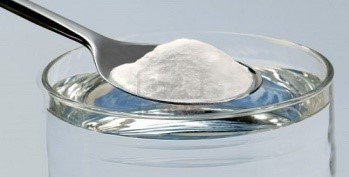

In which beaker does salt dissolves faster?
Hot water
Room temperature
Ice watet

solvent
solute

solute
solvent
solution

solvent
solute
Which one of the following is considered a SOLUTE?
Salt
Water
Salt Water
Which one of the following is considered a SOLVENT?
Salt
Water
Salt Water
Which one of the following is considered a SOLUTION?
Salt
Water
Salt Water
Dissolution is defined as
the ability to catch on fire
the ability to be dissolved
the ability to fly.
the ability to get on Mr. Anzures nerves.
What is the 'rate of dissolution'?
The speed at which a solute dissolves in a solvent
The amount of solute in a solution
The temperature of a solution
The color of a solution.
What is formed when a solute dissolves in a solvent?
Gas
Solid
Solution
Precipitate
An increase in temperature will increase the ______ of dissolving.
speed
color
weight
smell
Fill in the blank: The increase in temperature will cause the solvent particles to move ____.
Slower
Faster
Not at all
In circles
What is the 'rate of dissolution'?
The speed at which a solute dissolves in a solvent
The amount of solute in a solution
The temperature of a solution
The color of a solution.
What is formed when a solute dissolves in a solvent?
Gas
Solid
Solution
Precipitate
An increase in temperature will increase the ______ of dissolving.
speed
color
weight
smell
Fill in the blank: The increase in temperature will cause the solvent particles to move ____.
Slower
Faster
Not at all
In circles
Fill in the blank: The more surface area of the solute that is exposed to the solvent, the _______ the solute dissolves.
slower
faster
unchanged
True or False: Smaller pieces of a solute dissolve slower than larger pieces.
True
False
The solvent only interacts with the ______ of the solute.
entire
surface
inside
bottom
What does the term 'agitation' mean?
To mix or move something around
To heat something
To cool something
To separate something.
Stirring will move the ______ particles around and allow more solvent particles to collide with the solute particles.
solute
solvent
solid
liquid
Agitation allows more solvent particles to ______ with the solute particles.
collide
separate
dissolve
evaporate
What is the process called when stirring moves the molecules in a solution?
Evaporation
Agitation
Condensation
Sublimation
What are you calculating when you divide the distance an object travelled by the amount of time it took for that object to travel that distance?
velocity
slope
motion
speed
What are you calculating when you divide the distance an object travelled by the amount of time it took for that object to travel that distance?
velocity
slope
motion
speed
Distance ÷ Time =
velocity
speed
acceleration
direction
total distance travelled divided by total time is...
speed
velocity
acceleration
average speed
The speedometer in a car gives the car's _________ speed.
average
instantaneous
speed
velocity
The relationship between speed, distance, and time can be written as a(n) ________.
instantaneous speed
slope
equation
velocity
The SI unit for speed is_______.
meters per second
miles per hour
miles per second
meters per hour
The speed at which an object is moving at a given instant in time.
speed
Instantaneous speed
Average speed
final speed
speed in a given direction
velocity
average speed
instantaneous speed
speed
slope =
rise x run
rise + run
rise/run
run/rise
The _______ of a distance-versus-time graph shows you the speed of a moving object.
average
run
rise
slope
The rise of a line on a distance-versus-time graph is 900m and the run is 3 min. What is the slope of the line?
200 m/min
300 m/min
300 m/sec
200 m/sec
What two things do you need to know to calculate velocity?
direction and distance
speed and distance
speed and direction
Distance and time
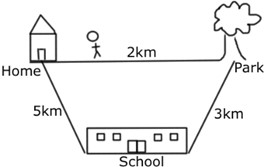
Jerry walked from home to school, then from the school to the park. What is his total distance?
2 km
5 km
8 km
10 km
Jerry walked from home to school, then from the school to the park. What is his total displacement?
2 km E
5 km E
8 km N
10 km NE

Two people walk across a parking lot. Their paths are shown in the image. Who traveled with a larger displacement?
Person A
Person B
They both had the same displacement.
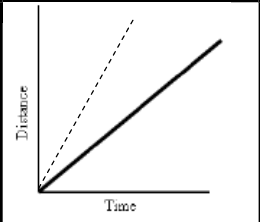

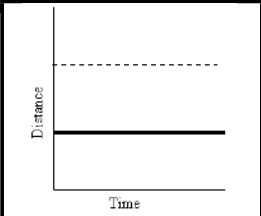
In which of the following graphs below are both runners moving at the same speed?


Match the description to the graph:
"The car is coming back."


Match the description to the graph:
"The car is traveling at a constant speed."


Which scene matches the graph?
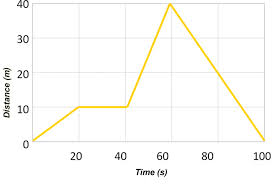
Jonathon walked to his girlfriends house - stayed a while then walked home
Justice rode her bike to the mall
Yeshua walked home from school


A ___________________ is the area of land where the surface water and groundwater drain into a particular body of water; separated from other watersheds by drainage divides
village creek
gully
stream channel
watershed

What occurs when used engine oil is poured into the pit in the ground?
The oil remains sealed in the small disposal pit and does not affect the groundwater.
The oil seeps through the soil until it leaks into the groundwater
The oil seeps through the soil but stops before it reaches the groundwater
The oil creates a barrier in Mrs. Dyess' room

Fertilizer can seep through the ground to reach groundwater, what effect can it have?
Fertilizer can cause groundwater to reverse flow
Fertilizer can cause groundwater to freeze
Fertilizer can cause groundwater to become undrinkable
It will seep into the school
These chemicals are expensive to produce.

Two forces are pushing on the cart with the SAME force. Which of the following best describes the forces and motion of the cart?
Balanced Forces
Balanced Forces
Net Force
25 N
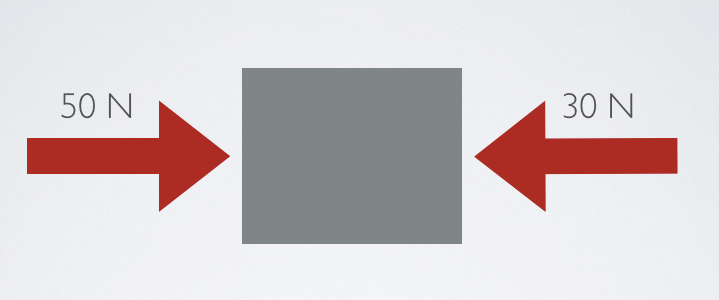
How will this object move?
It won't move.
It will move to the right.
It will move to the left.
It will move up.
Two forces are pushing on the cart with the SAME force. Which of the following best describes the forces and motion of the cart?
Balanced Forces
Balanced Forces
Net Force
25 N
How will this object move?
It won't move.
It will move to the right.
It will move to the left.
It will move up.


What is the net force?
30 N left
25 N right
5 N left
55 N right

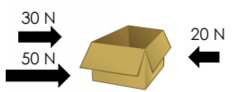


These forces are...
Balanced
Unbalanced

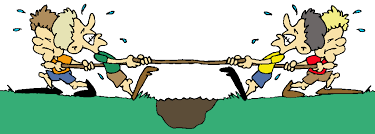
These forces are...
Balanced
Unbalanced

is the an example of a balanced force or unbalanced force?
balanced
unbalanced


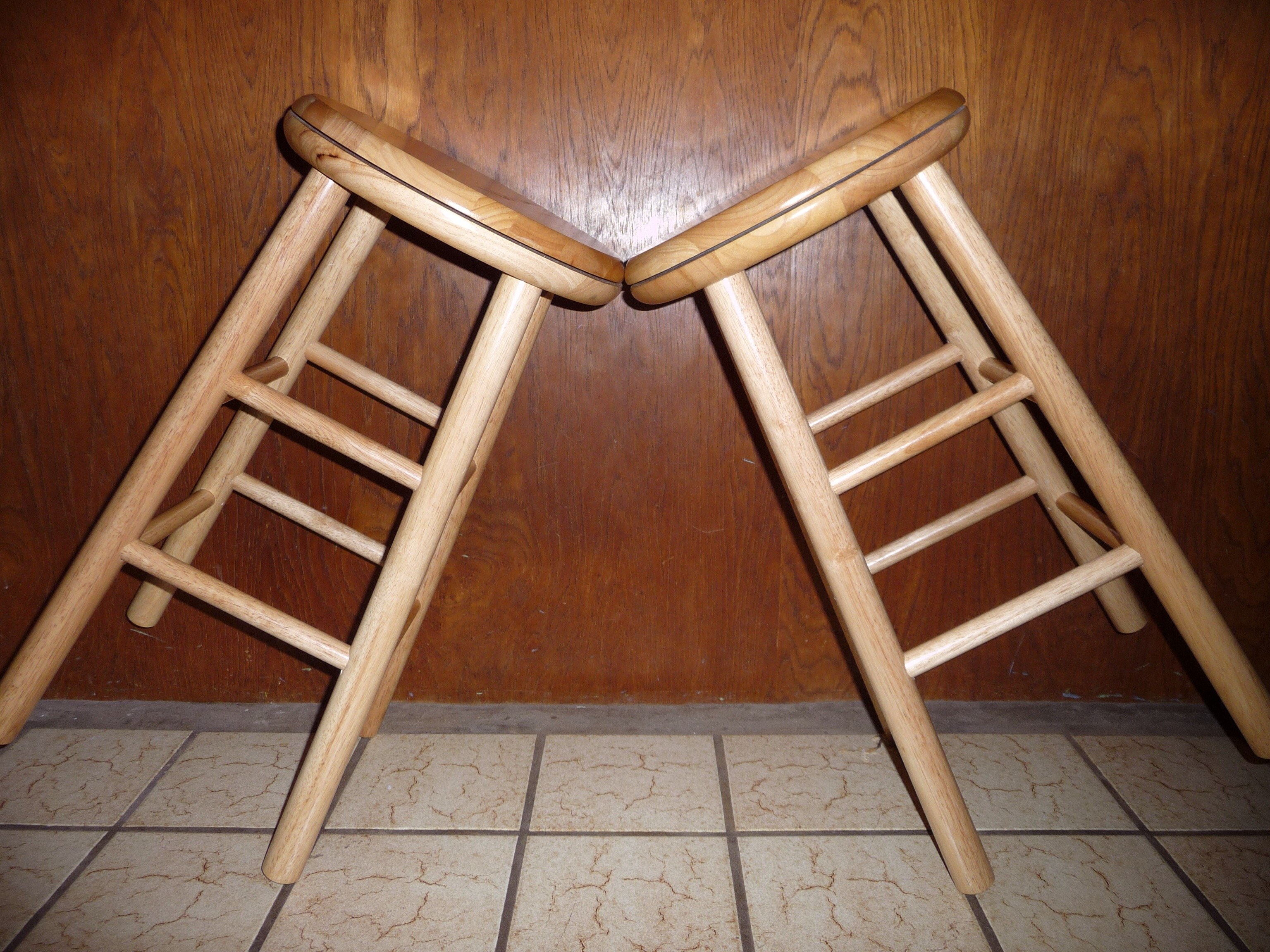
Which of the blocks above has balanced forces acting on it?
A
B
C
D
A balanced force will cause an object to move.
true
false
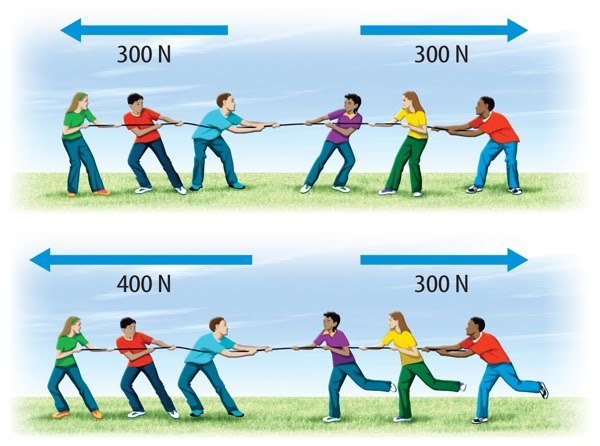
Forces that have a net force of Zero (0) are ______________.
Balanced force
Unbalanced force

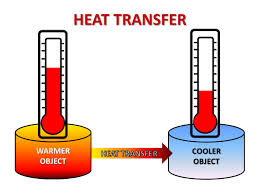
Heat ALWAYS moves from
cold to hot
hot to cold
it doesn't move
we destroy it
When I turn on my air conditioner I destroy the heat energy in the room. It is gone forever.
true, because that is how it works
true, because cold is stronger than hot
false, because the molecules are still moving just as fast
false, because I cannot destroy energy, only transfer it

What does an air conditioner do to the molecules of the air to make it cooler?
sucks the air out of the room
makes them go faster
Makes them slow down.
blows the air around the room

Which color shows molecules moving the SLOWEST?
red
purple
green
blue

As the heat moves what happens to the molecules?
they begin to move faster
they begin to move slower
they stop moving
they fly off the object





The type of plate boundary where two plates come together is a .....
Convergent Boundary
Divergent Boundary
Transform Boundary
Plate Boundary

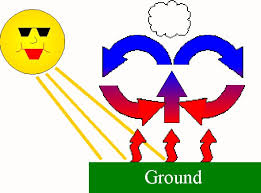
Which of the following causes Earth's tectonic plates to move?
Energy from the Sun
Magnetic Pole Reversal
Convection currents in the mantle
Faults in Mountain Ranges

A convergent boundary occurs when plates experience ________ force
Compression
Tension
Sheer
Subducting

Islands can from from magma which is pushed up at a __________ plate boundary
Divergent
Convergent
Transform

How is it possible for new crust to be formed without increasing the surface area of the Earth?
Crust is destroyed at the same time it is created
New crust is underwater where it sinks
New crust breaks more easily than old crust
Mountains are created when....
Two continental plates collide
Two oceanic plates pull apart
An Oceanic plate subducts under a Continental Plate
Two continental plates pull apart

Oceanic Trenches are formed by either _______ or _______ plate boundaries
Convergent Oceanic / Continental
Convergent Continental / Continental
Convergent Oceanic / Oceanic
Divergent

Ocean Ridges are formed by _______ plate boundaries
Convergent Oceanic / Continental
Convergent Continental / Continental
Convergent Oceanic / Oceanic
Divergent

Mountains are formed by _______ forces
Compression
Sheer
Tension
Divergent

Non-volcanic earthquakes are caused by _______ forces
Compression
Sheer
Tension
Divergent

Ocean ridges are caused by _______ forces
Compression
Sheer
Tension
Divergent

The outer layer of the Earth (the crust) is the...
Mantle
Asthenosphere
Lithosphere
Crust
The upper part of the mantle that is semisolid where convection pushes the tectonic plates
Mantle
Asthenosphere
Lithosphere
Crust
A divergent boundary occurs when plates experience ________ force
Compression
Tension
Sheer
Subducting
A transform boundary occurs when plates experience ________ force
Compression
Tension
Sheer
Subducting

What causes convection currents?
Hot magma rises while cool magma sinks
The rotation of the Earth
Ocean currents pulling plates apart
The spinning of the Earth's core

Oceanic crust is largely made of
Dense basalt rock
Light basalt rock
Dense granite rock
Light granite rock
Continental crust is largely made of
Dense basalt rock
Light basalt rock
Dense granite rock
Light granite rock

Why does oceanic crust subduct under continental crust?
Oceanic crust is thin
Oceanic crust is dense
Continental crust is thin
Continental crust is dense


What definition BEST describes a watershed?
An area where water infiltrates the soil
An area where aquatic plants and animals thrive
An area where snow melts and changes into liquid water
An area that collects precipitation and drains it to the lowest point
Which of the following human activities is LEAST likely to affect watersheds?
Flying in an airplane
Cutting down trees
Fertilizing lawns
Reading a book
Which statement about water pollution is TRUE?
Pollution only affects surface water.
Pollution cannot be dissolved in water.
Pollution affects both surface and groundwater.
Pollution cannot travel through soil to groundwater.

Pollutants from a factory that enter the water in a watershed will have a negative effect on which of the following?
Local pond life
Rainfall rates
Direction of river flow
Available space for crops

A neighborhood in a small Texas town had to be evacuated because the houses were sinking due to a problem in the aquifer. What is the most likely cause of this problem?
Heavy rains caused oversaturation of soil foundations.
Overbuilding in the area polluted the ground water.
Runoff from fertilized land created a dead zone.
Excessive removal of water weakened the ground.

The use of pesticides and fertilizers is carefully monitored because of the effect they can have on the environment. Which of the following is a possible negative effect of the use of these chemical on the environment?
These chemicals are expensive to produce.
Runoff carries these chemicals into lakes and streams.
Storage space for these chemicals is limited.
Theses chemicals cannot be purchased in large bulk.

Aquifer is an area of permeable rock on the land surface that holds groundwater.
True
False

Which of the following best describes water table?
It is in unsaturated zone.
It is a surface water
it is the top of saturation zone.
It is an aquifer.

Rapid growth of algae in a pond is often the result of -
loss of habitat due to commercial building.
flooding that causes water levels to rise.
excess nutrients from fertilizer runoff.
clogged river tributaries entering a lake.

Runoffs recharge lakes and streams.
True
False
Humans depend on the ocean for all of the following except?
Food
Transportation
Trash Storage
Jobs
Oceans play an important role in what important global cycle?
Carbon dioxide levels
Water Cycle (Freshwater production)
Oxygen production
All of the above
Which of the following is not a renewable energy source produced by the ocean?
Oil and gas
Wave energy
Current energy
Wind Energy
Which of the following is not a non-renewable resource produced by the ocean
Current energy
Oil
Natural gas
Minerals like copper and gold
Which of the following ocean activity does NOT contribute to the world's economy?
Commercial Fishing
Tourism
Transportation
Mining Polution
Is the following an example of a positive or negative impact on the earth's ocean systems?
Artificial reefs placed on the seafloor enhance marine life by creating new reef habitats.
Positive Human Impact on Ocean Systems
Negative Human Impacts on Ocean Systems
Is the following an example of a positive or negative impact on the earth's ocean systems?
Commercial fishing nets often times scrape the seafloor scooping up everything in its path. Dredge fishing destroys habitat and kills bycatch (fish, sharks, and other marine life caught unintentionally).
Positive Human Impact on Ocean Systems
Negative Human Impacts on Ocean Systems
Is the following an example of a positive or negative impact on the earth's ocean systems?
Fertilizers from farms runoff into rivers and create dead zones at the mouth of rivers in our world's oceans.
Positive Human Impact on Ocean Systems
Negative Human Impacts on Ocean Systems
Is the following an example of a positive or negative impact on the earth's ocean systems?
Fishing licenses regulate the number of fish and the size of fish that can be caught.
Positive Human Impact on Ocean Systems
Negative Human Impacts on Ocean Systems
Is the following an example of a positive or negative impact on the earth's ocean systems?
Fishing regulations create fishing seasons (time of year people are allowed to fish) to allow fish the opportunity to reproduce and increase species population.
Positive Human Impact on Ocean Systems
Negative Human Impacts on Ocean Systems
Is the following an example of a positive or negative impact on the earth's ocean systems?
The great pacific garbage patch collects trash from our oceans currents from around the world.
Positive Human Impact on Ocean Systems
Negative Human Impacts on Ocean Systems
Is the following an example of a positive or negative impact on the earth's ocean systems?
Recycling trash helps prevent plastic and other unwanted trash from entering our ocean systems.
Positive Human Impact on Ocean Systems
Negative Human Impacts on Ocean Systems
Is the following an example of a positive or negative impact on the earth's ocean systems?
Human development in wetlands, estuaries, and protected bays.
Positive Human Impact on Ocean Systems
Negative Human Impacts on Ocean Systems
Is the following an example of a positive or negative impact on the earth's ocean systems?
An increase in carbon emissions means the oceans are absorbing more carbon dioxide which results in more acidic ocean water.
Positive Human Impact on Ocean Systems
Negative Human Impacts on Ocean Systems
Is the following an example of a positive or negative impact on the earth's ocean systems?
Warmer global temperatures have caused glaciers to melt resulting in higher ocean levels which displace humans and destroy wetlands.
Positive Human Impact on Ocean Systems
Negative Human Impacts on Ocean Systems
Is the following an example of a positive or negative impact on the earth's ocean systems?
Educating the public helps communities generate interest and engages the public which results in awareness, knowledge, and understanding of the importance of our ocean systems.
Positive Human Impact on Ocean Systems
Negative Human Impacts on Ocean Systems
Is the following an example of a positive or negative impact on the earth's ocean systems?
Warmer ocean waters create more frequent and stronger storms
Positive Human Impact on Ocean Systems
Negative Human Impacts on Ocean Systems
Which of the following is NOT a way to help our oceans?
Using reusable bags when grocery shopping
Conserving water
Riding a bike instead of driving a car
Littering

