
 Worksheets
ENVIRO SCI FALL REV 2024
Total questions: 100
Worksheet time: 2hrs 43mins
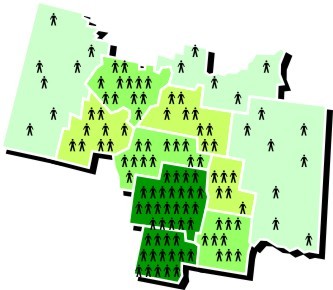


Which of the following is NOT a potential limiting factor of human population growth?
disease
war
medicine
famine

Name the type of pyramid in the picture.
slow growth
rapid growth
zero growth
negative growth


Which of the following age structure diagrams demonstrates little to no growth in the population?


none of the above
Which of the following age structure diagrams demonstrates POSITIVE, RAPID growth in the population?
none of the above
Wealthy, old, low birth and death rates, Industrialized, slow growth
Developed Nation
Developing Nation
Poor, Young, High Birth and Death Rates, Population Increasing rapidly, Agricultural
Developed Nation
Developing Nation
When a population grows past the ecosystem's carrying capacity, what most likely happens to the population?
The population continues to grow
The population starts to die off to return to carrying capacity
The population will go completely extinct due to lack of resources
A limiting factor that is density-independent is something that affects a population regardless of the size of the population.
A limiting factor that is density-dependent is something that can have a greater effect if a population is larger, such as disease, competition of resources, and predation.
Which of the following limiting factors is density-independent?
water
food
natural disasters

If the carrying capacity of a predator decreases, what will happen to the carrying capacity of the prey?
increase
stay the same
decrease

The graph shows the interaction of the wolf and moose populations in Yellowstone National Park. If the moose population continues to increase, the wolves' food supply will increase.
What will most likely happen to the wolf population as a result?
increase
stay the same
decrease
Any thing or organism that regulates the size of a population is known as a __________.
limiting measure
carrying capacity
biodiversity
limiting factor

When did this population of rabbits reach its carrying capacity?
Beginning of May
Beginning of June
Beginning of July
Beginning of September

What is the difference between freshwater and marine ecosystems? Select 2 choices
A marine ecosystem is an aquatic ecosystem with high levels of dissolved salts in the water, freshwater ecosystem have low levels dissolved salts
A freshwater ecosystem is an aquatic ecosystem with high levels of dissolved salts in the water, marine ecosystem have low levels dissolved salts

What is this picture an example of in Figure 1?
Marine ecosystem
Watershed
Water Cycle
Carbon Cycle

What is an estuary?
a unique aquatic ecosystem where rivers flow into the open sea
Are ecosystems that are covered with water for at least part of the year.
Ecosystems with high dissolved salts
Ecosystems without trees

Plankton are tiny, free-floating organisms that can be found in which aquatic ecosystem____.
Freshwater ecosystems
Marine ecosystems
Wetlands & Estuaries
All of the above
Explain the greenhouse effect.
The process where plants use sunlight to create energy for consumers
Are pathways for the movement of matter within ecosystems
Allow light energy to pass through the atmosphere &
Prevent heat energy from escaping from the ground into space
What takes place when water is between the shore and the tide

Observe the image, a system of rivers, streams, and ponds represents which type of aquatic ecosystem?
Freshwater ecosystem
Marine ecosystem
What is the difference between the photic and aphotic zone?
Photic zone is has little to no sunlight, the aphotic zone is penetrated by sunlight
Photic zone is penetrated by sunlight, the aphotic zone has little to no sunlight
What do we call FRESH water that lies beneath the Earth's surface?
groundwater
lake
river
spring
What do we call massive pieces of slow moving ice?
Ice Shelf
Ice Floe
Glaciers
None of the Above
Which type of agriculture is mainly practiced in developed nations?
hunting and gathering
subsistence agriculture
commercial agriculture
fishing
Explain the concept of crop rotation in sustainable agriculture.
Crop rotation is a method where crops are planted randomly without any specific order.
Crop rotation involves planting the same crop repeatedly in the same area to deplete the soil nutrients.
Crop rotation involves planting different crops in the same area in sequential seasons to improve soil health, prevent pests and diseases, and increase crop yield.
Crop rotation is a technique used to reduce crop yield and increase soil erosion.
What role does organic farming play in sustainable agriculture?
Organic farming plays a crucial role in sustainable agriculture by promoting practices that maintain soil health, biodiversity, and natural resources.
Organic farming depletes soil health and natural resources
Organic farming promotes the use of harmful chemicals in agriculture
Organic farming has no impact on sustainable agriculture
Discuss the importance of reducing chemical pesticide use in sustainable agriculture.
Using more chemical pesticides leads to higher crop yields
Reducing chemical pesticide use in sustainable agriculture is crucial for protecting the environment, human health, and biodiversity.
Chemical pesticides have no impact on human health
Biodiversity is not affected by chemical pesticide use
A biological control uses a
Predator to control a pest
Pest to control a predator
Which chemical controls weeds?
Fungicide
Pesticide
Insecticide
Herbicide
Which chemical controls pests
Fertiliser
Pesticide
Herbicide
Fungicide

A way to control pests naturally with organisms that eat or infect them is called:
Biological Pest Control
Chemical Pesticides
Traditional Agriculture
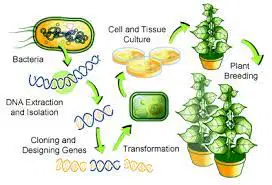
The manipulation of DNA of organisms by recombinant DNA technology is called:
Factory Farming
Genetically Engineering
Sustainable Agriculture
What is a major advantage of biological control over chemical pesticides?
Answer choices
It is a one-time solution that can be self-sustaining
It guarantees complete eradication of pests
It is cheaper and easier to implement
It requires no initial research or testing
chaparral
What are wetlands?
areas of land that are flooded at least part of the year
the ocean
lakes
estuaries
Found in clear, warm salt water with lots of sunlight; most marine organisms are found here.
river
swamp
coral reef
lake
For island biogeography, the founder effect is
an increase in biodiversity when an old population grows
a loss in genetic biodiversity when a new population is established from a larger one
a loss in biogeography when an island sinks
an increase in biogeography when an island emerges from the sea
Which Island has the best chance of being inhabited by new species from the mainland?
An Island that is small and far
An Island that is large and far
An Island that is small and close
An Island that is large and close
What part of the water cycle needs a living organism to occur?
Evaporation
Condensation
Transpiration
Precipitation
Describe how human's negatively impact the water cycle (short answer- need detail)
Pollution
Deforestation
Building on and paving areas
All of the above


What is this a picture of?
Nitrogen cycle
carbon cycle
water cycle
plant cycle


What is the frog considered in this food web?
producer
primary consumer
secondary consumer
tertiary consumer

Which organism DOES NOT pass energy directly to the eagle?
rat
thrush
frog
dragonfly
Which environmental factors MOST likely impact the formation of tornadoes in this area?
high-pressure systems colliding with other high-pressure systems
cold dry air and warm dry air moving toward each other
low evaporation rates and windy conditions
cool dry air colliding with warm moist air
Visible light reaches Earth’s surface while infrared light is trapped as heat. Which characteristic of Earth’s atmosphere causes this to happen?
the ozone hole
the inversion layer
the greenhouse effect
the atmospheric continuum
How is weather different from climate?
Weather is the average climate for a particular region.
Weather involves large areas, while climate involves a smaller area.
Weather focuses on long-term observations, while climate focuses on short-term observations.
Weather focuses on short-term changes to the atmosphere, while climate focuses on long-term changes.
An iceberg breaks off of a glacier and floats into the ocean. In the ocean, the iceberg begins to melt. Which temporary effect does this melting have on ocean water in the immediate area of the iceberg?
The melting ice lowers the freezing point of the ocean water.
The melting ice reduces the salinity of the ocean water.
The melting ice releases the carbon dioxide stored in ocean water.
The melting ice increases the acidity of the ocean water.
Which is a major source of air pollution?
planting more trees in forest areas
building dams for hydroelectric plants
the production of energy using solar and nuclear power
farms raising large numbers of animals such as cows and pigs
Which of the following does NOT exert a major influence on Earth's overall climate?
The distribution of land masses and oceans, in combination with Earth's topography.
The daily rotation of Earth on its axis, along with its annual revolution around the sun.
The annual amount of solar radiation that reaches Earth's surface.
All of these can exert a major influence.
The Coriolis Effect is a result of the Earth's ____.
rotation
gravity
curvature
temperature
An underground layer of sediment or rock that holds water is known as...
Reservoir
Watershed
Aquifer
Runoff

Look closely at the map of the watershed below. If water enters the watershed at the top of the mountain where the arrow is pointing, at which point will it stop draining?
Point A
Point B
Point C
Point D

The boundaries of a watershed are determined by ___________
Elevation
Soil type
The amount of water that flows
The kinds of organisms found in the area
I. Flood irrigation
II. Drip irrigation
III. Low-pressure central pivot irrigation

The picture represents a(n) ___ event.
El Nino
La Nina
Non-El Nino (normal conditions)

what region within the Earth's stratosphere where the concentration of ozone (O3) molecules is higher than the surrounding atmosphere?
Ozone Layer
Coriolis Effect
Exosphere
Ferrel Cells

what are parts of the ENSO climate pattern?
Coriolis Effect
El Niño/El Niña
Thermohaline Circulation
Polar Cells

What is the thermohaline circulation?
A global circulation pattern of ocean water driven by differences in temperature and salinity
A type of cloud formation
A phenomenon caused by volcanic activity
A region with heavy rainfall due to mountainous terrain


What type of event will occur at this boundary?
Earthquake
Volcano Eruption
Tornado
Mountain Building
Which of the following is the correct description for cross-breeding
Crossing two plants of the same species, but each parent plant has a different number of chromosomes
Breeding two compatible species in hopes of creating an offspring with the desired traits
Plant cells from two distinct species are fused together to form a new hybrid plant
Exposing seeds to chemicals or radiation to promote genetic mutations in hopes that the mutation will produce a desirable trait
What is one reason some people are AGAINST the use of genetically modified organisms, such as Bt corn?
We do not know the potential health effects for humans and other organism
It helps solve world hunger
It is harmful to farmers in the field
It allows us to stop spraying pesticides
Which of these may be a cause of non-point source pollution?
back-siphoning of pesticide spills at a wellhead
leaching from a pesticide mixing area
pesticides that dissolve and leach through the soil after a rainfall
dumping leftover pesticide products down a well

The table below shows what happens to an insect population before and after a pesticide is added.
Which of the following best explains why more of the pesticide-resistant insects were present in the second generation?
Because of the pesticides in plants, insects in the second generation developed a tolerance for pesticides
Because of heredity, insects with genes for pesticide resistance passed it on to the following generation
Because of the environment, parent insects taught their offspring to be pesticide resistant in order to survive
Because of heredity, insects learned to avoid pesticides on plants
Pollution can be...
gases
smoke
chemicals
all of the above

How long does it take plastic to decompose?
10,000
1000
5000
50,000
Which of the following is the correct description for cross-breeding
Crossing two plants of the same species, but each parent plant has a different number of chromosomes
Breeding two compatible species in hopes of creating an offspring with the desired traits
Plant cells from two distinct species are fused together to form a new hybrid plant
Exposing seeds to chemicals or radiation to promote genetic mutations in hopes that the mutation will produce a desirable trait
How are GMOs created using bioengineering?
A desirable gene is removed from one organism and inserted into another organisms genome
Two different organisms with desired genes are mated
Bacteria with good genes are inserted into other organisms
An undesirable gene is found, removed, and replaced with the desirable form of the gene

