
 Worksheets
American History 1st Semester Practice Final
Total questions: 69
Worksheet time: 35mins
Name
Class
Date
1.
The Radical Republicans opposed President Lincoln's plan, saying it was too
a)
harsh on the South.
b)
easy on the South.
c)
generous to the freed people.
d)
difficult to carry out.
2.
The Radical Republicans with the Reconstruction Act of 1867
a)
closed the south to Republicans
b)
broke the south up into military districts/punished them
c)
made scalawags illegal
d)
gave voting rights to all people, black and white, men and women
3.
In 1870, thanks to the Fifteenth Amendment, southern black men
a)
voted for the first time.
b)
took charge of the Senate.
c)
received free government land.
d)
produced their own Reconstruction plan.
4.
Which of the following was NOT used by southern states and southern whites to keep African Americans from voting?
a)
Poll tax
b)
15th Amendment
c)
KKK
d)
Literacy test
5.
In the case of Plessy v. Ferguson, the Supreme Court
a)
declared segregation unconstitutional.
b)
established the “separate-but-equal” doctrine, upholding segregation.
c)
ordered public school districts to upgrade schools for African Americans.
d)
ordered universities to enroll more women and African Americans.
6.
Many agreements between Native Americans and the federal government fell apart because
a)
Native Americans and settlers had differing concepts of land ownership.
b)
Native Americans wanted to work as tenant farmers or sharecroppers.
c)
Many settler objected to the reservation system.
d)
Most of the treaties were never signed.
7.
What was one key requirement that applicants had to meet to receive land under the Homestead Act?
a)
They had to live on the land all year long.
b)
They had to farm the land for five years in a row.
c)
They had to file a claim with a bank
d)
They had to wheel portable cabins from plot to plot.
8.
One way the government sought to change Native Americans through the Dawes Act was by
a)
teaching them to hunt buffalo
b)
requiring them to farm individual plots (their own land)
c)
finding them jobs on the railroads
d)
requiring them to move to growing cities
9.
Which is not a PULL factor for westward expansion?
a)
free land
b)
discrimination
c)
gold mining
d)
jobs on the railroads
10.
In their platform, the Populists included provisions for
a)
free silver (the bimetallic standard), a progressive income tax, and an eight-hour day.
b)
changing to the gold standard and ending any government regulation of business.
c)
private ownership of communications and transportation systems.
d)
excluding African Americans from Populist Party membership.
11.
John D. Rockefeller gained control over much of the oil industry by
a)
managing a trust made up of Standard Oil and allied companies.
b)
buying large sections of the transcontinental railroad.
c)
going into partnership with Andrew Carnegie.
d)
charging higher prices than his competitors.
12.
Which of the following made possible the American industrial growth of the late 1800s?
a)
the household economy
b)
technological advances
c)
government reforms
d)
the development of labor unions
13.
During the late 1800s, children often worked in factories because
a)
their parents believed in the process of "natural selection".
b)
families needed the income to survive.
c)
employers offered high wages to skilled children.
d)
there were no public schools for children to attend.
14.
Why did many immigrants support political machines?
a)
political machines were free of corruption.
b)
political machines provided them with jobs.
c)
political machines put powerful "bosses" out of business.
d)
political machines fought against crime in the slums.
15.
The Progressive movement focused mainly on the problems of
a)
African Americans.
b)
urban residents.
c)
tenant farmers.
d)
non unionized workers.
16.
In 1906, Upton Sinclair's novel entitled The Jungle exposed dangerous workplace conditions
a)
in the meatpacking industry.
b)
for women in the garment industry.
c)
for children working long hours.
d)
for miners in West Virginia and Colorado.
17.
Most Progressives agreed that the government should
a)
nationalize industries
b)
abolish home rule in cities and states.
c)
use the government for reform (protect workers and help the poor for example)
d)
outlaw unions.
18.
In the 1890s, immigration patterns shifted dramatically, with most immigrants now coming from
a)
northern European countries
b)
southern and eastern European countries, Asia and Mexico
c)
Mexico and Central America
d)
China and Japan
19.
Which of the following was a major economic argument for expansion?
a)
The United States needed new markets for its goods.
b)
Many United States industries were short of labor.
c)
Foreign goods were often superior to American products.
d)
Americans needed the respect of foreign countries.
20.
The main goal of the Ku Klux Klan during Reconstruction was to
a)
prevent African Americans from exercising their rights.
b)
gain control of state legislatures.
c)
restore the Confederacy.
d)
improve conditions for poor whites.
21.
Critics of powerful industrialists who saw them as ruthless referred to them as
a)
captains of industry
b)
philanthropists
c)
robber barons
d)
anarchists
22.
The idea that wealth and technological advances "covered up" some deeper issues and problems as seen in the term
a)
The Progressive Era
b)
The Gilded Age
c)
Reconstruction South
d)
The Roosevelt Presidency
23.
The Bessemer process was key to American industrialization. What product did it revolutionize?
a)
steel
b)
airplanes
c)
oil
d)
kerosene
24.
What political party did Teddy Roosevelt help start?
a)
Republican
b)
Democrat
c)
Progressive (Bull Moose)
d)
Socialist
25.
Journalists known as muckrakers worked at
a)
praising government policies.
b)
exposing problems that needed to be fixed.
c)
attacking the ideas of socialists.
d)
opposing government regulation of business.
26.
During the late 1800s, the port of entry for most immigrants was
a)
Boston
b)
San Francisco
c)
Philadelphia
d)
New York City
27.
This book did much to expose the living conditions of those in slum tenements
a)
How the Other Half Lives
b)
Uncle Tom's Cabin
c)
The Jungle
d)
The Shame of the Cities
28.
The sinking of this ship pushes the US closer to the Spanish-American War.
a)
USS Maine
b)
Lusitania
c)
USS Arizona
29.
At Homestead, __________ sent Pinkerton detective agents to break the strike leading to several deaths.
a)
Frick
b)
Carnegie
c)
Rockefeller
d)
Southfork
30.
The system by which government jobs are given to those that had helped someone get elected is known as
a)
The Spoils System
b)
favoritism
c)
The Merit System
d)
A Political Machine
31.
This President was killed by someone who thought he deserved a job under the spoils system.
a)
Lincoln
b)
Garfield
c)
Kennedy
d)
Harrison
32.
Even though we know much about the War for the Black Hills we have no idea what ___________ ______________ looked like
a)
General Custer
b)
Sitting Bull
c)
Crazy Horse
d)
Red Cloud
33.
The most famous name of those killed at Little Bighorn.
a)
General Custer
b)
Sitting Bull
c)
Crazy Horse
d)
Red Cloud
34.
Harriet Beecher Stowe authored a best selling novel that greatly influenced Northern attitudes toward slavery. It was
a)
How the Other Half Lives
b)
The Jungle
c)
Uncle Tom's Cabin
d)
The Influence of Sea Power on History
35.
The "turning point" of the Civil War was the Confederate loss at the Battle of
a)
Gettysburg
b)
Shiloh
c)
Antietam
d)
Vicksburg
36.
What one word best describes the attitude and mindset of the Progressive Era?
a)
Reform
b)
Corruption
c)
Laissez-faire
37.
What did more to end the Progressive Era than anything else?
a)
World War I
b)
Progressive were frustrated because nothing was getting finished
c)
Progressives had already destroyed the Jim Crow system
d)
World War II
38.
Which amendment created Prohibition?
a)
16
b)
17
c)
18
d)
19
39.
Which amendment gave women the right to vote?
a)
13
b)
14
c)
15
d)
19
40.
The factory that spotlighted the worst dangers of sweatshops
a)
Triangle Shirtwaist Factory
b)
Carnegie Factory
c)
Lowell Factory
41.
During the Gilded Age, during a strike which side did the government support?
a)
labor/worker
b)
owners/management
c)
they were neutral
d)
all of these
42.
Building the Panama Canal and everything that went into that process is an example of the US breaking out of its history of isolationism.
a)
True
b)
False
43.
Which of these influenced American Foreign Policy greatly with his Farewell Address?
a)
Washington
b)
Adams
c)
Jefferson
d)
TR
44.
Who were the main targets of the Ku Klux Klan's terror?
a)
white fundamentalists.
b)
African Americans
c)
police officers and city officials.
d)
gamblers, gangsters, and prostitutes.
45.
US foreign policy for the first 100 years of its history
a)
Interventionalism
b)
Gradualism
c)
Isolationism
d)
Big Stick Diplomacy
46.
A larger more active government such as that during the Progressive Era would be a shift to the
a)
Left
b)
Right
c)
Middle
d)
Reactionary
e)
Radical
47.
Laissez-faire and Social Darwinism would be a shift to the
a)
Right
b)
Left
c)
Middle
d)
Reactionary
e)
Radical
48.
Those far out on the political spectrum, such as the Republicans immediately after the Civil War
a)
Radical
b)
Left
c)
Right
d)
Middle
e)
Reactionary
49.
Divides power between the state and national government
a)
federalism
b)
limited government
c)
rule of law
d)
popular sovereignty
e)
judicial review
50.
There are certain things the government is not allowed to do.
a)
limited government
b)
rule of law
c)
popular sovereignty
d)
federalism
e)
judicial review
51.
This gives each branch ways to keep the other branches from gaining too much power.
a)
checks and balances
b)
limited government
c)
rule of law
d)
popular sovereignty
e)
federalism
52.
This allows the Supreme Court to make sure Congress and the President are following the rules of the Constitution.
a)
judicial review
b)
limited government
c)
rule of law
d)
popular sovereignty
e)
federalism
53.
Constitutional amendment that ended slavery
a)
13
b)
14
c)
15
d)
16
e)
17
54.
Constitutional amendment that guaranteed equal protection of the laws and made anyone born in the US a citizen
a)
14
b)
13
c)
15
d)
16
e)
17
55.
Short, vague document that established our government
a)
US Constitution
b)
Declaration of Independence
c)
Bill of Rights
d)
Emancipation Proclamation
e)
Monroe Doctine
56.
Promised freedom to slaves but actually did not free anyone at the time
a)
Emancipation Proclamation
b)
Declaration of Independence
c)
US Constitution
d)
Bill of Rights
e)
Monroe Doctine
57.
The Prince of Steel
a)
Andrew Carnegie
b)
John D. Rockefeller
c)
Theodore Roosevelt
d)
Upton Sinclair
e)
Thomas Edison
58.
Invented the telephone.
a)
Alexander Graham Bell
b)
Andrew Carnegie
c)
John D. Rockefeller
d)
Theodore Roosevelt
e)
Upton Sinclair
59.
Industrialist who established the Standard Oil Company.
a)
John D. Rockefeller
b)
Andrew Carnegie
c)
Theodore Roosevelt
d)
Upton Sinclair
e)
Thomas Edison
60.
Author of the Jungle
a)
Upton Sinclair
b)
Andrew Carnegie
c)
John D. Rockefeller
d)
Theodore Roosevelt
e)
Thomas Edison
61.
Invented the light bulb
a)
Thomas Edison
b)
Andrew Carnegie
c)
John D. Rockefeller
d)
Theodore Roosevelt
e)
Upton Sinclair
62.
First family of railroads
a)
'The Commodore' Vanderbilt
b)
Andrew Carnegie
c)
John D. Rockefeller
d)
Theodore Roosevelt
e)
Upton Sinclair
63.
"Rough riding trust buster"
a)
Theodore Roosevelt
b)
Andrew Carnegie
c)
John D. Rockefeller
d)
Upton Sinclair
e)
Thomas Edison
64.
Early suffrage leader who got arrested for trying to vote.
a)
Susan B Anthony
b)
Andrew Carnegie
c)
John D. Rockefeller
d)
Theodore Roosevelt
e)
Upton Sinclair
65.
"Rosa Parks of the Progressive Era"--arrested for riding in the wrong car on a train
a)
Homer Plessy
b)
Andrew Carnegie
c)
John D. Rockefeller
d)
Theodore Roosevelt
e)
Upton Sinclair
66.
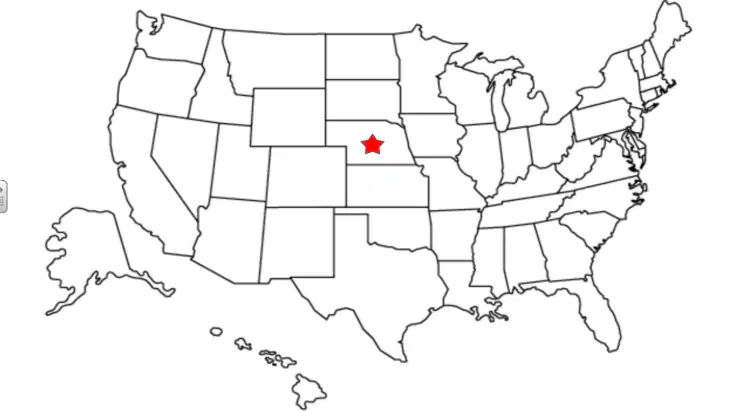
Name the State with the Star
a)
Nebraska
b)
Iowa
c)
Ohio
d)
Vermont
67.
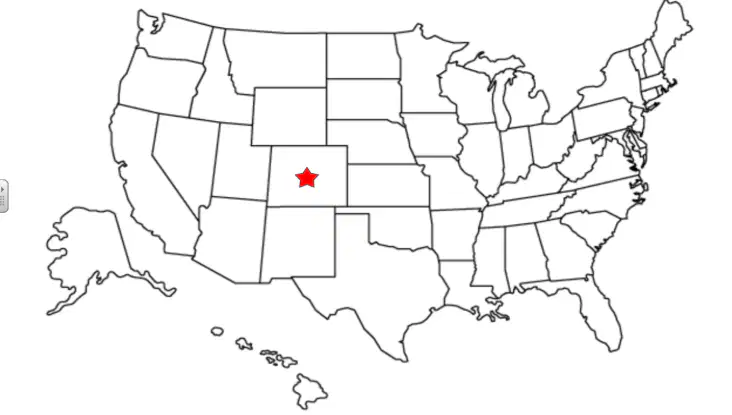
Name the state with the star
a)
Florida
b)
Colorado
c)
Texas
d)
New York
68.
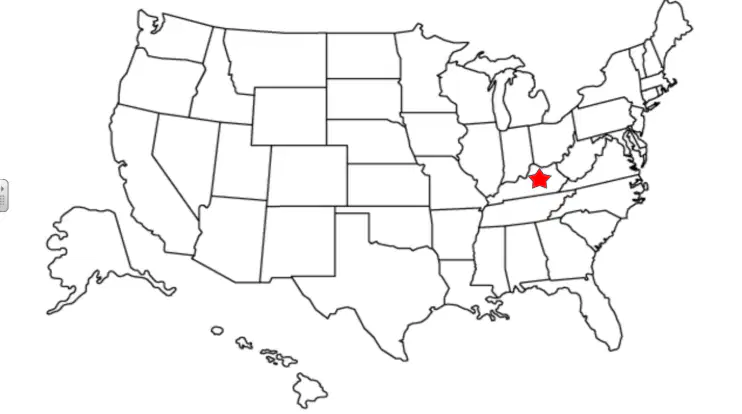
Name the state with the star
a)
Tennessee
b)
Kentucky
c)
Oklahoma
d)
New Mexico
69.
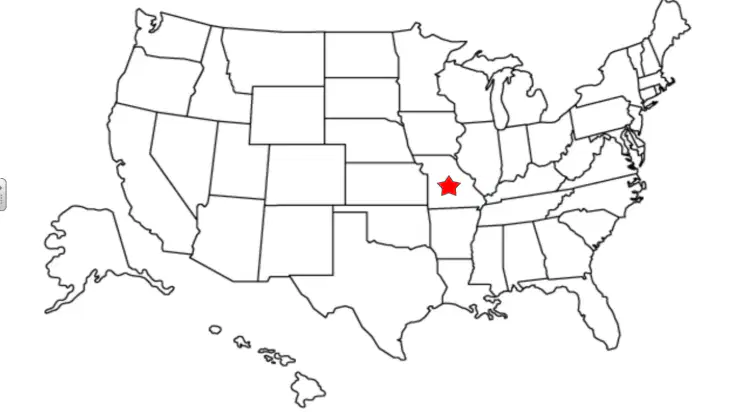
Name the state with the star
a)
Iowa
b)
Alabama
c)
Illinois
d)
Missouri
100 %

