
Font size
 Worksheets
Fall 2024 IB SEHS FINAL EXAM REVIEW
Total questions: 72
Worksheet time: 36mins
Lipids are a macronutrient. Which are functions of lipids? [select ALL that apply]
To build hormones
To build muscle tissue
To store energy
Which characteristic distinguishes unsaturated fatty acids from saturated fatty acids?
Ability to bond to glycerol
Composition of carbon, hydrogen and oxygen
Plant origin
Presence of double bonds between carbon atoms
Which option states the approximate energy content of 100 g of protein?
100 kJ
1720 kJ
1760 kJ
4000 kJ
Which food is most likely to promote growth and repair of muscles?
White rice
Green apple
Red lentils
Olive oil
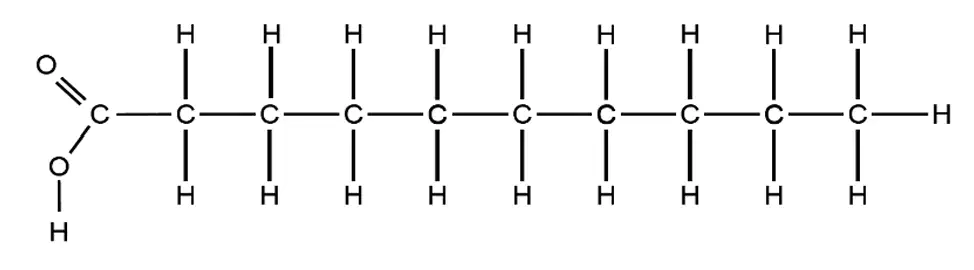
What type of fatty acid is represented in the diagram?
Trans fat
Monounsaturated fat
Polyunsaturated fat
Saturated fat
What are the general recommendations for a healthy balanced diet?
Carbohydrate: 10–15%, Protein: 15–30%, Fat: 80–90%
Carbohydrate: 55–75%, Protein: 10–15%, Fat: 15–30%
Carbohydrate: 15–30%, Protein: 55–75%, Fat: 10–15%
Carbohydrate: 80–90%, Protein: 15–30%, Fat: 55–75%
Which is a polysaccharide?
Glucose
Glycogen
Glucagon
Triacylglycerol
Which 2 are saturated?
Sunflower oil
Dairy yogurt
Coconut oil
Avocado oil
Which food is most likely to contain unsaturated fats?
Cashew nuts
Beef burger
Coconut oil
Dairy yogurt
Which is one characteristic of non-essential amino acids?
They are not required for essential bodily processes.
They are required from a healthy diet.
They can recycle nitrogen from a healthy diet.
They can be synthesized by the human body.
Which are macronutrients? I. Fats II. Carbohydrates III. Water
I and II only
I and III only
II and III only
I, II and III
Which is a condensation reaction?
Breaking of the bonds in glycogen and creation of a water molecule
Addition of two glucose molecules and creation of a water molecule
Breaking of the bonds in glycogen and absorption of a water molecule
Addition of two glucose molecules and absorption of a water molecule
An untrained individual with healthy BMI starts to train for a marathon. What change should they make to their diet?
Decrease calorie intake, Decrease carbohydrates
Decrease calorie intake, Increase carbohydrates
Increase calorie intake, Decrease carbohydrates
Increase calorie intake, Increase carbohydrates
Which element distinguishes an amino acid from a fatty acid?
Carbon
Hydrogen
Oxygen
Nitrogen

Which molecule is represented by the diagram below?
Glucose
Fat
Amino acid
Protein
What is the correct order (greatest to least) for the amount of energy contained in 100 g of each body fuel?
A. Carbohydrate, protein, lipid
B. Lipid, carbohydrate, protein
C. Protein, carbohydrate, lipid
D. Lipid, protein, carbohydrate
Insulin and muscle contraction influence glucose during exercise. Which combination correctly states how they influence glucose uptake?
Both stimulate
Stimulates, Inhibits
Inhibits, Stimulates
Both inhibit
Which is a major storage site for glycogen?
Pancreas
Brain
Muscles
Gallbladder
Which process is represented by the breakdown of sugar in the absence of oxygen?
Anaerobic anabolism
Aerobic anabolism
Anaerobic catabolism
Aerobic catabolism
Which is formed from a catabolic reaction?
Glucose
Glycogen
Adipose tissue
Protein
Which process occurs when blood glucose levels are decreased?
Glycolysis
Lipolysis
Glycogenolysis
Glycogenesis
Which reaction represents aerobic catabolism?
Gluconeogenesis
Lactate formation
Electron transport chain
Protein synthesis
Where is glycogen primarily stored in the body?
The liver and brain
The liver and skeletal muscle
Cardiac muscle and the brain
Cardiac muscle and the liver
What is an anabolic reaction?
When small molecules are combined into larger molecules
When complex molecules are broken into smaller molecules
When there is a net release of energy
When no energy is used or released within the reaction
What are major sites for triglyceride storage in the body? (choose all that apply)
pancreas
skeletal muscle
liver
adipose tissue
Which outlines lipolysis?
Two glucose molecules combine to form a disaccharide
One glycerol and three fatty acids combine to form a triglyceride
One disaccharide breaks down to form two glucose molecules
One triglyceride breaks down to form glycerol and three fatty acids
What type of process is lipolysis?
Aerobic anabolism
Anaerobic anabolism
Aerobic catabolism
Anaerobic catabolism
Which is the breakdown of glycogen into glucose?
Glycolysis
Glycogenesis
Glycogenolysis
Beta oxidation
What is the function of glucagon during fasting?
Stimulate the breakdown of glycogen into glucose
Stimulate the uptake of glucose to form glycogen
Stimulate the uptake of glycogen to form glucose
Stimulate the production of adipose tissue from glucose
Which processes require the presence of oxygen to produce adenosine triphosphate (ATP)? I. Glycolysis by the lactic acid system II. Glycolysis followed by the Krebs cycle and electron transport chain III. Beta oxidation of fatty acids followed by the Krebs cycle and electron transport chain
I and II only
I and III only
II and III only
I, II and III
What is the role of the Golgi apparatus in the cell?
It is the site of aerobic respiration.
It contains chromosomes and nucleolus.
It packages proteins for secretion.
It contains digestive enzymes.
What is the main fuel source for an elite athlete in a 400 m running race?
Creatine phosphate
Glycogen
Lactic acid
Amino acid
Which processes metabolize glucose and fat?
I. Glycolysis
II. Kreb's Cycle
III. Electron transport chain
I and II only
I and III only
II and III only
I, II and III
Which component of the aerobic energy system also occurs in the anaerobic system?
Krebs cycle
Electron transport chain
Glycolysis
There are no common components
Which represents the production of adenosine triphosphate (ATP) via the aerobic glycolysis system?
PC + ADP → 1ATP + C
glucose → pyruvate + 2 ATP + lactate + H⁺
glucose → pyruvate + O₂ → acetylCoA → Krebs cycle → electron transport chain → 38 ATP + H₂O + CO₂ + heat
ADP + P = ATP
Which donates a phosphate group to adenosine diphosphate (ADP) during the initial stages of intense exercise to regenerate adenosine triphosphate (ATP)?
Glycogen
Glucose-6-phosphate
Amino acid
Creatine phosphate
What is the definition of cell respiration?
The controlled release of energy in the form of adenosine triphosphate (ATP) from organic compounds in cells
The controlled release of energy in the form of adenosine diphosphate (ADP) from organic compounds in cells
The controlled release of energy in the form of glycogen from organic compounds in cells
The controlled release of energy in the form of carbon dioxide from organic compounds in cells
Which energy system is the predominant contributor of ATP for a runner participating in a marathon?
ATP–PC system
Anaerobic system
Lactic acid system
Aerobic system
What is the main function of the mitochondria?
A. Protein synthesis
B. Digestion of macromolecules
C. Cellular respiration
D. DNA storage
What are the products of anaerobic glycolysis?
2 ATP per glucose molecule and lactic acid
2 ATP per glucose molecule and no lactic acid
34–36 ATP per glucose molecule and no lactic acid
34–36 ATP per glucose molecule and lactic acid
Which energy system is the most rapid to resynthesize ATP?
Anaerobic glycolysis
Aerobic glycolysis
Lactic acid
Creatine phosphate
What is the attachment of a muscle tendon to a stationary bone?
Insertion
Ligament
Origin
Synapse
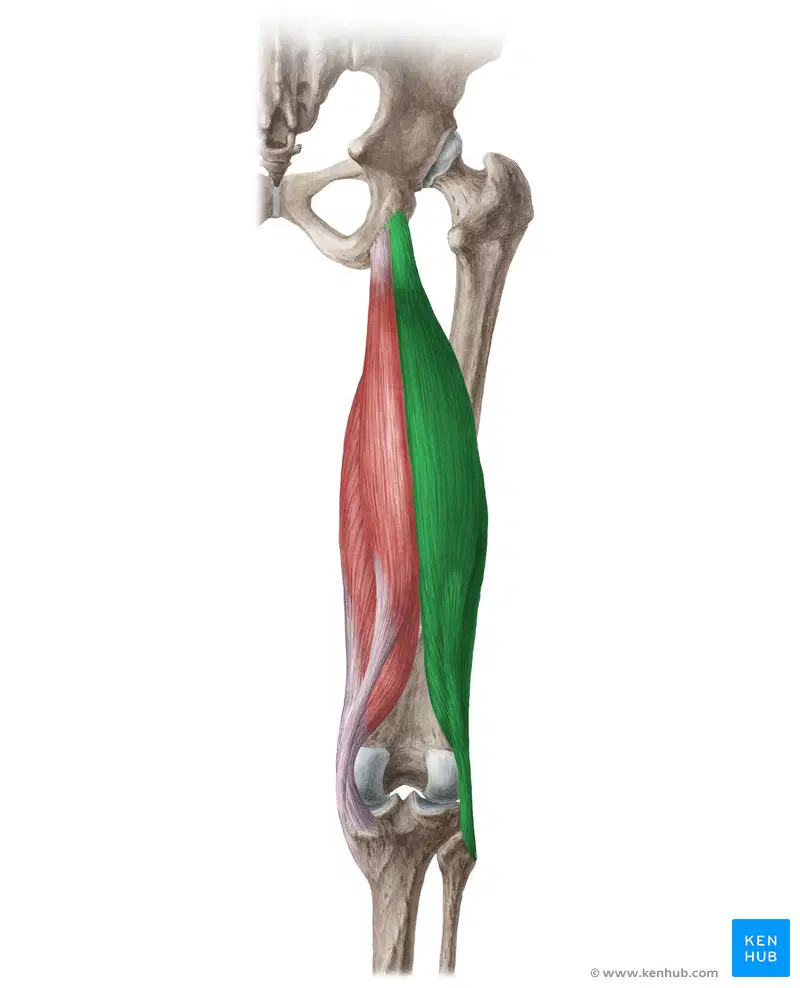
The diagram shows a posterior view of the legs. Which skeletal muscle is labelled X?
A. Biceps femoris
B. Gastrocnemius
C. Gluteus maximus
D. Soleus
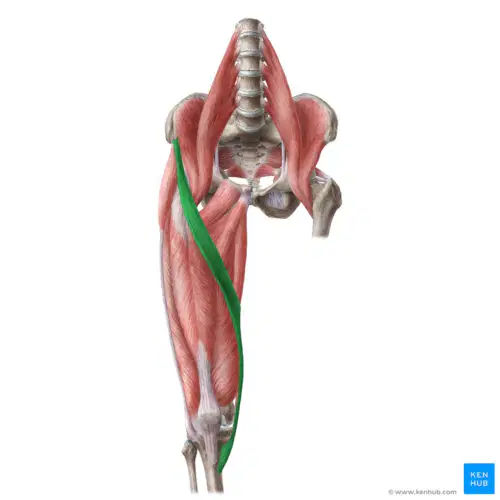
What is the muscle labelled?
Sartorius
Iliopsoas
Vastus medialis
Vastus lateralis
Which is the origin of a muscle?
The attachment of a muscle to a stationary bone
The attachment of a muscle to a joint
The attachment of a muscle to a moveable bone
The attachment of a muscle to a bursa
Which statement is correct about the insertion of a skeletal muscle?
The attachment of a muscle tendon to a moveable bone
The attachment of a muscle tendon to a stationary bone
The attachment of a muscle tendon at the proximal end
The attachment of a muscle tendon on the anterior aspect
What is the lateral muscle of the quadriceps group?
Rectus femoris
Vastus medialis
Sartorius
Vastus lateralis
An athlete’s broken leg is immobilized in a cast. Which muscle characteristic causes difficulty in walking after the prolonged inactivity?
Extensibility
Elasticity
Atrophy
Hypertrophy
Which correctly identifies functions of slow twitch (type I) muscle fibers?
Force generation: Small, Durability: Maintain contractions for a long time
Force generation: Moderate, Durability: Fatigue quickly
Force generation: Large, Durability: Maintain contractions for a long time
Force generation: Small, Durability: Fatigue quickly
What is in the center of the cell body of a neuron?
Nucleus
Cell body
Axon
Motor end plate
What are the predominant muscle fibre characteristics of an elite 100 m sprinter’s gastrocnemius?
High capillary supply, High contraction force, Low glycogen content
High capillary supply, Low contraction force, High glycogen content
Low capillary supply, High contraction force, High glycogen content
Low capillary supply, Low contraction force, High glycogen content
What is released from the axon terminal at the neuromuscular junction?
Calcium ions
Sodium ions
Cholinesterase
Acetylcholine
Which muscle fiber type is predominant in the gastrocnemius muscle of an elite 200m sprinter?
Type I
Type IIa
Type IIb
Slow twitch
What is the function of calcium ions during muscle contraction?
Calcium ions move across the synapse to initiate a nerve impulse on the muscle cell.
Calcium ions bind to troponin, causing tropomyosin to move, allowing actin and myosin to bind.
Calcium ions bind to the myosin head following contraction, allowing detachment of myosin from actin.
Calcium ions cause ATP molecules stored in the sarcoplasmic reticulum to be released, initiating contraction.
In which area does the neurotransmitter acetylcholine act?
axon
motor end plate
dendrite
cell body
The diagram shows an athlete extending their left elbow while throwing a javelin. According to the sliding filament theory, which occurs in the muscle fibres of the athlete’s left triceps?
The H zone increases.
The A band shortens.
The Z lines move closer together.
The A band lengthens.
What shortens during muscular contraction according to the sliding filament theory?
Z line
A band
H zone
Actin
What describes the role of acetylcholine in skeletal muscle contraction?
To open an axon’s synaptic vesicle
To close an axon’s synaptic vesicle
To open a motor-end plate channel
To block a motor-end plate channel
A skier, when snowplowing, turns the soles of their feet outwards. What action are the feet performing?
Extension
Circumduction
Inversion
Eversion
What is the sequence of a motor unit signal travelling from the brain to the muscle?
Synapse, axon, cell body, dendrite, motor end plate
Synapse, dendrite, cell body, axon, motor end plate
Motor end plate, dendrite, cell body, axon, synapse
Synapse, dendrite, axon, cell body, motor end plate
An athlete, while running, sprains the ligaments on the lateral side of their ankle. What type of movement occurred at the ankle to stretch the lateral tendons?
Inversion
Dorsi flexion
Plantar flexion
Eversion
What action occurs at the ankle of a swimmer as they push off the wall?
Extension
Dorsi flexion
Plantar flexion
Adduction
The diagram shows a swimmer performing backstroke. What type of movement correctly describes the motion at the shoulder joint?
Circumduction
Eversion
Adduction
Supination
Which states the correct anatomical relationship among the bones of the hands and arms?
Phalanges are medial to the humerus.
Carpals are proximal to the ulna.
Humerus is distal to the metacarpals.
Ulna is medial to the radius.
What type of bone is the fibula?
Short
Flat
Long
Irregular
Which movement involves bones of the axial skeleton?
Extension of the elbow when pitching a baseball
Rotation of the neck to breathe while swimming freestyle
Flexion of the knee when rowing
Pronation of the radius and ulna joint to apply topspin in tennis
Which correctly matches the connective tissue to its function?
Ligaments are the connections between muscles and bones.
Cartilage reduces friction between bones and helps absorb shock.
Tendons are the connections between bones and bones.
The synovial membrane provides stability to the joint.
Where are the external oblique muscles located in the body?
posterior - upper leg
lateral - trunk
anterior - upper arm
posterior - trunk
Which structure attaches muscle to bone to facilitate movement?
Ligament
Cartilage
Joint
Tendon
What is the function of a ligament?
To attach muscle to bone
To attach bone to bone
To reduce friction
To secrete synovial fluid
Which type of joint provides the greatest degree of movement?
Fibrous
Synovial
Cartilaginous
Gliding
What lines the joint cavity and secretes synovial fluid
Articular capsule
Synovial fluid
Articular cartilage
Synovial membrane

