
 Worksheets
science
Total questions: 80
Worksheet time: 2hrs 41mins

What happens when solid is changed into a liquid?
freezing
swimming
Melting

If we increase the heat this chocolate will _____________.
freeze
change color
melt


Water can change state. What happens to water during condensation?
It changes from liquid to a gas.
It changes from a gas to a liquid.
It changes from a liquid to a solid.
It changes from a solid to a liquid.

What is happening to the butter?
freezing
melting

When the water is put in the freezer, it will change
from a liquid to a solid
from a solid to a liquid
from cold to hot

2. wet
3. evaporate
2. keep their shape
3. can be melted
2. atoms are very far apart
3. atoms move very fast

2. wet
3. evaporate
2. keep their shape
3. can be melted
2. atoms are very far apart
3. atoms move very fast

2. wet
3. evaporate
2. keep their shape
3. can be melted
2. atoms are very far apart
3. atoms move very fast

What is the change in the state of matter called?
Evaporation
Condensation
Freezing
Melting

What is the change in the state of matter called?
Evaporation
Condensation
Freezing
Melting

A bear's thick fur will ___________.
help it to move
scare away other animals
keep its body warm in cold environment

What does a beaver use to chop down trees?
Its sharp teeth
Its tail
Its thick hairs or fur
Why don't polar bears live in the desert?
They don't like the Sun.
It's not the right habitat for polar bear.
There is nothing to eat.
Polar bears do live in the desert.
The place where an animal normally lives and grows is its...
garden
home
habitat
territory
Food, water, shelter, and space to live are a part of a...
habitat
home
Crash Course video
food chain
A model to describe the flow of energy between living things is called...
an ecosystem
a habitat
a flowchart
a food chain
Where do camels live
Ocean
Desert
Grassland
Snow place

A tropical rainforest __________________________.
receives lots of rainfall all year round.
is dry all year round.
does not receive rainfall at all.
A pond habitat contains ____________________ all year round.

snow

water

sand

Which of the following organism belong in a pond habitat?

water lily

tiger

wolf

rafflesia
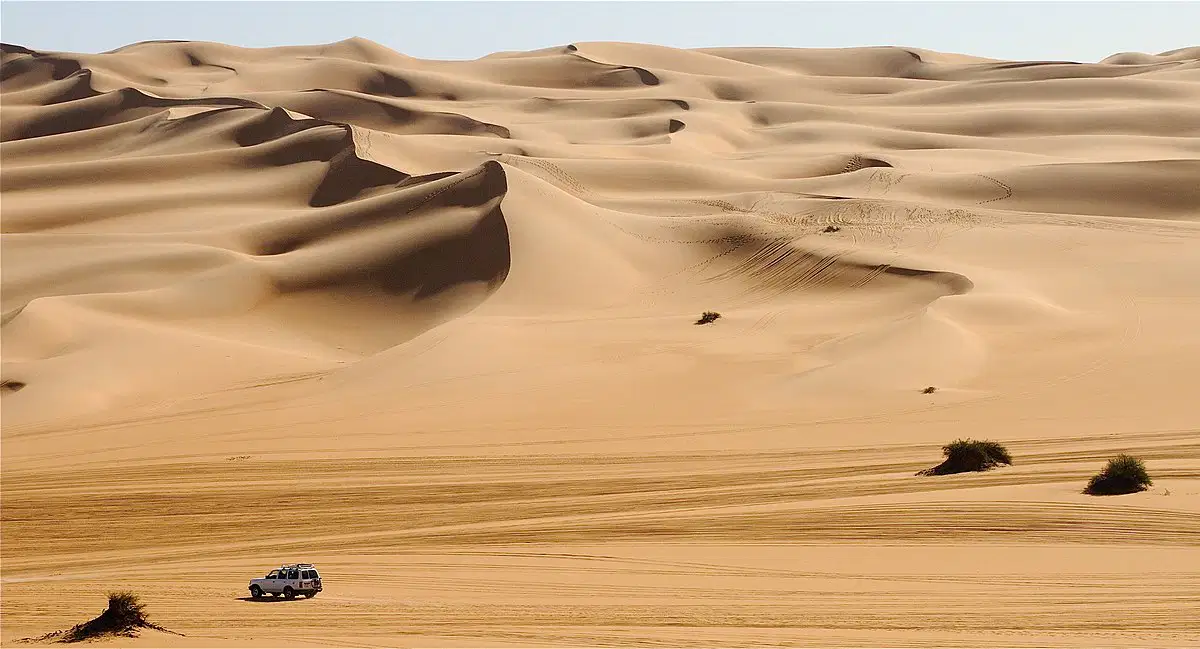
A desert is a hot and dry habitat. Which of the following animals should not belong in this habitat?

cactus

camel

scorpion

rabbit
The main source of energy for all of earth's food chains is the...
sun
water
nutrients
producers
All food chains begin with a...
grass
producer
consumer
decomposer
The second link in a food chain is a...
consumer
producer
herbivore
carnivore
A herbivore is a...
consumer that eats both plants and other animals
consumer that only eats other animals
consumer that only eats plants
A herbivore is also known as...
primary consumer
secondary consumer
tertiary consumer
An omnivore is a...
consumer that eats both plants and other animals
consumer that eats only other animals
consumer that eats only plants
Animals that are not hunted and eaten by any animals are called...
herbivores
carnivores
omnivores
apex predators


What is a food chain?
The flow of energy from one thing to another
The way animals eat each other
The way the sun makes everything
How the plants grow
What do plants need to make their own food?
Sun, Water, and Animals
Sun, Coke, and Soil
Sun, Water, and Soil
Nothing at all
An example of a predator:
shark
mouse
rabbit
Tim has two beakers of liquid at room temperature. He places both beakers on a hot plate. The liquid in Beaker A boils before the liquid in Beaker B.
Which statement explains why the liquid in Beaker A boils before the liquid in Beaker B?
Beaker A has a lower boiling point
Beaker B has a higher freezing point
The liquid in Beaker A has less mass
The liquid in Beaker B has a lower density

A scientist uses an instrument to study the small particles in a piece of matter. The diagram shows what the scientist sees.
What state of matter is the scientist most likely observing?
gas
solid
liquid
vapor

A scientist uses an instrument to study the small particles in a piece of matter. The diagram shows what the scientist sees.
What state of matter is the scientist most likely observing?
gas
solid
liquid
vapor

A scientist uses an instrument to study the small particles in a piece of matter. The diagram shows what the scientist sees.
What state of matter is the scientist most likely observing?
gas
solid
liquid
plasma
Which phase has a fixed shape?
Solid
Liquid
Gas
The bones in your body would not be able to move without ____.
skin
muscles
cells
organs
What do the bones in the body make up?
Digestive System
Skeletal System
Circulatory System
Muscular System
What are the three main functions of your skeleton?
Movement, Protection and Balance
Movement, Protection and Support
Protection, Coordination and Balance
Movement, Balance and Running

This part of skeleton is called....
Skull
Pelvis
Ribs
Spine
The function of ribs is protecting....
Lungs only
Lungs and heart
Heart only
Brain

This bone is called....
Femur
Pelvis
Skull
Ribs
Joints...
are only in the legs.
tighten and stretch to help us move.
connect two bones together.
Where is the ball and socket joint located ?
Shoulder
Neck
elbow
wrist
The picture of pelvis is ____


Brain wll be protected by....


What bone is this?
Rib Cage
Collar Bone
Jaw
Spine
How many bones are in an adult human's body?
206
168
542
337
A system that includes all the bones in the body is a
Joint
Skull
Torso
Skeleton
are the place where two bones meet or connect
Joint
Lungs
Muscles
What bones protect your heart and lungs?
Breastbone
Rib cage
Collar bone
Wrist bone
The backbone provides ........................ to the body.
energy
support
nutrition,
growth
The ribs protect the
internal organs such as
the ............... and ...................
Which life process is the skeleton the most important for?
Movement
Respiration
Excretion
Nutrition

