
Font size
 Worksheets
Semester 1 Final Revu
Total questions: 67
Worksheet time: 2hrs 41mins
Categorize the following characteristics of matter as either intensive or extensive.
Color
Density
Boiling / Melting Point
Lustre
Malleability
Temperature
Mass
Volume
Length
Area
Moles
(a) are dependent of the amount of substance present, such as mass, length, or volume
(a) are independent of the amount of substance present, such as density
Toxicity - how poisonous something is
chemical property
intensive physical property
extensive physical property
Reactivity - the ability of a substance to cause a chemical reaction
chemical property
intensive physical property
extensive physical property
Classify the following a chemical or physical properties
flammability
toxicity
radioactivity
solubility (ability to dissolve in water)
A student mixes yellow powder with water. Which observation would prove a CHEMICAL change occurred?
The powder DISSOLVED in the water
The water turned the COLOR yellow
The bag's TEMPERATURE changed
The STATE OF MATTER changed
What kind of change occurs if matter changes in amount, size, or shape?
substance change
chemical change
physical change
elemental change
What is a chemical change?
Forming a new substance
When two or more substances combine to make a greater one
When two or more substances combine to make a new chemical substance
Combing substances
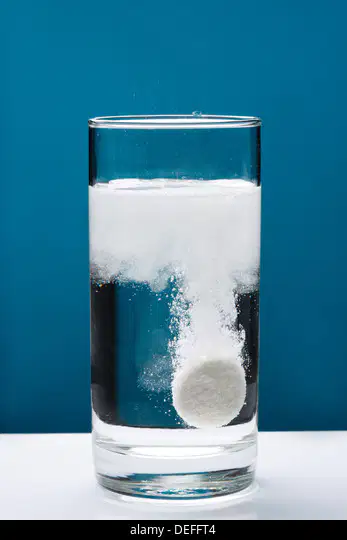
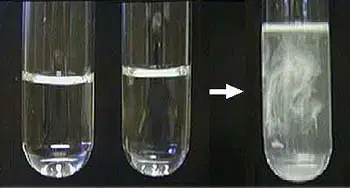
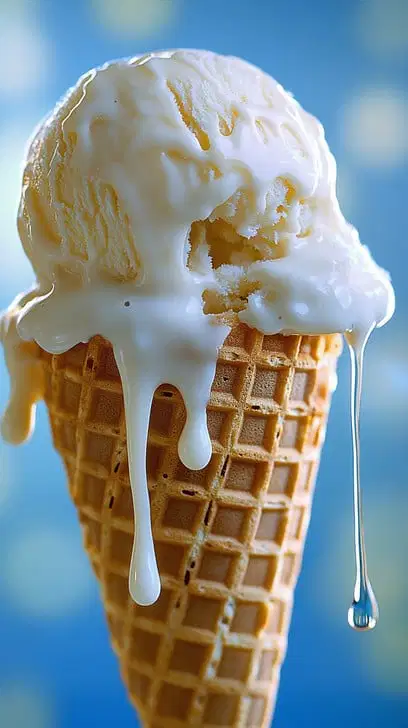
Chemical or Physical Change?






Which of the following elements has the largest atomic radius?
oxygen
sulfur
phosphorus
nitrogen
Of the halogens, which has the smallest radius?
F
Br
He
At

Which element has 3 valence electrons?
A
B
E
C


The tendency of an atom to attract a shared pair of electrons
Atomic Radii
Ionization Energy
Electronegativity
Electron Afinity
Oxidation Number
oxygen (O)
the number of protons increases, causing electrons to be more attracted to the nucleus
the number of electrons increases, causing the electron cloud to expand
What is the strength of an atom's pull on electrons in a bond called?
atomic radius
ionization energy
electronegativity

How many full inner shells are beneath the outer valence electron shell of Calcium (Ca)?
1
2
3
4
Which of the following have a luster, are malleable, are ductile, and are good conductors of heat and electricity?
metals
nonmetals

Which outline of elements are known as the transition metals?
A
B
C
D
What does Nitrogen (N) want to do to obtain a full outer valence shell?
gain 2 electrons
gain 3 electrons
lose 2 electrons
lose 3 electrons
Which element is the most electronegative element on the periodic table?
Oxygen (O)
Fluorine (F)
Sulfur (S)
Chlorine (Cl)

An atom of ____ could be represented by the Lewis dot diagram shown above.
Mg
Cl
C
O
Atomic radius is defined as ____.
the relative size of the atom's nucleus
the relative size of the atom's electron cloud
the energy required to shield the outer electrons from the nucleus
a measure of the ability of an atom to attract electrons
Ionic Bonding is the _________ of electron/s between atoms.
sharing
transfer
loose
gain
Electron that is located on the outermost shell
proton
neutron
electron
valence electron
A bond between metal and non metal is called
covalent bond
ionic bond
metallic bond
transfer bond
If an atom loses two electrons what charge will it have?
-1
-2
+1
+2

What type of bonding is present in dinitrogen pentoxide, N2O5?
ionic
covalent
metallic
bionic
In metallic bonds, the force of attraction is between
positive and negative ions
cations and electrons
two different metals
neutrons and electrons
Metals are used to make electric wires because metals (choose all that apply)
are ductile
are shiny
have free moving electrons
form a lattice
How does a metallic lattice differ from an ionic crystal?
A metallic lattice is less flexible
A metallic lattice can change shape without breaking
A metallic lattice shatters when struck
There are 3 substances on the table. Substance A is a white powder with a high melting point and conducts in a solution. Substance B is a silver gray solid with a high melting point. Substance C is a white solid with a low melting point that doesn't conduct. Based on the properties, what are the bonds of each material.
A has covalent bonds, B has ionic bonds, and C has metallic bonds
B has covalent bonds, C has ionic bonds, and A has metallic bonds
C has covalent bonds, A has ionic bonds, and B has metallic bonds
Not enough information
What type of bond is NaF
Ionic
Covalent
Metal
No bond can form
Which is of the following is NOT true about ionic compounds?
Ionic compounds are brittle
Ionic compounds melt easily
Ionic compounds conduct electricity in water
Ionic compounds are made of positive and negative ions
Ionic compounds have _________ electronegativity difference
large
small
what is electronegativity?
medium
How do particles in a solid move?
they slide past each other
they vibrate in place
they don't move at all
they move freely and rapidly
Matter that has a fixed volume but no fixed shape is…
solid
liquid
gas
plasma
What is the name of the phase change from gas to liquid?
freezing
deposition
vaporization
condensation
What is the name of the phase change from liquid to solid?
freezing
deposition
vaporization
condensation
Matter in which the particles are free to move in all directions until they have spread evenly throughout their container is a...
plasma
liquid
gas
solid
1s22s22p63s2

What electron configuration matches an Bromine?
1s22s22p63s2, 3p64s23d104p5
1s22s22p4
1s22s22p6
1s22s22p63s23p64s23d1
Label the 3 states of matter shown here
Solid
Liquid
Gas

