
 Worksheets
LET 2 Semester Final_ Jordan Vocational
Total questions: 25
Worksheet time: 13mins
The Army JROTC began in 1916 when ______ passed the National Defense Act.
the Army Chief of Staff
Secretary of Defense
Congress
Vice President
One of the outcomes of the Army JROTC program is for Cadets to ______.
graduate high school with skills needed to excel in additional career/education training
be prepared to defend our nation
join the military
appreciate the role of the Army in performing physical fitness exercises
The ______ of Army JROTC is to motivate young people to be better citizens.
Benefit
challenge
reason
mission
he Cadet Creed explains how the JROTC program supports citizenship, character, and ______.
leadership
integrity
patriotism
loyalty
The Cadet Challenge is an activity where you ______.
perform drills
march
improve your grades
improve your physical fitness
If someone asked you about what you expect to get out of Army JROTC, which one of the following responses would you use to best inform them about the mission and purpose of JROTC?
"We expect to learn military skills as future soldiers, sailors, airmen, and Marines for our armed forces. That's the purpose of JROTC."
"We expect to develop our personal growth skills as we participate in a variety of experiences and leadership situations to help us be better citizens. That's the mission of JROTC."
"We expect to participate in an alternative method of normal classroom learning. That's the purpose of JROTC."
"To march everyday. That's the reason of JROTC."
Name the congressional act that launched the JROTC program.
The Civil Rights Act
The No Child Left Behind Act
The National Fitness Act
The National Defense Act of 1916
One of the goals of the JROTC curriculum is to encourage students to graduate from _____________.
college
high school
basic training
two-year colleges
Being the only one of its kind is the definition of ______.
unique
being by yourself
mantle
self-esteem
Who wrote "The Star Spangled Banner"?
Francis Scott Key wrote it in 1814
Martha Washington wrote it in 1777
George Washington wrote it in 1789
Mary Todd Lincoln wrote it in 1861
T or F: When a flag is properly folded, only the blue field with stars will be visible.
True
False

What rank is this?
(a)
What do the colors on the U.S. flag represent?
White represents Northern States; Red represents Southern states; Blue represents the Union
Blue represents hope, purity, and innocence; White represents hardiness and valor; Red represents reverence to God, loyalty, vigilance, perseverance, and justice
White represents death; Red represents rebellion; Blue represents clear skies of freedom
White represents hope, purity, and innocence; Red represents hardiness and valor; Blue represents reverence to God, loyalty, vigilance, perseverance, and justice
How many stars are on the U.S. Flag?
50
13
48
51
Leadership is _________.
giving orders to others
guiding and influencing others
attaining a position of power
JROTC leadership opportunities are available only to fourth year Cadets.
Agree
Disagree
Motivation is up to the individual. Leaders have no role.
Agree
Disagree
__________ is the process of influencing people by providing purpose, direction, and motivation to accomplish the mission and improve the organization.
Motivation
Leadership
Relationship
The psychological and physical capacity to bounce back from life's stressors and maintain focus is called __________.
stubbornness
tact
resilience
restoration
There is only one effective way to lead.
Agree
Disagree
Effective leadership results from a leader's ability to provide purpose, direction, and __________.
expertise
discipline
trust
motivation
The reason for doing something is the __________.
order
vision
purpose
justification
All of the following are characteristics of a good leader EXCEPT:
Intelligent
Arrogant
Hardworking
Honest
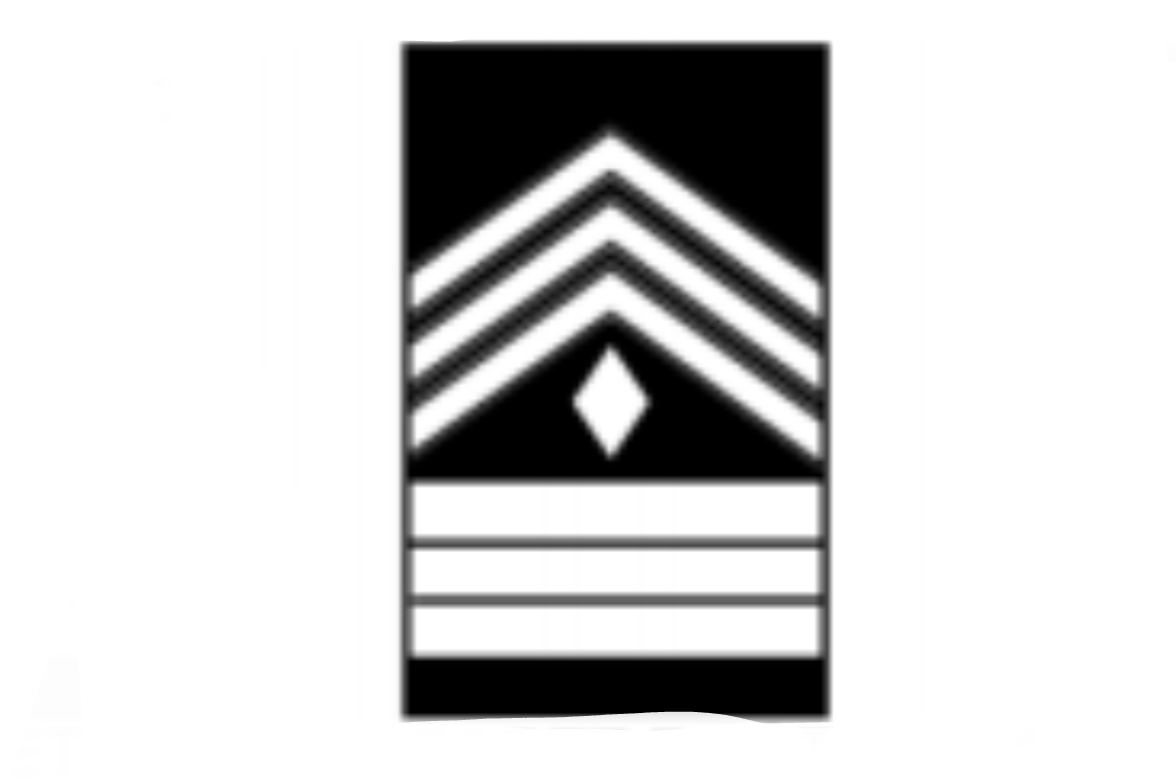
WHAT RANK IS SHOWN?
Cadet Command Sergeant Major
Cadet Master Sergeant
Cadet First Sergeant
Cadet Sergeant First Class

WHAT RANK IS SHOWN?
Cadet Sergeant
Cadet Captain
Cadet Private
Cadet Sergeant First Class

