
 Worksheets
Business Management Final
Total questions: 75
Worksheet time: 38mins
Name
Class
Date
1.
True or False: A Marketing plan is a group of consumers a company aims its products at
a)
False
b)
True
2.
True or False: Push Marketing is a company's market position and successful strategies
a)
False
b)
True
3.
True or False: a USP is a factor that differentiates a product from competitors
a)
False
b)
True
4.
True or False: Pricing and Position Strategy is pricing products based on competitors and positioning
a)
False
b)
True
5.
True or False: An example of retention strategy is perception among customers.
a)
False
b)
True
6.
True or False: Promotion Strategy includes advertising, personal selling, sales promotions, direct marketing, internet marketing, and public relations
a)
False
b)
True
7.
Path a product takes from manufacturer to consumer
a)
Place
b)
Promotion
c)
Channels of Distribution
d)
Channel Management
8.
Taking products to customers (e.g. negotiating with retailers)
a)
Target Market
b)
Push Strategy
c)
Push Marketing
d)
Promotion
9.
Attracting customers through mass media promotions and sales promotions
a)
Pull Marketing
b)
Place
c)
Pull Strategy
d)
Push Marketing
10.
Comprehensive plan to advertise a target market
a)
Business plan
b)
Target market
c)
Marketing strategy
d)
Marketing plan
11.
Transforming a person into a paying customer
a)
Marketing Plan
b)
Checkout Process
c)
Product Experience
d)
Conversion Strategy
12.
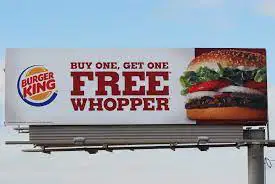
Which type of marketing is the following picture?
a)
Push
b)
Pull
13.

Which type of marketing is the following picture?
a)
Push
b)
Pull
14.
The following statement is an example of which part of the SWOT? "McDonalds brand image is very strong"
a)
Strength
b)
Weakness
c)
Opportunities
d)
Threats
15.
The following statement is an example of which part of the SWOT? "McDonalds has the opportunity to grow and expand in developing countries."
a)
Strength
b)
Weakness
c)
Opportunities
d)
Threats
16.
The following statement is an example of which part of the SWOT? "McDonalds standardization ensures consistency but also reduces the companies flexibility"
a)
Strength
b)
Weakness
c)
Opportunities
d)
Threats
17.
The following statement is an example of which part of the SWOT? "The restaurant industry is highly competitive"
a)
Strength
b)
Weakness
c)
Opportunities
d)
Threats
18.
Name:
4 lines
19.
True or False: A merchandising business is a business that purchases finished products and resells them to consumers
a)
True
b)
False
20.
True or False: Human Resources is the division of a business responsible for finding, recruiting, screening, and training job applicants.
a)
True
b)
False
21.
True or False: Management is the coordination and organization of business
activities.
a)
False
b)
True
22.
True or False: Manufacturing is the process of exploring, creating, and delivering value to meet the needs of a target market in terms of goods and services
a)
True
b)
False
23.
True or False: Marketing is an arrangement where parties, known as business partners, agree to cooperate to advance their mutual interests.
a)
True
b)
False
24.
True or False: Corporation is a type of enterprise owned and run by one person and in which there is no legal distinction between the owner and the business entity
a)
True
b)
False
25.
True or False: Manufacturing is the process of transforming raw materials into finished goods through the use of tools, machines, and labor.
a)
True
b)
False
26.
A processes that involve different activities that lead to the extraction of raw materials from the earth (such as oil, metals, mineral and aggregates), processing and utilization by consumers.
a)
Extracting Industry
b)
Merchandising Industry
c)
Manufacturing
d)
Service Industry
27.
An organization or enterprising entity engaged in commercial, industrial, or professional activities
a)
Corporation
b)
Marketing
c)
Management
d)
Business
28.
Members are not personally liable for the company's debts. _____ are taxed on a "pass-through" basis, all profits and losses are filed through the member's personal tax return
a)
LLC
b)
PARTNERSHIP
c)
CORPORATION
d)
SOLE PROPRIETORSHIP
29.
A group of people or a company—authorized by the state to act as a single entity and recognized as such in law for certain purposes.
a)
Corporation
b)
Actuary
c)
Partnership
d)
Sole Proprietorship
30.
This career guides businesses and individuals in decisions about expending money to attain profit.
a)
Venture Capitalist
b)
Takeover Specialist
c)
Research Analysis
d)
Financial Analyst
31.
The person who calculates the risks for an insurance company or financial institution
a)
Copay
b)
Actuary
c)
Beneficiary
d)
Underwriter
32.
This provides specific products or services that meet a need or are otherwise useful to customers.
a)
Manufacturing Industry
b)
Service Economy
c)
Service Sector
d)
Service Industry
33.
This manages how others see and feel about a person, brand, or company
a)
Marketing
b)
Public Relations
c)
Human Resources
d)
Management
34.
Special type of corporation allowed by states that is taxed as if it were a sole proprietorship or partnership
a)
Limited Liability Corporation
b)
Partnership
c)
Corporation
d)
Sole Proprietorship
35.
Dentists and Accountants are examples of what kind of business?
a)
Service Businesses
b)
Merchandise/Service Businesses
c)
Manufacturing
d)
Extracting
36.
A business owned and managed by one person.
a)
Corporation
b)
LLC
c)
Sole Proprietorship
d)
Partnership
37.
Business owned and operated by its user-members for the purpose of supplying themselves with goods and services.
a)
Corporation
b)
Joint Venture
c)
Cooperative
d)
Creditor
38.
Business owned by two or more people.
a)
Corporation
b)
Joint Venture
c)
Partnership
d)
Franchise
39.
What % of small businesses fail in 5 years?
a)
50%
b)
90%
c)
30%
d)
80%
40.
Organization that does not pay taxes and does not exist to make a profit
a)
Non-Profit Businesses
b)
Corporations
c)
Personal Businesses
d)
Sole Proprietorships
41.
Which is not one of the 4 types of partnerships?
a)
Limited Partnerships
b)
Boss Partnership
c)
Silent Partnership
d)
General Partnerships
42.
Who governs a corporation?
a)
CEO
b)
Owner
c)
CFO
d)
Board of Directors
43.
What is the difference between a privately owned corporation and a publicly owned corporation?
a)
All the shares are owned by a small number of individuals, often family members or the managers of the company.
b)
Who owns the shares and can purchase shares of stock for the corporation.
c)
a type of legal structure for an organization where a corporate loss will not exceed the amount invested in a partnership
d)
Owned by a relatively large number of shareholders, most of whom have no connection with the company beyond the desire to make a profitable investment from owning shares of it
44.
Which of the following is an example of a franchise?
a)
McDonald's
b)
American Airlines
c)
Green Top Grocery
d)
Rosie's Pub
45.
Commodities involves those economic transactions that take place inside the geographical boundaries of a country
a)
true
b)
False
46.
Export- a commodity, article, or service brought in from abroad for sale.
a)
true
b)
false
47.
Commodities- A port is a maritime facility comprising one or more wharves or loading areas, where ships load and discharge cargo and passengers
a)
true
b)
False
48.
Gross National Product- any business that operates across international borders.
a)
True
b)
False
49.
Trade- the action of buying and selling goods and services.
a)
True
b)
False
50.
Import- a tax or duty to be paid on a particular class of imports or exports.
a)
True
b)
False
51.
a commodity, article, or service sold abroad.
a)
Trade
b)
Import
c)
Export
d)
Domestic
52.
an official ban on trade or other commercial activity with a particular country.
a)
Tariff
b)
Export
c)
Import
d)
Embargo
53.
goods transported in bulk by truck, train, ship, or aircraft.
a)
Transit
b)
Freight
c)
Cargo
d)
Haulage
54.
Total market value of all goods and services produced in a country in a year.
a)
Gross Domestic Product
b)
Consumer Price Index
c)
Gross National Product
d)
Gross National Income
55.
a raw material or primary agricultural product that can be bought and sold, such as copper or coffee.
a)
Import
b)
Export
c)
Commodities
d)
Resources
56.
The total value added from domestic and foreign sources claimed by residents of a country.
a)
Gross Domestic Product
b)
Purchasing Power Parity
c)
Gross National Product
d)
International Monetary Fund
57.
What is leadership?
a)
a) A form of control
b)
b) Influencing individuals and groups to achieve organizational goals
c)
c) Isolation from others
d)
d) Following orders blindly
58.
Which of the following is NOT a leadership characteristic?
a)
a) Intelligence
b)
b) Initiative
c)
c) Cooperation
d)
d) Aggressiveness
59.
How many main styles of leadership were discussed in this topic?
a)
a) Two
b)
b) Three
c)
c) Four
d)
d) Five
60.
Which leadership style encourages employee participation but can be time-consuming?
a)
a) Autocratic
b)
b) Democratic
c)
c) Open
d)
d) Situational
61.
Laissez-Faire leadership works well with:
a)
a) Experienced employees
b)
b) Unskilled employees
c)
c) Aggressive employees
d)
d) All employees equally
62.
Which of the following is NOT a main type of communication?
a)
a) Listening
b)
b) Verbal
c)
c) Nonverbal
d)
d) Technical
63.
What is one way to improve listening skills?
a)
a) Ignore feedback
b)
b) Stop practicing after a few days
c)
c) Practice every day
d)
d) Focus only on the message
64.
Which is a characteristic of verbal communication?
a)
a) Speaking without thinking
b)
b) Repeating minor points
c)
c) Believing in the message
d)
d) Using nonverbal cues
65.
Which of the following is NOT a verbal channel of communication?
a)
a) Written
b)
b) Email
c)
c) Face-to-face conversation
d)
d) Hand gestures
66.
Nonverbal communication involves:
a)
a) Speaking clearly
b)
b) Writing messages
c)
c) Communicating without speaking
d)
d) Using technical jargon
67.
What is an example of nonverbal forms of communication?
a)
a) Email
b)
b) Presence
c)
c) Phone call
d)
d) Written report
68.
According to the information, what do managers spend most of their time doing?
a)
a) Talking
b)
b) Writing reports
c)
c) Listening
d)
d) Making decisions
69.
What is a key leadership style where leaders give clear instructions but may bore employees?
a)
a) Autocratic
b)
b) Democratic
c)
c) Open
d)
d) Situational
70.
Which leadership style leaves decisions to individual employees and gives little direction?
a)
a) Autocratic
b)
b) Democratic
c)
c) Open
d)
d) Situational
71.
What are some leadership characteristics mentioned?
a)
a) Charisma, secrecy, isolation
b)
b) Intelligence, initiative, cooperation
c)
c) Dictatorship, manipulation, aggression
d)
d) Isolation, obedience, deception
72.
Which type of communication involves the sender, receiver, message, and feedback?
a)
a) Listening
b)
b) Verbal
c)
c) Nonverbal
d)
d) Technical
73.
Which of the following is NOT a main type of communication?
a)
a) Visual
b)
b) Listening
c)
c) Nonverbal
d)
d) Verbal
74.
What is a characteristic of laissez-faire leadership?
a)
a) High control and supervision
b)
b) Works well with less confident workers
c)
c) Requires constant micromanagement
d)
d) Works well with experienced employees
75.
Which of the following is an example of a verbal channel of communication?
a)
a) Reading body language
b)
b) Sending an email
c)
c) Using hand gestures
d)
d) Maintaining a neutral presence
100 %

