wayground logo

Free Printable Worksheets

Font size

S
M
L
XL
Worksheets

IPC Semester 1 Test

Total questions: 60

Worksheet time: 3hrs 0mins

Name
Class
Date
1.
What are the three types of mutation? 
a)
Insertion, Deletion, Subsitution
b)
Deletion, Newstion, Subsitution 
c)
Newstion, Deletion, Insertion 
d)
Insertion, Newstion, Substitution 
2.
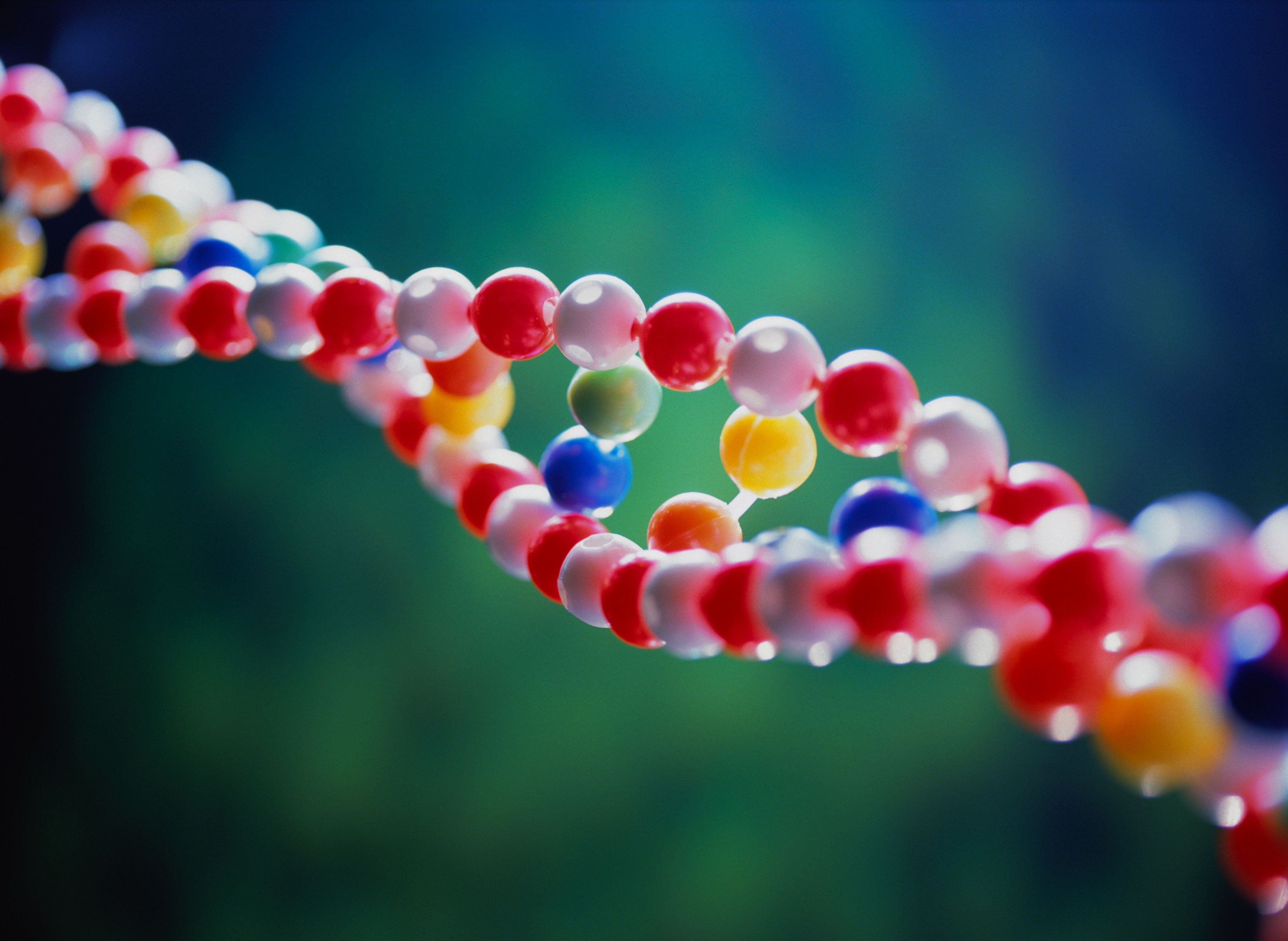
Normal-
GAG-CTC-GAC-AGA
Mutant
GAG CTC-CAC-AGA
a)
no mutation
b)
substitution
c)
insertion
d)
deletion
3.
Why is DNA important?
a)
it is very small and very complicated
b)
it's in everything
c)
it serves as the blueprint for traits of all living things
d)
because we eat it every day for energy
4.
What is the definition of DNA mutation? 
a)
The original DNA strand
b)
The strand with four pairs 
c)
A change in the DNA strand
d)
The strand in a double helix 
5.
What mutation has occurred here? 
T-G-A-C-C-A
T-G-A-G-C-A
a)
Substitution
b)
Deletion
c)
Insertion
d)
Frameshift 
6.
DNA molecule segment is : TTACGCAAG
The mutated DNA segment is TTCGCAAG. This is an example of ___ mutation.
a)
Substitution
b)
Deletion
c)
Insertion
d)
Inversion
7.
Original: ATC CAT
Mutation: ATC GCAT
What mutation occurred?
a)
deletion
b)
insertion
c)
silent
d)
transverse
8.
Are all mutations bad?
a)
Yes
b)
No
9.

DNA molecule segment is : TTACGCAAG

The mutated DNA segment is TTACGCAAC. This is an example of ___ mutation.

a)

Substitution

b)

Insertion

c)

Inversion

d)

Translocation

10.
Identify the DELETION mutation from the following DNA sequence: 
ATG CCA AAT
a)
ATG TCA AAT
b)
ATG CCT AAA T
c)
ATC CA  AT
d)
ATG CCA AAT
11.
The main source of energy for all life comes from ____.
a)
the Earth
b)
the moon
c)
the sun
d)
the food we eat/make
12.
Which statement about the energy needed to start photosynthesis is correct?
a)
Plants get the energy they need for photosynthesis from water.
b)
Plants get the energy they need for photosynthesis from soil.
c)
Plants get the energy they need for photosynthesis from sunlight.
d)
Plants do not require energy to perform photosynthesis.
13.
What are the products of photosynthesis?
a)
Carbon dioxide and water
b)
Carbon dioxide and oxygen
c)
Glucose and oxygen
d)
Glucose and water
14.
Which gas is used to start the process of  photosynthesis?
a)
hydrogen
b)
oxygen
c)
nitrogen
d)
carbon dioxide
15.
In which  organelle does photosynthesis occur?
a)
mitochondria
b)
stomata
c)
xylem
d)
chloroplast
16.
The main source of energy for all life comes from ____.
a)
the Earth
b)
the moon
c)
the sun
d)
the food we eat/make
17.
Which statement about the energy needed to start photosynthesis is correct?
a)
Plants get the energy they need for photosynthesis from water.
b)
Plants get the energy they need for photosynthesis from soil.
c)
Plants get the energy they need for photosynthesis from sunlight.
d)
Plants do not require energy to perform photosynthesis.
18.
What are the products of photosynthesis?
a)
Carbon dioxide and water
b)
Carbon dioxide and oxygen
c)
Glucose and oxygen
d)
Glucose and water
19.
Which gas is used to start the process of  photosynthesis?
a)
hydrogen
b)
oxygen
c)
nitrogen
d)
carbon dioxide
20.
In which  organelle does photosynthesis occur?
a)
mitochondria
b)
stomata
c)
xylem
d)
chloroplast
21.
Plants need ________from the air for photosynthesis
a)
oxygen
b)
soil
c)
carbon dioxide
d)
sugar
22.
What is another name for glucose?
a)
Chlorophyll
b)
Chloroplasts
c)
Stomata
d)
Sugar
23.
Plants need ________from the air for photosynthesis
a)
oxygen
b)
soil
c)
carbon dioxide
d)
sugar
24.
What are the reactants (what's needed) for photosynthesis?
a)
glucose and oxygen
b)
light, water, and carbon dioxide
c)
hydrogen and helium
d)
ATP and energy
25.
Roots absorb ____ and ____ for plants? 
a)
Water and Nutrients
b)
Soil and Sun
c)
Warmth and Water
d)
Soil and Water
26.
What is the word equation for photosynthesis?
a)
Carbon dioxide + water --> glucose + oxygen
b)
Oxygen + glucose --> carbon dioxide + water
c)
ATP + carbon dioxide --> sugar
d)
radiant energy + oxygen --> water + hydrogen
27.

Photo means (a)   .

28.

Chlorophyll is...

a)

provides support, moves water to the rest of the plant, brings the plant closer to the light.

b)

Found in the chloroplast, is a GREEN pigment that absorbs the sunlight and converts it into chemical energy.

c)

Gas given off by plants during photosynthesis

d)

the plant's food made during photosynthesis

29.

What is photosynthesis?

a)

the process by which plants use sunlight, carbon dioxide and water to make its own food

b)

anchors the plant, absorbs water, minerals and dissolved nutrients from the soil or air

c)

As a result of photosynthesis, green plants give off this substance as a waste product

d)

provides support, moves water to the rest of the plant, brings the plant closer to the light.

30.

The plant's food made during photosynthesis

a)

fruits

b)

pollen

c)

stomata

d)

glucose(sugar)

31.

Photosynthesis occurs in an area of a plant leaf called the

a)

Chloroplasts

b)

Carbonator

c)

Glucose

d)

Chlorine

32.

What process do plants go through to make their own food?

a)

Photosynthesis

b)

A chemical change

c)

Plants create oxygen

33.

What might happen if you try to grow a plant in a dark room?

a)

The plant will use water to feed itself, that way it will grow.

b)

Plants need sunlight to grow, so it will die.

c)

The plant will grow at a slower pace,

34.

Plants need ________from the air for photosynthesis.

a)

oxygen

b)

soil

c)

carbon dioxide

d)

sugar

35.
The food that a plant makes looks like _________. 
a)
sugar
b)
coffee
c)
glitter
d)
soil
36.
Which part of a plant captures the light energy used in photosynthesis?
a)
guard cells
b)
chlorophyll
c)
roots
37.
What is this?
a)
stem
b)
root
c)
flower
d)
leaves
38.
What is this?
a)
roots
b)
stem
c)
leaves
d)
flower
39.
What is this?
a)
leaves
b)
stem
c)
fruit
d)
flower
40.
What is this?
a)
roots
b)
stem
c)
leaves
d)
flowers
41.
What is this?
a)
roots
b)
leaves
c)
stem
d)
flower
42.
What is this?
a)
roots
b)
stems
c)
flowers
d)
flowers
43.


What is this?
a)
fruit
b)
flower
c)
leaves
d)
stem
44.


What is this?
a)
flower
b)
stem
c)
roots
d)
leaves
45.
What is this?
a)
stem
b)
leaves
c)
roots
d)
flowers
46.
What is this?
a)
fruit
b)
flower
c)
root
d)
leaves
47.
What is this?
a)
flower
b)
fruit
c)
leaves
d)
stem
48.
What are the nucleotides made of?
a)
Sugar, Phosphate, nitrogen base
b)
Phosphate, Adenine, nitrogen base
c)
Thymine, Adenine, Cytomine
d)
Phosphate, Nitrogen, Adenine
49.
What are the nucleotides made of?
a)
Sugar, Phosphate, nitrogen base
b)
Phosphate, Adenine, nitrogen base
c)
Thymine, Adenine, Cytomine
d)
Phosphate, Nitrogen, Adenine
50.
Which of the following best describes a DNA molecule?
a)
double helix
b)
contains ribose
c)
made of amino acids
d)
contains Uracil
51.
Adenine bonds with ______________.
a)
Guanine
b)
Thymine
c)
Cytosine
d)
Adenine
52.
Guanine bonds with ______________.
a)
Adenine
b)
Guanine
c)
Cytosine
d)
Thymine
53.
Why is DNA important?
a)
it is very small and very complicated
b)
it's in everything
c)
it serves as the blueprint for traits of all living things
d)
because we eat it every day for energy
54.
What are the 4 nitrogen bases?
a)
adenine, thymine, cytoplasm, and guanine
b)
adenine, thymine cytosine, and guanine
c)
adenine, thymine, cytosine, and gylcerol
d)
adenine, thymine, cytosine, and glucose
55.
Which 2 molecules forms the sides (backbone) of the DNA ladder?
a)
deoxyribose and adenine
b)
deoxyribose and a hydrogen bond
c)
sugar and the nucleus
d)
deoxyribose (sugar) and phosphate
56.
Which organelle is DNA usually found in?
a)
cell membrane
b)
vacuole
c)
chloroplast
d)
nucleus
57.
Which sequence of DNA bases would pair with this partial strand
ATG TGA CAG
a)
ATG TGA CAG
b)
TAC ACT GTC
c)
GTA AGT GAC
d)
CAT TCA CTG
58.
Replicate the following strand of DNA: 
AATCATGGA
a)
AATCATGGA
b)
TTAGTACCT
c)
UUAGUACCU
d)
GGATAUCUA
59.
DNA replication results in two DNA molecules,
a)
each one with two original strands
b)
each one with two new strands
c)
each one with one new strand and one original strand
d)
one with two new strands and the other with two original strands
60.
The sugar in DNA is ?
a)
sucrose
b)
glucose
c)
deoxyribose
d)
fructose