
 Worksheets
GENERAL PHYSICS REVIEWER
Total questions: 140
Worksheet time: 51mins
A particle is constrained to move along the inner surface of a fixed hemispherical bowl. The number of degrees of freedom of the particle is
one
two
three
four
The homogeneity of time leads to the law of conservation of
linear momentum
Angular momentum
energy
parity
The isotropy of space leads to the law of conservation of
linear momentum
angular momentum
energy
parity
If the generalized coordinate is angle then the generalized force has the dimensions of
force
momentum
torque
energy
If Lagrangian does not depend upon the time explicitly then
Hamiltonian is constant
hamiltonian is not constant
kinetic energy is constant
potential energy is constant
The product of generalized coordinate and its conjugate momentum has the dimensions of
force
energy
angular momentum
linear momentum
If a coordinate corresponds to a rotation is cyclic, rotation about the given axis is invariant, then following quantity is conserved
Linear Momentum
Angular Momentum
kinetic energy
Potential energy
It is a branch of Physics, that deals with the electromagnetic force that occurs between electrically charged particles.
Thermodynamics
Optics
Kinematics
Electromagnetism
It is a form of energy resulting from the existence of charged particles (such as electrons or protons), either statically as an accumulation of charge or dynamically as a current.
Force
Charge
Magnetism
Electricity

What will possibly happen to these charges?
Repel
Switch
Transfer
Attract
It is a property that leads to electromagnetic interactions between the particles that make up matter.
conduction
electric charge
electromagnetism
repulsion
Which among the choices is a good example of static electricity?
Occurrence of lightning
Grounding
Electric Generators
Repulsion between like charges

Which among these is a conductor?
Iron (Fe)
Selenium (Se)
Neon (Ne)
Antimony (Sb)

The flow of this particle is the main reason of producing electricity.
a
b
c
none of the above

Which among these labeled item is the proton?
a
b
c
none of the above
It is a property that leads to electromagnetic interactions between the particles that make up matter.
conduction
electric charge
electromagnetism
repulsion

What will possibly happen to these charges?
Repel
Switch
Transfer
Attract
If the current in a specific copper wire increases this can be due to _____________________.
An increase in the charge carrier density
An increase in the electron drift speed
An increase in its cross sectional area
An increase in the charge of electrons

A wire has a resistance R.
What is the resistance when both the length and radius of the wire are doubled?
R/2
2R
R/4
4R
Silicon
Conductor
Insulator
Semi-Conductor

Which bulb will be the brightest?
Bulb A
Bulb B
Bulb C
They will all be the same

In a parallel circuit, if one connection is broken, all of the connections stop working.
True.
False.

Which of the following is an ohmic conductor?
transistor
vacuum tube
nichrome wire
electrolyte
A bar magnet of magnetic moment 80 units is cut into two halves of equal length: the magnetic moment of each half will be
80 units
40 units
60 units
20 units
A thin bar magnet of length 2L is bent at the midpoint so that the angle between them is 600. The new length of the magnet is :
(2)1/2 L
(3)1/2 L
2L
L
A semi circular magnet of moment M is being straightened , then the new magnetic moment :
(2M/Π)
Π / 2 M
( M Π / 2)
(3M / Π)
The ratio of magnetic flux density to the strength of magnetising field is called :
Magnetic potential
Magnetic permeability
Magnetic susceptibility
Magnetic hysteresis
The dip angle at the magnetic poles :
00
900
450
600
The temperature at and above which a ferromagnetic material becomes a paramagnetic is called:
critical temperature
inversion temperature
curie temperature
debye temperature
A hydrogen atom is paramagnetic , a Hydrogen molecule is a :
diamagnetic
paramagnetic
ferromagnetic
anti-ferromagnetic
The angle between the earth's magnetic and geographic axes is :
zero
170
230
710
The unit of magnetic susceptibility is :
henry
amp / m
weber / m
none of these
A sphere of gold is brought close to a powerful magnet . The sphere will experience?
zero force
Repulsive force
Attractive force
Oscillating force
A magnetic field is a field of force that is produced by moving ________ charges.
northern
positive
gravitational
electric
Magnetism is a force of ____________________________ that occurs between two _____________ objects.
attraction or repulsion, magnetic
external or internal, magnetic
external or repulsion, electronic
attraction or internal, electronic

The magnetic ____________ around a bar magnet is shown above.
legs
flowers
field
direction
A compass points toward the south pole of Earth's magnetic field, located near the Earth's geographical ________.
north
south
east
west
Every magnet has both a _________ pole and a __________ pole.
North, South
East, West
Positive, Negative
Positive, South

The image above shows how iron filings respond to magnetic fields generated by two magnets with ____________ poles facing each other.
opposite
like
positive
negative

The image above shows how iron filings respond to magnetic fields generated by two magnets with ____________ poles facing each other.
like
opposite
positive
negative


How can a wire become magnetic?
point it north
add a resistor
heat it up
run a current through it

In the picture, what direction is the current flowing in?
In the direction of the fingers
In the direction of the thumb
Opposite the direction of the fingers
Opposite the direction of the thumb
Where is field strength the strongest in a current carrying wire?
closest to the wire
further from the wire
The same no matter the distance
The magnetic field lines around a wire carrying a current form a series of concentric circles around the wire
True
False
Which of the following is not true about magnetic field lines?
They go away from the north pole
They go away from the south pole
They are a vector quantity
They are 3D
In a moving coil galvanometer, the radial magnetic field will always exert a maximum torque on the coil. In which orientation will the coil have the maximum torque?
Magnetic field is parallel to the plane of the coil
Magnetic field is at 45° with the plane of the coil
Magnetic field is perpendicular to the plane of the coil
Magnetic field is at 60° with the plane of the coil
In a moving coil galvanometer, the radial magnetic field will always exert a maximum torque on the coil. In which orientation will the coil have the maximum torque?
Magnetic field is parallel to the normal plane of the coil
Magnetic field is at 45° with the normal plane of the coil
Magnetic field is perpendicular to the normal plane of the coil
Magnetic field is at 60° with the normal plane of the coil
In a mass spectrometer, charged particle moves in straight line before leaving the region in the velocity selector. Then it moves in __________ when the charged particle enter a magnetic field region after passing through the velocity selector.
straight line
uniform circular motion
Choose all physical quantity that effects the strength of magnetic force on a current-carrying conductor moving in uniform magnetic field?
magnitude of charge
magnitude of current
length of the conductor
angle between the current and B
Choose all physical quantity that effects the strength of magnetic force on a charge moving in uniform magnetic field?
magnitude of charge
velocity of the charge
magnetic field strength
angle between the velocity and B

Process B on the PV diagram is an ______________ process.
adiabatic
isobaric
isochoric
isothermal
which of the following laws is applicable for the behaviour of perfect gas...
Boyle's law
Charle's Law
Gas Lussac law
All of the above
A thermodynamic system where no exchange of heat takes place between system and surrounding is...
Isothermal process
Adiabatic process
Isobaric process
Isochoric process
A thermodynamic system where no exchange of heat takes place between system and surrounding is...
Isothermal process
Adiabatic process
Isobaric process
Isochoric process
Heating a closed, steel container is an example of an
Adiabatic process
Isovolumetric process
Isothermal process
Isobaric process
Which of the following equations is the equation for calculating the work done by a gas in a piston?
W=Fd
W=PΔV
ΔV=Ad
A=πr2
For an isovolumetric process, which of the following statements is correct?
a. Work, heat, and internal energy all undergo changes.
b. Work and heat balance each other, so that there is no change in internal energy.
c. No energy is transferred as heat; internal energy change is due to work.
d. No work is done; internal energy change is due to heat.
For an isothermal process, which of the following statements is correct?
a. Work, heat, and internal energy all undergo changes.
d. No work is done; internal energy change is due to heat.
c. Work and heat balance each other, so that there is no change in internal energy.
d. No energy is transferred as heat; internal energy change is due to work.
For an adiabatic process, which of the following statements is correct?
a. Work, heat, and internal energy all undergo changes.
b. Work and heat balance each other, so that there is no change in internal energy.
c. No energy is transferred as heat; internal energy change is due to work.
d. No work is done; internal energy change is due to heat.
Symbol that indicates that energy is released.
U
Q
-Q
W
In an adiabatic process, what equals zero?
Q
W
ΔU
T
In Isothermal process which property remains constant
Volume
Pressure
Concentration
Temperature
What is the name of the process in which pressure remains constant.
Isochoric process
Adiabatic process
Isobaric process
Isolated process
Zeroth law of thermodynamics is:
Kinetic energy of molecules of a gas is zero
Ideal gas does not contain molecules
If two systems are thermal equilibrium third one is also in equilibrium
Absolute zero temperature cannot be obtained
Transfer of heat from low temperature to high temperature is
None of these
Possible by doing some external work
Possible by keeping both the bodies in contact
Impossible
The physics of the refrigerator closely resembles the
Ice formation
Heat engine
Vapour compression machin
vaporization of water
---------------is intensive variable
area
entropy
temperature
volume
In a reversible adiabatic process, entropy
increases
decreases
remains unchanged
none of these
A piece of ice is added to water in a cup. The entropy
decreased
increased
no change
decreases then increases.
Correct Meyer's relation
Cp-Cv = R
Cv-Cp = R
Cv+Cp = R
What type of image is formed by the humane eyes?
Upright and Virtual
Upright and Real
Inverted and Virtual
Inverted and Real
Which type of lens do the camera and human eyes alike have?
Concave lens
Spherical lens
Plain lens
Convex lens
Which best describe the propagation of electric field in relation to the propagation of the magnetic field and wave motion?
The propagation of the electric field is perpendicular to the direction of the magnetic field but parallel to the propagation of the wave motion.
The propagation of the electric field is perpendicular to the direction of the magnetic field and wave motion.
The propagation of the electric field is parallel to the direction of the magnetic field but perpendicular to the propagation of the wave motion.
The propagation of the electric field is parallel to the direction of the magnetic field and wave motion.
What is created by changing magnetic field?
voltage
current
magnetic field
resistance
Which property of light is described when light separate into bands of color as it passes through the prism?
Dispersion
Diffraction
Reflection
Rarefaction
Which of the following electromagnetic waves has the strongest ionizing capability?
Radio waves
X-rays
Microwaves
Gamma rays
Colors are the characteristics of what type of wave in the electromagnetic spectrum?
Visible light
Microwaves
Infrared
Ultra violet waves
The pitch of the sound is dependent upon what property of wave?
wavelength
period
amplitude
frequency
Which is true about the propagation of sound waves in different media?
Sound waves travel fastest among liquid media.
Sound waves travel faster in vacuum than concrete walls.
Sound waves travel the slowest among solid media.
Sound waves do not travel in vacuum space.
What does SONAR stands for?
Sound Navigation and Ranging
Sound Navigation and Reflection
Sound Navigation and Refraction
Sound Navigation and Rarefaction
Who pioneered the discovery of the dispersion of light?
Wilhelm Gottfried Leibniz
Isaac Newton
Galileo Galilei
Michael Faraday
What do concave spherical mirrors do to incident light?
Diverge the incident light.
Contract the incident light.
Suppress the incident light.
Converge the incident light.
What bends light into the retina?
Pupil
lens
aqueous humour
Cilliary muscle
Which of the following best describe ionizing radiations?
Ionizing radiations are less penetrating than non-ionizing radiation.
Ionizing radiations has wavelength less than infrared radiation.
Ionizing radiations carry extremely high amount of energy.
Ionizing radiations have lower frequency and longer wavelength.
The highest point of the wave is called_______
amplitude
trough
crest
wavelength
What type of waves always require medium to propagate?
Electromagnetic waves
Surface waves
ionizing waves
Mechanical waves
Which EM waves has the shortest frequency and highest energy level?
radio waves
x-rays
gamma rays
microwaves
Which of the following color property of light has the lowest frequency?
Red
Violet
Green
Yellow
Who is one of the most influential physicists in the 20th century?
Karl Schwarzschild
Albert Einstein
Isaac Newton
Max Planck
Light sometimes behave as a particle. It is called__.
proton
photon
neutron
electron
Which explains why the sky is blue?
Blue light is not easily scattered by the atmosphere
Blue light is not easily absorbed by the atmosphere
Air molecules scatter blue light more readily than other colors
Blue light is reflected off the world's oceans into the atmosphere
Which statement best describes the 'Law of reflection'?
The angle of incidence is equal to the angle of reflection
The angle of reflection is perpendicular to the normal.
The angle of reflection is parallel to the angle of incidence
Both the angle of incidence and reflection lie in different planes.
It Is also known as curving of space-time.
Black hole
warping
Bending
orbiting
How does special relativity differs from general relativity?
Special relativity applies only to moving frames while general relativity applies only to stationary frames.
Special relativity applies only to stationary frames while general relativity applies only to accelerating frames.
Special relativity applies only to stationary or moving frames while general relativity applies only to accelerating frames.
Special relativity applies only to accelerating frames while general relativity applies only to stationary or moving frames.
Which is true about time according to general relativity?
Time slows down with gravity.
Time accelerates with gravity.
Time is pulled down by gravity.
Time can't be changed by gravity.
He was the one to first use the general relativity in predicting that a sufficiently massive body can deform space-time and that lead to his idea of the existence of black holes.
Karl Schwarzschild
Albert Einstein
Thomas Young
Max Planck
What force is explained by general relativity?
Weak nuclear force
Electromagnetic force
Strong nuclear force
Gravitational force
How does the curvature of space-time affect the light from distant stars?
The curvature of space-time reflects light passing through it.
The curvature of space-time bends light passing through it.
The curvature of space-time does not allow light pass through it.
The curvature of space-time absorbs the light passing through it.
Which of the following is NOT considered as the evidence of General Theory of Relativity?
Orbit of Mercury
Orbit of the Earth
Bending of light
Black holes
Light, like any wave is known to pass from one medium to another medium with different optical densities. Which of the following properties of light is being described?
Reflection
Diffraction
Refraction
Interference
Which of the following is most likely scattered by particles present in the atmosphere?
No wavelengths are scattered.
Shorter wavelength of light.
Longer wavelength of light.
Both Shorter and Longer wavelength of light.
The Theory of Photoelectric effect won a Nobel prize in 1921. Who was the proponent of the said theory?
Thomas Young
Albert Einstein
Albert Bandura
Max Planck
White light goes through a filter that can absorb blue light; what color of light can pass through as perceived by an observer?
Blue
Green
Red
Yellow
Which of the following BEST describes length contraction?
Length is absolute regardless of reference frame.
Length may change under one reference frame.
Length may change depending on the environment.
Length varies from one reference frame to another
What must be the velocity of an object to escape a black hole?
less than c
equal to c
zero
greater than c
How does General Relativity view gravity?
Gravity warps space and time.
Gravity is the curvature of space-time.
Gravity warps mass.
Gravity is a force.
It is a branch of physics that includes various areas of study based on quantum theory which deals with matter and electromagnetic radiation, and the interactions between them.
Optics
Nuclear Physics
Thermodynamics
Quantum Physics

He is the one who created the principle of gravity.
Isaac Newton (1643-1727)
Galileo Galilei (1564-1642)
Albert Einstein (1879-1955)
James Clerk Maxwell (1831-1871)
When a photon falls on a surface what factor of photon determines whether Photoelectric effect takes place
Energy
Frequency
Wavelength
All of the above
The wavelength is defined as:
the distance traveled by a progressive wave in a second
the distance traveled between corresponding points on adjacent waves in a period
the distance traveled by a progressive wave in a half period
A wave with a frequency of 1.150 x 10^3 Hz has a wavelength of
2.7 x 10^5 m
2.51 m
2.61 x 10^5 m
50 m
Calculate the energy of a gamma ray photon whose frequency is 5.02 x 10²⁰ Hz?
4.73 x 1072 J
2.07 x 10 6 J
3.33 x 10⁻¹³ J
1.21 x 10 35 J
Which is needed to determine the amount of gravitational force between two objects?
distance and mass
weight and time
area and weight


How is the gravitational force between to objects related to their mass
They are directly proportional
They are inversely proportional
They do not affect each other
They are equal
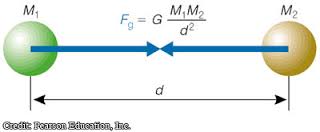
The number 6.67 x 10 -11 N* m2 / kg2 is called the
Universal speed constant
centripetal force
Universal Gravitational constant
Earth's Gravitational constant
Calculate the gravitational force between two objects when they are 0.750m apart. Each object has a mass of 5.00kg.
2.96x10⁻⁷N
3.00x10⁻⁶N
2.22x10⁻⁹N
2.23x10⁻⁸N

A 500 kg asteroid is located 3.4 x10⁷m from the center of Earth. The mass of Earth is 6.0x1024 kg. What is the gravitational force between the asteroid and Earth?
F = GMm/r2
G= 6.67 x 10⁻¹¹
1.73 x 10² N
4.63 x 10⁵ N
2.94 x 10³ N
6.42 x 10⁴ N

The law of universal gravitation is credited to whom?
Einstein
Galileo
Darwin
Newton
The number of wave cycles to pass a given point per unit of time.
Amplitude
Wavelength
Frequency
Calculate the frequency of a photon of a wavelength
4 x 10⁻⁷ m
7.5 × 10⁻¹⁴ Hz
7.5 × 10¹⁴ Hz
7.5 × 1014 cm
Calculate the energy, in joules, of a photon of green light having a wavelength of 562 x 10-9m?
3.537×10⁻¹⁹ J
3.537×10¹⁹ J
3.537×10⁻¹⁹ Hz

