wayground logo

Free Printable Worksheets

Font size

S
M
L
XL
Worksheets

Physics Spring Benchmark Practice

Total questions: 140

Worksheet time: 4hrs 47mins

Name
Class
Date
1.

What is the standard metric unit for length?

a)

meter

b)

yard

c)

second

d)

inch

2.

What is the standard metric unit of time?

a)

second

b)

hour

c)

meters/second

d)

meters/second2

3.

What is the standard metric unit for mass?

a)

kilogram

b)

gram

c)

pound

d)

momentum

4.

What is the standard metric unit for volume?

a)

liter

b)

gallon

c)

quart

d)

cup

5.

A vector has...

a)

magnitude only

b)

magnitude and direction

c)

direction only

d)

neither direction or magnitude

6.

A scalar has...

a)

magnitude only

b)

direction only

c)

magnitude and direction

d)

nothing to do with physics

7.

Equilibrium is when...

a)

there are no forces acting on an object

b)

there are balanced forces acting on an object

c)

an object is at rest

8.

An object can be in equilibrium if it is moving at a constant speed

a)

True

b)

False

9.

A force is...

a)

a push or pull

b)

measured in m/s

c)

always positive

d)

a measure of mass

10.

Force is measured in

a)

m/s

b)

m/s2

c)

N

d)

kg m/s

11.

Calculate force by...

a)

multiplying mass & acceleration

b)

multiplying mass & velocity

c)

dividing mass & acceleration

d)

dividing mass & velocity

12.

Which is Newton's 1st Law?

a)

An object in motion always stays in motion

b)

An object in motion stays in motion and an object at rest stays at rest unless acted upon by an outside force

c)

An object at rest stays at rest unless acted upon by an outside force

d)

An object in motion stays at rest and an object at rest stays in motion unless acted upon by a force

13.

What is Newton's 2nd Law?

a)

F=m/a

b)

m=Fa

c)

F=ma

14.

Inertia is...

a)

equal to momentum

b)

my grandmother's cousin

c)

equal to weight

d)

the tendency for an object to keep doing what it's doing

15.

The force between any two surfaces in contact

a)

support force

b)

friction

c)

gravity

d)

air resistance

16.

Friction...

a)

sometimes speeds things up

b)

always slows things down

c)

is always negative

d)

sometimes creates energy

17.

If you go to the moon... this will change

a)

energy

b)

weight

c)

mass

d)

time

18.

Another name for the force of gravity

a)

weight

b)

mass

c)

energy

d)

momentum

19.

What approximate value does the acceleration due to gravity have here on earth?

a)

10m/s2

b)

5m/s2

c)

it can not be determined

d)

100m/s2

20.

How do you calculate average speed?

a)

divide distance by time

b)

divide time by distance

c)

multiply distance and time

d)

divide velocity by time

21.

The speedometer on your car shows

a)

acceleration

b)

average speed

c)

instantaneous speed

d)

momentum

22.

What are the standard units of velocity?

a)

m/s

b)

m/s2

c)

kg m/s

d)

N

23.

If an object is only acted upon by the force due to gravity, it is in

a)

free fall

b)

equilibrium

c)

mechanical equilibrium

d)

constant motion

24.

Newton's Third Law states...

a)

for every action, there is a reaction

b)

for every action, there is an equal reaction

c)

for every action, there is an equal and opposite reaction

d)

for every action, there is an unequal reaction

25.

Calculate momentum by

a)

multiplying mass and velocity

b)

dividing mass by velocity

c)

dividing velocity by mass

d)

multiplying mass and volume

26.

The units of momentum are

a)

kg m/s

b)

kg m/s2

c)

m/s

d)

N

27.
What is the speed of an object that travels 60 meters in 4 seconds?
a)
240 m/s
b)
15 m/s
c)
0.067 m/s
d)
15 mph
28.
What is velocity?
a)
the quickness of an object
b)
the location of an object
c)
acceleration
d)
speed in a specific direction
29.
Rockets are launched into space using jet propulsion where exhaust accelerates out from the rocket and the rocket accelerates in an opposite direction.
a)
Newton's 1st Law
b)
Newton's 2nd Law
c)
Newton's 3rd Law
d)
None of them
30.
A picture is hanging on a wall and does not move.
a)
Newton's 1st Law
b)
Newton's 2nd Law
c)
Newton's 3rd Law
d)
None of them
31.

A pizza box slides off the front seat and onto the floor when the driver makes a quick stop because the box wants to remain in continuous motion even when the car stops.

a)

Newton's 1st Law

b)

Newton's 2nd Law

c)

Newton's 3rd Law

d)

None of them

32.
Pushing a child on a swing is easier than pushing an adult on the same swing, because the adult has more inertia.
a)
Newton's 1st Law
b)
Newton's 2nd Law
c)
Newton's 3rd Law
d)
None of them
33.
Acceleration is produced when a force acts on a mass. The greater the mass (of the object being accelerated) the greater the amount of force needed (to accelerate the object).
a)
Newton's 1st Law
b)
Newton's 2nd Law
c)
Newton's 3rd Law
d)
None of them
34.
Which has more momentum: a car stopped at a red light or a bike moving at 15 mph?
a)
car
b)
bike
c)
they are equal
d)
cannot determine using the info provided
35.
Determine the momentum of 1000-kg car moving southward at 20 m/s......... 
a)
20000 N
b)
20000 Joules
c)
20000 Kg * m/s south
d)
10000 kg * m/s south
36.
A boy kicks a football with a force of 20 N, the time the force acts for is 0.3 s.
Calculate the impulse on the ball.
a)
1 N*s
b)
6 N*s
c)
33.3 N*s 
d)
None of these
37.
A runner has a momentum of 720 kg m/s and is traveling at a velocity of 5 m/s. What is his mass?
a)
14.4 kg
b)
1400 kg
c)
144 kg
d)
360 kg
38.
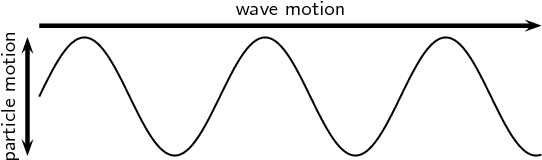
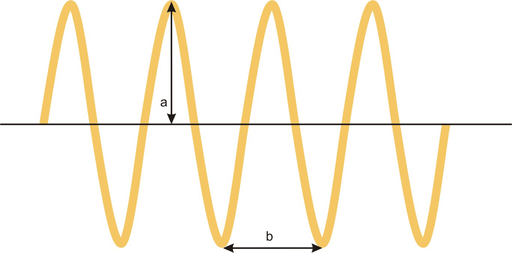
What kind of wave is pictured below?
a)
compressional wave
b)
transverse wave
c)
sound wave
d)
mechanical wave
39.
Waves are a transfer of what?
a)
Heat
b)
Light
c)
Energy
d)
Food
40.
Amplitude reflects the amount of ____________________ in a wave.
a)
energy
b)
compression
c)
rarefaction
d)
speed
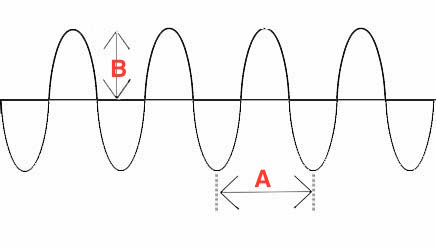
41.
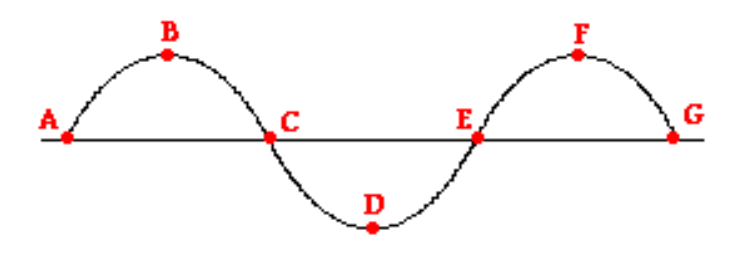
What property of this wave is represented by the letter "A"
a)
amplitude
b)
crest
c)
trough
d)
wavelength
42.
The highest point on a wave is:
a)
the crest
b)
the trough
c)
the top
d)
the coast 
43.
The lowest point on a wave is the:
a)
Amplitude
b)
Crest
c)
Trough
d)
Wavelength
44.
The number of wavelengths that pass a point each per second is:
a)
frequency
b)
period
c)
longitudinal 
d)
transverse wave 
45.
The type of waves that require medium to pass:
a)
Mechanical Waves
b)
Electromagnetic Waves
46.
When the frequency of a wave increases, what happens to the wavelength?
a)
The wavelength is not directly affected by the frequency of a wave.
b)
The wavelength increases.
c)
The wavelength decreases.
d)
More specific information is needed to form a conclusion about the wavelength.
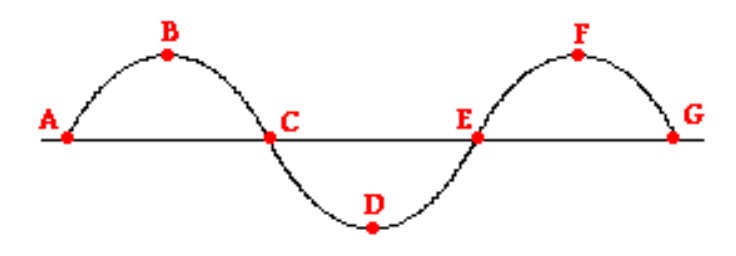
47.
Which letter(s) represent the trough of the wave?
a)
A
b)
B & D
c)
D
d)
C & G
48.
Which letter(s) represent the crest of the wave?
a)
A
b)
B & D
c)
B & F
d)
F
49.
Which of the following can sound travel through?
a)
solid
b)
liquid
c)
gas
d)
all of the above
50.
What is the speed of a sound wave that has a frequency of 250 hertz and a wavelength of 8 meters? 
a)
31 m/s
b)
250 m/s
c)
2000 m/s
d)
5280 m/s
51.
The SI unit for frequency is ________.
a)
m
b)
m/s
c)
hertz
d)
s
52.
A wave in which the particles of the medium move perpendicularly to the direction the wave is traveling
a)
A. surface wave
b)
B. transverse wave
c)
C. electromagnetic  wave
d)
D. longitudinal wave
53.
A wave in which the particles of the medium vibrate parallel to the direction of the wave motion
a)
A. mechanical wave
b)
B. surface wave
c)
C. longitudinal wave
d)
D. wave
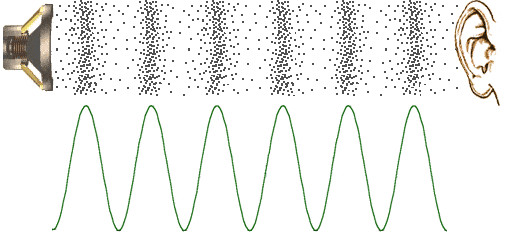
54.
How many waves are in this wave chain?
a)

8

b)

2

c)
4
d)

6

55.
 A wave has frequency of 50 Hz and a wavelength of 10 m. What is the speed of the wave?
a)
500 m/s
b)
50 m/s
c)
5 m/s
d)
0.5 m/s
56.

Select the correct order of waves on the EM Spectrum from low to high energy

a)

Radio, Micro, Infra, Visible, Ultra, X-ray, Gamma

b)

Gamma, X-ray, Ultra, Vis, Infra, Micro, Radio

c)

Vis, Micro, Infra, Ultra, X-ray, Gamma, Radio

d)

Micro, Radio, Vis, Infra, Ultra, X-ray, Gamma

57.

Which has the LONGEST wavelength and, therefore, the LOWEST frequency/energy

a)

Gamma Rays

b)

Ultraviolet

c)

Visible Light

d)

Infrared rays

58.

How are Electromagnetic waves different from Mechanical waves?

a)

EM waves have very short wavelengths

b)

EM waves transmit energy instead of matter

c)

EM waves can travel through the vacuum of space (without particles)

d)

EM waves can change direction by reflection
59.

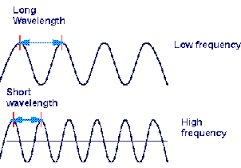
Wavelength and Frequency are related in that...

a)

they are always the same

b)

when one increases, the other decreases (inversely proportional)

c)

there is no correlation

d)

they both vary in an irregular pattern
60.
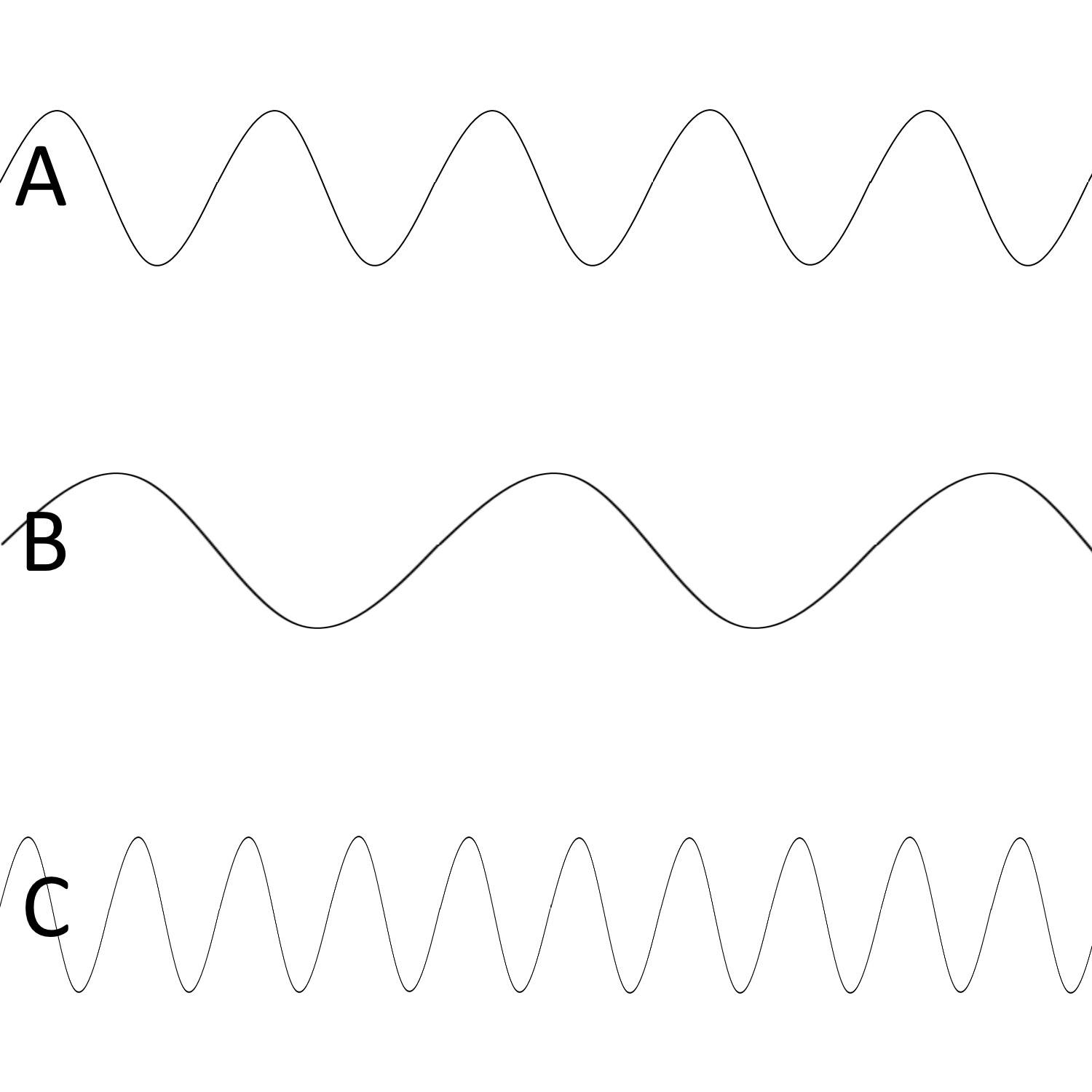
Which wave has the largest wavelength?
a)
A
b)
B
c)
C
d)
None (same wavelength)
61.
Which wave has the largest frequency?
a)
A
b)
B
c)
C
d)
None (same frequency)
62.

Light acts like

a)

a wave.

b)

a particle.

c)

Both a wave and a particle

d)

neither a wave nor a particle.

63.

The full range of frequencies of electromagnetic radiation is called

a)

visible light.

b)

radio waves.

c)

the electromagnetic spectrum.

d)

invisible radiation.

64.

Cellular telephones utilize

a)

radar waves.

b)

very high frequency waves.

c)

very low frequency waves.

d)

microwaves.

65.

High frequency in EM waves equals

a)

high energy and short wavelength

b)

high energy and long wavelength

c)

low energy and short wavelength

d)

low energy and long wavelength

66.
Which electromagnetic waves help doctors detect broken bones inside your body?
a)
gamma rays
b)
x-rays
c)
ultraviolet rays
67.

Helpful in military night vision goggles

a)

radio wave

b)

microwave

c)

infrared

d)

light

68.
Which type of light has the highest energy of this group?
a)
red
b)
yellow
c)
green
d)
blue
69.

Rank these colors from least to greatest energy

a)

red, green, violet

b)

violet, green, red

c)

green, violet, red

d)

red, violet, green

70.

Rank these colors from least to greatest frequency

a)

red, green, violet

b)

violet, green, red

c)

green, violet, red

d)

red, violet, green

71.

Rank these colors from shortest to longest wavelength

a)

red, green, violet

b)

violet, green, red

c)

green, violet, red

d)

red, violet, green

72.

This star contains sodium. The lines don't line up because...

a)

The star is red-shifted and moving away.

b)

The star is red-shifted and moving towards.

c)

The star is blue-shifted and moving away.

d)

The star is blue-shifted and moving towards.

73.

Why does this blueberry look blue?

a)

It is reflecting light in the blue frequency

b)

It is absorbing light in the blue frequency

c)

It is producing light in the blue frequency

d)

It is reflecting red and green

74.

A cup is black in red light, green in green light, and blue in blue light. What color is it in white light?

a)

White

b)

Black

c)

Cyan

d)

Yellow

75.

The same fruit is shown in four different types of lighting. Which of the three primary colors does the fruit reflect?

a)

red, green, and blue

b)

red and blue

c)

only green

d)

none

76.

What is the frequency of a EM wave that is 3 meters long?

a)

1 x 108 hz1\ x\ 10^8\ hz

b)

3 x 108 hz3\ x\ 10^8\ hz

c)

3.3 x 108 hz3.3\ x\ 10^{-8}\ hz

d)

3 hz

77.

Which of the following are in correct order from greatest to least energy?

a)

microwaves, infrared, ultraviolet, x-rays

b)

microwaves, x-rays, infrared, ultraviolet

c)

x-rays, ultraviolet, infrared, microwaves

d)

infrared, ultraviolet, x-rays, microwaves

78.

Which EM wave has the highest energy?

a)

Radio waves

b)

X-rays

c)

Gamma waves

d)

Ultraviolet waves

79.

Which EM wave has the highest frequency?

a)

Radio waves

b)

X-rays

c)

Gamma waves

d)

Ultraviolet waves

80.
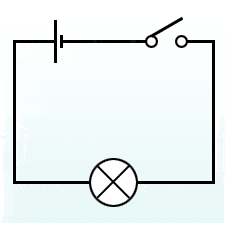
this circuit is .....?
a)
open
b)
parallel
c)
closed
d)
The cutest little circuit evah!
81.
What kind of circuit is this?
a)
series
b)
parallel
82.
What type of circuit is show in the image?
a)
Series Circuit
b)
Parallel Circuit
83.
Which one will still function if one light bulb goes out?
a)
A-Series
b)
B-Parallel
c)
A-Parallel
d)
B-Seriese
84.

A kilowatt (kW) is how many watts?

a)

10

b)

50

c)

100

d)

1000

85.

A 200-W light bulb is connected across a 100-V dc power supply. What current will flow through this bulb?

a)

0.90 A

b)

0.36 A

c)

0.60 A

d)

2.0 A

86.
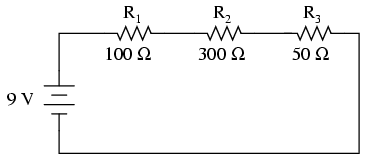
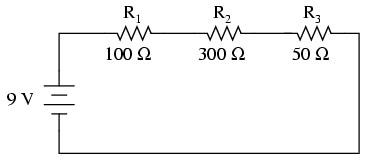
The picture shows an electrical circuit. This circuit is a series circuit because: 
a)
It has 3 light bulbs.
b)
The same current flows through all three light bulbs.
c)
It uses a single battery.
d)
The electrical current is divided between the three light bulbs.
87.
The total resistance in this circuit is 
a)
100 ohms
b)
450 ohms
c)
400 ohms
d)
30 ohms
88.
The total current through this circuit is
a)
0.02 amps
b)
0.09 amps
c)
50 amps
d)
9 amps
89.
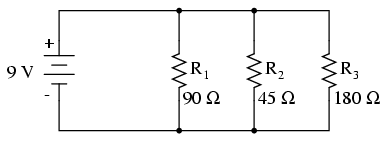
What is the total resistance (RT) across this circuit?
a)
3 kΩ
b)
10 kΩ
c)
13 kΩ
d)
16 kΩ
90.
As the resistance of a circuit increases, the current will...
a)
increase
b)
decrease
c)
stay the same
91.
The current going through the 45 ohm resistor is 
a)
0.05 amps
b)
0.2 amps
c)
0.1 amps
d)
5 amps
92.
Pick the correct sentence.
a)
This circuit will work because it is a closed circuit.
b)
Energy will freely flow in this circuit.
c)
This circuit will not work because there is no energy source.
d)
This circuit will not work because there is no switch.
93.
What will happen if one light bulb is removed from this circuit?
a)
The other bulbs will go out.
b)
The other bulbs will stay on
c)
The other bulbs will get dimmer.
d)
The battery will become stronger.
94.

If an 8.0-Ω resistor and a 12-Ω resistor and a 24-Ω resistor are connected in parallel, the equivalent resistance (total resistance) is ___ Ω

95.

In a closed circuit, how does battery voltage affect current?

a)

As voltage increases, current increases.

b)

As voltage increases, current decreases.

c)

Voltage has no affect on current.

d)

If voltage exceeds current, a short circuit circuit will develop.

96.

Which of the symbols represents current in an electrical circuit?

a)

i

b)

c

c)

e

d)

r

97.

An electrical circuit is powered by a 12-volt battery and contains a light bulb. The current flowing in the circuit is 20 amps. What is the resistance of the light bulb? HINT: V = IR

a)

0.6 Ohms

b)

240 Ohms

c)

1.67 Ohms

d)

12 Ohms

98.

An electrical circuit is powered by a battery and contains a light bulb producing 1.5 Ohms of resistance. The circuit is flowing at 4 amps of current. What is the voltage of the battery?

HINT: V = IR

a)

6.0 volts

b)

1.5 volts

c)

9.0 volts

d)

12.0 volts

99.

The quantity electric potential is defined as the amount of:

a)

electric potential energy

b)

force acting upon a charge

c)

potential energy per charge

d)

force per charge

100.

J.J. Thomson used a cathode ray to show atoms are charged particles. What charge would the ray from the cathode have if the ray moved to the positive field? Why?

a)

negative, because opposites attract

b)

positive, because likes attract

c)

negative, because likes repel

d)

positive, because likes repel

101.
machine that produces a large amount of excess charge, used for experiments with high voltage
a)
Van de Graaff generator
b)
voltage
c)
xerography
d)
electron-volt
102.
The charge of an electron is 
a)
positive. 
b)
negative. 
c)
Electrons have no charge
103.
Two like charges
a)
 neutralize each other.
b)
repel each other. 
c)
must be neutrons. 
d)
attract each other.
104.
If two balloons have the same charge, what will happen if you place them close to each other?
a)
Nothing
b)
They will be attracted
c)
They will pop
d)
They will push each other away.
105.
Objects that have opposite charges
a)
are attracted to each other, and the force between the objects pulls them together.
b)
are attracted to each other, and the force between the objects pushes them apart.
c)
are repelled by each other, and the force between the objects pulls them together.
d)
are repelled by each other, and the force between the objects pushes them apart.  
106.
An object becomes charged when the atoms in the object gain or lose
a)
electrons
b)
protons
c)
neutrons
d)
all of the above
107.
If two charges repel each other, the two charges must be
a)
Positive and neutra
b)
Positive and negative
c)
positive and neutral
d)
negative and negative
108.
In a neutral atom, the number of electrons is equal to the number of _______.
a)
Neutrons
b)
Orbits
c)
Protons
d)
subatomic particles
109.
An atom gains an electron.  What type of charge does it have now?
a)
positive
b)
negative
c)
No charge
110.
An atom loses an electron.  What type of charge does it have now?
a)
positive
b)
negative
111.
A glass rod becomes positively charged when it is rubbed with silk. This net positive charge accumulates because the glass rod
a)
gains electrons
b)
loses electrons
c)
gains protons
d)
loses protons
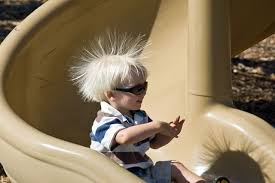
112.

What method of static charging is shown in this picture

a)

Contact

b)

Friction

c)

Grounding

d)

Electron Shifting

113.
What do you call the process of charging a conductor by bringing it near another charged object?
a)
induction
b)
polarization
c)
neutralization
d)
conduction
114.
When a balloon is rubbed on clothes it acquires a charge by ___________
a)
Induction
b)
reduction
c)
friction 
d)
concuction
115.
Which of the following is not a good insulator?
a)
Copper
b)
Glass
c)
rubber
d)
wool
116.
Which of the following is not a good conductor of electricity?
a)
copper
b)
silver
c)
Glass
d)
aluminum
117.
Insulators are different than conductors in that insulators ____.
a)
do not contain electrons or protons 
b)
 do not contain any charge
c)
have a weaker affinity for electrons 
d)
do not allow charge to freely move 
118.
Planets orbit the Sun in a shape called a(n)
a)
circle
b)
ellipse
c)
focus
d)
perihelion
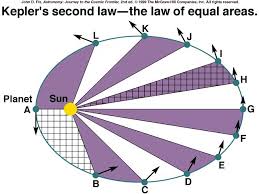
119.
Where is the planet moving faster
a)
Position A to B
b)
Position B to C
c)
Position H to I
d)
Position I to J
120.
Kepler's 2nd Law deals with 
a)
the shape of the planets' orbits
b)
the speed/area the planet travels 
c)
the length of time it takes the planet to orbit the sun
121.
A planet moves __________ when it is farthest from the sun.
a)
faster
b)
slower
122.
Kepler's first law states that the orbits of the planets are oval in shape or 
a)
ellipses
b)
perfect circles
123.
The farther away a planet is from the sun, the _______ it takes it to orbit the sun once. 
a)
longer
b)
shorter
124.
The path a planet travels around the sun is called its 
a)
orbit
b)
ellipse
c)
barycenter
d)
precession
125.
What does Kepler's 2nd Law state? 
a)
during a planet's orbit, the planet will sweep out equal areas in its orbit in equal amounts of time
b)
all areas are equal in space
c)
triangles have equal areas
d)
no two points in a planet's orbit are equal
126.
The study of space
a)
Astronomy
b)
Meteorology
c)
Galaxy
d)
Geology
127.
At position A, which hemisphere would have summer?
a)
Northern hemisphere
b)
Southern hemisphere
128.
Why does Earth have different seasons? 
a)
because of the distance between Earth and the sun 
b)
because of the speed of Earth as it rotates on its axis 
c)
because of the amount of light blocked by the moon on its axis 
d)
because of the tilt of Earth on its axis as it moves around the sun 
129.
An object is _____ if its position changes relative to another object.
a)
in motion
b)
at reset
c)
a frame of refence
d)
magical
130.
What would be the effect of changing the tilt of the earth from 23 degrees to only 5 degrees?
a)
Winter in the northern hemisphere would be longer
b)
Summer in the northern hemisphere would be longer
c)
There would be fewer differences in the temperatures of seasons within the same hemisphere
d)
There would be more differences in the temperatures of seasons within the same hemisphere
131.

Which ellipse has an eccentricity of 0.0.

a)
b)
c)
132.

Which ellipse has an eccentricity of 0.7.

a)
b)
c)
133.
Which diagram shows a planet with the least eccentric orbit?
a)
1
b)
2
c)
3
d)
4
134.
What is the maximum eccentricity an ellipse can be?
a)
0
b)
.5
c)
1
d)
42
135.
What is eccentricity? 
a)
a measurement of how elliptical an orbit is. 
b)
a measurement of the distance between the planet and the sun
c)
a measurement of how long the planet takes to rotate around the sun
d)
none of these
136.
During which month is the earth moving the slowest? 
a)
July 
b)
March
c)
January
d)
September
137.
During what month is the earth moving the fastest around the sun? 
a)
July
b)
March
c)
January
d)
September
138.

How can the position of the sun in earth's orbit be described?

a)

The sun is at the very center of a perfectly circular orbit

b)

The sun is at one of the two focal points of a slightly eccentric ellipse

c)

The sun is at one of the two focal points of a highly eccentric ellipse

139.

An orbital period is the time (in Earth time) a planet _______________ .​

a)

to complete one orbit around the sun

b)

revolves around the solar system

c)

Experiences a season

140.

Where will an object move at the greatest speed as it orbits the sun?

a)

Perihelion

b)

Aphelion

c)

Between perihelion and aphelion