
 Worksheets
Final Exam
Total questions: 61
Worksheet time: 31mins
Name
Class
Date
1.
First Name:
4 lines
2.
1. Which of these costs would be the MOST difficult to adjust if you were looking to reduce your expenses?
a)
Dining out at local restaurants
b)
Loan payment on a new car
c)
Expenses for new clothes
d)
Postponing a purchase for a big-screen TV
3.
2. You earn a salary of $40,000 per year and decide to save 20% of your gross pay. You set a goal of creating a $16,000 emergency fund. How long will it take for you to achieve your goal?
a)
6 months
b)
1 year
c)
2 years
d)
3 years
4.
1. Juan saved $1,000 from his summer job cleaning pools. Which of these account types would work best for him if he doesn't need access to the money for a number of years AND wants to earn the highest interest rate?
a)
Regular savings account
b)
Money Market account
c)
Checking account
d)
Certificate of Deposit
5.
2. Which of the following is an effective strategy for personal saving?
a)
Wait until the end of the month and save whatever is left in your checking account
b)
Save a certain percentage of each paycheck and deposit it directly into a savings account
c)
Cover all of your wants and needs and save whatever is left over
d)
Take out a payday loan so you can save before you receive your paycheck
6.
3. Joelle wants to have an emergency fund to cover 6 months of her expenses. Her monthly gross pay is $4,000 and her monthly expenses are $2,000. If she plans to save 10% of her gross pay each month, how long will it take her to build her emergency fund?
a)
3 months
b)
9 months
c)
24 months
d)
30 months
7.
4. All of the following statements about bank accounts are true EXCEPT…
a)
If the bank account is FDIC-insured, your money is safe even if the bank fails
b)
Many banks pay interest on the money you deposit into your savings account
c)
Historically, savings accounts earn higher returns than investments in the stock market
d)
Money in a checking account is usually easy to access via ATM, debit card or check
8.
5. All of the following are true about prepaid cards EXCEPT…
a)
Prepaid cards typically include a lot of fees
b)
Prepaid cards are a useful option for someone who is unbanked to make online purchases
c)
Prepaid cards are a great way to build credit
d)
Prepaid cards are usually accepted anywhere that debit and credit cards are accepted
9.
6. You are developing a savings plan and using short-, medium-, and long-term goals to motivate you. Which represents possible goals from short-term to long-term? Save for…
a)
Retirement, a house down payment, college tuition
b)
A new cell phone, college tuition, a house down payment
c)
A new cell phone, dinner with friends this weekend, a new bike
d)
Retirement, college tuition, a vacation
10.
7. Fill in the blanks with the correct responses. If you follow the 50-30-20 rule of budgeting, you'll be putting 50% of your monthly income toward _______________, 30% of your monthly income toward _____________, and 20% of your monthly income toward ______________.
a)
Needs, wants, savings
b)
Savings, needs, wants
c)
Needs, savings, wants
d)
Wants, needs, savings
11.
8. Which represents the BEST time to start saving for your retirement?
a)
As soon as you have your first full-time job
b)
Right after you pay off your student loans
c)
Once you are debt-free, including paying off all credit cards, auto loans, and your mortgage
d)
At age 45, so you have exactly 20 years until retirement
12.
9. Which of the following statements is TRUE?
a)
The majority of Americans have an adequate emergency fund
b)
The majority of Americans have sufficient amounts of money saved for retirement
c)
The majority of Americans have an adequate emergency fund, but do NOT have sufficient amounts of money saved for retirement
d)
The majority of Americans do NOT have an adequate emergency fund or sufficient amounts of money saved for retirement
13.
10. Experts recommend that you accumulate enough to cover 3 to 6 __________________ of expenses in your emergency fund.
a)
Days
b)
Weeks
c)
Months
d)
Years
14.
3. If you are trying to substantially reduce the amount you spend on food, you should try...
a)
Cooking your own food at home for as many meals as possible
b)
Dining at restaurants more often so you don't waste water doing dishes
c)
Eating more snacks on the go and way fewer meals at home
d)
Drinking more coffee and soda so you are not as hungry for food
15.
4. Leila just graduated from college and is comparing a few different cities to move to. Which of these factors is the LEAST important thing for her to consider right now?
a)
Average rent for an apartment
b)
Food and grocery store options in the area
c)
Employment opportunities
d)
Average cost of Uber, Lyft, or taxi fare
16.
5. Greg is trying to decide whether he needs a car when he moves to the city. Which of the following would be a reason for Greg to get a car rather than use public transportation?
a)
There are several public transportation routes between Greg's apartment and work
b)
The cost of public transportation is less than Greg’s monthly car payment
c)
Greg’s company covers half the cost of his monthly public transportation pass
d)
Using public transportation, Greg’s commute to work one-way is two hours
17.
1. Which of the following scenarios BEST demonstrates FOMO (Fear of Missing Out)?
a)
Megan takes a baking class after seeing a sign for the class at her favorite bakery
b)
David goes on a vacation to Europe and posts about it on social media every day
c)
Angela sees an advertisement for a pair of shoes and decides to buy them
d)
José wants to go see a movie that all of his friends have seen and are raving about
18.
2. After learning about hedonic adaptation, Tamara wants to spend her money more wisely. Which of the following might help her do so?
a)
Purchasing a dress after seeing an ad on social media
b)
Buying a new laptop even though her current one still works well
c)
Donating money to a charity that supports a cause she cares about
d)
Getting a new phone accessory for her phone case
19.
3. Which of the following best describes what a cognitive bias is?
a)
A rational decision that is based on research and facts
b)
The belief that a person should change their opinions when new facts arise
c)
The belief that we are right until someone provides information that contradicts our belief
d)
An error in the way we think that can influence our decisions
20.
4. Which of the following actions is the BEST way to counteract loss aversion when making a decision?
a)
Dwelling on the potential loss you may experience for several days
b)
Making the choice that takes on the most risk possible
c)
Reframing the decision to focus on the potential gains instead of the potential losses
d)
Polling a bunch of your friends and family to see what they would decide
21.
5. Sebastian began day trading stocks at the beginning of the summer. After a month, he made a profit of $200. Due to his short term success and his belief that he is a highly skilled trader, Sebastian puts his entire savings into the market. This is an example of…
a)
Overconfidence Bias
b)
The Fear of Missing Out (FOMO)
c)
Confirmation Bias
d)
The Endowment Effect
22.
6. Imagine two scenarios: Scenario 1: You see a rare sports card being sold for $500 in a store but choose not to buy it because you think it’s too expensive. Scenario 2: You find a rare sports card worth $500 in your parents’ attic. Rather than sell it, you choose to put it in a case and display it in your room. In scenario 1, you are putting more value on your $500 than the card. In scenario 2, you are putting more value on your card than the $500. This is an example of what?
a)
The Fear of Missing Out (FOMO)
b)
Overconfidence
c)
Endowment effect
d)
Confirmation bias
23.
7. Michael observed he felt the pain of losing a $20 bill more than he felt the joy of finding it on the sidewalk the week before. This is a result of...
a)
Endowment effect
b)
Loss aversion
c)
Sunk cost
d)
Overconfidence
24.
8. Which of the following is the LEAST likely to influence a person’s financial decisions?
a)
What their values are
b)
What their family’s needs are
c)
What their budget is
d)
What their friends want
25.
9. Imani attends a town hall meeting where a tax increase is proposed to help pay for a new bridge. After the meeting, she reads Facebook comments that complain about the already high taxes in her town, which is a view that she agrees with. To avoid confirmation bias, Imani should…
a)
Avoid social media since it will influence her decision
b)
Seek out comments that support the tax increase and the bridge project to provide an alternative viewpoint
c)
Allow others to make the decision because she is too biased
d)
Join a Facebook group that organizes citizens that are opposed to the tax increase
26.
10. Unlike traditional economics, behavioral economics believes that…
a)
People behave in a rational way when making economic decisions
b)
People do not always behave in a rational way when making economic decisions
c)
There is no way to predict how people will make economic decisions
d)
People will always update their viewpoints based on new information
27.
1. How does investing in the stock market differ from putting money in a savings account at a bank?
a)
Investing is always a less risky option than saving
b)
Investing is best for short-term situations like emergency funds; saving is best for the long-term
c)
Investing typically earns between 1-2% while saving generally earns between 5-7%
d)
Investing allows you to accumulate wealth for retirement while saving is best for short-term purchases or emergencies
28.
2. Which of the following statements is TRUE about compound interest?
a)
Compound interest is difficult to calculate, so those who use it earn higher profits for their efforts
b)
Compound interest means you have a fund manager who is compounding your returns without charging a fee
c)
Compound interest allows you to earn interest not only on the amount you have saved, but also on the interest you've already earned
d)
Compound interest directly impacts how much you will be charged in fees
29.
3. What kinds of behaviors can PREVENT people from making smart investing decisions?
a)
Staying calm when the market is experiencing a downturn
b)
Buying stocks when prices are low and selling them when they’re high
c)
Exiting the market because that’s what everyone else is doing
d)
Investing in a diversified portfolio instead of trying to beat the market
30.
4. Daniel has saved $2,000 in a savings account that earns 0.5% interest annually. What will most likely happen to the purchasing power of his savings over time?
a)
His purchasing power will DECREASE because the interest rate is lower than the historical rate of inflation
b)
His purchasing power will INCREASE because the interest rate is higher than the historical rate of inflation
c)
His purchasing power will INCREASE because the interest will compound faster than the historical rate of inflation
d)
His purchasing power will remain the SAME because the interest rate is the same as the historical rate of inflation
31.
5. Which of the following accurately describes a difference between an individual bond compared to a bond fund?
a)
A bond pays you dividends while a bond fund pays you regular interest
b)
A bond guarantees you a higher rate of return than a bond fund
c)
A bond is issued by a company while bond funds only invest in government bonds
d)
A bond is considered to be a less diversified investment than a bond fund
32.
6. Which of the following statements about Exchange Traded Funds (ETFs) is TRUE?
a)
ETFs are traded once a day after the market closes
b)
An ETF is a single stock that you can buy in the stock market
c)
Actively managed ETFs have very low fees
d)
ETF prices can change throughout the day as they are exchanged on the market
33.
7. You bought 10 shares of stock in StreamingVideoCo for $45 per share. Two months later you sold the 10 shares of stock for $80 per share. What was your profit or loss on StreamingVideoCo stock? (Assume that StreamingVideoCo didn't pay a dividend and that you didn't incur any trading fees during that period.)
a)
Loss of $800
b)
Profit of $350
c)
Loss of $450
d)
Profit of $800
34.
8. Which of the statements below BEST describes the relationship between risk and return when considering an investment?
a)
Investors expect to earn a lower return when they invest in a high risk asset
b)
Investors expect to earn a higher return when they invest in a low risk asset
c)
Investors expect to earn a higher return when they invest in a high risk asset
d)
Investors expect to earn zero return when investing in a low risk asset
35.
1. Shira is trying to decide between getting a debit card, a prepaid debit card, and a credit card. Which statement is true?
a)
All 3 cards are completely different
b)
Debit cards and prepaid debit cards are the same
c)
Debit cards and credit cards are the same
d)
All 3 cards are completely the same
36.
2. The average APR for a payday loan is closest to …
a)
4%
b)
14%
c)
40%
d)
400%
37.
3. Which of the following statements comparing credit and debit cards is TRUE?
a)
Far more businesses accept credit cards than debit cards
b)
Credit cards pull money directly from your bank account, while debit cards get their money from Visa or Mastercard
c)
Credit card companies provide you with a monthly statement, while debit cards do not
d)
With debit cards, you're spending your own money at point of sale, but with credit cards, you're getting a loan that you need to pay back later
38.
4. Which of the following is most likely to represent a fixed rate, secured debt?
a)
A student loan
b)
A credit card
c)
A prepaid debit card
d)
An auto loan
39.
5. Which of these statements best explains why it's often a good idea to pay more than the monthly amount due on an amortized loan?
a)
Every time you pay extra, the lender will reduce the interest rate they're charging by a small amount
b)
The extra payment will be applied to the principal amount you owe, which will pay down your debt more quickly
c)
The extra payment will be applied to the interest you owe, which will reduce the overall cost of your loan
d)
Amortized loans typically have much higher interest rates than credit cards, so they're the best place to put your extra cash
40.
6. If you are having trouble making auto loan payments and are really following a tight budget, which recommendation below represents the WORST advice?
a)
Find an extra source of income by taking a second job, working longer hours, or borrowing from family if they can afford to help
b)
Stop making payments on some of your debts so you can focus on getting the most expensive or largest debts under control
c)
Continue making all payments and call your lenders and see if you can negotiate lower monthly payments, lower interest rates, or longer terms
d)
Explore whether a free or non-profit credit counseling service could help
41.
7. When loans are amortized, monthly payments are _______ , while the amount of your monthly payment applied to interest ________ and the amount of your monthly payment applied to the principal _______ over time.
a)
Constant, Increases, Increases
b)
Constant, Decreases, Increases
c)
Variable, Decreases, Increases
d)
Variable, Decreases, Decreases
42.
8. Which of the following is true about fixed and adjustable-rate mortgages?
a)
Fixed-rate mortgages have a constant payment every month, but an interest rate that increases throughout the term of the loan
b)
Fixed-rate mortgages have a fixed interest rate for a few years, after which time the interest rate fluctuates according to general market conditions
c)
Adjustable-rate mortgages have a fixed interest rate for a few years, after which time the interest rate fluctuates according to general market conditions
d)
The two mortgages work the same way but are called different names depending if they come from a bank or a credit union
43.
1. What are the two most important factors in calculating your credit score?
a)
Payment history and types of accounts
b)
Amounts owed and length of credit history
c)
Payment history and total debt
d)
Length of credit history and new credit inquiries
44.
2. Heather realized she has taken out too much debt and it has started to negatively impact her ability to budget. She has decided to pay off this debt in full as soon as possible. All of the following would be beneficial strategies EXCEPT…
a)
Reducing spending by canceling some of her streaming subscriptions
b)
Taking extra shifts at work to increase her income
c)
Making more than the minimum required payment on her debt
d)
Applying for another credit card to use in case she runs out of cash paying off her debt
45.

3.Which of the following statements about credit scores does this bar graph support?
a)
Credit scores tend to drop as you grow older because you are more likely to miss a payment at some point
b)
It is more difficult for young people to borrow because they have less payment history for a lender to rely upon
c)
When young people borrow, they are likely to have lower interest rates because their credit scores are lower
d)
It is easier for young people to get loans at lower interest rates because they are likely to have never been late with a payment
46.
4. All of the following would show up on a credit report EXCEPT...
a)
Salary of your current job
b)
Payment history of your car loan
c)
Credit card payment history
d)
Student loan activity
e)
47.
5. Which of the following methods of getting your credit score would involve paying a fee?
a)
Checking your credit card or loan statement
b)
Talking to a non-profit counselor
c)
Checking creditkarma.com
d)
Getting a score from myFICO.com
48.
6. Your friend confides in you that he has a low credit score. What is the single best way for him to improve his score?
a)
Cancel his credit cards
b)
Make on-time payments
c)
Get a car loan
d)
Check his credit score
49.
7. Melvin is 19 years old and wants to begin establishing a credit history. Which action should he take to meet that goal?
a)
Always say "credit" when asked "credit or debit?" at a store
b)
Ask his parents to cosign a credit card or add him as an authorized user on their credit card
c)
Any time he borrows money from a friend or family member, be sure to pay it back promptly
d)
Take out some private student loans, even though he doesn't need them because he has grants and scholarships
50.
8. Which of the following individuals or groups would be the LEAST likely to look at your credit score?
a)
Someone interviewing you for a job
b)
Credit card companies
c)
An insurance company reviewing your applicant for auto insurance
d)
A bank representative who is helping you open a savings account
51.
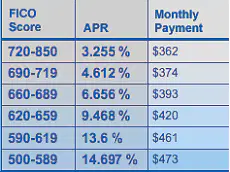
9. Frank and Jasmere are each shopping for a new car for themselves. Each will need a $20,000 loan that they will pay back over a five year period. Frank has a credit score of 730 and Jasmere has a score of 600. Which of the following statements is TRUE?
a)
Over the five year period, Jasmere and Frank will pay the same amount for the car loan
b)
Frank's monthly payment on the auto loan will be about $100 more than Jasmere's payment
c)
Jasmere's monthly payment on the loan will be about $100 more than Frank's payment
d)
Lenders are not allowed to charge people different interest rates based on their credit scores
52.
11. What strategy should you use to pay off multiple sources of debt if you want to pay the lowest amount of interest over time?
a)
Snowball method
b)
Make minimum payments
c)
High rate method
d)
Consolidate multiple debts into one new loan
53.
6. Which of these boxes of cereal has the LOWEST unit price?
a)
Cereal A, which costs $3.20 for a 16 oz. box
b)
Cereal B, which costs $5.00 for a 32 oz. box
c)
Cereal C, which costs $2.50 for a 10 oz. box
d)
Cereal D, which costs $4.50 for an 8 oz box
54.
7. Isaiah has a summer internship at a technology company and is paid $3,000. After Federal and state taxes, Social Security, and Medicare are deducted, his take-home pay is $2,500. Which of the statements below is correct?
a)
His gross pay is $2,500 and net pay is $3,000
b)
His gross and net pay are $3,000
c)
His gross and net pay are $2,500
d)
His gross pay is $3,000 and net pay is $2,500
55.
8. You are putting together your first post-graduation budget. Your net pay is $2,500 per month and you estimate that your monthly expenses will be $2,625. How would you describe your budget?
a)
You have a surplus of $125
b)
You have a deficit of $125
c)
You have a deficit of $2,625
d)
You have a surplus of $2,500
56.
9. You are interested in renting an apartment after graduating college. You meet with the landlord and complete the application. All of the following may need to be provided when you sign your lease EXCEPT
a)
Proof of employment
b)
A bank account
c)
First and last month's rent
d)
A security deposit
57.
11. Which description is most accurate for a Zero-Based Budget?
a)
You put every dollar of your net pay into a budget category each month
b)
You spend your checking account balance down to $0 every month
c)
You spend your saving account balance down to $0 every month
d)
You pay every one of your debts down to $0 every month
58.
12. For two months in a row, Aaron realizes he has a budget deficit of roughly $175. Which of these options makes the most sense for him to fix his problem?
a)
Cancel one of his streaming video subscriptions and go out to dinner three fewer times each month with friends
b)
Start paying just the minimum monthly payment on his student loan and credit card debt, instead of the extra he's been contributing
c)
Contribute $100 less to savings each month and $75 less to his retirement fund
d)
Sell his current car and get a less expensive vehicle
59.
13. You're considering moving into a 3-bedroom apartment with 2 roommates, rather than living on your own post-college. Which of your expenses would likely decrease by having roommates?
a)
Groceries and eating out
b)
Rent
c)
Cell phone bill
d)
Bedroom furniture
60.
14. Danaisha does all her grocery shopping at organic markets and has a monthly grocery bill of $325. Charles says that Danaisha is wasting her money on wants instead of focusing on needs. He buys in bulk, uses coupons, and shops at Save-More for a monthly bill of $195. Who's budgeting correctly for food?
a)
Danaisha, because she is focusing on her health, which will have a guaranteed payoff in the long run
b)
Charles, because he's taking efforts to save money by focusing on his needs only
c)
Both, because needs vs wants are determined on an individual basis
d)
Neither, because they should meet in the middle somewhere. Charles should focus more on health, and Danaisha should cut her spending.
61.
15. Bryan is a great cook. He works as an independent contractor and books gigs cooking customers breakfast or dinner in their own homes on the app Cook For You. Who provides Bryan's health insurance and retirement plan?
a)
Each family he cooks for
b)
The owners of the Cook For You app
c)
The Google and Apple app stores
d)
Bryan has to fund them himself
100 %

