wayground logo

Free Printable Worksheets

Font size

S
M
L
XL
Worksheets

Gen Psych Final Review Part 1

Total questions: 98

Worksheet time: 3hrs 48mins

Name
Class
Date
1.
The unconscious mind influences everything we do.
a)
Biological perspective
b)
Behavioral perspective
c)
Cognitive perspective
d)
Psychodynamic perspective
2.
If a child is behaving poorly, it is likely because this behavior has been rewarded somehow.
a)
Social-cultural perspective
b)
Behavioral perspective
c)
Biological perspective
d)
Psychodynamic perspective
3.
Anxiety is the result of repressed traumatic childhood experiences.
a)
Psychodymanic perspective
b)
Cognitive perspective
c)
Behavioral perspective
d)
Biological perspective
4.
An imbalance of hormones can contribute to aggressive behavior.
a)
Biological perspective
b)
Psychodynamic perspective
c)
Humanistic perspective
d)
Cognitive perspective
5.
Exercising increases endorphins in the brain, thus improving mood.
a)
Cognitive perspective
b)
Biological perspective
c)
Humanistic perspective
d)
Psychodynamic perspective
6.
Teachers will get students to study more by offering extra credit.
a)
Humanistic perspective
b)
Social-cultural perspective
c)
Behavioral perspective
d)
Cognitive perspective
7.
"Change your thoughts, change your life."
a)
Behavioral perspective
b)
Cognitive perspective
c)
Biological perspective
d)
Psychodynamic perspective
8.

Alvin has trouble with memory due to his brain being damaged

a)

evolutionary

b)

biological

c)

social cultural

d)

cognitive

9.

The Smiths train their dog not to leave the yard by using an invisible fence that delivers low level shocks if the dog passes it.

a)

behaviorism

b)

biological

c)

psychodynamic

d)

humanism

10.

Oscar has schizophrenia because his brain is over producing a chemical.

a)

Humanism

b)

Social Cultural

c)

Cognitive

d)

Biological

11.

Dr. Emilios studies the way in which the culture an individual is born into shapes their beliefs about gender identity.

a)

Biological

b)

Cognitive

c)

Social Cultural

d)

Evolutionary

12.
Perception, attention, thinking, language, memory
a)
Behavioral perspective
b)
Cognitive perspective
c)
Humanistic perspective
d)
Psychodynamic perspective
13.
Eating disorders are more prevalent in the West because we are constantly bombarded with images of thin, perfect bodies.
a)
Social-cultural perspective
b)
Behavioral perspective
c)
Biological perspective
d)
Psychodynamic perspective
14.
Which perspective emphasizes the idea that the people and groups around us are important in understanding human behavior?
a)
Humanistic
b)
Sociocultural
c)
Behavioral
d)
Biochemical
15.
Which perspective would be most likely to state behavior is motivated by self-actualization and the promise of human potential?
a)
Evolutionary
b)
Humanistic
c)
Biochemical 
d)
Sociocultural
16.

Which perspective would say that anxiety is the result of repressed traumatic childhood experiences?

a)

Psychodynamic

b)

Cognitive

c)

Behavioral

d)

Biological

17.
Treat mental illness with medication.
a)
Biological approach
b)
Psychodynamic approach
c)
Humanistic approach
d)
 Behavioral approach
18.
An imbalance of hormones can contribute to aggressive behavior.
a)
Biological perspective
b)
Psychodynamic perspective
c)
Humanistic perspective
d)
Cognitive perspective
19.

Holds the view that people have free will, the freedom to choose

their own destiny, and strive for self-actualization

a)

Evolutionary

b)

Biopsychological

c)

Humanistic

d)

Behavioral

20.

How the mind encodes, processes, stores, and retrieves information

a)

neuroscience perspective

b)

cognitive perspective

c)

developmental psychology

d)

evolutionary perspective

21.

The disguised effects of unfulfilled wishes and childhood traumas.

a)

social psychology

b)

psychodynamic perspective

c)

social-cultural perspective

d)

behavioral perspective

22.

What is behavior?

a)

Our actions

b)

Our thinking

c)

Our dreams

23.

True or false: Psychology is the scientific study of behavior and mental processes.

a)

True

b)

False

24.

True or false: The biological perspective argues that our biology (like our brain) affects our behavior.

a)

True

b)

False

25.

If I say she acted like that because she has a good sense of who she is and because she is self-motivated, which perspective am I using?

a)

Humanistic

b)

Learning

c)

Biological

26.

Which perspective argues that things like our ethnicity, gender, and culture will influence our behavior?

a)

Sociocultural

b)

Humanistic

c)

Cognitive

27.

Which perspective argues that our unconscious motives influence our behavior?

a)

Psychoanalytic

b)

Humanistic

c)

Learning

28.

True or false: Mental processes are things we do with our mind.

a)

True

b)

False

29.

What are examples of mental processes?

a)

Perception

b)

Memory

c)

Thinking

d)

All of them

30.

Which perspective argues that our unconscious motives influence our behavior?

a)

Psychoanalytic

b)

Humanistic

c)

Learning

31.

Which perspective argues that our behavior depends on things like our self-motivation?

a)

Humanistic

b)

Psychoanalytic

c)

Sociocultural

32.

Which perspective argues that our nervous system influences our behavior?

a)

Biological

b)

Evolutionary

c)

Cognitive

33.

Match the neurotransmitter with its function: Gaba

a)

Excitatory neurotransmitter

b)

Motor neurotransmitter

c)

Sensory neurotransmitter

d)

Inhibitory neurotransmitter

34.

Match the neurotransmitter with its function: Dopamine

a)

Muscle contraction and movement

b)

Reward-motivated behavior and pleasure

c)

Memory and learning

d)

Regulation of sleep and wakefulness

35.

Match the neurotransmitter with its function: Adrenaline

a)

Vitamin

b)

Antibody

c)

Hormone

d)

Enzyme

36.

Match the neurotransmitter with its function: Serotonin

a)

Regulating muscle movement

b)

Regulating mood, sleep, appetite, and other functions

c)

Regulating heart rate

d)

Regulating body temperature

37.

Match the neurotransmitter with its function: Oxytocin

a)

Social bonding, trust, and love

b)

Memory and learning

c)

Fight or flight response

d)

Muscle contraction and movement

38.

Match the neurotransmitter with its function: Acetylcholine

a)

Digestion, heart rate, and blood pressure

b)

Muscle movement, memory, and learning

c)

Vision and light sensitivity

d)

Emotions and mood

39.

Match the neurotransmitter with its function: Norepinephrine

a)

Regulates stress response

b)

Enhances memory

c)

Promotes sleep

d)

Regulates heart rate

40.

The basic structural unit of the nervous system:

a)

nerve

b)

neuron

c)

brain

d)

spinal cord

41.

Neurotransmission can best be described as a(n)

a)

physical change.

b)

nuclear reaction.

c)

electrochemical process.

d)

electromagnetic field.

42.
Once the brain receives a message from the sensory neurons, it sends a message to make your muscles move. Which of these is responsible for that movement?
a)
Motor neurons
b)
Inter neurons
c)
Sensory neurons
d)
Spinal cord
43.

Neurotransmission can best be described as a(n)

a)

physical change.

b)

nuclear reaction.

c)

electrochemical process.

d)

electromagnetic field.

44.

Type of synapse which increases the chance of the next neuron firing

a)

Inhibitory

b)

Excitatory

c)

Neurotransmitters

d)

Neuron

45.

The proper name for brain chemicals

a)

Hormones

b)

Neurons

c)

Neurotransmitters

d)

Synapse

46.
Which neurotransmitter is involved in muscle movements?
a)
Acetylcholine
b)
Endorphins
c)
Serotonin
d)
GABA
47.
What is a neurotransmitter?
a)
fatty covering of the axon
b)
nerve cell
c)
chemical messenger
d)
gap between neurons
48.
Which neurotransmitter inhibits brain activity?
a)
Acetylcholine
b)
GABA
c)
Endorphins
d)
Dopamine
49.

Which of these is an excitatory neurotransmitter?

a)

Acetylcholine

b)

Dopamine

c)

GABA

d)

Endorphins

50.

Which neurotransmitter is both excitatory and inhibitory and increases heart beat in the "Fight or Flight" response?

a)

Acetylcholine

b)

Endorphins

c)

Norepinephrine

d)

Serotonin

51.
Too much of this neurotransmitter can cause severe muscle spasms and even death
a)
Serotonin
b)
Endorphins
c)
Acetylcholine
d)
GABA
52.
Loss of Dopamine-producing neurons is a cause of:
a)
paralysis
b)
Parkinson's
c)
anxiety
d)
Alzheimer's
53.
A chemical that blocks a neurotransmitter from being absorbed, thus blocking its effects is a(n):
a)
Agonist
b)
Antagonist
c)
Endorphin
d)
L-Dopa
54.
Synapses that are ____________ cause a neuron to fire whereas ____________ synapses reduce the likelihood that a neuron will fire.
a)
excitatory; inhibitory
b)
synaptic; terminal
c)
postsynaptic; presynaptic
d)
dendritic; axon
55.
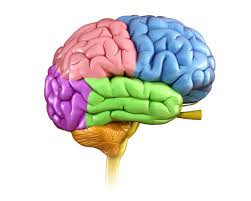
Identify the structure in green.
a)
parietal lobe
b)
frontal lobe
c)
occipital lobe
d)
temporal lobe
56.
Identify the structure in green.
a)
temporal lobe
b)
frontal lobe
c)
parietal lobe
d)
occipital lobe
57.
Identify the structure in green.
a)
parietal lobe
b)
frontal lobe
c)
temporal lobe
d)
occipital lobe
58.
Identify the structure in green.
a)
frontal lobe
b)
temporal lobe
c)
occipital lobe
d)
parietal lobe
59.
Identify the structure in green.
a)
brainstem
b)
spinal cord
c)
corpus callosum
d)
thalamus
60.
Identify the structure in green.
a)
cerebrum
b)
cerebellum
c)
thalamus
d)
hypothalamus
61.

Which color represents the temporal lobe?

a)

Blue

b)

Yellow

c)

Pink

d)

Green

62.

Responsible for the voluntary control of your skeletal muscles, the muscles we can move and control.

(a)  

63.

Responsible for visual perception and are involved in some forms of visual, short-term memory.

(a)  
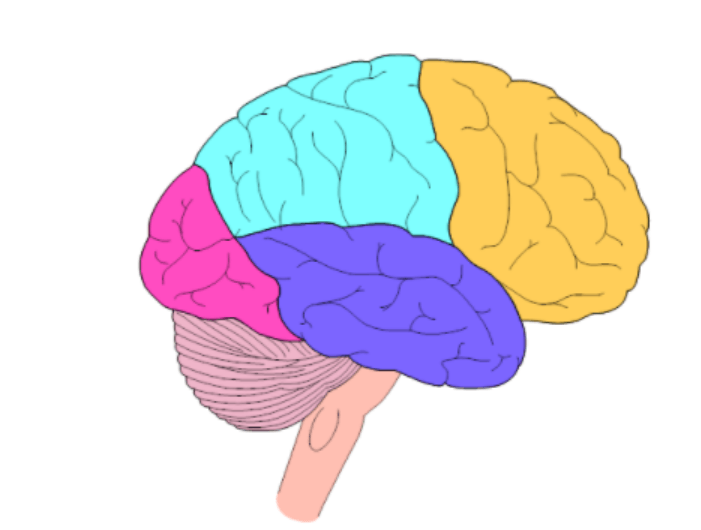
64.

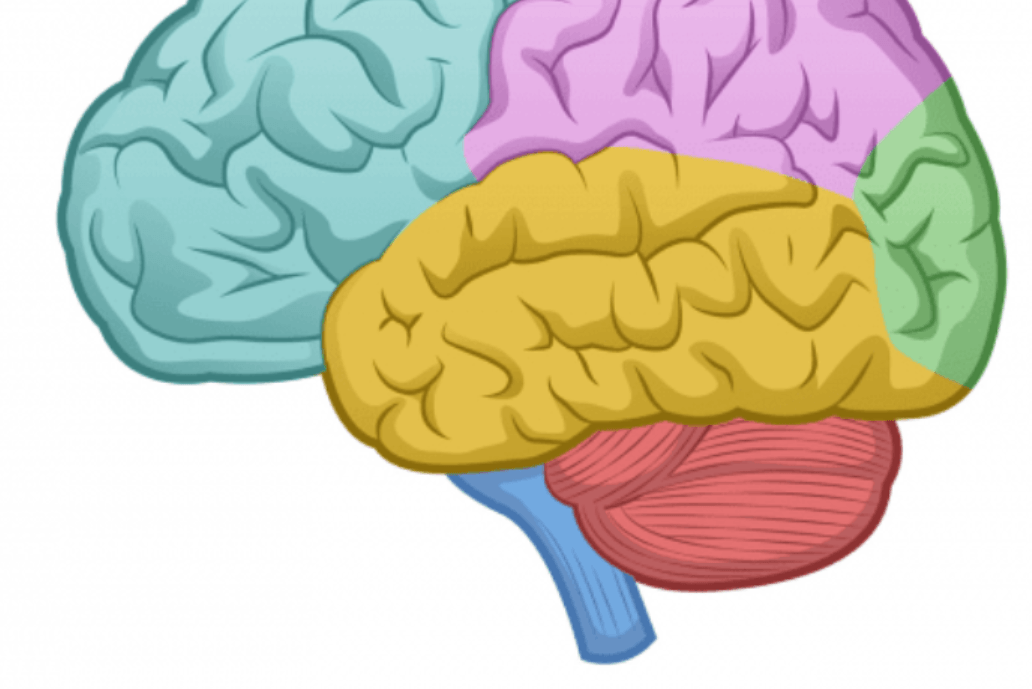
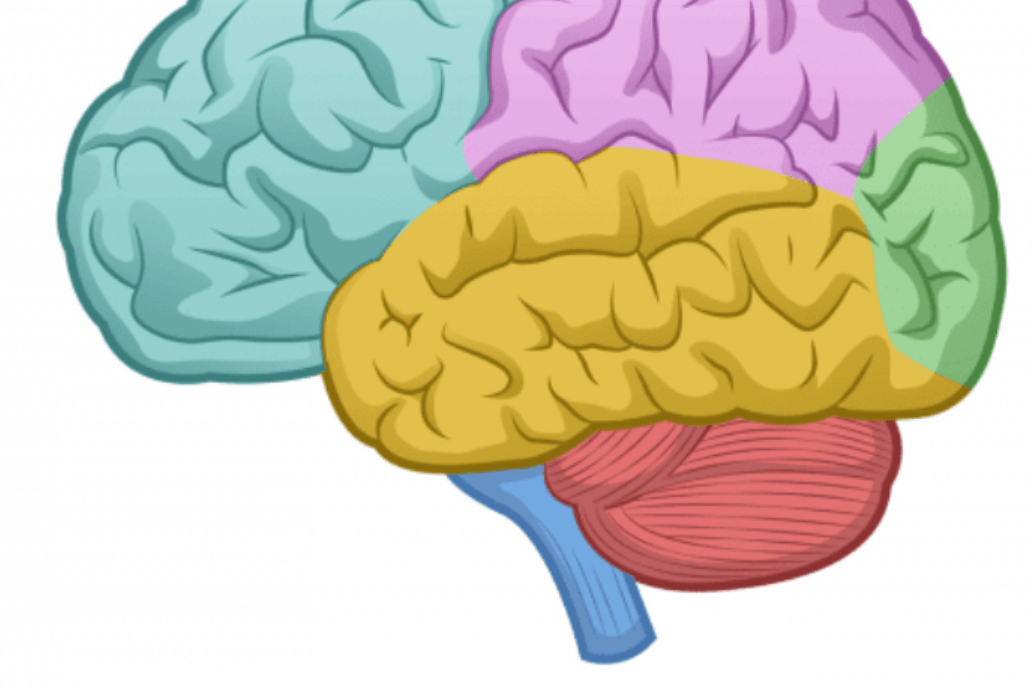
What lobe is orange in this picture?

a)

Frontal

b)

Parietal

c)

Temporal

d)

Occipital

65.

What lobe is bright pink in this picture?

a)

Frontal

b)

Parietal

c)

Temporal

d)

Occipital

66.

What lobe is green in this picture?

a)

Frontal

b)

Parietal

c)

Temporal

d)

Occipital

67.

What lobe is pink in this picture?

a)

Frontal

b)

Parietal

c)

Temporal

d)

Occipital

68.

What structure is red in this picture?

a)

Cerebrum

b)

Cerebellum

c)

Brain Stem

69.

What structure is dark blue in this picture?

a)

Cerebrum

b)

Cerebellum

c)

Brain Stem

70.

What is the function of the brainstem?

a)

Motor control

b)

Sensation

c)

Integration

d)

Maintaining basic needs

71.

Which lobe of the brain is responsible for vision?

a)

Frontal Lobe

b)

Parietal Lobe

c)

Occipital Lobe

d)

Temporal Lobe

72.

What is the function of the temporal lobe?

a)

Language and hearing

b)

Motor control

c)

Sensation

d)

Vision

73.

Name the cerebral lobe.

a)

frontal lobe

b)

occipital lobe

c)

parietal lobe

d)

temporal lobe

74.

The part of the brain that impacts emotions, especially fear, is known as the ____________.

a)

amygdala

b)

hypothalamus

c)

hippocampus

d)

pons

75.

Which brain area is known as the "Little brain" and is in charge of balance and coordinating movements:

a)

Thalamus

b)

Brainstem

c)

Hypothalamus

d)

Cerebellum

76.

Which of the following vital body functions are monitored and controlled by the Brain Stem?

(Multiple Items)

a)

heartbeat

b)

digestion

c)

smelling

d)

respiration

77.

Imagine Nora, Elijah, and Arjun are on a quest to find the part of the brain that controls hunger and satiety. Can you help them identify it?

a)

Hypothalamus

b)

Cerebellum

c)

Thalamus

d)

Amygdala

78.

Abigail, Hannah, and Rohan are playing a trivia game about the human brain. They come across a question: Which part of the brain is responsible for automatic survival functions?

a)

Brainstem

b)

Cerebellum

c)

Thalamus

d)

Hippocampus

79.
The brain stem controls automatic things like
a)
breathing, balance and heart rate
b)
temperature, breathing, and balance
c)
breathing, heart rate, and coordination
d)
temperature, breathing, and heart rate
80.

problem solving

a)

frontal lobe

b)

parietal lobe

c)

occipital lobe

d)

temporal lobe

81.
Makes decisions, plans, reasons, and carries out behaviors
a)
Frontal Lobe
b)
Parietal Lobe
c)
Occipital Lobe
d)
Temporal Lobe
82.
Cindy understands her world primarily by grasping and sucking easily available objects. Cindy is clearly in Piaget's ________ stage
a)
preoperational
b)
concrete operational
c)
sensorimotor
d)
formal operational
83.
According to Piaget, children come to understand that the volume of a substance remains constant despite changes in its shape during the ________ stage.
a)
sensorimotor
b)
preoperational
c)
concrete operational
d)
formal operational
84.
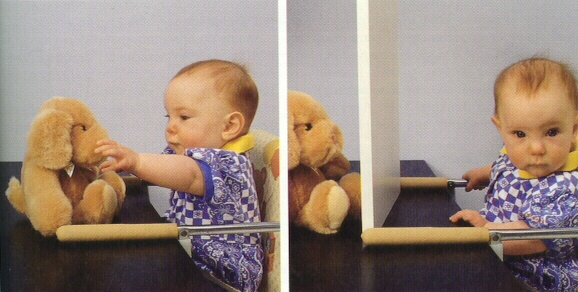
An infant who has developed object permanence...
a)
is attached to specific objects, such as a blanket.
b)
will see all objects as being the same.
c)
knows that an object, such as a rattle, exists even if it is not in view.
d)
cries when a wanted object is taken away.
85.
Four-year-old Jennifer mistakenly believes that her mother would like to receive a toy doll as a Christmas present. This best illustrates Piaget's concept of:
a)
accommodation
b)
attachment
c)
object permanence
d)
egocentricism
86.
The cognitive ability to be able to recognize that quantities remain the same when two glasses of water are sitting beside each other, and one is poured into a taller glass.
a)
Irreversibility
b)
Centration
c)
Conservation
d)
Object Permanence 
87.
The inability of young children to see the world through someone else's view is termed:
a)
Centration
b)
Irreversibility
c)
Conservation
d)
Egocentrism
88.
Peek-a-boo works on children in what stage?
a)
Sensorimotor
b)
Preoperational
c)
Concrete Operational
d)
Formal Operational
89.
The ability to use deductive logic, think abstractly and systematically solve problems emerges during the:
a)
Concrete Operational Stage
b)
Sensorimotor Stage
c)
Formal Operational Stage 
d)
Preoperational State 
90.
The first stage of development is the _____ stage.
a)
adaptation
b)
assimilation
c)
accommodation
d)
sensorimotor
91.
Jane's mother has two crackers, both of equal size. She breaks one of the crackers up into four pieces. Jane says she wants the one with the most and immediately chooses the four pieces, even though the two amounts are equal. Jane's choice illustrates Piaget's concept of:
a)
Accommodation
b)
Egocentrism
c)
False belief
d)
Conservation
92.

In Piaget's theory, the stage in which infants are only aware of what is immediately in front of them (from birth to about 2 years of age).

a)

Formal Operational Stage

b)

Preoperational Stage

c)

Sensorimotor Stage

d)

Concrete Operational Stage

93.
According to your age and Piaget's theory, what stage are you at?
a)
Concrete Operational
b)
Formal Operational
c)
Preoperational
d)
Sensorimotor
94.

During this stage, humans begin to think more rationally about abstract concepts and hypothetical events.

a)

Formal Operational Stage

b)

Concrete Operational Stage

c)

Pre-Operational Stage

d)

Sensori-Motor Stage

95.

During this stage, a child would know the answer to this math question: 3 + 5 = 8

a)

Formal Operational Stage

b)

Concrete Operational Stage

c)

Pre-Operational Stage

d)

Sensori-Motor Stage

96.

Deductive reasoning or being able to generalize happens during this stage.

a)

Formal Operational Stage

b)

Concrete Operational Stage

c)

Pre-Operational Stage

d)

Sensori-Motor Stage

97.

During this stage, a child participates in lots of pretend play.

a)

Formal Operational Stage

b)

Concrete Operational Stage

c)

Pre-Operational Stage

d)

Sensori-Motor Stage

98.

People in this stage know they can reverse action by doing the opposite.

a)

Formal Operational Stage

b)

Concrete Operational Stage

c)

Pre-Operational Stage

d)

Sensori-Motor Stage