
 Worksheets
Atomic structure and thermochemistry test
Total questions: 146
Worksheet time: 49mins
During an endothermic reaction in a beaker if we are part of the surroundings and touched the beaker, it would feel _______.
Warm
Cold
Bubbly
Damp
Is this reaction endothermic or exothermic?
Is this reaction endothermic or exothermic?



This potential energy diagram (graph) represents an _________ change.
endothermic
exothermic
A change in enthalpy, ΔH, for a reaction is described as energy absorbed or released as ________.
light.
heat.
sound.
pressure.
Energy can not be created or destroyed, it can only be transferred refers to the ______________. This is also known as the First Law of Thermodynamics.
law of conservation of energy
law of conservation of mass
life facts
law of conservation of chemistry
A chemical reaction that absorbs heat from the surroundings is said to be __________ and has a __________ ΔH at constant pressure.
endothermic; positive
endothermic; negative
exothermic; negative
exothermic; positive
During an exothermic reaction, heat content in the surroundings increases because
heat energy is destroyed during reactions
the reaction absorbs heat energy
the energy contained in the reactants is lower then the products
the energy contained in the products is lower than the reactants

The graph represents the uniform heating of a substance, starting with the substance as a solid below its melting point. Which line segment listed below represents an increase in potential energy and no change in average kinetic energy?
Line segment AB
Line segment BC
Line segment CD
Line segment EF
Define ΔH
Change in Specific Heat; Heat by one Degree Celsius
Change in Temperature; the energy we calculate; Degree Celsius
Change in Enthalpy; the energy/heat we calculate
Change in Time; time travel
Define Exothermic
Energy is released; ΔH is negative; Going from Gas to Liquid, Liquid to Solid
Energy is absorbed; ΔH is positive; Going from Gas to Liquid, Liquid to Solid
Energy is released; ΔH is positive; Going from Solid to Liquid, Liquid to Gas
Energy is absorbed; ΔH is negative; Going from Gas to Liquid, Liquid to Solid
Specific Heat is..
the temperature initial minus temperature final
the amount of heat/energy required to raise 1 gram of a substance by 1°C (or K) aka "C"
the temperature final minus temperature initial
the item in a system with given weight in grams
Is this phase change representing an exothermic or endothermic reaction?
GAS to LIQUID
Exothermic
Endothermic
Is the phase change representing an exothermic or endothermic reaction?
SOLID to LIQUID
Endothermic
Exothermic

Which of the following would have the highest entropy?
A cold solid
A hot liquid
A hot gas
A cold gas
Which law states "The entropy of a closed system is always increasing"?
Zeroth Law
1st Law
2nd Law
3rd law
Which law states "Energy can neither be created nor destroyed. It can only be transformed"?
Zeroth Law
1st Law
2nd Law
3rd law
Which law explains the relationship between temperature and entropy?
Zeroth Law
1st Law
2nd Law
3rd Law
Which law of Thermodynamics helps to explain how car engines work?
Zeroth Law
1st Law
2nd Law
3rd Law
Which type of system is always used in the Laws of Thermodynamics?
Open Systems
Closed Systems
Isolated Systems
Skeletal System (obviously)
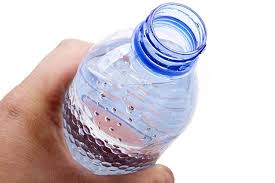
Which type of system is depicted here?
Open System
Closed System
Isolated System
Which is the best description of equilibrium?
When two systems weigh the same amount as each other
The equal exchange between reactants and products in open systems
The equal exchange between reactants and products in closed systems
When reactants and products become equal to each other
Which would have the highest entropy?
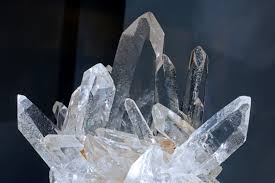
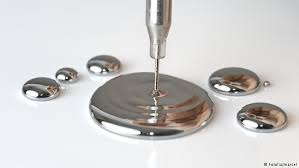
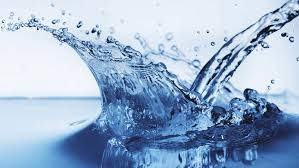
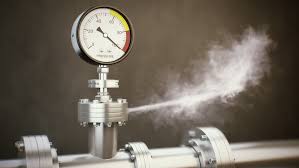
What is entropy?
Disorder
Not disorder
What is a subatomic particle with a positive charge that is in the nucleus of an atom?
neutron
proton
electron
valence electron
What is the center of an atom containing protons and neutrons?
nucleus
neutron
proton
electron cloud
The atomic number identifies the number of __________.
electrons
atoms
protons
neutrons
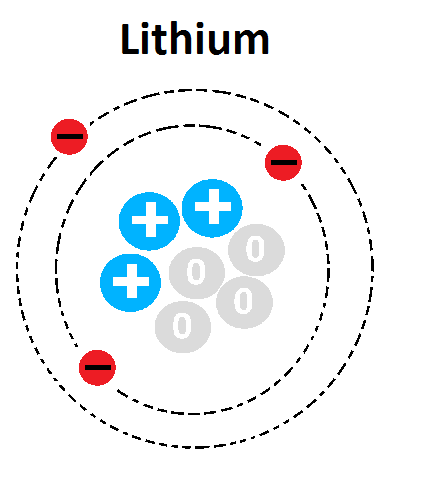
What is the mass number of this atom?
1
3
4
7
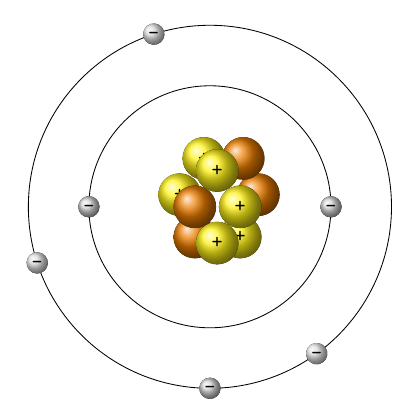
How many electrons does this atom have?
2
4
6
10
How many electrons does this atom have?
2
4
6
10
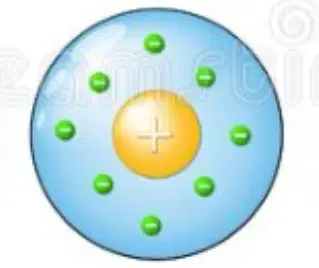
A very few alpha particles were deflected almost straight back by the gold foil.
Rutherford
Dalton
Democritus
Bohr
1. What element is represented in this Bohr Model?
Carbon
Hydrogen
Aluminum
Lithium

An electron emits or absorbs energy when it jumps from one orbit or energy level to another.
Dalton
Rutherford
Bohr
Democritus
Subatomic particles with a negative charge
Electrons
Neutrons
Protons
Quarks

The smallest particle of an element.
Element
Molecule
Atom
These are found in the nucleus and have a neutral charge.
proton
electron
neutron

The number 16 for the atomic element sulfur is the
ionic number
isotope
atomic mass
atomic number

How many protons does sulfur have?
32
16
48
12

How many electrons does sulfur have
16
32
48
12
In an atom, the number of protons is equal to the number of ____________.
energy levels
neutrons
neurons
electrons


How many neutrons does a Hydrogen atom have?
1
2
3
0

How many electrons does an Iodine atom have?
53
126
73
179

How many neutrons does an Oxygen atom have?
8
16
24
7.999

How many electrons does a Copper atom have?
63
29
92
34

Rutherford's model of atom based on -------------- experiment
Alpha ray scattering experiment
Cathode ray Discharge tube experiment
Millicken oil drop experiment
pick out the correct statements related to Rutherford's model
Electrons revolve around the nucleus in circular paths called orbits
Electrons revolve around the nucleus in certain selected circular paths called orbits
Most of the space in the atom is empty
the energy of a particular shell is a constant
Plank's Quantum theory is based on
Wave nature
Particle nature
Dual nature
In Photoelectric Effect ,number of electrons ejected is proportional to --------------------------
(a)
Give the name of spectral series of Hydrogen comes in the UV region
(a)
---------------- the equation used to calculate radius of the orbit
rn=a0n2
rn=a0n
rn=a0/n2
rn=a0/n
What are the possible values for azimuthal quantum number
0 to (n-1)
-l to +l
1,2,3,4------
Identify the law stated below
"No two electrons in an atom can have the set of all four quantum numbers"
(a)
Pick out the correct configuration of Cu
4s23d9
4s13d10
4s23d4
4s13d5
Give the name of the orbital whose quantum number values are the following
n=5 l=2 m= -1
5d
5s
5p
5f
When electron falls from an excited state to a ground state, (a) is emitted by the electron.
If a photon hits an atom, the electron will ___________ the energy. It is promoted from a _____ energy level to a ______ energy level.
absorb; lower; higher
emit; lower; higher
absorb; higher; lower
emit; higher; lower
_____________________ is the lowest energy level an electron will occupy in an atom.
ground state
excited state
Which of the following statements is false?
The energy of a photon is directly related to its wavelength
A line spectrum is produced when light is emitted from an excited atom
The energy of a photon is directly related to its frequency
Light is composed of photons with specific amounts of energy
Neils Bohr's atomic theory is similar to the concept of the
solar system
circles with dots
spinning wheel
None of the above
According to Bohr, the energy absorbed by an electron upon excitation comes in a fixed amount called
exact energy
fixed energy
quantized energy
None of the above
Soon after the electron absorbs energy, this energy is released in a form of light or photon. True or False?
True
False
When the frequency of a wave increases, the wavelength ___________.
increases
decreases
stays the same
A wave with a low energy has a ___________ frequency.
low
high
medium
What is a photon?
A ray from the sun
An electron
A particle with no mass that can be thought of as a bundle of energy
A particle that has the ability to blow up an atom
Can electrons exist between energy levels/orbits?
Yes
No
According to Bohr, what two things do electrons have to have enough energy to do?
Resist the energy given to it by a photon
Stay in constant motion around its orbital
Resist the attraction from the positive nucleus
Jump between energy levels
Mass of proton is
1.6726×10^–27g
9.1095×10^–31kg
1.6726×10^–24 g
5.4858amu
Which atomic orbital has highest energy
4d
4f
5s
5p
The value of four quantum numbers of valence electron of an element are
n = 4, = 0, m = 0 and s = +1/2. The element is
Li
K
Sc
Na
The atomic number of an element is 30. How many s, p and d-electrons respectively it possesses in ground state?
8, 19, 8
8, 12, 10
10, 15, 10
8, 18, 11
The principal quantum number of an atom is related to
Orientation of orbital in space
Spin of electron around its own axis
Size of the orbital
Shape of orbita

The third electron of Li atom will have quantum number values
A
B
C
D

The ground state electronic configuration of nitrogen atom can be represented as
A
B
C
D
The set of elements which violates Auf bau principle is
Cr and Co
Cu and Co
Cr and Cu
Cr and M
The shape of 1s, 2s and 3s is
Different
Linear
Similar
Flate
The value of n = 3. What are probable values of azimuthal quantum number ‘ ’
0,1,2,3
0,1,2
0,1
1,2,3,4
Which one is the correct order of frequency of radiations?
-ray > UV rays > red rays> microwave rays
UV-rays > -rays > red rays > microwave rays
Microwave rays > red rays > UV rays> -ray
Microwave rays > UV rays > red rays > -ray
A photon of light moving with energy 3.3 × 10&–30 J. The frequency of photon is
(h = 6.6 × 10^–34 Js)
500 Hz
0.5 × 10^–30 Hz
5000 Hz
2.5 × 10^–4 Hz
The nucleon number of 8O−2
is:
8
10
16
24
In a chemical specie there are 26 protons, 24 electrons and 30 neutrons, it may be:
Fe
Mn
Fe^+2
Zn^+2
The number of unpaired d electrons retained in Cu^2+ (At.Number of Cu = 29) ions is
2
5
1
0
Which is incorrect statement
e/m value of electron is 1.7588×10^11 C/kg
Protons are deflected in electric field
Protons produce flashes on striking Zns plate
Wave number ( v ) is reciprocal of frequency (v)
Which of the following fundamental subatomic particle is different in number than others in the sodium atom?
Protons
Neutrons
Electrons
All are equal
Which of the following sets of quantum number is correct for an electron in 4f
orbital?
n = 4, l= 3, m =+4
n = 4, l= 3, m =+1
n = 4, l= 4, m =− 4
n = 3, l= 2, m =− 2
Which is not deflected by magnetic field
Neutron
Proton
Alpha particles
Electron
The electronic configuration of a dipositive ion is 2, 8, 17 and atomic mass is 65. The number of neutrons in the nucleus would
38
65
36
29

Match list I and list II and pick the correct matching from given codes
A–1, B–3, C–4, D–2
A–3, B–1, C–4, D–2
A–3, B–4, C–2, D–1
A–1, B–3, C–2, D–4
With the increase in value of principal quantum number which one will not change
Size of s-orbitals
Energy of p-orbitals
Shape of p-orbitals
Size of p-orbitals

A
B
C
D
Total fundamental sub atomic particles are present in hydride ion (H–):
1
2
3
4
The electrons in a sub-shell are filled according to formula
2n^2
2(2l+1)
2l+1
n^2

Deduce the number of protons, neutrons, electrons and nucleons from the given
specie
39
19 K
A
B
C
D

Which of the following is the shape of one of the d-orbital?
A
B
C
D
The positive charge in nucleus of an atom is due to a fundamental particle called
Neutrons
Protons
Electrons
Neutrino
The shapes of orbitals can be determined by
Spin quantum number
Azimuthal quantum number
Principal quantum number
Magnetic quantum number
The number of degenerate orbitals in p–subshell is
2
3
5
7
The isoelectronic pair like argon is
Cl^-, Ca^2+
F^-,Na^+
Cl^-,Na^+
He,Ne
The total number of orbitals containing electrons, if atomic number of the element is 19
9
6
10
16
A(An) ______ is a region of space in which there is a high probability of finding an electron in an atom
Shell
Nucleus
Atomic orbital
Main energy level
Cathode rays and canal rays when pass through electric field they wil
Deflect towards negatively charged plate only
Deflect towards positively and negatively charged plates respectively
Deflect towards positively charged plate only
Not deflect towards negatively charged plate and positively charge plate
Atoms of two different elements having same nucleon number but different proton number are called
Isotopes
Isoelectronic
Isotones
Isobars
A di-valent cation having 10 electrons and 24 nucleon number. The number of
neutrons ar
11
12
10
24
The wavelength of Lyman Series lies in the region
U.V
Visible
I.R
X.rays
Positive ions are formed from the neutral atom by the loss of
Protons
Neutrons
Electrons
Positrons
e/m value for positive rays is maximum for
Helium
Hydrogen
Oxygen
Nitrogen
Lines of Paschen series are produced when electrons jump from higher orbit to
_______ orbit
1st
2nd
3rd
4th
According to Bohr’s atomic model, radius of first orbit of hydrogen atom is
0.529Å
2.11 Å
4.0 Å
0.52 m
An orbital can have maximum two electrons with opposite spins according to
Heisenberg’s Principle
Auf Bau Principle
Hund’s rule
Pauli exclusion Principle
Which particle has a greater wavelength
Proton
Neutron
Alpha-particle
Electron
The mass of a proton is 1837 times more than that of _____
Neutron
Electron
Positron
Alpha-particle
The limiting lines shows that the energy difference between the first level and the _____
Second
Third
Fourth
Infinite
How do the ‘p’ orbitals Px, Py, Pz differ from each other
Size
Shape
Orientation
Capacity
Magnetic quantum number is related to
Size of orbit
Shape of orbital
Orientation of orbital
Spin of electron
In magnesium atom, in ground state, the number of electron with m = 0 are
4
6
2
8
The two electrons in the K-shell will differ in
Principal quantum number
Azimuthal quantum number
Magnetic quantum number
Spin quantum number
According to Plank’s Quantum theory, Greater the energy of electromagnetic
radiation, lesser will be the _______
Wavelength
Frequency
Wave number
Both “B” and “C”

