wayground logo

Free Printable Worksheets

Font size

S
M
L
XL
Worksheets

winter review

Total questions: 110

Worksheet time: 3hrs 53mins

Name
Class
Date
1.
A car travels 300 km in 6 hours. What is the average speed of the car (in km/hr)?
a)
0.02 km/hr
b)
1,800 km/hr
c)
50 km/hr
d)
50 km
2.
What is the speed of a jet plane that flies 7200 km in 9 hours ( in km/hr)
a)
800 km/hr
b)
80 km/hr
c)
800 hrs
d)
64,800 km/hr
3.
A storm is moving toward your house at a speed of 20 km/hr.  It is now 60 km away from your house.  In what time will the storm reach your house?
a)
0.3 hours
b)
1200 hours
c)
3 km
d)
3 hours
4.
An airplane leaves Orlando, FL and travels 540 miles to Washington D.C. The flight takes 90 minutes. What is the speed of the plane?
a)
0.17 m/s
b)
6 m/s
c)
6 s 
d)
480 m/s
5.
A rocket is launched from the launch pad at a speed of 700 km/hr.  How far will the rocket have traveled after 1.0 hour?
a)
699 km
b)
700 km
c)
350 km
d)
700 hours
6.
A hot air balloon traveled 2.5 hours at a speed of 450 km/hr. What distance did it travel?
a)
87 m/s
b)
1300 m/s
c)
180 km
d)
1,125 km
7.
What is the average speed of a walker who walks 500 m in 400 seconds?
a)
1.25 m/s
b)
100 m/s
c)
0.8 m/s
d)
200,000 m/s
8.
A truck travels down the highway at a speed of 110 km/hr.  How long does the trip last if the truck covered 2200 km?
a)
0.05 hours
b)
20 hours
c)
2,090 hours
d)
242,000 hours
9.
You are traveling at 100 km/hr to make it to work on time.  You have to be to work in .25 hours or you will be late.  You have 16 km to travel.  Will you make it to work on time?
a)
Yes
b)
No
10.
A bird flies at a speed of 4 m/s.  It flies for 2160 seconds from its nest to the field.  How much distance did the bird cover?
a)
540 meters
b)
8,640 meters
c)
2164 meters
d)
2156 meters
11.
What is the speed of a helicopter that traveled 1200 miles in 7 hours?
a)
70,000 seconds
b)
171 hours
c)
8,400 mi/hr
d)
171 mi/hr
12.
A speed boat is traveling at 100 km/hr. How many hours will it take for the boat to cover a distance of 115 km?
a)
1.15 hours
b)
15 hours
c)
0.87 hours
d)
11,500 hours
13.
If a student ran 300 m in 30 seconds, what was her average speed?
a)
0.10 m/s
b)
10 m/s
c)
270 m/s
d)
100 m/s
14.
A car traveled 1027.88 km from Harrisburg, PA to Chicago, IL in 11.75 hours.  What was the average speed of the car?   
a)
12,077.59 m/s
b)
85.67 m/s
c)
1,039.63 m/s
d)
87.48 m/s
15.
Becky leaves home and rides a distance of 30 km. It took her 2.5 hours. What is her speed?
a)
0.83 hm/hr
b)
12 km/hr
c)
27.5 km/hr
d)
75 km/hr
16.

Force is a -

a)

push or pull

b)

only a push

c)

only a pull

d)

none of the above

17.
How much force is needed to accelerate a 3kg skateboard at 5m/s2. 
a)
8N
b)
1.6N
c)
0.6N
d)
15N
18.
How much force is needed to accelerate a 25kg bowling ball at 2m/s2
a)
50N
b)
5N
c)
12.5N
d)
100N
19.
If a 2kg bird is pushed by the wind with a force of 2N, how fast does the bird accelerate?
a)
1 m
b)
2 m/s2
c)
4m/s2
d)
1 m/s2
20.
Newton's law of motion describes the relationship of force, mass, and acceleration. Write the equation.
a)
M=F/A
b)
F=MA
c)
A= F/M
d)
All of the above
21.
What is the acceleration of a 50 kg object pushed with a force of 500 newtons?
a)
100 m/s2
b)
25,000 m/s2
c)
10 m/s2
d)
25 m/s2
22.
A 50 kg skater pushed by a friend accelerates 5 m/sec2.  How much force did the friend apply?
a)
45 N
b)
15 N 
c)
10 N
d)
250 N
23.
A force of 250 N is applied to an object that accelerates at a rate of 5 m/sec2.  What is the mass of the object?
a)
100kg 
b)
1,250kg
c)
50kg
d)
5kg
24.
The classes are playing tug of war. Barsoum’s room pulls to the left with a force of 45 N. Coach Camacho's room pulls to the right with a force of 50 N. What is the net force? And who won?
a)
5N right. Coach Comacho's Class won.
b)
5N Left. Barson's class won. 
c)
95N and Coach Comacho's class won. 
d)
95N and Barson's class won.
25.
Which is an unbalance force?
a)
A book sitting on a desk.
b)
A ball moving in a constant speed in the same direction. 
c)
While doing a mannequin challenge Jose suddenly falls over when a bug lands on his nose. 
d)
Every student in class is sitting perfectly still at their desks.
26.
Is it BALANCED? 
a)
Yes
b)
No
27.
What is the unit for FORCE? 
a)
N (Newtons)
b)
lbs (pounds)
c)
g (grams)
d)
m/s (meters per second)
28.
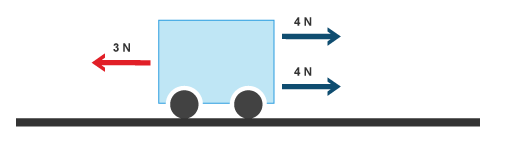
Calculate the net force of the object in the image shown.
a)
20N
b)
35N
c)
5N
d)
25N
29.
Is this a balanced or unbalance force?
a)
Balanced
b)
Unbalanced
c)
Neither one
d)
Both
30.
Which direction will the object move?
a)
Up
b)
Down
c)
Right
d)
Left
31.
Calculate the net force of the object.
a)
10N
b)
2N
c)
15N
d)
5N
32.
What is the net force of this object?
a)
0N
b)
50N
c)
25N
d)
5N
33.
Is this a balanced or unbalanced force?
a)
Balanced
b)
Unbalanced
c)
Neither
d)
Both
34.
If a force causes an object to move, it's considered a(n) __________________ force.
a)
Balanced
b)
Unbalanced
c)
Massive
d)
Strong
35.
The forces represented by the arrows in the diagrams are applied to the four objects that are at rest on a table. Which object is most likely to move to the right?
a)
Object W
b)
Object X
c)
Object Y
d)
Object Z
36.
What law is best described by inertia?
a)
1st
b)
2nd
c)
3rd
d)
law of conservation of mass
37.
a)
1st
b)
2nd
c)
3rd
d)
law of motion
38.
Equal and Opposite
a)
1st
b)
2nd
c)
3rd
d)
speed 
39.
A magician pulls a tablecloth out from under dishes and glasses on a table without disturbing them.
a)
Newton's 1st Law
b)
Newton's 2nd Law
c)
Newton's 3rd Law
40.
A person not paying attention while skateboarding hits a rock. The skateboard stops...they don't.
a)
The Law of Inertia (1st law)
b)
The Law of Acceleration (2nd law)
c)
The Law of Conservation of Momentum
d)
Action Reaction Law (3rd law)
41.
What Unit do we Measure Force in? 
a)
Newtons
b)
Joules
c)
Force
d)
Kilograms
42.
With unbalanced forces, the object will move in the direction that the _______ force is being applied.
a)
larger 
b)
smaller 
c)
equal 
d)
less
43.
What is Newton's First Law
a)
F=ma
b)
Every action has an equal and opposite reaction
c)
An object at rest stays at rest, an object in motion stays in motion. 
d)
Friction 
44.
A person is pushed forward into their seatbelt when a car stops
a)
1st
b)
 2nd
c)
2 and 3
d)
3rd 
45.
Which type of force(s) will cause a change in an object's motion?
a)
gravity
b)
zero net force
c)
balanced forces
d)
unbalanced forces
46.
A 20 kg bike accelerates at 10 m/s2.  what was the force
a)
25 Newtons
b)
20 Newtons
c)
200 Newtons
d)
10 Newtons
47.
Newton's third law states that any action will have a(n) _______ and ______ reaction
a)
Equal and similar
b)
Equal and opposite
c)
Equal and different
d)
Greater and opposite
48.
8 N to the left , and 4 N to the right. Find the net force. Is this balanced 
a)
12 N Right  No
b)
4 N Left  No
c)
12 N Right  Yes
d)
4 N Left  Yes
49.
You hit a wall with a stick.  The equal but opposite reaction is _____
a)
the wall pushes against you
b)
the stick pushes against you
c)
you push against the stick
d)
the wall pushes against the stick
50.
What is Newton's First Law known as? The Law of
a)
Friction
b)
Mass
c)
Inertia
d)
Gravity
51.
What is the acceleration of an object traveling at a constant velocity?
a)
10 m/s2
b)
0 m/s2
c)
250 m/s2
d)
20 m/s2
52.
What are the appropriate units to describe acceleration?
a)
m/s
b)
m/s2
c)
cm
d)
there are no units associated with acceleration
53.

Read the example given in the picture. Drag and drop correct answer to each box. Not all answers will be used.

These ​ (a)   are an example of the law ​ (b)   .

Choose from the below words
forces
action-reaction
unbalanced forces
gravity
force and acceleration
54.
In the diagram given, what happens as we move to the left?
a)
Stars Get Larger
b)
Stars get Colder
c)
Stars get Hotter
d)
Stars get Brighter
55.
Which color of star is the coolest?
a)
Yellow Star
b)
Red Star
c)
Orange Star
d)
Blue Star
56.
As a whole, Giants are considered hotter than White Dwarfs.
a)
True
b)
False
57.
What type of galaxy is shown in this image?
a)
Spiral
b)
Elliptical
c)
Irregular
d)
Irrational
58.
What are the the 3 types of galaxies?
a)
Spiral, Regular, and Elliptical 
b)
Spiral, Irregular, and Elliptical 
c)
 Milky Way, Elliptical, and Spiral 
d)
Milky Way, Elliptical, and Irregular 
59.
What type of galaxy is depicted in this image?
a)
spiral
b)
elliptical
c)
irregular
d)
quasar
60.
What type of galaxy is this?
a)
spiral
b)
elliptical
c)
irregular
d)
quasar
61.
Our solar system is located inside a galaxy called the _____________.
a)
Local Group
b)
Milky Way
c)
Andromeda
d)
Constellation
62.
Red stars are the _____________.
a)
hottest
b)
coolest
c)
biggest
d)
brightest
63.
Blue stars are the _____________.
a)
hottest
b)
coolest
c)
smallest
64.
What is the best title for this picture?
a)
Birth of a Star
b)
Birth of a Universe
c)
Life Cycle of a Star
d)
Big Bang Theory
65.
Look at the H-R diagram. Which star is
sort of cool, dim (not too much light), and red?
a)
Betelguse
b)
Sirius B
c)
Procyon B
d)
Barnard's star
66.
 Which one shows the correct location of the Sun in the Milky Way galaxy?
a)
A
b)
B
c)
C
d)
none of the above
67.
Which fact about the SUN is FALSE?
a)
The sun is a medium sized star.
b)
The sun is near the center of a disc-shaped galaxy of stars.
c)
The sun is thousands of times closer to the Earth than any other star.
d)
The sun is about 2/3 of the way out from the middle of the Milky Way.
68.
What is found on the x axis of an H-R diagram?
a)
Luminosity
(or brightness)
b)
Temperature
c)
Star Size
d)
Distance
69.
Which is an example of a Main Sequence star?
a)
Betelgeuse
b)
our Sun
c)
Sirius B
d)
Polaris
70.
Which star has the lowest temperature?
a)
A
b)
B
c)
C
d)
D
71.

Metals are useful materials in that they are good conductors of heat and electricity. Metals that can be changed to meet specific needs. All of the following changes to a metal are physical changes except -

a)

bending

b)

melting

c)

rusting

d)

polishing

72.

An older bicycle shows wear and tear. Which of the following signs show that a chemical change has occurred to the bicycle?

a)

rust on the wheel

b)

broken light

c)

torn seat cover

d)

bent handle bar

73.

In the laboratory, a blue liquid is mixed with a yellow liquid. What would be the best evidence that a chemical change took place as the liquids were mixed?

a)

The new liquid is green.

b)

The yellow liquid floats on top of the blue.

c)

The formation of a gas.

d)

No change in the temperature of the new solution.

74.

Which of the following is an example of a chemical change?

a)

grinding salt crystals to a powder

b)

the evaporation of water from a mud puddle

c)

ice melting in a glass

d)

burning wood in a campfire

75.

All of the following are evidences of a chemical change except -

a)

a change in temperature

b)

the production of a gas

c)

a change in state of matter

d)

an odor being given off

76.

Every chemical change results in -

a)

a change in temperature.

b)

the formation of a new substance.

c)

a color change.

d)

the formation of a precipitate.

77.

The precipitate formed in the reaction is evidence of a chemical change because -

a)

a new substance has been formed.

b)

a change in the state of matter has occurred.

c)

a color change has taken place.

d)

a change in temperature has taken place.

78.

During digestion the body uses both physical and chemical changes to move and process food. Which of the following is an example of a physical change?

a)

Teeth breaking food down into smaller pieces.

b)

Protein breaking down into amino acids in the stomach.

c)

Enzymes breaking down carbohydrates into simple sugars.

d)

Hydrochloric acid breaking down fats in the stomach.

79.

Evidence of a chemical change can be observed when -

a)

a solid melts into a liquid.

b)

cookies are crumbled.

c)

a drink is poured from a can to a cup.

d)

a banana turns brown after being cut.

80.

Which of the following is NOT evidence of a chemical change?

a)

the temperature changes

b)

a gas forms

c)

a precipitate forms

d)

a state of matter change happens

81.

Which of the following is an example of both a physical and a chemical change?

a)

chopping vegetables with a knife

b)

burning a candle

c)

dissolving hot cocoa mix in water

d)

pouring cold water on a hot object

82.

When two liquids are mixed, the container feels cold to the touch. This is evidence of what?

a)

physical change

b)

chemical change

c)

state of matter change

d)

no change

83.

Which of the following would indicate the formation of a new substance?

a)

A liquid turns to a solid.

b)

A sample of metal melts.

c)

Bubbles and fizzing occur.

d)

A solid dissolves in a liquid.

84.

Which of the following is an example of a physical change?

a)

an explosion

b)

a solid stays a solid

c)

a piece of paper is crumpled

d)

two liquids are mixed and it warms up

85.

Which of the following is an example of a physical change in your home?

a)

frying an egg

b)

lighting a birthday candle

c)

cooking a pizza in the oven

d)

a light bulb is hot after being on for a while

86.

How man atoms of carbon are there?

a)

1

b)

2

c)

3

d)

4

87.

How many atoms of Iron are in this compound?

a)

1

b)

2

c)

3

d)

4

88.

How many atoms of hydrogen are in

C6H12O6

a)

6

b)

12

c)

18

d)

2

89.

A substance made up of atoms of two or more different elements joined by chemical bonds

a)

Molecule

b)

compound

c)

polar covalent bond

d)

nonpolar covalent bond

90.

How many different elements are present in H2COCH2

a)

5

b)

4

c)

3

d)

2

91.

Calculate the number of Oxygen atoms in Al(OH)3

a)

1

b)

2

c)

3

d)

4

92.

How many total POTASSIUM atoms are in this formula?

a)

8

b)

2

c)

4

d)

12

93.

How many elements are in this chemical formula? NaHCO3NaHCO_3  

a)

1

b)

2

c)

3

d)

4

94.

Coefficients in chemical formulas...

a)

Multiply just the first atom

b)

Add to the subscripts at the end of the molecule

c)

Multiply elements without subscripts

d)

Multiply EVERYTHING!

95.

C3H5(NO3)3

a)

C = 3, H = 5, N = 3, O = 9

b)

C = 3, H = 5, N = 1, O = 9

c)

C = 9, H = 15, N = 3, O = 9

d)

C = 9, H = 15, N = 1, O = 3

96.
Which of these is a property of metals?
a)
It's malleable
b)
It can't conduct electricity
c)
They are used in food
d)
It's very brittle
97.
Good conductor of heat
a)
Metal
b)
Nonmetal
98.
Which of the following is a property of a non-metal?
a)
Conducts electricity and heats well
b)
Can be hammered into thin sheets
c)
Is brittle and breaks easily
d)
Has a shiny, metallic luster
99.
Iron is a good conductor, malleable and magnetic. What type of element is Iron? 
a)
Metal
b)
Nonmetal
c)
Metalloid
d)
Pretty
100.
The word “luster” refers to which property of matter?
a)
The ability to conduct electrical or thermal energy
b)
Capable of being drawn out into thin wires
c)
The way a surface appears when it reflects light
d)
Suitable for being shaped by beating or rolling
101.
At room temperature metals are ____________.
a)
plasma
b)
gases
c)
liquid
d)
solid
102.
Metalloids _____________
a)
have no properties of metals.
b)
have no properties of nonmetals.
c)
have some properties of both metals and nonmetals.
d)
none of the above
103.
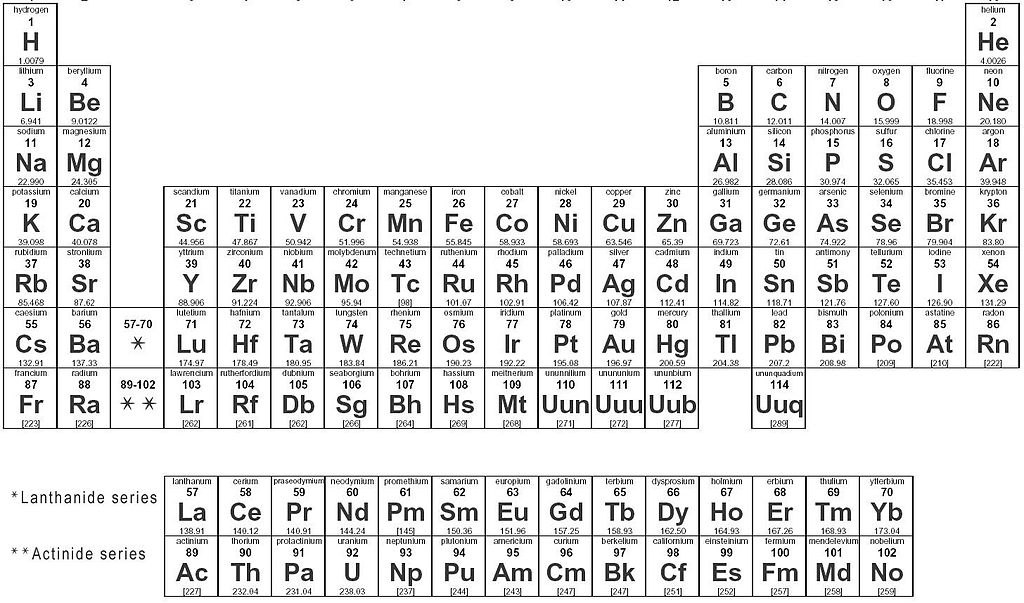
Where are metalloids located on the periodic table?
a)
to the right of nonmetals
b)
along the zig-zag line
c)
to the left of the zig-zag line
d)
to the right of the zig-zag line
104.

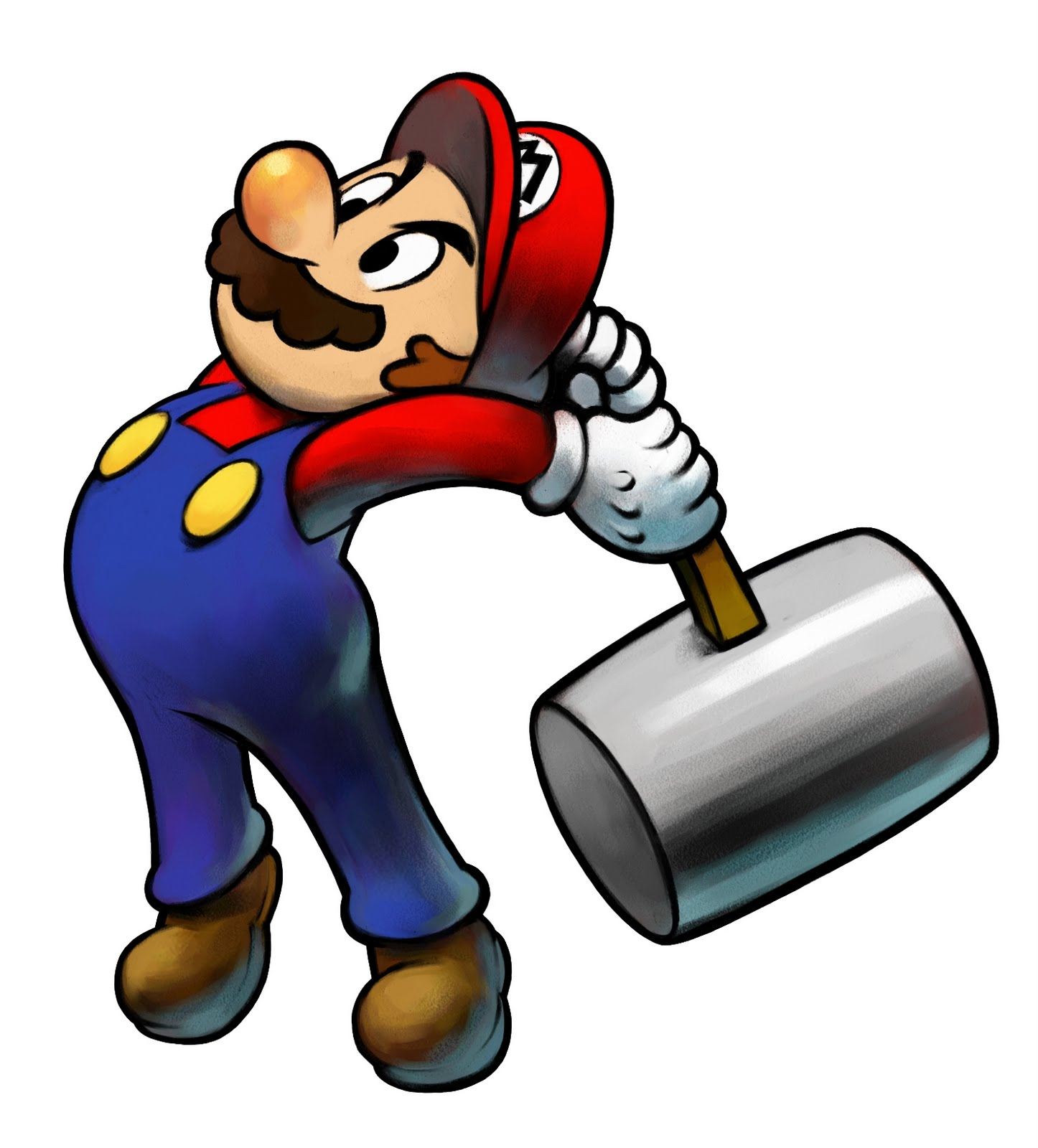
When an object changes shape when struck by a hammer it is said to be...

a)

luster

b)

malleable

c)

brittle

d)

ductile

105.
Is gold metal or nonmetal?
a)
metal
b)
nonmetal
106.
How do metals differ from nonmetals?
a)
metals are shiny, nonmetals are dull
b)
metals are good insulators, nonmetals are good conductors
c)
metals are powdery
d)
nonmetals are shiny
107.

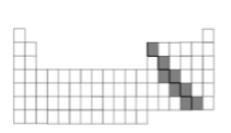
Elements in the shaded area can best be described as -

a)

Shiny and brittle, semiconductors

b)

Insulators

c)

Good conductors

108.

The elements argon, krypton, and xenon are all non-metals.What property would these elements have in common?

a)

Good conductor of thermal energy

b)

Poor conductor of electricity

c)

Shiny, lustrous surface

d)

Soft and malleable

109.
Brittleness is _________
a)
the capability of being broken.
b)
the capability of being bent.
c)
the capability of being stretched.
d)
the capability of being molded.
110.

Carbon is dull and brittle. Carbon is a

a)

metal

b)

nonmetal

c)

metalloid