
Font size
 Worksheets
G7 Quiz 2 Revision
Total questions: 164
Worksheet time: 3hrs 37mins
Adding energy to water causes the water particles to...
speed up
slow down
What do you call the energy of motion?
matter
kinetic energy
diffusion
temperature
What do you call the energy of motion?
matter
kinetic energy
diffusion
temperature
Anything that takes up space is _____.
a particle
matter
temperature
water
The movement of substances from an area of high concentration to an area of low concentration.
temperature
kinetic energy
diffusion
particles
A small unit of matter.
particle
volume
mass
diffusion
Particles move in ______ with no pattern.
a square
a circle
random motion
The greater the kinetic energy the ______ the temperature.
lower
greater
When particles move faster they bump into each other and need more space. This is called ____.
random motion
diffusion
thermal expansion
thermal contraction
What best describes the particles in a solid?
close together and moving freely
far apart and moving freely
close together and vibrating in place
far apart and vibrating in place
When a substance is heated, the particles gain energy and move apart. The volume of the substance being heated ______.
increases
decreases
stays the same
A liquid thermometer works because liquid ________ when warmed.
expands
contracts
solidifies
condenses
Most highway bridges are built with expansion joints that can move back and forth. What is the reason for this?
expansion joints are cheaper than stationary joints
the materials that make up the bridge will expand and contract with changes in temperature
there is no real good reason to use expansion joints
A large balloon is taken to a shady area and filled with cool air. The balloon is then taken to a bright, sunny location. After a short time, the balloon begins to expand. WHAT explanation does this investigation verify?
A balloon filled with cool air will rise into the atmosphere
the sunlight had no effect on the balloon
as particles gain energy the material takes up more space

Looking at these thermometers, is compression, contraction, or expansion being shown (from left to right).
Compression
Contraction
Expansion

Solids would have ______ kinetic energy.
Low
High
No
What is contraction?
Reduction of volume as a result of applied pressure
Reduction of volume as a result of heat being removed
Increase in volume
Decrease in volume
What is expansion?
Increase of volume
Decrease of volume
Adding heat
Removing heat

Removing heat would _______ the kinetic energy of a substance.
Increase
Decrease
In order to increase kinetic energy of a substance, heat would need to be...
Added
Removed
What happens to particles when they are heated?
They speed up and expand
They slow down and contract
They slow down and compress
They slow down and expand

When gases are heated, the particles will speed up and expand, which means kinetic energy ______
Increases
Decreases
The device that is used to measure the temperature of an object is called:
Thermometer
Ruler
Barometer
Vernier Caliber
The movement of particles from an area of high concentration to an area of low concentration is called ______________
Condensation
Diffusion
Evaporation
Osmosis
What is kinetic energy?
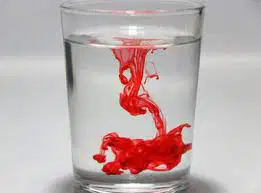
What is the name of the process shown in the picture?
Condensation
cellular respiration
photosynthesis
Diffusion
How long does diffusion last?
Until the concentration of particles in the system is equal
Until a region in the system has a smaller concentration of particles than the other
Until a region in the system has a greater concentration of particles than the other
Until the particles disappear from the system
Diffusion is the natural movement of molecules from:
Areas of low concentration to areas of high concentration
Areas of high concentration to areas of low concentration
Cold to hot environments
Gaseous to liquid environments
From fastest to slowest rate of diffusion, which of the following is in the correct sequence?
Solids, liquids, gases
Liquids, gases, solids
Gases, liquids, solids
Gases, solids, liquids
Particles are closely spaced.
solid
liquid
gas
Particles are not so closely spaced and slide past each other.
solid
liquid
gas
Particles are widely spaced except when they collide.
solid
liquid
gas
An object going from a solid to a liquid is
sublimation
deposition
freezing
melting
The transfer of thermal energy through the movement of GASES and LIQUIDS (fluids)
Conduction
Convection
Radiation
_________ currents are the up-and-down movements of gases and liquids by heat transfer
Conduction
Convection
Radiation
The transfer of heat through electromagnetic waves (E.M. Waves)
Conduction
Convection
Radiation
Thermal energy (heat) is transferred through the direct contact of particles.
Conduction
Convection
Radiation
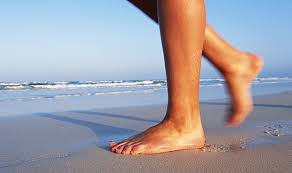
Heat is the transfer
of thermal energy from a cooler object to a warmer object
of thermal object from a warmer object to a cooler object.
Heat doesn't transfer
Freezing to Cold


A group of friends gather around a fire to stay warm. This is an example of ________.
conduction
convection
radiation
Which describes what can happen as a result of radiation?
A piece of wood burns in a fire.
A shirt is hot after having been ironed.
A can of soup is heated in a pot on a stove.
A car’s inside temperature rises to over 100 degrees on a sunny day.

In heat transfer, heat always flows from the _______________ substance to the _______________ substance.
hotter to colder
colder to hotter
hotter to hotter
colder to colder
Which is an example of heat being transferred by conduction?
a furnace heating the air in a school
an ice cube melting in a person’s hand
a pot of water on a stove boiling
the sun heating water in a swimming pool

The handle of a metal spoon warms up when it is placed in a hot bowl of soup because of ________.
convection
conduction
radiation

Near the ceiling of a room the air is warmer. The warm air rises because of ________.
conduction
convection
radiation

The heat from a lamp allows a lizard to remain warm. This is an example of which type of heat transfer?
radiation
conduction
convection

The type of heat transfer that creates currents in water is called ________.
conduction
convection
radiation

A pot is placed directly on a stove. The pot gets hot due to ________.
conduction
convection
radiation
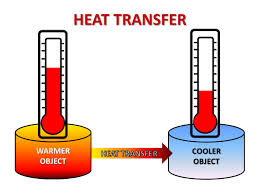
Thermal expansion occurs when particles of matter move farther apart as temperature increase.
True
False
The instrument used for measuring temperature
barometer
thermometer
calorimeter
Kinetic energy is what type of energy?
chemical
electric
motion
sound
As the kinetic energy of the particles increased, the _____ of the particles ________
speed; decreased
speed: increased
space; decreased
space; increased
The faster the particles move, the less kinetic energy there is.
True
False
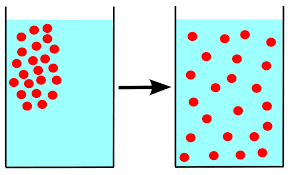
The movement of particles from an area of higher concentration (more particles) to an area of lower concentration. The particles spread out.
Dissolving
Diffusion
Density
Thermal Expansion
The smallest possible unit of matter is?
particle
matter
element
cereal
A phase of matter that has no definite shape or volume
Solid
Liquid
Gas
The energy of motion
Compression
Contraction
Expansion
Kinetic Energy


During the Investigation "Ready, Set, Collide" on p.13, why did the particles diffuse quicker in hot water.
The particles in the hot water diffused quicker because the water molecules were moving faster, colliding, and moving further apart.
The particles in the hot water diffused slower because the water molecules were moving slower and not colliding as much.

Which of the following statements are true about temperature? Choose all the true statements
It is the measure of kinetic energy
Temperature is measuring the speed of the particles
Temperature increases when kinetic energy increases
Temperature decreases when kinetic energy decreases
None of the statements are true

Which statement is true about how gas particles behave?
(p.19) - Choose all the TRUE statements
When the balloon was placed in the freezer, the gas particles moved slower, closer together, and thermal contraction occurred.
When the balloon returned to room temperature, the gas particles moved faster, farther apart, and thermal expansion occurred.
Thermal expansion and contraction only happen in solids and not in gases.
Temperature is related to the average kinetic energy of the particles in an object due to their random motions through space.
True
False
An increase in the volume of a material due to a temperature increase in the material.
Thermal contraction
Thermal expansion
Thermal heat
Thermal expansion occurs when particles of matter move farther apart as temperature increase.
True
False
The instrument used for measuring temperature
barometer
thermometer
calorimeter

What is happening to the fluid inside the thermometer in this image?
thermal expansion
thermal contraction
vaporization
boiling
When temperature increases, distance between molecules ______________.
decreases
increases
stays the same

When temperature decreases, distance between molecules ____________.
increases
decreases
stays the same
The faster the particles in an object move, the higher the …….of the object.
temperature
heat energy
chemical properties
potential energy

Which type of heat transfer is shown?
convection
conduction
radiation
stir frying

Which type of heat transfer is shown?
convection
conduction
radiation
ironing

Which one is using more energy?
A
B

Which material has the highest specific heat?
gold
water
glass
steam
As the mass increases, the energy needed to heat up the material _______
increases
decreases
doesn't change
The amount of thermal energy required to increase the temperature of 1kg of a material by 1°C.
The amount of energy required to increase the temperature of 19 kg of a material by 1°C.
The amount of friction required to increase the temperature of 1kgof a material by 1°C.
Specific Heat
Temperature
Kinetic Energy
All the materials have the same specific heat
true
false
Which of the following is a factor that determines thermal energy?
Mass
Heat
Transfer of thermal energy
Conduction
If a substance has many particles and we want to increase the kinetic energy of it, then what will it need more of from the surroundings?
Mass
Volume
Energy
Conduction
As the mass increases, the change in temperature will ___________
increase
decrease
stay constant
Draw the proportional relationship between the mass and the change in temperature

the relationship between the mass and the change in temperature is __________
directly
inversely
none of the answers
The proportional relationships provide information about ___________ properties
the same
different
equal
Which would be heated up the fastest?
small pot of water
large pot of water
moderate pot of water
Draw the directly proportional relationship
As the mass increases, the energy needed to heat up the material _______
increases
decreases
doesn't change
The amount of thermal energy required to increase the temperature of 1kg of a material by 1°C.
The amount of energy required to increase the temperature of 19 kg of a material by 1°C.
The amount of friction required to increase the temperature of 1kgof a material by 1°C.
Specific Heat
Temperature
Kinetic Energy
All the materials have the same specific heat
true
false
The material with low specific heat needs ________ amount of energy to change its temperature
large
less
moderate
water has high specific heat, so it needs _______ amount of energy to change its temperature
large
less
moderate
Pools, lakes and oceans stay cool in summer as ___________
the air is cold
their temperature don't change
the specific heat of water is high
What is the BEST example of a conductor of thermal energy?
A wooden block
A wool oven mitt
A plastic mug
A metal pan

Is glass a conductor or an insulator?
Conductor
Insulator

Is a mitten a conductor or an insulator?
Conductor
Insulator
Which picture represents water in a SOLID state?
Don't pick this one!


Matter in this state has no definite shape, but has definite volume
solid
liquid
gas
plasma
When a substance goes from a gas state to a liquid state
evaporation
condensation
sublimation
elimination
At the lamp station in the lab, why does the radiometer spin?
You electrocuted the particles to make them move faster
the chemicals mixed to create light in the lamp
the radiant energy also contains heat which makes air molecules move fast
I don't know. I wasn't actually paying attention

What makes this snowperson melt?
heat causing particles to slow down
heat causing particles to speed up
light making particles stop
air making particles disappear
which of these shows a substance in a GAS state?


What energy transformation was happening at the bouncy ball station
gravitational to mechanical
mechanical to chemical
chemical to mechanical
endothermic to exothermic

Frost on this window pane is:
deposition
sublimation
condenstaion
evaporation
What is density?
the amount of mass in a given volume
volume divided by mass
the city where Den lives
the law that says mass cannot be crated or destroyed
Based on your knowledgeof the states of matter and density, which of the below states is the MOST dense?


What is the melting point of ice in CELSIUS?
100 degrees
0 degrees
212 degrees
32 degrees
What is the freezing point of water in degrees Celsius?
100 degrees
0 degrees
32 degrees
2 degrees
True or False? ALL substances freeze at 32 degrees F.


When vaporization happens below the surface of a liquid
boiling
melting
evaporation
sublimtion
when a substance goes from liquid to a gas
vaporization
sublimation
deposition
melting
Thermal energy is also known as ___________ energy
heat
light
potential
mechanical
Check the two that are the SAME temperature!
boiling point
melting point
freezing point
dew point
In the lab stations, you got to see how GLOWSTICKS work! The energy transformation happening is:
thermal to radiant
chemical to radiant
radiant to mechanical
thermal to mechanical
When you oxygen and the iron filings at the "handwarmer" station, this was a/an:
exothermic reaction
endothermic reaction
physical change
magic trick!
You made a battery power a motor at one of the lab stations! The energy transfers happening were:
chemical to electrical to mechanical
electrical to mechanical to radiant
radiant to mechanical to electrical
exothermic to endothermic

Why the tracks are bent?
the train was too heavy
there was an accident
the tracks heated and expanded
the tracks cooled and contracted

What is this process?
melting
vaporization
condensation
evaporation

What is the image demonstrating?
heating the system causes the particles to push further apart
adding more particles to the system causes the balloon to expand
volume increases as temperature decreases
heat slows the particles allowing the balloon to get bigger

Why is the balloon deflated?
the particles slowed down
the particles got faster
the particles became smaller
the particles escaped the balloon
Thermal contraction is...
a decrease in volume as temperature decreases
an increase in volume as temperature decreases
a decrease in volume as temperature increases
an increase in volume as temperature increases

Which graph shows the relationship between temperature and volume?
Graph A
Graph B
Graph C
Graph D
How does heat flow?
from hotter objects to colder objects
from colder objects to hotter objects
in both directions (hot to cold AND cold to hot)

The amount of force per unit area applied to an object's surface...
pressure
temperature
heat
Star Wars
During the process of melting, the temperature does not change as energy is added. What is this energy doing?
breaking the attractive forces between particles
going into the atmosphere
creating new particles
increasing the temperature

What is this process called?
vaporization
condensation
evaporation
melting
Vaporization is the change of state from....
liquid to gas
solid to liquid
gas to liquid
liquid to solid
The temperature at which a solid turns into a liquid...
melting point
thermometer data point
melting number
particle accelerator

Which model correctly shows heat flow in a system?
Model A
Model B
Model C
Model D
During freezing, the particles...
slow down and form an organized structure
stop moving and lock in place
slow down and repel each other
randomly connect with each other into a solid

Why is there water on the outside of this cold drink?
water vapor in the air around the glass became a liquid
small water particles went through the glass
pressure from the atmosphere pushed the water out
thermal contraction caused the glass to shrink, spilling the water
What occurs during vaporization (check all that apply):
kinetic energy increases
particles slow down
temperature remains constant
liquid becomes a gas

