wayground logo

Free Printable Worksheets

Font size

S
M
L
XL
Worksheets

ISRO

Total questions: 101

Worksheet time: 2hrs 33mins

Name
Class
Date
1.

How many planets are in our solar system?

a)

4

b)

9

c)

6

d)

8

2.

What is Pluto's classification?

a)

planet

b)

comet

c)

dwarf planet

d)

star

3.

In which galaxy is our Solar system located?

a)

Milky Way

b)

Sagittarius

c)

Orion's Belt

d)

Asteroid Belt

4.

Identify the planets (in order) starting from the one nearest to the Sun.

a)

Mercury, Venus, Mars, Earth, Jupiter, Saturn, Neptune, Uranus

b)

Neptune, Venus, Mars, Earth, Jupiter, Saturn, Mercury, Uranus

c)

Mercury, Venus, Earth, Mars, Jupiter, Saturn, Uranus, Neptune

d)

Mercury, Neptune, Uranus, Venus, Mars, Earth, Jupiter, Saturn

5.

Which planet is the largest?

a)

Jupiter

b)

Saturn

c)

Mercury

d)

Earth

6.

Which planet is the smallest?

a)

Jupiter

b)

Saturn

c)

Mercury

d)

Earth

7.

Which planet is the lightest?

a)

Jupiter

b)

Saturn

c)

Mercury

d)

Earth

8.

Which planet has the most water?

a)

Jupiter

b)

Saturn

c)

Mercury

d)

Earth

9.

Which of the following is the odd one out?

a)

Asteroids

b)

Meteoroid

c)

Universe

d)

Comet

10.

How long does it take for the Earth to revolve around the Sun?

a)

365.25 days

b)

88 days

c)

687 days

d)

28 days

11.

First people who goes to moon.

a)

Niel Armstrong

b)

Gandi ji

c)

Pratiba devi

d)

Colombo

12.

Does underground of earth there is more hot then sun.

a)

Yes

b)

No

c)

Same

d)

Don't no

13.

Does sun is star.

a)

Yes

b)

No

c)

Don't no

d)

Impossible

14.

Largest planet in the space.

a)

Saturn

b)

Pluto

c)

Earth

d)

Jupiter

15.

Smallest planet on the space.

a)

Pluto

b)

Jupiter

c)

Mercury

d)

Mars

16.

Iron planet in the space.

a)

Mercury

b)

Mars

c)

Venus

d)

Earth

17.

In which planet there are peoples.

a)

Earth

b)

Mars

c)

Pluto

d)

Mercury

18.

Hottest planet in the space.

a)

Venus

b)

Mars

c)

Mercury

d)

Saturn

19.

Does mars and earth size is same.

a)

No

b)

Yes

c)

Easy

d)

Impossible

20.

How many planets are there in space.

a)

8

b)

9

c)

6

d)

10

21.

Which planet known as blue planet.

a)

Earth

b)

Mars

c)

Venus

d)

Jupiter

22.

Does you like GK

a)

No

b)

Yes

23.
Which of the following gases DOES NOT trap heat?
a)
carbon dioxide
b)
nitrogen
c)
water vapor
d)
methane
24.
Where have some of the strongest and earliest impacts of global warming occurred?  
a)
in the tropics
b)
in the northern latitudes
c)
impacts of global warming are distributed equally all over the planet
25.
If you took away the atmosphere’s natural greenhouse effect, and everything else stayed the same, Earth’s temperature would be   
a)
10-20°F warmer
b)
30-40°F warmer
c)
10-20°F cooler
d)
50-60°F cooler
26.
How do scientists collect evidence about climate?  
a)
using remote sensing from space with satellites
b)
by ground-based measurements of surface temperatures, carbon dioxide concentration and sea level
c)
by collecting “proxy data” from tree rings, ice cores, and historical records
d)
all of the above
27.
Compared to other greenhouse gases, carbon dioxide is very effective in trapping heat near the surface of the Earth.
a)
true
b)
false
28.
Which of the following have been linked to climate change?  
a)
droughts
b)
flooding
c)
melting of polar ice caps
d)
all of the above
29.
Which century was the wettest of the last millenium?  
a)
12th
b)
16th
c)
19th
d)
20th
30.
Which species is threatened by the increased winter flow in streams due to global warming?
a)
striped bass
b)
atlantic mackerel
c)
   crawfish
d)
salmon
31.
Visible light reaches Earth’s surface while infrared light is trapped as heat. Which characteristic of Earth’s atmosphere causes this to happen?
a)
the hole in the ozone
b)
the greenhouse effect
c)
atmospheric pressure
d)
the inversion layer
32.
The average temperature of the surface of Earth has increased approximately 1°C in the past century. Which reason best explains this increase in temperature?
a)
lower levels of ozone in the atmosphere
b)
lower levels of nitrogen in the atmosphere
c)
higher levels of carbon dioxide in the atmosphere
d)
higher levels of oxygen in the atmosphere
33.
Which is a primary energy source used by power plants to generate electricity?
a)
coal
b)
wood
c)
gasoline
d)
batteries
34.
Which of the following is the best conclusion that can be made from this graph?
a)
atmospheric carbon dioxide levels have been decreasing since 1960
b)
Hawaii has a lot of carbon dioxide
c)
humans have been working hard to decrease carbon dioxide levels
d)
atmospheric carbon dioxide levels have increased steadily since 1960
35.
Large bodies of water affect climate because
a)
water heats up and cools more slowly than land
b)
water heats up and cools faster than land
c)
water and land cool at the same time
d)
water and land heat at the same rate
36.
The sun's rays are least direct
a)
near the poles
b)
near the equator
c)
at high altitudes
d)
far from the ocean
37.
Climates are classified according to two major factors:
a)
elevation and precipitation
b)
latitude and temperature
c)
elevation and latitude
d)
precipitation and temperature
38.
Which of the following has cause repeating 100,000-year cycles of ice ages in the past?
a)
an increase in sun spots
b)
several major volcanic eruptions
c)
changes in Earth;s orbit and tilt of its axis
d)
continental drift
39.
Over the past 200 years, the level of carbon dioxide in the atmosphere has
a)
decreased slightly
b)
increased until recently, and then decreased
c)
increased steadily
d)
stayed about the same
40.
The land on the ______ side of the mountain range is in the rain shadow.
a)
Cold
b)
westward
c)
Cloud covered
d)
leeward
41.
Because of its high ________________, Mount Chimborazo has a cool climate all year.
a)
Temparature
b)
Altitude
c)
Winds
d)
Clouds
42.
What does the term "anthropogenic" mean?
a)
something that is NOT caused by human activity
b)
a naturally occurring cause
c)
originating from human activity
d)
something that everyone should care about
43.
The average temperature of the surface of Earth has increased approximately 1°C in the past century. Which reason best explains this increase in temperature?
a)
lower levels of ozone in the atmosphere
b)
lower levels of nitrogen in the atmosphere
c)
higher levels of carbon dioxide in the atmosphere
d)
higher levels of oxygen in the atmosphere
44.
Visible light reaches Earth’s surface while infrared light is trapped as heat. Which characteristic of Earth’s atmosphere causes this to happen?
a)
the hole in the ozone
b)
the greenhouse effect
c)
atmospheric pressure
d)
the inversion layer
45.
Which of the following have been linked to climate change? 
a)
droughts
b)
flooding
c)
melting of polar ice caps
d)
all of the above
46.
How do scientists collect evidence about climate? 
a)
using remote sensing from space with satellites
b)
by ground-based measurements of surface temperatures, carbon dioxide concentration and sea level
c)
by collecting “proxy data” from tree rings, ice cores, and historical records
d)
all of the above
47.
If you took away the atmosphere’s natural greenhouse effect, and everything else stayed the same, Earth’s temperature would be 
a)
10-20°F warmer
b)
30-40°F warmer
c)
10-20°F cooler
d)
50-60°F cooler
48.
Which of the following gases DOES NOT trap heat?
a)
carbon dioxide
b)
nitrogen
c)
water vapor
d)
methane
49.
Which of the following is the best conclusion that can be made from this graph?
a)
atmospheric carbon dioxide levels have been decreasing since 1960
b)
Hawaii has a lot of carbon dioxide
c)
humans have been working hard to decrease carbon dioxide levels
d)
atmospheric carbon dioxide levels have increased steadily since 1960
50.
El Nino occurs when the tropical ocean waters are warmer in which ocean?
a)
Atlantic
b)
Indian
c)
Pacific
d)
Arctic
51.
Which of the following is a natural cause of long term climate change?
a)
Burning Fossil Fuels
b)
Milankovitch Cycles
c)
Deforestation
d)
All of them
52.
Which is NOT a geographical element which influences climate
a)
altitude
b)
latitude
c)
longitude
d)
ocean currents
53.
In the past 800,000 years, CO2 levels have never gone above
a)
200 ppm
b)
225 ppm
c)
260 ppm
d)
300 pm
54.
What is the largest carbon sink in the world?
a)
The Amazon
b)
The Oceans
c)
The Deserts
d)
The Forests
55.
Volatile Organic Compounds + NOx + sunlight energy can cause a secondary pollutant called
a)
acid rain
b)
gray air or London Smog
c)
Brown air smog
d)
ground-level ozone 
56.
Acid rain can damage
a)
Drinking water sources
b)
Aquatic life
c)
Architecture/buildings
d)
All options are correct
57.
A metallic element, no longer permitted as a gasoline additive in the US, that can cause brain damage is
a)
Lead
b)
Particulate matter
c)
Ground-level ozone
d)
Nitrogen oxides
58.
Dust, ash and pollen are examples of this air pollutant
a)
Lead
b)
Ground-level ozone
c)
Particulate matter
d)
Nitrogen oxides
59.
Combines with water to form acid rain
a)
Nitrogen oxides & sulfur dioxide
b)
Particulate matter & lead
c)
Nitrogen oxides & ground-level ozone
d)
Sulfur dioxide & ground-level ozone
60.
When the air above is warmer than the air below, it is called a
a)
Temperature shift
b)
Temperature change
c)
Temperature or thermal inversion
d)
Temperature reversal
61.
What is a primary pollutant? 
a)
pollutant that is put directly into air by human activities
b)
pollutant formed when primary pollutants react with each other  & sun & water
62.
Air quality has improved over the past 30 years, mostly as a result of the Clean Air Act.
a)
True
b)
False
63.
Source of carbon monoxide
a)
Incomplete combustion of fuel
b)
Combustion of fossil fuel
c)
Decomposition of plant and animal matters
64.

US cars made starting in 1975 had to have a _____ and burn unleaded gasoline to comply with the Clean Air Act.

a)

combustion chamber

b)

electrostatic precipitator

c)

scrubber

d)

catalytic converter

e)

baghouse filter

65.
Air pollution can cause...
a)
asthma
b)
lung cancer
c)
emphysema
d)
ALL OF THE ABOVE
66.

Most carbon monoxide come from

a)

Factories

b)

internal combustion for transportation

c)

Chemical waste

d)

Fires

67.
Provides a protective shield around the earth in the stratosphere, but also can cause problems for living organisms in the troposphere when NOx + VOCs + sun happens
a)
Atmosphere
b)
Ozone
c)
Clouds
d)
Smog
68.

Vehicle pollution control device that converts most NOx, VOCs, & Carbon Monoxide to H2O, CO2, & Nitrogen gas.

a)

Wet Scrubber

b)

Bag house filter

c)

Electrostatic Precipitator

d)

Catalytic Converter

e)

Cyclone Separator

69.
Acid Shock
a)
Situation in which humans are exposed to acid rain and their skin is burned.
b)
Leads to ozone formation.
c)
A situation in which snow that is acidic melts in spring and runs off into aquatic ecosystems drastically changing the PH.
d)
Occurs when plants are exposed to acid rain.
70.
This colorless gas is deadly because it binds to your red blood cells instead of oxygen. This deprives your major organs of oxygen and results in death.
a)
Carbon Dioxide
b)
Carbon Monoxide
c)
Sulfur Dioxide
d)
Nitrogen Dioxide
71.
The air pollution prevention device used by companies that produce large airborne particles, such as a carpentry shop, is most likely a
a)
electrostatic precipitator
b)
wet scrubber
c)
cyclone separator
d)
baghouse filter
72.

The air pollution prevention device used by coal & oil burning power plants, for SOx and particulates removal, is most likely a combination of which two of these?

a)

electrostatic precipitator

b)

wet scrubber

c)

cyclone separator

d)

baghouse filter

73.
The air pollution prevention device used for removal of small toxic particles, but creates a water disposal problem is a(n)
a)
electrostatic precipitator
b)
wet scrubber
c)
cyclone separator
d)
baghouse filter
74.
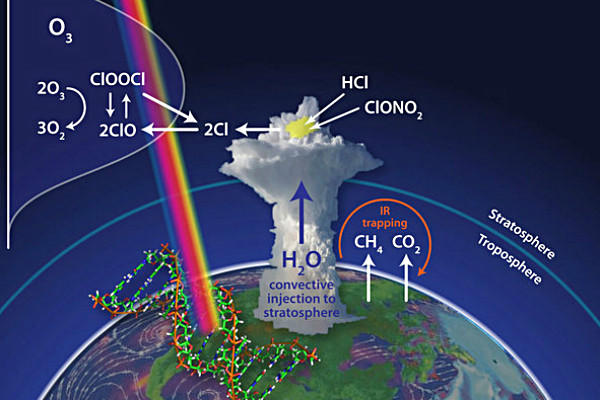
Second layer of the atmosphere, extending about 17-48 kilometers above the earth’s surface. It contains a layer of gaseous ozone, which filters out about 95% of the incoming harmful ultraviolet radiation emitted by the sun
a)
Mesosphere
b)
Troposphere
c)
Stratosphere
d)
Ozone
75.
The breakdown of stratospheric ozone
I. can originate from the emission of chlorofluorocarbons (CFCs).
II. is catalyzed through a free chlorine (Cl) atom.
III. prevents UV rays from reaching the earth’s surface.
a)
I only
b)
III only
c)
I,&II
d)
I,II,& III
76.

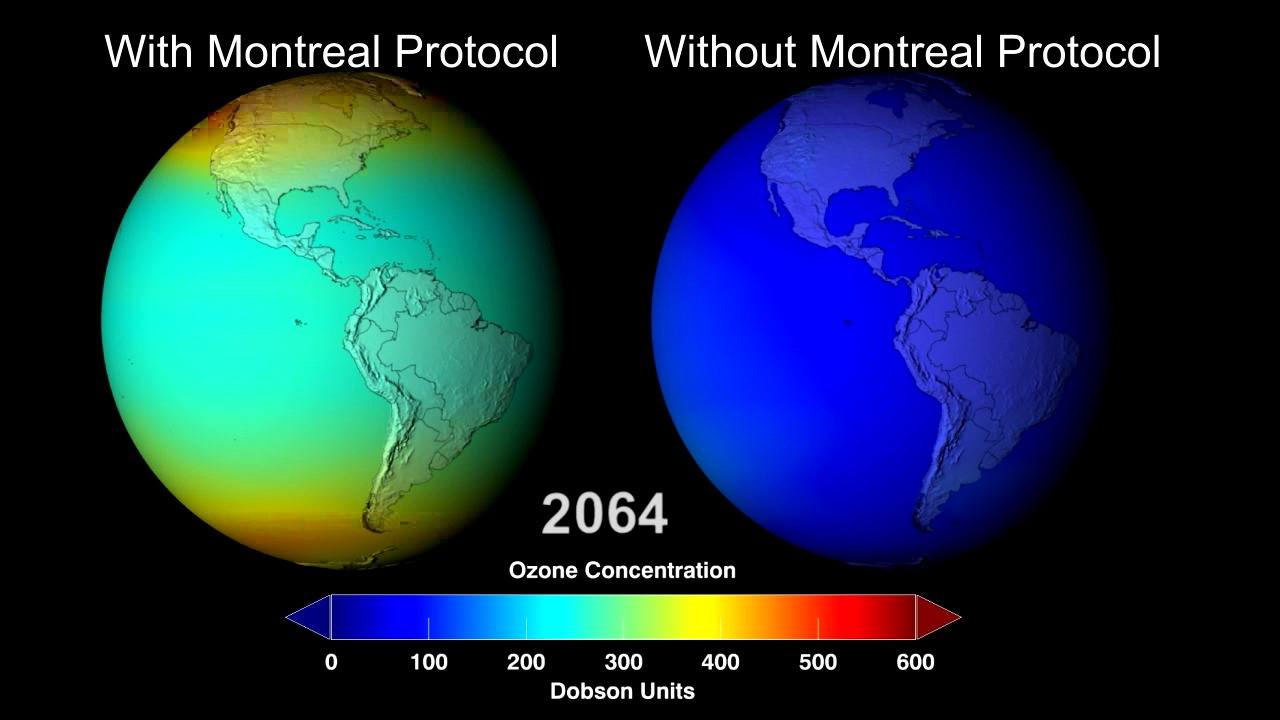
Which agreement allowed for a reduction, and eventual elimination, of CFC production and use?

a)

Montreal Protoccol

b)

Kyoto Protoccol

c)

Paris Agreement

d)

Cartagena Protocol

e)

Clean Air Act

77.

About how many cycles can a single chlorine atom make in its quest to break down ozone molecules?

a)

5,000

b)

10,000

c)

50,000

d)

100,000

78.

Which is NOT a result of the reduction in stratospheric ozone?

a)

reduced photosynthetic activity

b)

increased skin cancer

c)

increased likelihood of cataracts

d)

increased birth defects

79.

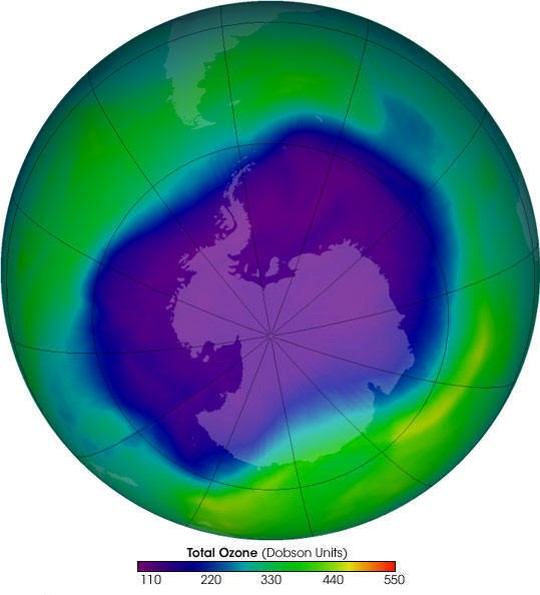
Location of the largest whole in the ozone.

a)

Antarctica

b)

Artic

c)

Iceland

d)

Africa

80.

Though CFC production has been curtailed, the threat to the ozone layer continues because CFCs

a)

become harmless quickly.

b)

destroy ozone for only a short time.

c)

persist but stop destroying ozone.

d)

persist and continue to destroy ozone for decades.

81.

This atmospheric compound is critical to the planet in its protection against UV radiation, but when found close to the ground is part of photochemical smog that can cause serious health problems.

a)

particulate matter

b)

carbon monoxide

c)

stratospheric ozone

d)

tropospheric ozone

82.

What is 'Geriatrics'?

4 lines
83.

Define 'arthritis'

a)

painful inflammation of the bones

b)

porosity of the bones

c)

painful inflammation of the joints

d)

degenerative disease

84.

'Osteoporosis' is ............ and ........... of the bones.

(a)  

85.

Define 'heart disease'

a)

problems with heart and circulation.

b)

decline of heart condition and circulation.

c)

degerative brain disease.

d)

abnormal conditions of heart and circulation.

86.

A 'stroke' is ....

a)

loss of consciousness.

b)

heart disease.

c)

no more blood in the brain for a brief moment.

d)

a sudden interruption of sugar in your blood.

87.

What is presbycusis?

4 lines
88.

Name at least three old age changes:

4 lines
89.

What is 'diabetes'?

a)

A methabolic disorder with low blood sugar level.

b)

A methabolic disorder with high blood sugar level.

c)

the pancreas don't produce enough insuline.

d)

the pancreas produce too much insuline.

90.

'Presbyopia' is when you can't see (a)   objects anylonger.

91.

What happens when you have a 'hip fracture'?

a)

break of the ankle

b)

break in the top of the thigh bone

c)

break in the bottom of the thigh bone

d)

break in the foot

92.

When viruses infect body cells, certain host cells produce proteins that inhibit synthesis of viral proteins and help block viral replication. this protein is called

a)

histamine

b)

lysozyme

c)

interferons

d)

amylase

93.

The main role of antibodies is

a)

increase the production of viral proteins

b)

destroy pathogens

c)

tag antigens for destruction by immune cells.

d)

inhabit the production of viral proteins

94.

……………..increase the flow of blood and fluids to the affected area and enlarge blood capillaries

a)

histamine

b)

lysozyme

c)

phagocyte

d)

B cells

95.

The body makes up to 10 billion different antibodies.

a)

true

b)

false

96.

The shape of each type of antibody allows it to attach to many types of antigens.

a)

true

b)

false

97.

The inflammatory response causes infected areas to become

a)

dry and cold

b)

painful, cold and red

c)

red, warm but with no sense of pain

d)

red, warm and painful, or inflamed.

98.

The main working cells of the immune response

a)

B cells

b)

antibodies

c)

T cells

d)

B & T cells

99.

are lymphocytes the produced and matured in the bone marrow

a)

B cells

b)

T cells

100.

are lymphocytes the produced in the bone marrow but matured in the thymus

a)

B cells

b)

T cells

101.

Which one of the following is not involved in the specific immune response

a)

B cells

b)

antibodies

c)

T cells

d)

fever