
NEW
Font size
 Worksheets
AP Biology Cell Structures and Functions
Total questions: 75
Worksheet time: 2hrs 32mins
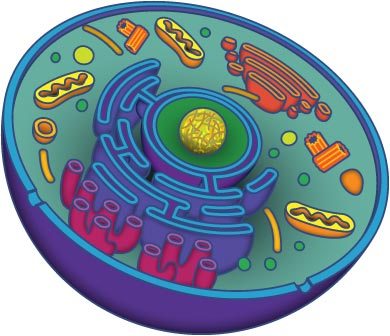
Ava and James are learning about biology in school. Their teacher asked them, "All living things are made up of..."
cells
cell tissues
organ
organ systems
Benjamin was curious about how new plants grow in his garden. He learned that all cells are produced ____________.
From pre-existing and deceased cells
from other pre-existing cells
Cells can come from anywhere, as long as there is the sun.

During a biology class, Samuel learned about the organelle that assembles proteins in the cytoplasm. Which organelle is it?
Ribosome
Nucleus
Mitochondrion
Rough Endoplasmic Reticulum

In a school science project, Scarlett is tasked with explaining the organelle where lipids are synthesized along with proteins and other materials that are exported from the cell:
Endoplasmic Reticulum
Golgi Apparatus
Vacuoles & vesicles
Nucleus

In a busy kitchen, Avery is responsible for modifying, sorting, and packaging dishes and other items from the preparation area for storage or delivery. Which organelle in a cell performs a similar function?
Endoplasmic Reticulum
Golgi Apparatus
Vacuoles and Vesicles
Ribosome

Elijah is learning about cell biology and wants to know which organelle breaks down lipids, carbohydrates, and proteins into small molecules that can be used by the rest of the cell:
Lysosome
Cytoskeleton
Golgi Apparatus
Chloroplast
Luna and Ethan are looking at slides of animal and plant cells under a microscope. They notice that both types of cells have a cell membrane.
TRUE
FALSE
In a classroom, Aiden is asked to describe a gel-like fluid that takes up most of the space inside the cell, where the organelles are found scattered throughout it. What is he describing?
Chloroplasts
Cell Wall
Cell Membrane
Cytoplasm
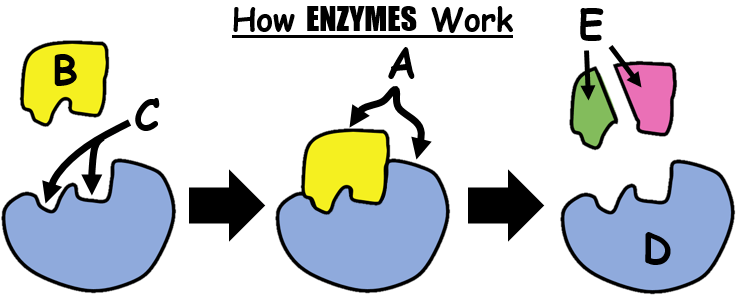
In a science class, Zoe is learning about how enzymes work. She sees a diagram where letter D represents a part of the process. What does letter D represent?
active site
enzyme
substrate
products
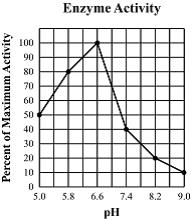
Olivia is conducting an experiment to determine the optimum pH for a specific enzyme. Based on the graph she obtained, which of the following conclusions can be drawn?
The optimum pH of the enzyme is 6.6.
The optimum pH of the enzyme is 5.8
The enzyme’s activity increases as pH increases 5.0 to 9.0
The enzyme’s activity is greater around pH of 8.0 .
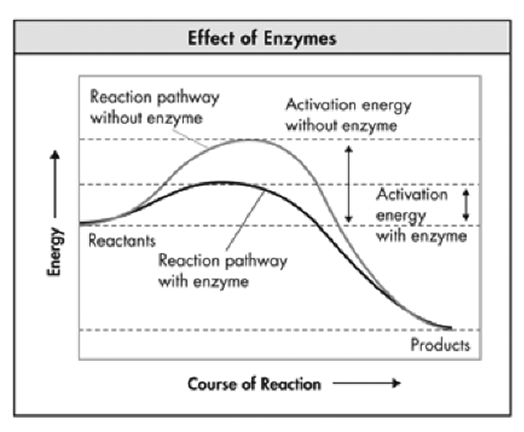
Avery is conducting an experiment to see how enzymes affect reactions in cells. Which statement best summarizes the information shown in the graph?
Enzymes increase the energy of the reactants.
Enzymes decrease the energy level of the products.
Enzyme decrease the activation energy of the reaction.
Enzymes reverse the direction of the reaction.
Harper is baking cookies and notices that adding a pinch of a special ingredient makes the dough rise faster. How does this special ingredient typically affect the reaction in the dough?
They increase the reaction rate
They decrease the reaction rate
They change the end products of the reaction
They have no effect on the reaction
Emma is baking cookies and uses a special tool that helps her mix the ingredients faster. What property of this tool allows Emma to use it repeatedly?
It is consumed by the mixing process
It changes shape permanently after each use
It is not altered by the mixing process
It binds permanently to the ingredients
Oliver is conducting an experiment to understand how water moves through a thin tube. He learns that capillary action is in part the result of adhesion. Which aspect of water is responsible for this?
Nonpolar covalent bonds that enable water to dissolve other substances
Polar covalent bonds that join molecules of water to other substances
Hydrogen bonds between water and another substance
Ionic bonds that enable electrons to flow through water and into another substance
Nora is conducting an experiment in her chemistry class to dissolve various substances in water. She observes that water can dissolve a wide range of substances. What property of water allows it to be such a versatile solvent that it is often called the "universal solvent?"
Purity
Polarity and cohesion
High heat capacity
Expansion upon freezing
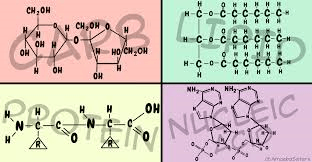
Mason and Luna are studying the basic building blocks of life in their biology class. They learn that certain elements are common to all 4 biomolecules. What elements are these?
Carbon, hydrogen, nitrogen
Carbon, Nitrogen, Phosphorus
Carbon, Hydrogen, Oxygen
Carbon, Hydrogen, Phosphorus

Emma is studying a model of a macromolecule in her biology class. What macromolecule is she looking at?
Carbohydrate
Lipid
Protein
Nucleic Acid

During a biology class, Anika was shown a picture of a biomolecule. Which biomolecule is this a picture of?
Protein
Nucleic Acid
Lipid
Carbohydrate

Luna and Oliver are studying a chemical reaction in their biology class. Which of the following statements is/are true regarding the chemical reaction illustrated in Figure 5.5?
It is a hydrolysis reaction.
It is a hydrolysis reaction and it results in a peptide bond.
It results in a dehydration reaction that is breaking the two amino acids apart.
It is a dehydration reaction that is joining two amino acids together.
James is studying cell biology and wants to understand what macromolecule makes up the cell membrane's lining. Can you help him identify it?
Saturated Fatty acid chains
Phospholipids
Polypeptide chains
Cellulose polysaccharide Chains
In a biology class, Evelyn and Aria are learning about how DNA and RNA nucleotides are added via dehydration synthesis. They discover that this process forms ...
helical structure
ionic bonds
covalent bonds
hydrogen bonds

Olivia, a scientist, grew Chlorella, a single-celled photosynthetic algae, for three weeks in a laboratory culture. The culture medium contained dissolved carbon and other nutrients.
Scientists measured the beginning and the end of the three week period. Based on the results of the graph which nutrients were absent from the culture medium?
phosphorus
nitrogen
oxygen
sulfur
Ava is learning about plant cells in her biology class. She wonders, "What is the function of the vacuole in a plant cell?"
Sac that stores water, nutrients, and waste products
Sac filled with digestive chemicals
Jelly-like substance within the plasma membrane
stack of membranes that packages chemicals
Mia is trying to unlock a special box with a unique key. What is the relationship between the key and the lock on the box?
The key has the right polarity to interact with the lock.
The key is hydrophobic and interacts with other hydrophobic parts of the lock.
The key has a specific shape that fits the shape of the lock.
The key uses energy to form covalent bonds with the lock.
Evelyn is conducting an experiment to understand how a competitive inhibitor affects an enzyme's function. How does the inhibitor work in this scenario?
It binds to an allosteric site that alters the shape of the enzyme
It changes the polarity of the enzyme, decreasing the rate of reaction
It denatures the enzyme which increases the activation energy for the reaction.
It binds to the active site, preventing the enzyme from catalyzing the reaction
Abigail is conducting an experiment to observe the effect of temperature on enzyme activity. What effect does high temperature have on most enzymes reaction rates?
High temperatures will speed up the enzyme's reaction rate
High temperatures will stabilize the enzyme's reaction rate
High temperatures will decrease enzyme reaction rates due to denaturation
High temperatures do not affect enzyme reaction rates
Nora is conducting an experiment to test the effect of sunlight on plant growth. In her experiment, what is a control?
The variable that is manipulated by the researcher
A test that does not have the independent variable, to show a baseline with no reaction
A test where the researcher does not know which sample contains which variable
The variable that changes based on the experimental conditions
Anika and Emma are studying cells in their biology class. They learn about different structures within plant and animal cells. Which structure is common to both plant and animal cells?
central vacuole
chloroplast
wall made of cellulose
mitochondrion
Ethan is organizing a party and wants to ensure that the snacks are easily accessible to all guests. Which of the following is a reason that he should cut the snacks into smaller pieces?
Smaller pieces maximize the surface area-to-volume ratio, making them easier to access and eat.
Smaller pieces maximize the volume-to-surface area ratio, making them easier to access and eat.
Smaller pieces are necessary because they need to produce extremely small macromolecules.
Smaller pieces are preferred because they work better in clusters of many thousands that wouldn't otherwise fit anywhere.
Hannah is designing a model of a cell for her biology class. She wants to increase the surface area of the cell model without increasing its size. Which of the following is one way she can achieve this?
She can make the cell model with perfectly spherical membranes.
She can include folds in the cell model's membranes.
She can add holes to the cell model's membranes.
She can maximize the volume of the cell model.
Abigail and Liam are working on a science project about cell organelles. They learn that organelles such as mitochondria and the endoplasmic reticulum have membranes that compartmentalize reactions and other metabolic processes. To function properly, the organelles must move substances across their membranes.
Which of the following statements describes a feature shared by mitochondria and the endoplasmic reticulum that increases the efficiency of their basic functions?
They have rigid, nonfluid membranes.
They have highly folded membranes.
They have membranes composed of many carbohydrates.
They have double membranes, with one membrane enclosed within the other.
Ethan is studying cell biology and learns that eukaryotic cells possess an extensive endomembrane system. He wonders about the advantages this system provides that are not seen in prokaryotic cells. Which example correctly describes one of these advantages?
Nucleic acids can freely mingle with cytoplasmic enzymes
Lysosomes can maintain a much lower pH than surrounding cytoplasm
Endoplasmic reticulum is prevented from forming vesicles
Surface area available for chemical reactions is greatly decreased

Mason, Arjun, and Isla are comparing different soap bubbles they created. Which of the following bubbles would have the highest surface area to volume ratio?
1
2
3
they are all the same
Zoe is studying cell biology and learns that a protein that is destined for the membrane would be made
on a ribosome that is in the cytoplasm
within a lysosome
on a ribosome attached to the rough endoplasmic reticulum
within the Golgi body
Noah, a researcher, is studying the movement of a protein that is secreted from a eukaryotic cell.
Which of the following pathways best represents the movement they could expect
for packaging/processing of the secretory protein?
Nucleus --> Golgi --> Rough ER --> Cytoplasm
Golgi --> Rough ER --> secretory vesicles --> Plasma Membrane
Rough ER --> Golgi --> secretory vesicle --> Plasma Membrane
Secretory vesicle --> Golgi --> Rough ER -- Cytoplasm
Charlotte is studying a certain type of specialized cell in her biology class. She observes that this cell contains an unusually large amount of Rough Endoplasmic Reticulum.
Which of the following functions is this cell type most likely specialized to perform?
The production and secretion of lipids
The destruction of toxic materials produced in other cells of the organism
The synthesis of polysaccharides for energy storage
The production and secretion of proteins
Hannah is studying a cell that has a high rate of protein synthesis in her biology class. Knowing this, what cellular component would she expect to see large numbers of?
mitochondria
lysosomes
smooth endoplasmic reticulum
ribosomes
Grace is studying the membrane composition of organisms living in cold climates. What would she expect to find?
Long fatty acid chains to ensure the membrane is held together through hydrophobic interactions
Branched fatty acid chains, which would ensure the membrane does not pull apart at the low temperatures
Many saturated fatty acid chains to allow for the membrane to maintain its fluidity at low temperatures
Many unsaturated fatty acid chains to prevent tight packing of the phospholipids at low temperatures
William and Maya are studying cells in their biology class. They learn that one difference between prokaryotes and eukaryotes is that eukaryotes ...
include the domains Bacteria and Archaea
tend to be much smaller in size than prokaryotes
have their DNA contained in the nucleoid region
contain membrane bound organelles
Samuel is learning about how the human body processes and eliminates food waste using the organs of the excretory system. He wonders which organelle performs a similar function in humans at the cellular level?
mitochondrion
endoplasmic reticulum
lysosome
Golgi Apparatus
In a biology class, Liam learned that a cell that has lost its nucleus no longer has the ability to
produce food
pass genetic information
move through the body
use energy
Anika is studying different types of cells in her biology class. She wants to know, of the following types of cells, which has the highest concentration of mitochondria?
bone
muscle
nerve
skin
During a biology class, Ava and Samuel are discussing the genetic material of different types of cells. Which statement describes the difference between the DNA of a prokaryotic cell and a eukaryotic cell?
Eukaryotic cells have circular DNA contained in a nucleus.
Eukaryotic cells have DNA contained in chromosomes not inside a nucleus.
Prokaryotic cells have circular DNA not contained in a nucleus.
Prokaryotic cells have DNA contained in chromosomes inside a nucleus.
Nora is building a model of a cell for her biology class. She wants to include the part that is made up of a network of filaments to maintain the cell's structure. Which part should she include?
Cytoplasm
Endoplasmic reticulum
Cytoskeleton
Vacuoles
Abigail is studying cell biology and she wants to know what is the name of the cytoskeleton system that supports the nuclear envelope and Plasma Membrane?
Actin
Microtubules
Intermediate Filaments
During a science class, Aiden was curious about how the word hydrolysis, defined as the lysis of water, applies to polymers. How does this apply to polymers?
Polymers break by separating water into hydrogen and hydroxyl group that are added to the monomers.
Polymers are synthesized by using the energy released by the breaking of water molecules into hydrogen and hydroxyl group.
Polymers are separated into monomers producing energy and water molecules.
Polymers are hydrolyzed into monomers using water in the process and are called as dehydration synthesis.
In a school art class, students created 10 circle paintings, 20 square paintings, and 30 triangle paintings. The ratio for this particular art project is 2:3:5
observed: 10 circle paintings expected:
observed 20 square paintings expected : 18
observed 30 triangle paintings expected: 30
What is the expected number of circle paintings?
6
12
18
24
Aiden is conducting a wildlife survey and observes 10 circles, 20 squares, and 30 triangles in a particular area. The ratio for this particular population is 2:3:5
observed: 10 circles expected: 12
observed 20 squares expected : 18
observed 30 triangles expected: 30
What is the degrees of freedom?
1
2
3
4
In a wildlife reserve, Isla observed 10 lions, 20 zebras, and 30 giraffes. The ratio for this particular population is 2:3:5
observed: 10 lions expected: 12
observed 20 zebras expected : 18
observed 30 giraffes expected: 30
Would you accept or reject?
accept
reject
What is the purpose of a Chi-Square test?
To determine if there is a significant difference between the observed and expected values in an experiment.
To determine if there is a statistically significant difference between the observed and expected values in an experiment.
To do extra math.
To conclusively prove that your null hypothesis is true or false.

The manager of a high school cafeteria is planning to offer several new types of food for student lunches in the following school year. She wants to know if each type of food will be equally popular so she can start ordering supplies. To find out, she selects a random sample of 100 students and asks them, "Which type of food do you prefer: Asian food, Mexican food, pizza, or hamburgers?" Here are the data in the table provided. The Chi-square value is 11. Which of the following is the most appropriate conclusion?
The chi-square value is less than the critical value and the null hypothesis should be rejected. Students prefer some foods over others.
The chi-square value is greater than the critical value and the null hypothesis should be rejected. Students prefer some foods over others.
Students do not prefer one food type over another as proven by the chi-square test.
The data is inconclusive.

What is the null hypothesis?
Injury type is independent of position played
Injury type is dependent on the position played independent
Injury type is correlated to position played.
In the formula for Chi Squared, the E stands for
the sum
the observed frequency
The expected frequency
the p value
In the formula for Chi Squared, the O stands for
the sum
the observed frequency
The expected frequency
the p value

Mrs. Hock asks her class what their favorite ice cream flavor is. She wonders if the flavors are equally represented. The table shows the observed values. How many degrees of freedom are there?
4
3
2
1
Gap junctions are formed by ________.
gaps in the cell wall of plants
protein complexes that form channels between cells
tight, rivet-like regions in the membranes of adjacent cells
a tight knitting of membranes
What type of junctions prevent the movement of chemicals between two adjacent animal cells?
desmosomes
gap junctions
plasmodesmata
tight junctions
Which components of the cytoskeleton are responsible for the contraction of muscles?
intermediate filaments
microfilaments
microtubules
None of the above
What do centrioles and flagella have in common?
They are both made of intermediate filaments
They are both made of microtubles
They are both made of collagen
They are both tail like structures at the end of a cell
Which of the following is most likely to have the greatest concentration of smooth endoplasmic reticulum (SER)?
a cell that secretes enzymes
a cell that destroys pathogens
a cell that makes carbohydrates
a cell that engages in photosynthesis
If protein synthesis on the ribosome is interrupted, what is the next step that cannot occur?
modification in the Golgi apparatus
distribution in the endoplasmic reticulum
modification in the endoplasmic reticulum
distribution via the Golgi apparatus
Water beads up on the surface of a penny because of what property?
Adhesion
High surface tension
Universal solvent
Changes in density

The following data was collected by observing subcellular structures of three different types of cells. How can you determine these are eukaryotic cells?
They have ribosomes
They have membrane bound organelles
They have DNA
They have a plasma membrane
Tay Sachs results from a build-up of fats due to an error in which organelle that is responsible for digesting macromolecules?
Rough ER
Smooth ER
Lysosome
Golgi Bodies


To calculate actual size we use.....
image size ÷ magnification
image size x magnification
magnification ÷ image size


Josie measured the scale bar image to be 80 mm. What is the magnification of this electron micrograph?
160X
0.00625 X
0.16X
25,000X


What steps should Burt use follow to calculate the actual size of each bacterial cell?
Step 1: Calculate the magnification by measuring the scale bar image ÷ actual size
Step 2: Measure image of bacterial cell ÷ magnification
Step 1: Calculate the magnification by measuring the scale bar image x actual size
Step 2: Measure image of bacterial cell ÷ magnification
Step 1: Measure the image of the bacterial cell
Step 2: Divide the image size by the scale bar size
He can't, it is impossible to calculate

