
Font size
 Worksheets
SBI3U Systems Assessment
Total questions: 103
Worksheet time: 58mins
T/F - One could state that if blood flow starts in the right atrium the next stop on it's journey is in the right ventricle
True
False
T/F - The concentration of oxygen in the blood the right side of the heart is always lower than the left side
True
False
T/F - The concentration of carbon dioxide in the blood on the right side of the heart is always higher than the left side.
True
False
The pulmonary arteries are different than other arteries in that it
is much shorter
is has a much larger diameter
it carries blood that is low in oxygen
it caries blood that is high in oxygen
Blood sugar concentrations were measured in two locations and were observed to drop significantly. One could conclude that the blood just pasted through. (chose all that apply)
the lungs
a capillary bed
the intestine
T/F - One could state that if blood flow starts in the right ventricle that before it returns to the heart (left atrium) it must travel through the lungs.
True
False
T/F - One could state that the bloods journey after it leaves the left ventricle is to all parts of the body.
True
False
T/F - One could state that the bloods journey after it leaves the right ventricle is to all parts of the body.
True
False
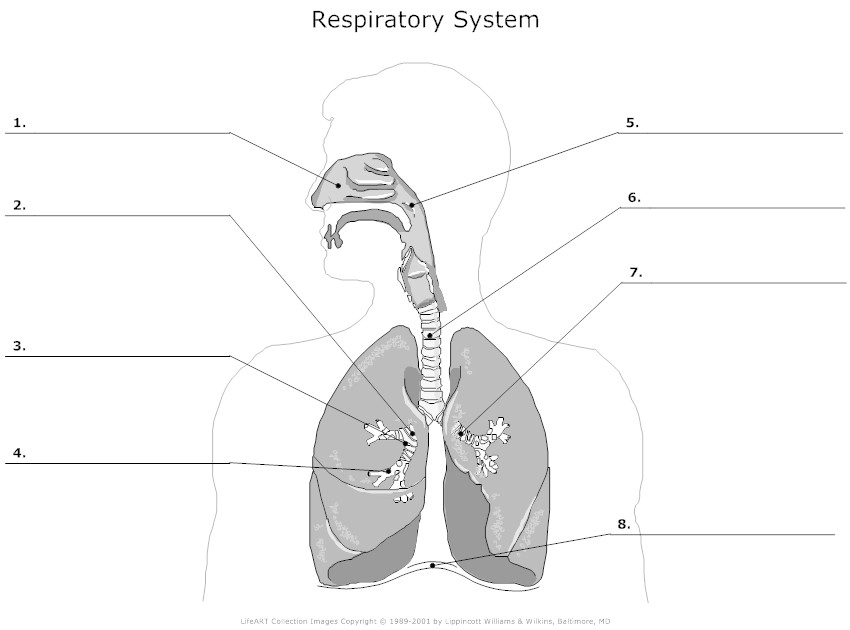
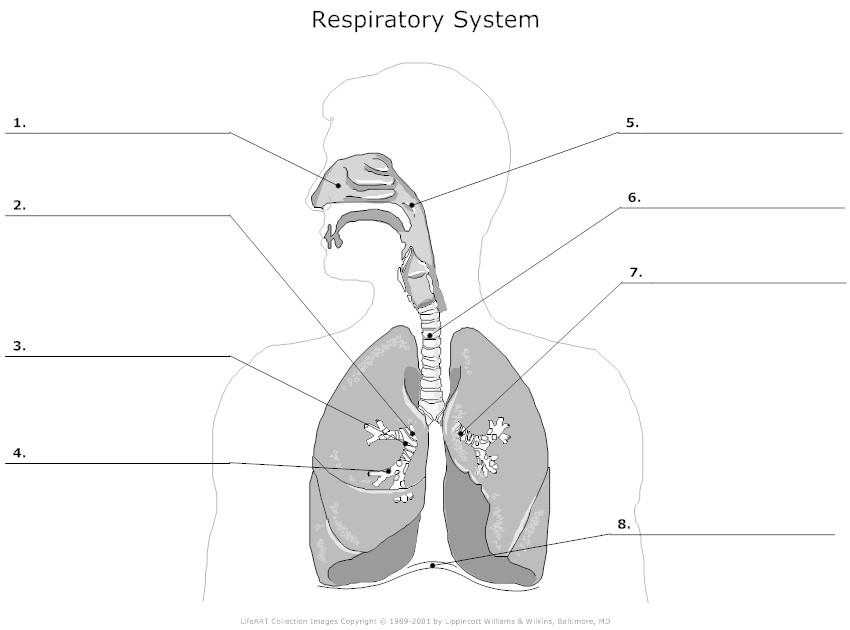
1. larynx
2. nasal cavity
3. pharynx
4. trachea
Which of the following is the correct order that air would flow during inhalation.
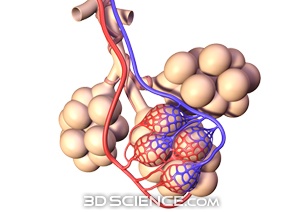

What keeps your bronchi and bronchiole tubes open?
cartilage rings
ligament squares
ciliated cells
muscle
Gaseous exchange happens because of...
Osmosis
Respiration
Diffusion
Semi-permeable membranes
Which structures filter and moisten air as it passes through the human respiratory system?
cilia and mucous membranes
alveoli and cartilage rings
diaphragm and bronchioles
epiglottis and bronchi
Which respiratory structure is supported by rings of cartilage?
trachea
alveolus
bronchiole
pharynx

Which structure shown in the diagram below contracts, causing a pressure change in the chest cavity during breathing?
A
B
C
D
An increase in breathing rate can be triggered by an increase in the
carbon dioxide content of the blood
oxygen content of the atmosphere
number of platelets in the blood
number of red blood cells

The diagram below represents a demonstration of the breathing process in humans. The balloons represent lungs.
The change in the balloons is brought about by
a change in air composition outside the bell jar
a change in air pressure inside the bell jar
an expansion of the balloons, which pulls the rubber sheet into the bell jar
a contraction of the balloons, which forces air into the bell jar
Which of the following is true about arteries and veins?
Arteries carry blood towards the heart
Veins carry oxygen rich blood
Veins carry blood towards the heart
Arteries carry oxygen depleted blood

The part labeled "A" is the:
Vena Cava
Aorta
Pulmonary arteries
Pulmonary veins

The part labeled "B" is the
Right atrium
Right ventricle
Left atrium
Left ventricle
What is the function of the small intestine?
Absorb nutrients
Absorb water
Break down nutrients
Secrete hormones
Lipases would be the main enzyme used to break down which food?
Chip dip
Beef steak
Potato
Carrot
What is the primary function of the small intestine in the digestive system?
Absorbing nutrients
Producing bile
Storing food
Mixing and breaking down food
Which enzyme is responsible for breaking down proteins in the stomach during the digestive process?
Amylase
Lipase
Pepsin
Trypsin
Which organ is responsible for producing bile to help with the digestion of fats in the digestive system?
Liver
Stomach
Gallbladder
Pancreas
Which of the following structures is responsible for the absorption of nutrients into the bloodstream during the digestive process?
Villi
Appendix
Esophagus
Epiglottis
Which enzyme is responsible for breaking down carbohydrates in the mouth during the digestive process?
Amylase
Pepsin
Trypsin
Lipase
Which of the following structures is responsible for the exchange of oxygen and carbon dioxide in the respiratory system?
Bronchi
Alveoli
Trachea
Diaphragm
Which of the following is the primary muscle responsible for breathing?
Intercostal muscles
Diaphragm
Abdominal muscles
Pectoral muscles
Which of the following is the correct pathway of air as it moves through the respiratory system?
Trachea > Pharynx > Larynx > Bronchi > Alveoli
Pharynx > Larynx > Trachea > Bronchi > Alveoli
Larynx > Pharynx > Trachea > Bronchi > Alveoli
Pharynx > Trachea > Larynx > Bronchi > Alveoli
During the process of gas exchange in the respiratory system, which specific feature of the alveoli maximizes the surface area available for the exchange of oxygen and carbon dioxide?
Cilia
Smooth muscle
Elastic fibers
Thin walls
What is the main function of red blood cells in the circulatory system?
To transport oxygen and carbon dioxide
To fight off infections and pathogens
To regulate blood pressure
To produce antibodies for immune response
What is the function of platelets in the circulatory system?
To transport oxygen and carbon dioxide
To assist in blood clotting
To regulate blood pressure
To produce antibodies for immune response
What component of the blood is responsible for carrying nutrients, hormones, and waste products throughout the body?
Plasma
White blood cells
Platelets
Red blood cells
What is the role of the heart in the circulatory system?
To filter waste products from the blood
To produce red blood cells
To pump and distribute blood throughout the body
To store excess nutrients for later use
Which of the following vessels carry oxygenated blood away from the heart?
Arteries
Veins
Capillaries
Lymphatic vessels
What is the function of the valves in the heart?
To regulate blood pressure
To prevent the backflow of blood
To produce red blood cells
To store excess nutrients for later use
Which of the following is responsible for the rhythmic contractions that propel blood through the circulatory system?
Aorta
Pulmonary artery
Ventricles
Sinoatrial node
What is the main function of red blood cells in the circulatory system?
Fighting infections
Transporting oxygen to tissues
Balancing fluid levels
Producing hormones
Which of the following is the largest artery in the human body, responsible for carrying oxygenated blood away from the heart to the rest of the body?
Carotid artery
Aorta
Pulmonary artery
Renal artery
Which of the following chambers of the heart pumps oxygenated blood to the rest of the body?
Right atrium
Left atrium
Right ventricle
Left ventricle
Which of the following chambers of the heart pumps deoxygenated blood to the lungs for oxygenation?
Right atrium
Left atrium
Right ventricle
Left ventricle
What is the function of the semilunar valves in the circulatory system?
Preventing backflow of blood from the atria to the ventricles
Regulating the flow of blood between the heart chambers
Preventing backflow of blood from the aorta and pulmonary artery into the ventricles
Assisting in the exchange of gases in the lungs
Which enzyme is responsible for breaking down proteins in the stomach during the digestive process?
Amylase
Lipase
Pepsin
Trypsin
Which organ is responsible for producing bile to help with the digestion of fats in the digestive system?
Liver
Stomach
Gallbladder
Pancreas
Which of the following structures is responsible for the absorption of nutrients into the bloodstream during the digestive process?
Villi
Appendix
Esophagus
Epiglottis
Which enzyme is responsible for breaking down carbohydrates in the mouth during the digestive process?
Amylase
Pepsin
Trypsin
Lipase
Which of the following structures is responsible for the exchange of oxygen and carbon dioxide in the respiratory system?
Bronchi
Alveoli
Trachea
Diaphragm
Which of the following is the primary muscle responsible for breathing?
Intercostal muscles
Diaphragm
Abdominal muscles
Pectoral muscles
Which of the following is the correct pathway of air as it moves through the respiratory system?
Trachea > Pharynx > Larynx > Bronchi > Alveoli
Pharynx > Larynx > Trachea > Bronchi > Alveoli
Larynx > Pharynx > Trachea > Bronchi > Alveoli
Pharynx > Trachea > Larynx > Bronchi > Alveoli
During the process of gas exchange in the respiratory system, which specific feature of the alveoli maximizes the surface area available for the exchange of oxygen and carbon dioxide?
Cilia
Smooth muscle
Elastic fibers
Thin walls
What is the main function of red blood cells in the circulatory system?
To transport oxygen and carbon dioxide
To fight off infections and pathogens
To regulate blood pressure
To produce antibodies for immune response
What component of the blood is responsible for carrying nutrients, hormones, and waste products throughout the body?
Plasma
White blood cells
Platelets
Red blood cells
What is the function of the valves in the heart?
To regulate blood pressure
To prevent the backflow of blood
To produce red blood cells
To store excess nutrients for later use
Which of the following is responsible for the rhythmic contractions that propel blood through the circulatory system?
Aorta
Pulmonary artery
Ventricles
Sinoatrial node
Which of the following is the largest artery in the human body, responsible for carrying oxygenated blood away from the heart to the rest of the body?
Carotid artery
Aorta
Pulmonary artery
Renal artery
Which of the following chambers of the heart pumps deoxygenated blood to the lungs for oxygenation?
Right atrium
Left atrium
Right ventricle
Left ventricle
What type of enzyme breaks down starch?
What enzyme breaks down lipids?
What enzyme breaks down protein in the small intestine?
What is the final break down product of protein?
What is the final break down product of starch?
What secretion enhances the activity of pepsin?
Hydrochloric acid
Saliva
Lipase
What secretion neutralizes chyme as it enters the small intestine?
What is a secretion?
A type of musical instrument
A substance produced and released by a cell with a specific function.
A type of enzyme.
A substance which increases surface area.
Food, once swallowed, is known as...
acid chyme
bolus
gastric juice
mucun
An essential nutrient is a nutrient that the body...
needs
does not need
can make
cannot make
The muscular contraction along the GI tract to move food is known as...
wave contraction
peristalsis
skeleton muscle contraction
arrhythmia
Which of the following is not a macronutrient?
Carbohydrates
Proteins
Minerals
Fats
Which type of teeth are meant to be used for cutting food?
Molars
Incisors
Canines
Bicuspids
What prevents food from moving from the stomach, back up the esophagus?
Fundus
Pyloric sphincter
Cardiac sphincter
Antrum
This respiratory disorder is characterized by swelling and narrowing of the bronchi and bronchioles, resulting in extra mucus production and the reduction of airflow that make it difficult to breathe.
Emphysema
Asthma
Pulmonary Fibrosis
Pulmonary Embolism
The respiratory disorder called (a) occurs when the inner walls of the alveoli weaken, break down, and rupture, causing a reduction in the quantity of alveoli, an increased amount of air space in the lungs, a reduction in the surface area of the gas exchange site, and less oxygen that can move into the bloodstream.
Aiden, Benjamin, and Anika are discussing respiratory diseases. They are trying to identify a chronic respiratory disease characterized by difficulty breathing. Which of the following diseases are they most likely talking about?
pneumonia
bronchitis
influenza
asthma
Rohan, Maya, and Kai are studying for their biology exam. They come across a question about lung infections. They want to know, what is the medical term for a lung infection caused by bacteria?
bronchitis
pneumonia
tuberculosis
asthma
Earthworms breathe through their _____.
gills
skin
spiracles
lungs

which animal has same breathing organ with animal in the picture


Choose animals that breathe using spiracles


The Lungs are made of muscles.
True
False
During Expiration (breathing out) the intercostal muscles _____________________ and the chest becomes smaller.
contract
relax
During inhalation the air is sucked into the lungs when the pressure in the lungs
increases
decreases
Which two muscles are responsible for BREATHING?
The Diaphragm
The Lungs
The Heart
The Intercostal Muscles

What part of the Respiratory System is seen on the picture
Lungs
Alveolus
Trachea
Bronchioles

How do you describe the condition of the diaphragm as one exhales?
the diaphragm contracts
the diaphragm relaxes
the diaphragm goes down
both a and c

Gas exchange is needed to supply _____________ to cells and remove __________________ from cells.
carbon dioxide; oxygen
oxygen; food
oxygen; carbon dioxide
carbon dioxide; water

The diagram shows some of the structures in a human lung. Where is the carbon dioxide concentration highest?
A
B
C
D

______ cells live 120 days
red
white
platelets

________ is nonliving
platelet
plasma
white cell
________ is 55% of total blood
platelets
plasma
white cells

Blood cells are made in the _______
brain
heart
bone marrow
vessels

The average person has about ______ liters of blood
2
3
4
5
Blood is ________
only solid
only liquid
both solid and liquid
Explain how blood is both living and nonliving

