Wayground logo

Free Printable Worksheets

Font size

S
M
L
XL
Worksheets

DNA and Protein Synthesis Unit Test

Total questions: 55

Worksheet time: 1hrs 23mins

Name
Class
Date
1.
Which nucleotide is complementary to adenine?
a)
adenine
b)
thymine
c)
cytosine
d)
guanine
2.
Which type of RNA delivers the genetic code to the ribosome?
a)
tRNA
b)
mRNA
c)
rRNA
d)
tmRtmRNA
3.
What is the function of transfer RNA?
a)
It is a part of the ribosome.
b)
It bonds to other RNA molecules, leading to their destruction.
c)
It delivers the correct amino acid to the ribosome.
d)
It carries the information coding for the amino acid sequence of a protein.
4.
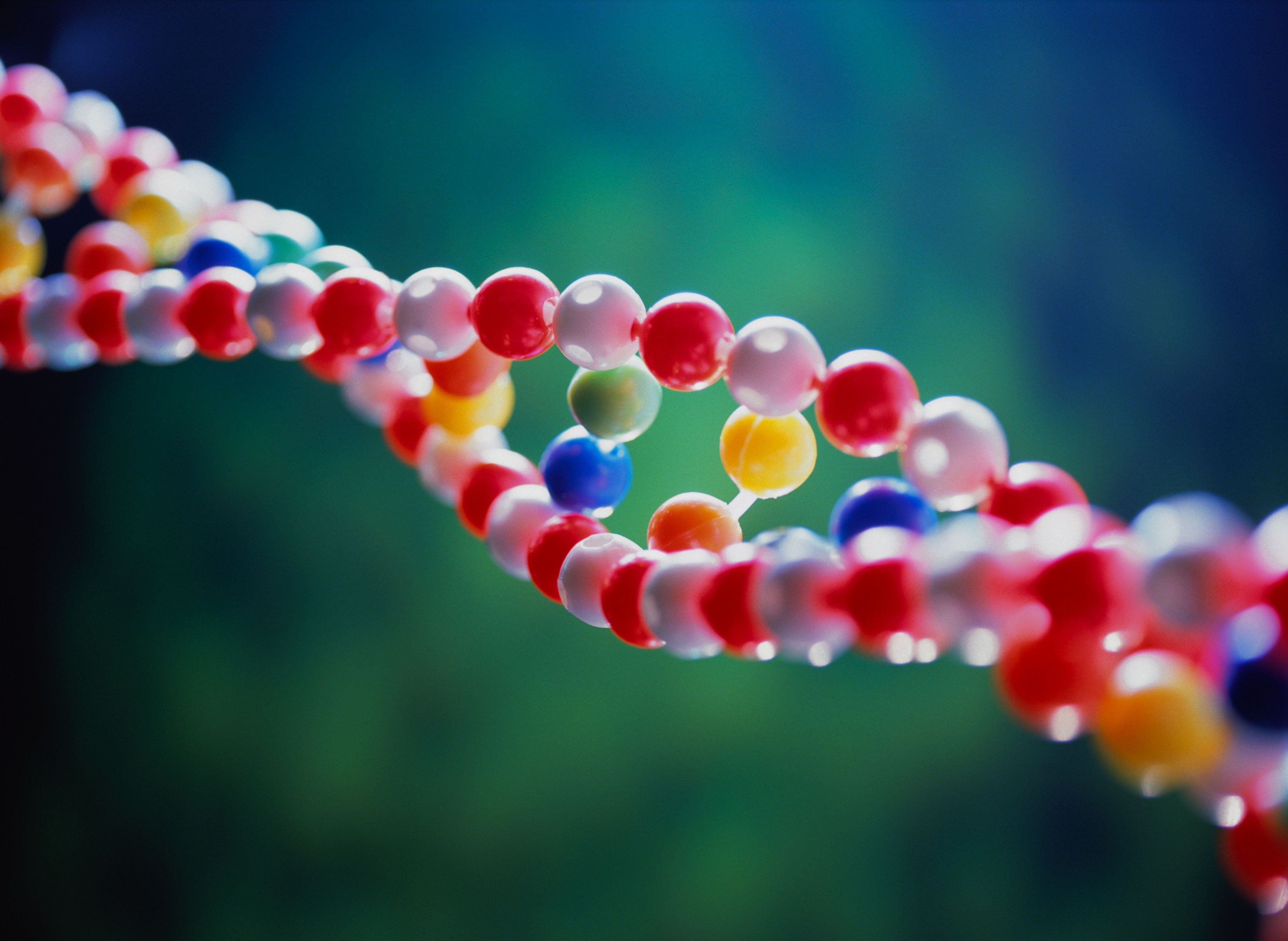
The drawing shows the structure of what molecule?
a)
A DNA molecule
b)
A lipid molecule
c)
A carbohydrate molecule
d)
A protein molecule
5.
What is the difference between DNA and RNA
a)
DNA has uracil and RNA has thymine
b)
DNA is involved in transcription and RNA is involved in translation
c)
DNA contains thymine and RNA contains uracil
d)
DNA is made of nucleotides and RNA is not
6.

What will be the complementary DNA sequence resulting from the following:

GAT-TAC-AGA-TTA-CAT?

a)

CTA-ATG-TCT-AAT-GTA

b)

GAU-UAG-UGA-UUA-GUT

c)

CUA-AUG-UCU-AAU-GUA

d)

CAT-ACA-TAC-ATA-TAG

7.
In a portion of a gene, the nitrogenous base sequence is T-C-G-A-A-T.  Which nitrogenous base sequence would normally be found bonded to this section of the gene?
a)
A-C-G-T-A-A
b)
A-C-G-U-U-A
c)
A-G-C-T-T-A
d)
U-G-C-A-A-U
8.
In eukaryotes, DNA:
a)
floats freely in the cytoplasm
b)
is found in the nucleus
c)
is wrapped within the ribosome
d)
is circular
9.
What 3 things make up a nucleotide?
a)
Sugar, Phosphate, Nitrogen Base
b)
Sugar, Hydrogen, Carbon
c)
Carbon, Phosphate, Nitrogen
d)
mRNA, tRNA and rRNA
10.
What is made during translation?
a)
transfer RNA
b)
messenger RNA
c)
Proteins
d)
Spanish Rice
11.
The site of protein synthesis?
a)
nucleus
b)
ER
c)
Ribosome
d)
Golgi Body
12.
In a molecule of double-stranded DNA, the amount of Adenine present is always equal to the amount of
a)
cytosine
b)
guanine
c)
thymine
d)
uracil
13.

What makes up the sides of the DNA molecule?

a)

Amino acids

b)

Proteins

c)

Sugar phosphate group

d)

Nitrogen bases

14.

What are nitrogen bases?

a)

Proteins

b)

Amino acids

c)

The rungs of the DNA ladder

d)

The building blocks of proteins

15.

Where are chromosomes stored in a cell?

a)

Nucleus

b)

Ribosome

c)

Cytoplasm

d)

Cell membrane

16.

What does DNA stand for?

a)

Deoxyribonucleotide acid

b)

Dioxyribonucleic acid

c)

Ribonucleic acid

d)

Deoxyribonucleic acid

17.

Where are proteins made in a cell?

a)

Cytoplasm

b)

Ribosome

c)

Cell membrane

d)

Nucleus

18.

What are the building blocks of proteins?

a)

Amino acids

b)

Nucleotides

c)

Lipids

d)

Carbohydrates

19.

Which organelle is the location where protein is made?

a)

Ribosome

b)

Nucleus

c)

Cytoplasm

d)

Nucleotide

20.

During transcription, this type of ribonucleic acid is responsible for copying the DNA and brining it out of the nucleus.

a)

tRNA

b)

mRNA

c)

rRNA

d)

dRNA

21.
What is the term for a three-nucleotide sequence that codes for an amino acid?
a)
base
b)
codon
c)
amine
d)
serine
22.

What brings the amino acids to the ribosome to assemble a protein?

a)
mRNA
b)
tRNA
c)
rRNA
d)

DNA

23.
·  Copying and carrying the genetic code is the responsibility of which molecule?
a)
RNA
b)
Glucose
c)
Oxygen
24.
The base Uracil is only found in which molecule?
a)
DNA
b)
RNA
c)
Carbohydrates
25.
DNA never leaves the nucleus
a)
True
b)
False
26.
Proteins are made of which molecule?
a)
Amino Acids
b)
Lipids
c)
Carbohydrates
27.
DNA is a double helix.
a)
True
b)
False
28.
RNA is a double helix
a)
True
b)
False
29.
Muscles are made of proteins.
a)
True
b)
False
30.
An organism's DNA is a code to make proteins.
a)
True
b)
False
31.

During transcription, this type of ribonucleic acid is responsible for copying the DNA and brining it out of the nucleus.

a)

tRNA

b)

mRNA

c)

rRNA

d)

dRNA

32.

When these bond together, they form a protein

a)

Amino Acids

b)

Peptide Bonds

c)

Ribose

d)

Nucleotides

33.
Which of these nitrogenous bases is NOT in RNA?
a)
Uracil
b)
Thymine
c)
Cytosine
d)
Guanine
34.
Why is DNA important?
a)

it is very small and very complicated

b)

it isn't important

c)

it serves as the blueprint for traits of all living things

d)

because we eat it every day for energy

35.

A process in which DNA has the unique ability to make an exact copy of itself.

a)

Replication

b)

Translation

c)

Transcription

d)

Protein Synthesis

36.
The shape of the DNA molecule is a double __________________?
a)
"S"
b)
helix
c)
rope
d)
curve
37.

What is the role of mRNA

a)

Carry an amino acid to the ribosome

b)

Copy the instructions from DNA and carry it out of the nucleus

c)

Make up the ribosomes

38.

What is an anticodon?

a)

rRNA

b)

an amino acid

c)

Three nucleotide sequence found on mRNA

d)

Three nucleotide sequence found on tRNA

39.

Why must transcription occur in the nucleus?

a)

because DNA can't leave the nucleus

b)

because ribosomes are in the nucleus

c)

because DNA polymerase is found there

d)

because helicase unzips the DNA

40.

How many nucleotides code for 1 amino acid?

a)

1

b)

2

c)

3

d)

4

41.
The process to go from mRNA to a protein is called ____
a)
transcription
b)
rRNA
c)
replication
d)
translation
42.

What does tRNA bring to the ribosome?

a)

Protein

b)

mRNA

c)

Uracil

d)

amino acid

43.

Where are proteins made?

a)

In the Ribosome

b)

In the cell wall

c)

Outside of the cell

d)

In the Nucleus

44.

What happens to the DNA once the mRNA detaches and leaves the nucleus?

a)

The DNA leaves the nucleus with the RNA

b)

The DNA Zips back up

c)

The DNA dies

d)

The DNA unzips

45.

What does the "m" in mRNA stand for?

a)

minor

b)

metric

c)

Ms. Smith

d)

messenger

46.

What does the "t" in tRNA stand for?

a)

total

b)

trippin

c)

transfer

d)

toot

47.
Which of the following best describes a DNA molecule?
a)
double helix
b)
contains ribose
c)
made of amino acids
d)
contains Uracil
48.
Which of the following units are repeatedly joined together to form a strand of DNA?
a)
amino acids
b)
nucleotides
c)
fatty acids
d)
polysaccharides
49.
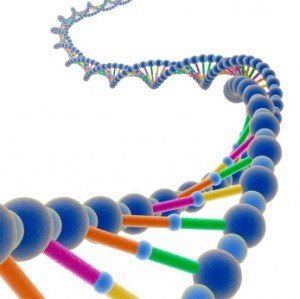
The following picture must be
a)
DNA because it's double stranded
b)
RNA because it's single stranded
c)
DNA because it's single stranded
d)
RNA because it's double stranded
50.
What does this picture represent?
a)
amino acid
b)
base pairing
c)
nucleotide
d)
the DNA molecule
51.
How many nucleotides make a codon?
a)
1
b)
2
c)
3
d)
6
52.
What is the product of translation?
a)
DNA
b)
mRNA
c)
tRNA
d)
proteins
53.

What is the order for Protein Synthesis?

a)

Transcription -> Translation -> Protein

b)

Translation - > Transcription -> Protein

c)

Protein -> Transcription -> Translation

d)

Translation -> Protein -> Transcription

54.

What type of RNA is shown in this image?

a)

rRNA

b)

mRNA

c)

tRNA

55.
The mRNA leaves the ________ to find the ribosome to make proteins.
a)
cell
b)
nucleotide
c)
nucleus