
 Worksheets
Middle School Chemistry Mid Term
Total questions: 84
Worksheet time: 4hrs 54mins
Name
Class
Date
1.
A research scientist at a pharmaceutical company discovers one of the company’s products currently on the market could cause severe side effects and even death in a very small percentage of people. Which of the following BEST describes the action the scientist should take?
a)
Pull the product from the market immediately but not inform those already using the product of the risks because no person has yet developed any of the side effects.
b)
Pull the product from the market immediately and inform the public and those currently taking the product of the possible side effects and risk of death.
c)
Continue to improve the product to eliminate the risks.
d)
Because the product is benefiting a large number of people, and the risk of side effects is very small, the information should be kept private in order to avoid possible public panic.
2.
Use this experiment for questions 1 and 2.Dan has three identical containers. He cuts a circular hole in the center of the bottom of each container and places a plug in each hole. The diameters of the three holes are 10 cm, 20 cm, and 30 cm. He fills the first container with water, removes the plug, and measures and records the amount of time it takes for the water to drain completely out of the container. He repeats this process for the other two containers.Identify the question that Dan is MOST likely trying to answer using the experiment.
a)
Does the size of a hole affect the drainage rate of a container?
b)
Does the type of container affect the way water drains out of the bottom?
c)
How fast does water drain out of three containers?
d)
Which container holds the greatest amount of water?
3.
As you are heating a beaker of an unknown substance, your instructor asks if the substance is giving off an odor. Which procedure should you follow to safely determine if the substance has an odor?
a)
Pick up the beaker and let your lab partner smell it.
b)
Put on your safety goggles and place your nose over the beaker.
c)
Turn off the heat source and sit for 10 minutes.
d)
Wave the fumes from the beaker toward your nose.
4.
Which of the following is NOT a part of Dalton’s atomic theory?
a)
All elements are composed of atoms.
b)
Atoms of the same element are alike.
c)
Atoms are always in motion.
d)
Atoms that combine do so in simple whole-number ratios.
5.
Robert A. Millikan contributed to the current atomic theory by discovering which of the following? I. electron charge II. the electron III. the mass of an electron
a)
I and II
b)
II and III
c)
I and III
d)
I, II, and III
6.
Bohr’s contribution to the development of atomic structure
a)
was referred to as the “plum pudding model.”
b)
was the discovery that electrons surround a dense nucleus.
c)
proposed that electrons travel in circular orbits around the nucleus.
d)
is the quantum mechanical model.
7.
What is the total number of subatomic particles (protons, electrons, and neutrons) in an atom of vanadium-51?
a)
51
b)
74
c)
102
d)
125
8.
Which of these statements is false?
a)
Electrons have a negative charge.
b)
Electrons have a mass of 1 amu.
c)
The nucleus of an atom is positively charged.
d)
Neutrons are found in the nucleus of an atom.
9.
What is the atomic number and the mass number of an atom with 11 protons and 12 neutrons?
a)
atomic number = 11 and mass number = 12
b)
atomic number = 12 and mass number = 11
c)
atomic number = 11 and mass number = 23
d)
atomic number = 23 and mass number = 12
10.
Name the elements that form the compound NaSO4.
a)
nitrogen, sulfur, oxygen
b)
sodium, sulfur, oxygen
c)
neon, silver, oxygen
d)
sodium, silver, oxygen
11.
The configuration for the outermost energy level in Ca is
a)
3s2.
b)
4s2
c)
2s1.
d)
4s1.
12.
Which of the following examples in nature represents a chemical change?
a)
water freezing
b)
a tree branch breaking
c)
autumn leaves changing colors
d)
steam rising from hot pavement
13.
A lab student places some sodium hydroxide solution into a test tube and adds a drop of phenolphthalein solution to it. Both sodium hydroxide and phenolphthalein are colorless, yet when mixed together, the solution turns pink. What has occurred?
a)
heterogeneous mixture
b)
a chemical change
c)
the formation of a solid
d)
a physical change
14.
For an experiment, you mix baking soda, calcium chloride, and phenol red solution in a sealed container. You notice the container getting warmer, the color turning yellow and bubbles being produced. You learn that calcium chloride and baking soda react together when dissolved in a liquid, and energy is released as heat when the chemical bonds are broken. Since an acid is produced in the reaction, as well as carbon dioxide, this accounts for phenol red turning yellow and gas bubbles being produced. From this description, which of the following is one of the indicators that a chemical change has occurred?
a)
dissolving of the baking soda
b)
color change
c)
breaking a bond
d)
constant temperature
15.
Which of the following statements about the atoms and molecules in all three states of matter is NOT true?
a)
Particles of matter are in constant motion.
b)
Space exists between the particles.
c)
Adding heat increases the size of the particles.
d)
The particles of matter are too small to be seen with the unaided eye.
16.
Which of the following is a pure substance?
a)
tea
b)
brass
c)
ocean water
d)
carbon dioxide
17.
Which property would be MOST useful for determining whether a piece of metal is iron or lead?
a)
ability to conduct electric current
b)
solubility in water
c)
size of the piece of metal
d)
attraction to a magnet
18.
To make a softball bat, a block of wood is carefully crafted into a shape that will allow a batter to best apply force on a softball. All of the following describe physical changes that may be used in the process of making a softball bat, EXCEPT
a)
sanding the wood.
b)
carving the wood.
c)
burning the wood.
d)
painting the wood.
19.
Dalton theorized that atoms are indivisible and that all atoms of an element are identical. Scientists now know that
a)
Dalton’s theories are completely correct.
b)
atoms of an element can have different numbers of protons.
c)
atoms are all divisible.
d)
all atoms of an element are not identical but they all have the same mass.
20.
Which hypothesis might Dan have made before he began his experiment?
a)
The smaller the hole, the more water the container will hold.
b)
The holes in containers 1, 2, and 3 should be 10 cm, 20 cm, and 30 cm in diameter, respectively.
c)
The larger the hole, the faster the water will drain out of the container.
d)
Water will drain at a different rate than other liquids.
21.
Which of the following statements about the atoms and molecules in all three states of matter is NOT true?
a)
Particles of matter are in constant motion.
b)
Space exists between the particles.
c)
Adding heat increases the size of the particles.
d)
The particles of matter are too small to be seen with the unaided eye.
22.
A student measures the volume and mass of a piece of plastic foam. The volume was 0.3 cubic meters and the mass was 8.4 kilograms. What is the density of the foam in g/cm3?
a)
0.028 g/cm3
b)
0.28 g/cm3
c)
2.8 g/cm3
d)
280 g/cm3
23.
Which state(s) of matter are practically incompressible?
a)
liquid state
b)
both solid and liquid states
c)
gaseous state
d)
solid state
24.
Gases are easier to compress than liquids because particles in gases are
a)
less brittle.
b)
free to flow from one location to another.
c)
farther apart.
d)
smaller.
25.
There is ongoing optimism in the scientific community for treatments targeting spinal cord injuries (SCI). However, sometimes a study is published that brings excitement to the SCI field, and for various reasons the findings cannot be replicated.
Which explanation is MOST likely the cause for the data not being replicated?
Which explanation is MOST likely the cause for the data not being replicated?
a)
The publication contains a good description of the study, but it is written in a foreign language.
b)
Not enough scientists subscribe to SCI journals.
c)
Most publications only contain information vital to performing the experiment.
d)
The publication lacks critical information required for another scientist to exactly replicate the study.
26.
Which of the following statements is an example of a correctly written, testable hypothesis?
a)
Does handling toads cause warts?
b)
If a truck is heavily loaded, then it will use more gasoline than an empty truck.
c)
Exercising for five minutes will increase my heart rate.
d)
If water contains salt, then it will be easier to swim in than fresh water.
27.
What conclusion can you make about a hypothesis that contradicts an existing theory?
a)
If the hypothesis is supported by observation, the theory may have to be modified.
b)
If the hypothesis is not supported by observation, the theory must be modified.
c)
The hypothesis cannot be valid because the theory is already established.
d)
The theory must be modified because it contradicts the new hypothesis.
28.
The table below shows approximate amounts of gases inhaled and exhaled by humans. Use the table to answer Question 32. Gases in Inhaled and Exhaled Air Gas Inhaled Air Exhaled Air Nitrogen 78% 78% Oxygen 21% 16% Carbon dioxide 0.03% 4% 1. What conclusion can you draw from this data?
a)
Inhaled air contains less oxygen and more carbon dioxide than exhaled air.
b)
Inhaled air contains more oxygen and less carbon dioxide than exhaled air.
c)
Inhaled air contains more oxygen and more carbon dioxide than exhaled air.
d)
Inhaled air contains the same amount of nitrogen and carbon dioxide as exhaled air.
29.
Where in an atom is MOST of its mass found?
a)
in electron clouds
b)
in the f orbital
c)
in the nucleus
d)
in the 1s and 2s orbitals
30.
Which scientist is credited with the discovery of the atomic nucleus, radioactive particles, and the decay of radioactive substances?
a)
Bohr
b)
Rutherford
c)
Dalton
d)
Thomson
31.
Why did theories about the structure of the atom have to be revised after the publication of Rutherford’s gold foil experiment results?
a)
Rutherford identified incorrect experimental data used to develop previous theories.
b)
Rutherford proved that the older model was wrong by showing that protons and neutrons existed.
c)
Rutherford’s results provided new evidence that the nucleus was small and massive.
d)
Rutherford showed that Thomson had interpreted the cathode ray experiment incorrectly.
32.
In the periodic table, there is a periodic pattern in the physical and chemical properties of elements when they are arranged in order of
a)
increasing atomic mass.
b)
increasing electronegativity
c)
increasing atomic radius.
d)
increasing atomic number.
33.
The addition of magnesium to molten cast iron, to produce nodular iron is common practice. What is the electron configuration for Mg?
a)
1s2 2s2 2p8
b)
1s2 2p6 3s2
c)
1s2 2s2 2p6 3s2
d)
1s2 2s2 2p6 3s1
34.
Although neon is commonly used in the advertisement industry, it is also used to make television tubes, high-voltage indicators, lightning arrestors, and gas lasers. What is the electron configuration for Ne?
a)
1s22s22p6
b)
1s22s22p6 3s1
c)
1s22s22p5
d)
1s22p63s1
35.
How many orbitals are in the 4f sublevel?
a)
1
b)
3
c)
5
d)
7
36.
The element sodium is one of the elements that compose the Earth’s crust. What is the electron configuration for sodium, Na?
a)
1s22s22p63s24s
b)
1s22s22p6 3s2
c)
1s22s22p6 3s1
d)
1s22p63s13p1
37.
If the composition of a material is fixed the material
a)
is incapable of boiling.
b)
is a substance.
c)
is a mixture.
d)
cannot undergo physical change.
38.
Which element is present in the greatest proportion by number of particles in the chemical formula C2H10O5, otherwise known as corn starch?
a)
oxygen
b)
water
c)
carbon
d)
hydrogen
39.
Which list contains only elements?
a)
Au, I, KO, Pb
b)
Pb, Hg, Cd, Rb
c)
SO2, NO2, CO2, LiH
d)
Pt, SiC, Cs, Zn
40.
Which BEST completes this sentence? Bohr proposed that an electron is found only in _______ around the nucleus of an atom.
a)
A the charged areas
b)
the magnetic field
c)
circular patterns
d)
random areas
41.
A study was published by a biotechnical company claiming a certain drug’s ability to successfully decrease the size of brain tumors in mice. The same study was conducted three different times by different researchers following the exact same procedures listed in the original study, but the results could not be replicated. What is the MOST likely reason?
a)
The brain tumors of the researchers’ mice were larger than the tumors of the mice in the original study.
b)
The different researchers were in competition with the company publishing the original study.
c)
The equipment used in the original study was newer and ran by better skilled technicians
d)
The original study did not accurately report the procedures.
42.
The number 80 in the name bromine-80 represents:
a)
the atomic number
b)
the mass number
c)
the sum of protons and electrons
d)
none of these
43.
The sum of the protons and neutrons in an atom equals the:
a)
atomic number
b)
number of electrons
c)
atomic mass
d)
mass number
44.
What do you have to know to determine if a set of data is accurate?
a)
when it was collected
b)
how it was collected
c)
the actual value
45.
A set of data are all close to each other, but they are not close to the actual value. This set of data can be described as...
a)
accurate
b)
precise
c)
both precise and accurate
46.
A set of data are all close to each other, and they are close to the actual value. This set of data can be described as...
a)
accurate
b)
precise
c)
both precise and accurate
47.
A set of data are not close to each other, but the average of the data is very close to the actual value. This set of data can be described as...
a)
accurate
b)
precise
c)
both precise and accurate
48.
If something goes wrong in the lab (even something minor) you should...
a)
ignore it, there are always problems in the lab
b)
scream hysterically
c)
tell the teacher/instructor
49.
What is the most useful tool for helping us organize details?
a)
bar graph
b)
data table
c)
line graph
d)
pie graph
50.
Why are graphs useful?
a)
They help us visualize trends and patterns
b)
They organize details
51.
Which graph would we use to show change over time?
a)
bar graph
b)
line graph
c)
pie graph
d)
scatter plot
52.
Which graph would be the best choice if I want to show the relationship between two variables?
a)
bar graph
b)
line graph
c)
pie graph
d)
scatter plot
53.
Which graph would be the best choice if I want to compare data?
a)
bar graph
b)
line graph
c)
pie graph
d)
scatter plot
54.
Which type of graph would best show parts of a whole?
a)
bar graph
b)
line graph
c)
pie graph
d)
scatter plot
55.

What is the independent variable in this bar graph?
a)
Amount of Sugar
b)
Type of Food
56.

What does this graph help you visualize?
a)
The change of height over time
b)
The relationship between height and weight
c)
Comparing the different weights of players
d)
Showing the parts of a team
57.

What is the dependent variable?
a)
The United States
b)
Population
c)
Year
58.

What kind of graph would you choose to visualize this information?
a)
Bar Graph
b)
Line Graph
c)
Pie Graph
d)
Scatter Plot
59.

What is this graph missing?
a)
x-axis label
b)
y-axis label
c)
Title
d)
Data
60.
The tool used to measure the mass of a substance or object is a ______________.
a)
balance
b)
graduated cylinder
c)
ruler
d)
thermometer
61.
Jack has a rock. The rock has a mass of 14g and a volume of 2cm3. What is the density of the rock?
a)
7 mL
b)
7 g/cm3
c)
28 g/cm3
d)
1/7 g/cm3
62.
Which units of measurement are used for volume?
a)
grams
b)
centimeters
c)
grams/milliliter
d)
milliliter
63.
Which lab tool might you use to measure the volume of a liquid?
a)
electric scale
b)
bunsen burner
c)
test tube
d)
graduated cylinder
64.

What is the volume of Object X?
a)
10.0 cm3
b)
15.0 cm3
c)
20.0 cm3
d)
25.0 cm3
65.
True or False: The density of a specific type of material never changes.
a)
True
b)
False
66.

I have two objects with the same volume but different masses. Which object will be more dense?
a)
The object with less weight.
b)
The object with more weight.
c)
The object with more mass.
d)
The object with less mass.
67.
What is the formula for density?
a)
density = mass x volume
b)
density = mass / volume
c)
density = mass + volume
d)
density = mass - volume
68.
Frank has an eraser. It has a mass of 4g, and a volume of 2cm3. What is its density?
a)
8 g/cm3
b)
2 g/cm3
c)
1/2 g/cm3
d)
24 g/cm3
69.
Frank has a paper clip. It has a mass of 9g and a volume of 3cm3. What is its density?
a)
3 g/cm3
b)
1/3 g/cm3
c)
27 g/cm3
d)
39 g/cm3
70.
How would you write 0.0005 in scientific notation?
a)
50 x 105
b)
5 x 10⁴
c)
5 x 10³
d)
.5 x 103
71.
How do you write
1001
in scientific notation?
1001
in scientific notation?
a)
1.0001 x 10⁴
b)
1.01 x 10⁵
c)
1.001 x 10³
d)
10.1 x 10³
72.
Which of the following is correct scientific notation?
a)
20.35 x 10⁴
b)
.2035 x 104
c)
2035 4
d)
2.035 x10⁴
73.
Express the following in scientific notation:
.000457
.000457
a)
457 x 106
b)
457 x 10-6
c)
4.57 x10⁴
d)
4.57 x 10⁻⁴
74.
Express the following in scientific notation:
.000045
.000045
a)
4.5 x 10⁻⁵
b)
45 x 10-6
c)
4.5 x10⁵
d)
45 x 106
75.
Express the following in scientific notation:
10,030,400,000
10,030,400,000
a)
1.00304 x 10⁹
b)
1.00304 x 10¹⁰
c)
1.00403 x 10¹⁰
d)
1.00304 x10⁻¹⁰
76.
Express the following in scientific notation:
0.0000002203
0.0000002203
a)
.02203 x 107
b)
22.03 x 10⁻⁶
c)
2.203 x 10⁻⁷
d)
22.03 x 10⁶
77.
Convert to scientific notation:
520,000,000
520,000,000
a)
52 x 107
b)
5.2 x 10⁷
c)
5.2 x 10⁸
d)
0.52 x 10⁹
78.
What is scientific notation?
a)
A long way to write really short numbers
b)
A short way to write really long numbers
c)
I don't know...
d)
None of the above
79.
Which of the following is correct scientific notation?
a)
20.35 x 10⁴
b)
.2035 x 104
c)
2035 4
d)
2.035 x10⁴
80.
Atomic number=
a)
number of neutrons
b)
atomic mass
c)
protons
d)
electrons+protons
81.
Mass Number is--
a)
the number of protons + neutrons
b)
the number of protons
c)
the number of electrons +protons +electrons
d)
the same as atomic number
82.

How many protons does He have?
a)
4
b)
2
c)
6
d)
0
83.
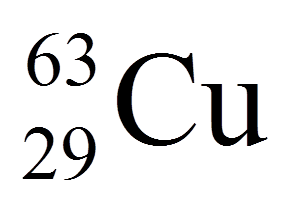
The top number in this isotope notation is
a)
the mass number
b)
the atomic number
c)
the atomic mass
d)
the neutron number
84.
The bottom number in this isotope notation is
a)
the mass number
b)
the atomic number
c)
the atomic mass
d)
the neutron number
100 %

