
 Worksheets
Rock Classification, Cycle and Minerals
Total questions: 65
Worksheet time: 47mins

__________ sedimentary rocks form when chemicals in water come out of the water and form solids.
Chemical (or nonclastic)
Clastic
Metamorphic
Igneous

The root words "______" mean change.
meta and MORPH
beta and POWER
alpha and GEO
rock and CYCLO


Obsidian is an example of _______________ rock.
intrusive
extrusive


_________ metamorphism occurs when magma or lava comes in contact with, or touches, surrounding rock.
Contact
Pressure
Regional

Clastic rocks are classified by the size of the __________ that form them.
sediments
metamorphic rocks
plates
igneous rocks

The two main types of sedimentary rocks are ___________ and _________.
chemical (nonclastic), clastic
sedimentary, metamorphic
igneous, metamorphic
heat, pressure


The Mohs Scale can be applied to rocks as well as minerals. Why? What property of rock is being observed when looking for whether or not it scratches other rocks and minerals?
cleavage
luster
hardness
streak



What will happen if an igneous rock is put under an extreme amount of heat and pressure?
it will melt into lava
it will weather and erode
it will become a metamorphic rock
it will become a sedimentary
When molten rock undergoes crystallization (cools, hardens, & grows crystals) above ground, what type of rock results?
Intrusive igneous rock
Extrusive igneous rock
Metamorphic rock
Sedimentary rock

What combination of processes can transform (change) a metamorphic rock to sediments?
Erosion, crystallization, and melting.
Heating, pressure, and lithification.
Melting, crystallization, and compaction.
Exposure, weathering, and erosion.

According to the rock cycle, which of the following transitions are possible? Assume an unlimited number of steps.
An intrusive igneous rock becomes a sedimentary rock.
A sedimentary rock becomes soil.
A metamorphic rock becomes an extrusive igneous rock.
All of the above are possible.
If you examine a rock sample and observe (see) fossils in it, what type of rock does the sample represent?
Igneous
Metamorphic
Sedimentary
Fossils are found in several of the types listed above.

The location marked by the black rectangle is characterized by high temperature and pressure. What rock type would most likely be formed in this location?
Igneous
Metamorphic
Sedimentary
None of the above

Which of the rock samples below is most likely to be a metamorphic rock?
Sample A
Sample B
Sample C
Sample D
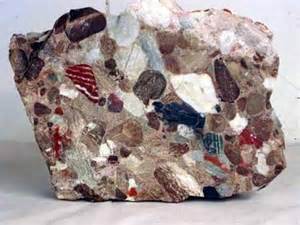

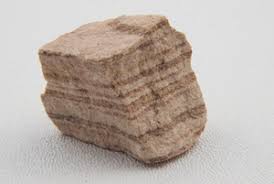
Sandstone

Limestone made from shells

Conglomerate

Coal

Shale
What must happen to a metamorphic rock before it becomes a sedimentary rock rock?
It must be broken down into sediment
It must be melted into magma
Its minerals must dissolve in water
It must be exposed to high temperature and pressure
These rocks are often foliated, meaning they have layers.
Sedimentary
Sediment
Metamorphic
Igneous
Fossil fuels are formed in sedimentary rocks when _____________ forces out all of the water and air in the layer.
cementation
compaction
heat
pressure

Which of the following is not a sediment in sedimentary rocks?
Bits of sand
Crushed pieces of granite
Shells
Tiny pieces slate




The root wood "igni-" or "ign-" means
air
change
fire
water

Think about everything you have learned so far about cycles on Earth. Do parts of the Earth move under its surface in the crust and mantle?
Yes
No
Why are sedimentary rocks the only classification of rock in which it is possible to find fossils? Choose TWO correct answers.
Because sedimentary rocks stay on the surface where they form, and that is where the dead plants and animals are.
Because sedimentary rocks form in water, and water is essential for all living things on Earth.
Because metamorphic rocks form at temperatures between 100 C and 800 C, and the heat would destroy and deform the fossils.
Because igneous rocks are formed from molten rock, and temperatures hot enough to melt rocks into minerals would burn the fossils.
Which of the following may be non-clastic sedimentary rocks? Choose two correct answers!
chemical
classy
organic
halite

What would non-foliated metamorphic rocks look like?
They have distinct bands of mineral crystal bands.
Their mineral crystals are not separated into bands, but are chunks with an even appearance of crystals.
They are much prettier than foliated metamorphic rocks.

What is the correct order in this diagram of deposition and sedimentary rock formation?
1, 2, 3, 4
4, 3, 2, 1
1, A, 2, B
3, 2, 1, 4

Look at this diagram of potential metamorphism. In which layer is it IMPOSSIBLE for metamorphic rocks to form?
Layer A
Layer B
Layer C
Layer D

