
 Worksheets
Natural Selection and Fossil Record Review
Total questions: 66
Worksheet time: 1hrs 15mins




The fossil record help scientists
better understand the kinds of organisms that lived in the past
better understand how the environment has changed over time
better understand how organisms have evolved over time
all of the above
What is common ancestry?
When a species no longer exists
When organisms are descended from a single ancestor

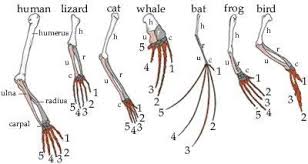
The forelimbs of humans, cats, whales, and bats are similar in structure due to having a common ancestor hundreds of millions of years ago. Is this considered homolgy or analogy?
Homology
Analogy
Which of the following are homologous structures?
whale flipper and bat wing
legs on a beetle and legs on a cat

The cave fish and minnow are related to each other but the cave fish is blind and only has the remnants of an eye. What type of structure is this?
vestigial
analogous
What is an example of a vestigial structure in a human?
liver
appendix
_______________, or selective breeding, is one way that humans impact evolution. One example is how the Belgian Blue cow has been bred to have greater muscle mass.
Artificial selection
Homologous

What can the arm bones of humans and bats show us? That they...
.. shared an ancestor whom had that arm structure
... will eventually evolve into similar creatures
... share a gene pool
Scientists are studying a particular protein found in blood cells. Based on this, which animals are most closely related?
Dog: ARG - LYS - HIS - TYR
Rabbit: ARG - LYS - TYR - TYR
Elk: ARG - PRO - TYR - ARG
Dog & Rabbit
Rabbit & Elk
Dog & Elk

What is an inherited trait?
A skill that is developed through practice
A characteristic determined by an organism's genes
an organism's place in the food web
an organisms relationship to its parents
When is a trait most likely to be passed on to the next generation?
When it serves no purpose
When it becomes an advantage to the organism's survival
When it gives the organism a lot of water
When it prevents the organism from finding a mate
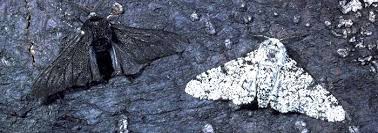
When nature "selects" a variation, that means that the trait:
Gets passed along from generation to generation
Causes the population to shrink
Has brought about a new species
Helps prey escape predators
In the phrase "survival of the fittest," the term "fittest" refers to:
The best-adapted organisms
The biggest organisms
The smartest organisms
The fastest organisms
What word describes a trait that helps an organism survive in its environment?
natural selection
mutation
camouflage
adaptation
Which of the following is an environmental pressure that might affect the survival of a species?
Predators
Seasonal Changes
Disease
All of the Above
Over time natural selection can change how often a trait is seen within a population.
True
False
If you know the age of a fossil, you know the relative age of the ________________ it was found inside.
sticky tar
rock
amber
ice
If you know the age of a rock, you know the relative age of the _________________ that was found inside.
sticky tar
fossil
amber
ice
Each of the following can be fossilized except.
plants
teeth
footprints
inorganic material
Which of the following can be learned by using the fossil record?
When organisms changed or evolved
when organisms appeared on Earth
when organisms became extinct
All the above
Geologists use radioactive dating to..
determine the relative ages of rock layers.
tell the difference between molds and casts.
tell where one soil horizon ends and the next one begins.
determine the absolute ages of rocks.

What are the oldest fossils and why?
B, C- because they are closest to the top
A, B- because they are closest to the bottom
They are all the same age- because they are all found on layer 2
A, B- because they are found closest to the top


In which kind of rock do we usually find a fossil?
sedimentary rock
metamorphic rock
igneous rock
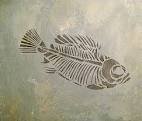
If scientists found this fossil, what could they infer?
what fish are like today
that this fish lacked oxygen
that water once covered the area where this fossil was found
Fossils of fish are found under land where cows now live. What does this tell you?
the fish were dropped their by flying birds
this land was once under the ocean
fish used to live on land
Look at each characteristic.
Determine if that characteristic is documented by the fossil record
change of life-forms
diversity of life forms
number of life-forms
hunting behavior of life-forms
environment the life form lives in
extinction of the life-form
age of the life-form
What is the fossil record
footprints found in rock
fossils found in the last 500,000 years
a fossil found in sedimentary rock
All fossils that have been discovered
Why is the fossil record incomplete?
CHOOSE ALL THAT APPLY
Not all organisms that die become a fossil.
Some organisms have not bee extinct long enough
Very few fossils formed during Precambrian Time.
There are still fossils buried in rock that have not been found.
Some organisms, like bacteria, are too small to make a fossil
Fossils were found with the following limb-bone pattern. Put them in order from oldest to youngest.
1-Bone
1-Bone/2-Bone
1-Bone/2-Bone/Many Bones
1-Bone/2-Bone/Many Bones/Digits
Which would most likely form a fossil-A lobster or a jellyfish? Why?
The Jellyfish because this organism has hard parts and hard parts are more likely to fossilize.
The Jellyfish because this organism has soft parts and soft parts are more likely to fossilize.
The Lobster because this organism has hard parts and hard parts are more likely to fossilize.
The Lobster because this organism has soft parts and soft parts are more likely to fossilize.

Which layer has the oldest Fossils?
A
B
C
D
E
According to this diagram of the Fossil Record, what organisms appeared before dinosaurs?
Choose ALL that apply
Ammonites
Trilobites
Plants
Birds
Fossils in Layer B are _______________
the same age
different ages
Dinosaurs and Birds lived at the same time
Ture
False
The trilobites are the same age as the rock in layer C
Ture
False

Which statement best describes a correct observation of the bone structure of both modern and Early Devonian Tetrapods?
Both Early Tetrapods and Modern Tetrapods have a 1-Bone/2-Bones/Many Bones/Digits bone pattern
Early tetrapods only had a 1-Bone/2-Bone/Many Bones pattern, but Modern Tetrapods have a 1-Bone/2-Bones/Many Bones/Digits.
Both Early Tetrapods and Modern Tetrapods have a 1-Bone/2-Bone//Digits bone pattern
Early tetrapods only had a 1-Bone/2-Bone/Many Bones/Digits pattern, but Modern Tetrapods have a 1-Bone/2-Bones/Digits.
How does this diagram infer relatedness of Early Devonian Tetrapods and Modern Organisms
It can be inferred Early tetrapods and Modern Tetrapods are related because they have the same limb structure.
It can be inferred Early tetrapods and Modern Tetrapods are related because they have the different limb structures.
It can be inferred Early tetrapods and Modern Tetrapods are NOT related because they have the same limb structure.
You cannot use bone structure patterns to infer relatedness between organisms

How many layers is fossil 'A' found in?
1
2
3
4
How many layers is fossil 'A' found in?
1
2
3
4

Which fossils are found in layer 5.
A, B
A, C
C only
C, D

How many of each fossil is found in layer 5?
2 of fossil C and 3 of fossil D
1 of fossil B and 3 of fossil D
2 of fossil B and 2 of fossil D
3 of fossil C and 2 of fossil D
What are the oldest fossils and why?
B, C- because they are closest to the top
A, B- because they are closest to the bottom
They are all the same age- because they are all found on layer 2
A, B- because they are found closest to the top

When did fossil A become extinct?
Layer 1
Layer 2
Layer 3
Layer 4

Fossil A is an ancient mollusk, an organism that needs water to survive. Why do you think that the mollusk went extinct in this particular sample of the fossil record?
When the ocean levels rose in layer 4, the mollusk went extinct because they cannot live in water
For some reason, the ocean disappeared causing the mollusk to thrive
For some reason, the ocean disappeared causing the mollusk to go extinct
When the ocean level rose in layer 4, the mollusk thrived because they need water

In which layer did fossil C come into existence? How do you know this?
Layer 1-Because that is the layer it is first seen
Layer 1- Because that is the last layer it is seen in
Layer 2- Because that is the layer it is first seen
Layer 2- Because that is the last layer it is seen in

Do no rush, examine the diagram. How has life evolved starting with the oldest fossils?
Life started in the ocean and over time organism became to appear with no common ancestors. Fish evolved first, then reptiles, then mammals and finally birds.
Life started in the ocean then slowly evolved through natural selection to life on land. Fish evolved first, then reptiles, then mammals and finally birds.
Life started on land and over time humans began to evolve into fish, then reptiles, and birds.
Life started in the ocean as four-legged amphibians which then evolved to palm trees, then to dinosaurs, and eventually into humans.

Which is the major difference between the Permian period and the Jurassic period?
Organisms evolved to from land animals to being able to fly
Organisms went from four legs to two
Organisms got fatter
Organisms stayed the same during these periods

Homologous structures are bones or organs found in different animals which very closely resemble structures in different organisms. What can you conclude about the past of these organisms?
They all have evolved through natural selection but do not use these structures anymore.
They all share a common ancestor but have evolved through natural selection
They all share a common ancestor but did not evolve from natural selection

The evolution of the horse is the most complete fossil record we have of a single organism. Using the picture, what can you conclude happened to the horse over time?
The horse grew larger and lost its toes
The horse shrank and lost its toes
The horse grew larger and gained toes
The horse shrank and gained toes

Chose the graph which accurately depicts how many layers each fossil is found in.



