
Font size
S
M
L
XL
 Worksheets
Chapter 9 Understanding the Atom
Total questions: 82
Worksheet time: 54mins
Name
Class
Date
1.

What is the atomic number?
a)
The number of protons in an element
b)
The number of neutrons in an element
c)
The number of protons and neutrons.
d)
The number of protons and electrons.
2.

How many protons are in an atom of carbon?
a)
12.01
b)
8
c)
6
d)
14
3.

What is the name of the atom in the picture. Hint: Look at the proton # and then use the periodic table
a)
Carbon
b)
Silicon
Calcium
Calcium
c)
aluminum
Sodium
Sodium
d)
Calcium
Silicon
Silicon
4.

Which is an electron?
a)
A
b)
B
c)
C
5.

Which is a proton?
a)
A
b)
B
c)
C
6.

Which is a neutron?
a)
A
b)
B
c)
C
7.
An element can be defined by the number of ___________ in the nucleus of its atoms.
a)
protons
b)
neutrons
c)
electrons
d)
atoms
8.

What parts of the atom make up most of its mass?
a)
protons and electrons
b)
protons and neutrons
c)
neutrons and electrons
d)
electrons
9.

Where are protons located in an atom?
a)
nucleus
b)
electron cloud
c)
neutron
d)
who knows?
10.

Where are neutrons located within an atom?
a)
nucleus
b)
electron cloud
c)
neutron
d)
who knows?
11.

Where are electrons located in an atom?
a)
nucleus
b)
electron cloud
c)
neutron
d)
who knows?
12.

The number of protons is equal to the
a)
atomic mass
b)
atomic number
c)
atomic structure
d)
atomic link
13.

An atom's protons and neutrons are concentrated in a dense, central region called the...
a)
electron cloud
b)
nucleus
c)
proton
d)
neutron
14.
The nucleus of the atom is considered to have _________________.
a)
A Neutral charge
b)
A negative charge
c)
A positive charge
15.

How many valence electrons are there in this atom?
a)
2
b)
13
c)
3
d)
0
16.

What is the name of the atom in the picture. Hint: Use the periodic table.
a)
Carbon
b)
Oxygen
c)
Aluminum
d)
Cobalt
17.

Which of the lewis models is for carbon?
a)
1
b)
2
c)
3
d)
4
18.
Which of these is the correct definition for subatomic?
a)
An atom
b)
Bigger than an atom
c)
Smaller than an atom
d)
Anything relating to an atom
19.
Which of these things would be considered subatomic?
a)
Copper
b)
Electron
c)
Water molecule
d)
Oxygen
20.
The subatomic particles that make up neutrons and protons are called __________.
a)
Groupons
b)
Mendelev
c)
Nucleus
d)
Quarks
21.

What is the atomic mass number?
a)
the number of protons in an element
b)
the number of neutrons in an element
c)
the number of protons and neutrons
d)
the number of protons and electrons
22.

What is the mass of a neutron?
a)
about 1/1800th of an amu
b)
0 amu
c)
1 amu
d)
2/3 amu
23.

Electrons have virtually no mass (weight).
a)
True
b)
False
24.
The particles that are found in the nucleus of an atom are
a)
neutrons and electrons
b)
electrons only
c)
protons and neutrons
d)
protons and electrons
25.
All matter is made of what?
a)
energy
b)
atoms
c)
electrons
d)
compounds
26.

How many of these substances are elements?
a)
2
b)
3
c)
4
d)
5
27.
Atoms are the ______ building blocks
a)
Largest
b)
Smallest
28.
What is the atomic number of Neon
a)
89
b)
73
c)
10
d)
12
29.
Do Electrons Carry Positive or Negative Charges
a)
Positive
b)
Negative
30.
What is Carbons Atomic Number
a)
8
b)
89
c)
6
d)
50
31.
the central region of an atom where its neutrons and protons are is its
a)
nucleus
b)
electron cloud
c)
core
d)
center
32.
an atom with atomic number 6 would have how many protons
a)
6
b)
12
c)
3
d)
cannot be determined
33.
Particles in an atom that are neutral and have no charge are
a)
negatrons
b)
electrons
c)
neutrons
d)
protons
34.
True or False? Neutrons have a negative charge
a)
True
b)
False
35.
What is the atomic number for an element with three protons?
a)
2
b)
1
c)
3
d)
6
36.
A particle that moves around the nucleus is a(n)...
a)
Proton
b)
Neutron
c)
Electron
d)
Quark
37.
In the modern periodic table elements are arranged by:
a)
atomic mass
b)
atomic number
c)
valence electrons
d)
number of isotopes
38.

What does the 1.00794 stand for?
a)
Hydrogen
b)
atomic number
c)
atomic mass
d)
atomic explosion
39.

What is the atomic mass of "F"
a)
9
b)
18
c)
17
d)
19
40.
The first energy level can hold up to how many electrons?
a)
8
b)
4
c)
2
d)
5
41.
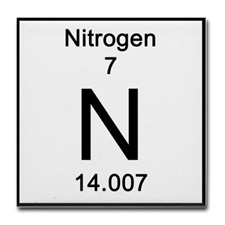
What is the number of protons that the element in this image contain?
a)
14
b)
7
c)
15
d)
18
42.
The particles that are found in the nucleus of an atom are
a)
neutrons and electrons
b)
electrons only
c)
protons and neutrons
d)
protons and electrons
43.
Which of the following is a positively charged subatomic particle found in the nucleus of an atom?
a)
Electron
b)
Proton
c)
Neutron
d)
Quark
44.
electrons have this type of charge?
a)
negative
b)
positive
c)
neutral
45.
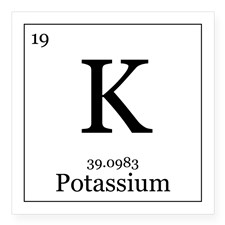
How many neutron are in the atom "K"?
a)
7
b)
2
c)
39
d)
12
46.

What is the number of protons that the element in this image contain?
a)
14
b)
7
c)
15
d)
18
47.
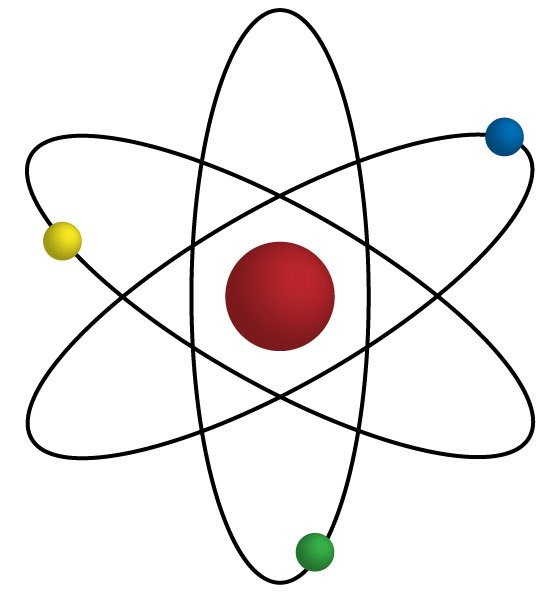
What are the 3 particles that make-up the atom?
a)
protons, neutrons, and isotopes
b)
neutrons, isotopes, and electrons
c)
positives, negatives, and electrons
d)
protons, neutrons, and electrons
48.
What element contains 26 protons?
a)
Iron
b)
Sodium
c)
Aluminum
d)
Helium
49.

How do we solve for number of neutrons?
a)
Mass + Atomic Number= Neutrons
b)
Mass x Atomic Number = Neutrons
c)
Mass - Atomic Number = Neutrons
d)
Mass + Number of Protons = Neutron
50.

What is the mass number of this atom?
a)
4
b)
5
c)
9
d)
none of the above
51.
What is the atomic number of Nickel?
a)
110
b)
28
c)
46
d)
78
52.

?
a)
Lithium
b)
Boron
c)
Carbon
d)
Neon
53.

What element is represented in this Bohr Model?
a)
Helium
b)
Hydrogen
c)
Argon
d)
Silver
54.

What element is represented in this Bohr Model?
a)
Lithium
b)
Boron
c)
Carbon
d)
Neon
55.

What element is represented in this Bohr Model?
a)
Beryllium
b)
Boron
c)
Barium
d)
Bromine
56.

This is the correct dot diagram for sodium (Na)
a)
true
b)
false
57.

This is a correct dot diagram for oxygen (O)
a)
true
b)
false
58.

This is a correct dot diagram for carbon (C)
a)
true
b)
false
59.

What Periodic Table family is represented by the Lewis dot diagram?
a)
Halogens
b)
Alkali Metals
c)
Transition Metals
d)
Noble Gases
60.
Which of the following is the atomic number of an alkali metal?
a)
31
b)
20
c)
18
d)
19
61.
Which properties are characteristic of the Group 1 metals?
a)
high reactivity and the formation of unstable compounds
b)
low reactivity and the formation of unstable compounds
c)
high reactivity and the formation of stable compounds
d)
low reactivity and the formation of stable compounds
62.
What group on the Periodic Table contains the elements of the alkaline earth family?
a)
1
b)
2
c)
17
d)
18
63.
The elements in this family are soft, silvery, and very reactive with water.
a)
Alkaline Earth Metals
b)
Alkali Metals
c)
Transition Metals
d)
Lanthanides
64.
What group is the family found? These halides are very reactive and almost have full outer energy level/shell.
a)
1
b)
2
c)
16
d)
17
65.
Gold (Au)
a)
Transition Metal
b)
Alkali Metal
c)
Alkaline Earth Metal
d)
Heavy Metal
66.
Which family of metals would be the most reactive?
a)
Alkali Metals
b)
Transition Metals
c)
Alkaline Earth Metals
d)
Full Metal Jacket
67.
Which element is not in the Alkali metal family?
a)
Li
b)
H
c)
Fr
d)
Cs
68.
Argon (Ar)
a)
alkali metal
b)
alkaline earth metal
c)
halogen
d)
noble gas
69.
Iodine (I)
a)
alkali metal
b)
alkaline earth metal
c)
halogen
d)
noble gas
70.
Which of the following is the most reactive group of non-metals?
a)
Alkali
b)
Alkali Earth
c)
Halogen
d)
Noble Gas
71.
How many valence electrons does an alkaline earth metal have?
a)
1
b)
2
c)
7
d)
8
72.
How many valence electrons does a halogen have?
a)
1
b)
2
c)
7
d)
8
73.

The yellow atoms are called
a)
metals
b)
nonmetals
c)
metalloids
d)
noble gases
74.
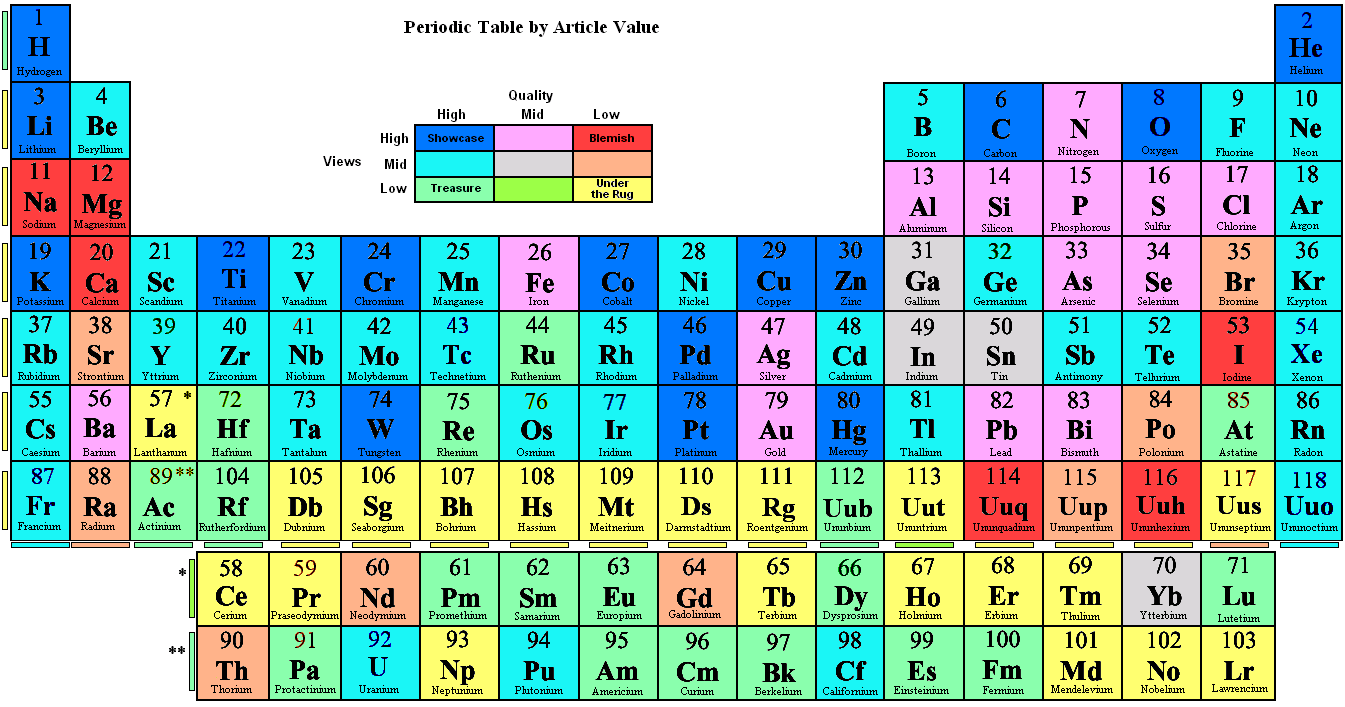
The period for Bromine is ___________.
a)
3
b)
2
c)
4
75.
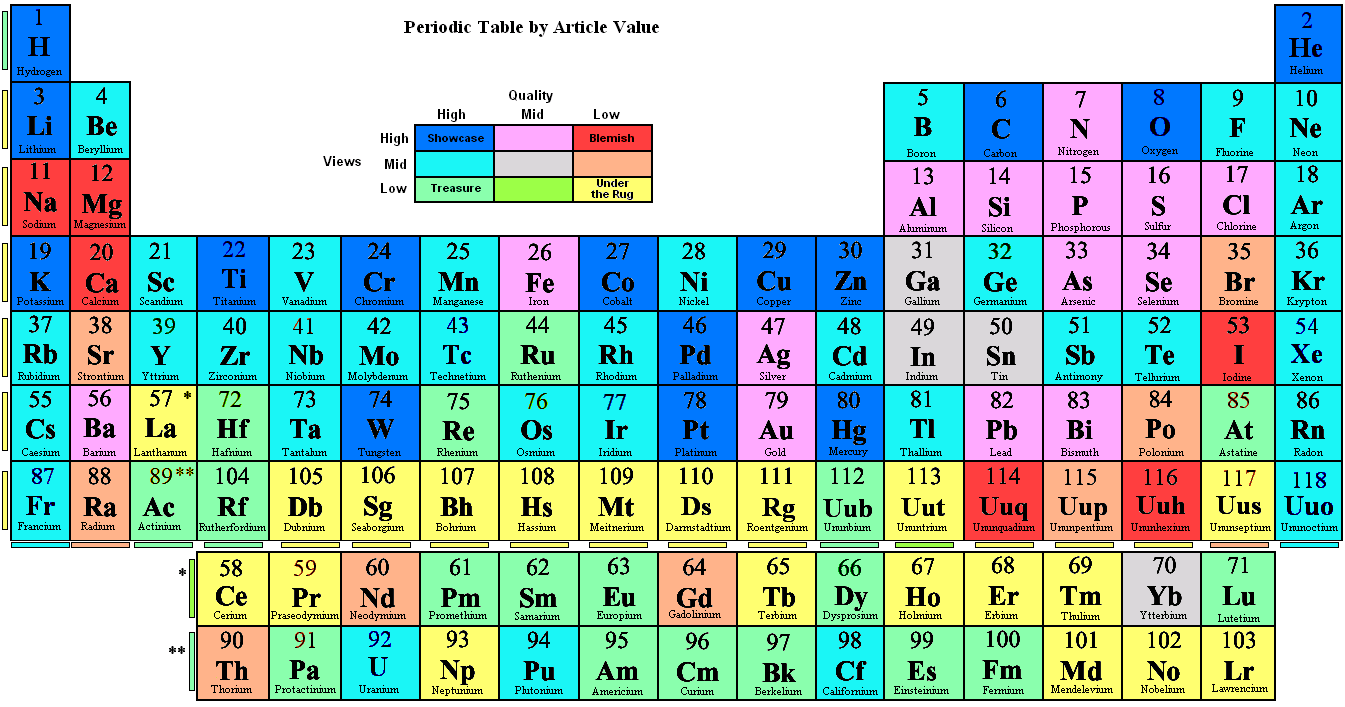
Beryllium is in group number______.
a)
Group 2
b)
Group 3
c)
Group 4
d)
Group 7
76.
The periodic table has __ periods.
a)
18
b)
8
c)
2
d)
7
77.
Elements in the same ________ are more chemically similar.
a)
group
b)
period
c)
club
d)
table
78.
The majority of elements on the periodic table are
a)
man made.
b)
nonmetals.
c)
metals.
d)
gases.
79.
Which elements have the most similar chemical properties?
a)
K and Na
b)
K and Ca
c)
K and Cl
d)
K and S
80.
What period and group is Silver (Ag)?
a)
Period 2, Group 1
b)
Period 3, Group 16
c)
Period 5, Group 11
d)
Period 2, 14
81.
The elements in this group only have 1 valence electron and include Li, Na, and K.
a)
Group 11
b)
Group 1
c)
Group 3
82.
Which of the following is not a property of metals?
a)
brittle
b)
malleable
c)
lustrous
d)
conductive
Reset

