wayground logo

Free Printable Worksheets

NEW

Font size

S
M
L
XL
Worksheets

Free Fall and Kinematics

Total questions: 64

Worksheet time: 3hrs 0mins

Name
Class
Date
1.
A free falling objects falls under the influence of 
a)
force of air
b)
force of gravity
c)
force of resistance
d)
force of 
2.
Free-falling objects do not encounter 
a)
air resistance 
b)
force of gravity
c)
downward acceleration
3.
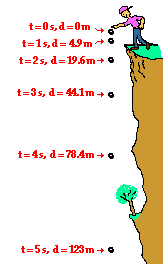
Approximately how far can an object fall in 5 seconds? 
a)
5 m
b)
25 m
c)
50 m/s
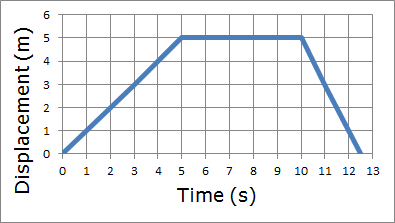
d)
125 m
4.

Kenyatta drops on object and it free falls for 5.00 seconds and has a final velocity of 49.0 m/s. What was the height of the cliff the object was dropped from?

a)

122.5 m

b)

250 M

c)

24.5 m

d)

0 m

5.
A free falling object falls for 1.6 s. What is the final velocity?
a)
-15.68 m/s
b)
- 9.8 m/s
c)
- 6.125 m/s
d)
- 25.088 m/s
6.
A ball is thrown downward from the top of a roof with a speed of 25 m/s. After 2 s, its velocity will be (down is considered a negative direction):
a)
19.6 m/s
b)
-5.4 m/s
c)
-44.6 m/s
d)
44.6 m/s
7.
1.  An object free falls for 3.5 seconds. How far does it fall?
a)
120.05 m
b)
17.15 m
c)
60.03 m
d)
34.3 m
8.
A ball is thrown up in the air with an initial velocity of 40 m/s. What is the ball's velocity after 2 seconds? 
a)
0 m/s 
b)
20 m/s traveling upward
c)
20 m/s traveling downward
d)
40 m/s traveling downward
9.
A ball is thrown up in the air with an initial velocity of 40 m/s. What is the ball's velocity after 6 seconds? 
a)
20 m/s traveling upward.
b)
10 m/s traveling downward.
c)
20 m/s traveling downward. 
d)
30 m/s traveling downward. 
10.
A free falling object falls for 1.6 s. What is the final velocity?
a)
-15.68 m/s
b)
- 9.8 m/s
c)
- 6.125 m/s
d)
- 25.088 m/s
11.
What values are always known for a free falling object?
a)
vi = 0 m/s
 a = -9.8 m/s2
b)
vi = -9.8 m/s
 a = -9.8 m/s2
c)
vi = -9.8 m/s
 a = 0 m/s2
d)
d = -9.8 m
vi = 0 m/s
12.
Do free falling objects move at constant velocity or do they accelerate?
a)
Falling objects accelerate at -9.8 m/s2
b)
Falling object move at constant velocity
c)
Falling objects accelerate at 100 m/s2
d)
It depends on the mass: heavy objects accelerate, light objects do not
13.
A freely falling object starts from rest. After falling for 6  seconds, it will have a speed of about 
a)
6m/s
b)
30m/s
c)
60m/s
d)
300m/s
14.
Free fall is
a)
Only when an object travels downward, or is falling
b)
Changes based on which object is in free fall. A heavier object will have a greater free fall than a lighter one
c)
When the object is only experiencing the force of gravity
d)
When objects have zero forces acting upon them
15.

All free falling objects accelerate with a value of

a)

0m/s2

b)

9.8m/s2

c)

-9.8m/s2

d)

-5m/s2

16.
Approximately how far can an object fall in 5 seconds? 
a)
5 m
b)
25 m
c)
50 m/s
d)
125 m
17.
A free falling objects falls under the influence of 
a)
force of air
b)
force of gravity
c)
force of resistance
d)
force of 
18.
A free falling object falls for 2.4 s. What is its displacement?
a)
-28.2 m
b)
-11.76 m
c)
-56.45 m
d)
-9.8 m
19.
A free falling object falls for 1.6 s. What is the final velocity?
a)
-15.68 m/s
b)
- 9.8 m/s
c)
- 6.125 m/s
d)
- 25.088 m/s
20.
Why can't you use v = d/t for free fall problems?
a)
Because free falling objects are accelerating;
v = d/t is for constant motion
b)
Because free falling objects have constant motion; 
v = d/t is for accelerating objects
c)
You never know how far an object  will fall, so you can't put anything in for "d"
21.
What happens to the velocity of a ball as it is dropped off a cliff? 
a)
It decreases at a uniform rate 
b)
It increases at a uniform rate 
c)
It is constant 
d)
It increases at a non-uniform rate
22.

A free falling object falls for 2.4 s. What is its final speed? (ignore air resistance)

a)

23.52 m/s

b)

0.24 m/s

c)

It cannot be calculated because there is no distance.

d)

9.8 m/s

23.

A free falling object falls for 1.6 s. What is the final velocity?

a)

15.68 m/s

b)

9.8 m/s

c)

6.125 m/s

d)

25.088 m/s

24.

Do free falling objects move at constant velocity or do they accelerate?

a)

Falling objects accelerate at 9.8 m/s2

b)

Falling object move at constant velocity

c)

Falling objects accelerate at 100 m/s2

d)

It depends on the mass: heavy objects accelerate, light objects do not

25.

When an object is free falling it is traveling with

a)

Constant velocity

b)

Constant acceleration

c)

Zero velocity

d)

Changing acceleration

26.
A pumpkin is dropped from a 35 m building. What is its initial velocity (vi)?
a)
9.8 m/s2
b)
35 m
c)
0 m/s
d)
9.8 m/s
27.
A freely falling object starts from rest. After falling for 6 seconds, it will have a speed of about:
a)
6m/s
b)
30m/s
c)
60m/s
d)
300m/s
28.
Kenyatta free falls for 5.00 seconds and has a final velocity of 49.0 m/s. What was the height of the cliff she jumped off of?
a)
122.5 m
b)
250 M
c)
24.5 m
d)
0 m
29.
Which statement describes a vector?
a)
It has magnitude but no direction
b)
It has direction but no magnitude
c)
It has both direction and magnitude
d)
It has constant magnitude but no
 direction
30.

An object falls from a high building. What will its velocity be after 10 s of Falling?

a)

20 m/s

b)

9.81 m/s

c)

98.1 m/s

d)

15 m/s

31.

An object fall from a high building and hits the ground in 12 s. What is the distance that it fell?

a)

550 m

b)

706.32 m

c)

843.21 m

d)

657.89 m

32.

How fast will a brick be going after it falls for 2.5 seconds?

a)

30 m/s

b)

24.525 m/s

c)

17.17 m/s

d)

56.78 ms

33.

How high was the brick dropped from if it falls in 2.5 seconds?

a)

30.66m

b)

15 m

c)

20.32 m

d)

10.78 m

34.

A book falls off a 1 meter tall table. How long will it take for the book to hit the floor?

a)

70 s

b)

.79 s

c)

1.37 s

d)

.451 s

35.

A plane drops a CARE package to some needy people in the jungle from a height of 1000m. How long will it take the package to strike the ground?

a)

1.27 s

b)

15.04 s

c)

40.08 s

d)

14.3 s

36.

A rock is dropped out of a volcano. When it started to fall, it took 9.5 s to hit the ground. How fat was the rock traveling as it struck the ground?

a)

93.2 m/s

b)

39 m/s

c)

5.87 m/s

d)

107.91 m/s

37.
What does this graph represent?
a)
Constant Speed
b)
Acceleration
c)
Not moving
38.
What is happening at D?
a)
Stationary
b)
Accelerating
c)
Fast steady speed; moving away from the starting position
d)
Slower steady speed; moving away from the starting position
39.
What is happening at E?
a)
Stationary
b)
Accelerating
c)
Fast steady speed; moving away from the starting position
d)
Steady speed; returning to start position
40.
What is happening at A?
a)
Stationary
b)
Accelerating
c)
Slower steady speed; moving away from the starting position
d)
Steady speed; returning to start position
41.
According to the graph how far does the person travel in the first 5 seconds?
a)
2 m
b)
10 m
c)
0 m
d)
5 m
42.
What is the person doing from 5 seconds to 10 seconds?
a)
Walking 
b)
Running
c)
Standing Still 
d)
Walking Fast
43.
How far is the person from the starting point after 3 seconds?
a)
0 m
b)
2 m 
c)
3 m
d)
6 m 
44.
What is the average speed of the person during the first 5 seconds?
a)
0 m/s
b)
1 m/s 
c)
3 m/s
d)
6 m/s 
45.
This graph shows
a)
An object stopped
b)
An object slowing down
c)
An object speeding up
d)
An object moving at constant speed
46.
This graph shows
a)
An object stopped
b)
An object speeding up
c)
An object slowing down
d)
An object moving at constant speed
47.
This graph shows
a)
An object stopped
b)
An object moving at constant speed
c)
An object slowing down
d)
An object speeding up
48.
This graph shows
a)
An object speeding up
b)
An object slowing down
c)
An object stopped
d)
An object moving at constant velocity
49.
This graph shows
a)
An object stopped
b)
An object slowing down
c)
An object speeding up
d)
An object moving at constant speed
50.
This graph shows
a)
An object speeding up
b)
An object slowing down
c)
An object stopped
d)
An object moving at constant speed
51.
The dependent variable in this graph is
a)
Time
b)
Distance
c)
Acceleration
d)
Speed
52.
This graph shows 
a)
An object stopped
b)
An object speeding up
c)
An object slowing down
d)
An object moving at constant speed
53.
This graph shows
a)
An object  speeding up
b)
An object stopped
c)
An object speeding up
d)
An object slowing down
54.
The dependent variable is the 
a)
distance
b)
time
c)
speed
d)
velocity
55.
The rate at which velocity changes is known as __________
a)
acceleration
b)
net force
c)
speed
d)
velocity
56.
When calculating the speed for the object in this graph, the units will be 
a)
m/s
b)
km/h
c)
mph
d)
m/h
57.
The independent variable in this graph is the
a)
distance
b)
time
c)
speed
d)
velocity
58.
What values are always known for a free falling object?
a)
vi = 0 m/s
 a = -9.8 m/s2
b)
vi = -9.8 m/s
 a = -9.8 m/s2
c)
vi = -9.8 m/s
 a = 0 m/s2
d)
d = -9.8 m
vi = 0 m/s
59.

How fast will a brick be going after it falls for 2.5 seconds?

a)

24.5 m/s

b)

28.5 m/s

c)

19.8 m/s

d)

9.8 m/s

60.

The acceleration due to gravity near the surface of Earth is equal to

a)

9.8 m/s

b)

9.8 kg x m/s

c)

9.8 N

d)

9.8 m/s2

61.

An apple falls out of a tree and takes 1.75 seconds to strike the ground. How high was the apple from the ground?

a)

25.00 m

b)

20.00 m

c)

15.00 m

d)

10.00 m

62.

A rock is thrown out of a volcano. When it started to fall, it took 9.5 seconds to hit the ground. How fast was the rock traveling as it struck the ground?

a)

9.8 m/s

b)

93.1 m/s

c)

98.1 m/s

d)

9.3 m/s

63.

A plane is flying a 9000 m when one bolt works its way loose and falls to the ground. How long did it take to hit the ground?

a)

55.0 s

b)

49.2 s

c)

45.9 s

d)

42.9 s

64.

For a Case 1 Free Fall (Dropped), the initial velocity is ___.

a)

zero

b)

constant

c)

increasing

d)

decreasing