
 Worksheets
8th Unit 3 Review
Total questions: 86
Worksheet time: 3hrs 52mins
What is the charge of a proton?
Negative
Positive
Neutral
Variable
Which scientist is known for the discovery of the electron?
Niels Bohr
J.J. Thomson
Ernest Rutherford
John Dalton
What is the electron configuration for the element oxygen (O)?
1s22s22p4
1s22s22p6
1s22s23p4
1s22p63s2
Which of the following elements has the largest atomic radius?
Helium
Lithium
Sodium
Potassium
Which of the following is a physical property of elements?
Reactivity with water
Melting point
Ability to form compounds
Flammability
What is the main idea of Dalton's atomic theory?
Atoms are indivisible and indestructible particles.
Atoms contain a dense nucleus.
Electrons orbit the nucleus in fixed paths.
Atoms are mostly empty space.
Which of the following elements is most likely to form a cation?
Chlorine
Oxygen
Sodium
Nitrogen
Explain why elements in the same group of the periodic table have similar chemical properties.
They have the same number of protons.
They have the same number of valence electrons.
They have the same atomic mass.
They have the same number of neutrons.
Which scientist proposed the planetary model of the atom?
J.J. Thomson
Niels Bohr
Ernest Rutherford
John Dalton
What is the trend in electronegativity across a period in the periodic table?
It decreases.
It increases.
It remains constant.
It fluctuates.
Which of the following is a chemical property of elements?
Density
Color
Reactivity with acid
Boiling point
Describe the process of how an atom becomes an ion.
By gaining or losing protons
By gaining or losing electrons
By gaining or losing neutrons
By splitting into smaller atoms
Which of the following best explains why noble gases are inert?
They have a full outer electron shell.
They have high atomic masses.
They have low melting points.
They have high densities.
What is the significance of the periodic law in the periodic table?
It states that elements are arranged by increasing atomic mass.
It states that elements are arranged by increasing atomic number.
It states that elements are arranged by decreasing atomic number.
It states that elements are arranged by decreasing atomic mass.
Who was the first to claim that all matter is made of indivisible particles called atomos?
John Dalton
J.J. Thomson
Democritus
Ernest Rutherford
What did John Dalton find about the mass of elements before and after chemical changes?
It increased
It decreased
It remained consistent
It was unpredictable
Which of the following is NOT one of John Dalton's claims in his Atomic Theory?
A) All matter is made of indivisible atoms
B) Atoms can be created and destroyed
C) Atoms of the same element are identical
D) Chemical reactions are rearrangements of atoms
What did J.J. Thomson conclude about the particles in the cathode ray?
They are positively charged
They are neutral
They are negatively charged
They have no charge
What was the main conclusion of Ernest Rutherford's Gold Foil Experiment?
Atoms are solid
Atoms are mostly empty space
Atoms are liquid
Atoms are flexible
What did Ernest Rutherford discover in 1917?
Neutron
Electron
Proton
Photon
Which of the following was NOT a part of John Dalton's Atomic Theory?
A) Atoms can be divided into smaller parts
B) Atoms of different elements are different
C) Atoms join to form compounds
D) Atoms are indivisible
Who was able to prove there were particles that are much smaller than any known atom?
Democritus
John Dalton
J.J. Thomson
Ernest Rutherford
What did Rutherford's Gold Foil Experiment reveal about the structure of the atom?
Atoms are solid
Atoms have a dense nucleus
Atoms are liquid
Atoms are flexible
Who adjusted Rutherford's model by giving electrons specific orbits around the nucleus?
Niels Bohr
James Chadwick
Erwin Schrödinger
Werner Heisenberg
What did James Chadwick discover about atomic nuclei?
They contain electrons
They contain neutrons
They have a positive charge
They are empty.
What is the modern atomic model considered to be?
Perfect
An imperfect representation
Completely accurate
A myth
What is a characteristic of scientific theories and models?
They never change
They are based on new evidence
They are fictional
They are myths.
What is the main idea behind the Bohr model of the atom?
Electrons are scattered randomly
Electrons orbit the nucleus in fixed paths
Electrons are stationary
Electrons are inside the nucleus
What did the discovery of the neutron help to explain?
The charge of the atom
The mass of the atom
The color of the atom
The shape of the atom
Which of the following best describes the nature of scientific theories?
They are guesses that scientists make.
They are unchangeable facts.
They are well-substantiated explanations based on evidence.
They are opinions of scientists.
Which of the following is a characteristic of a scientific theory?
It is based on personal beliefs.
It is supported by a large body of evidence.
It is a random guess.
It is not testable.
In a neutral atom,
protons = electrons
protons = neutrons
neutrons = electrons
protons = neutrons = electrons

At what part of the atom is the arrow pointing?
proton
neutron
electron
nucleus

At what part of the atom is the arrow pointing?
proton
neutron
electron
nucleus

At what part of the atom is the arrow pointing?
Cloud
energy level
electron
neutron

At what part of the atom is the arrow pointing?
electron
neutron
proton
nucleus

At what part of the atom is the arrow pointing?
nucleus
energy level
electron
proton
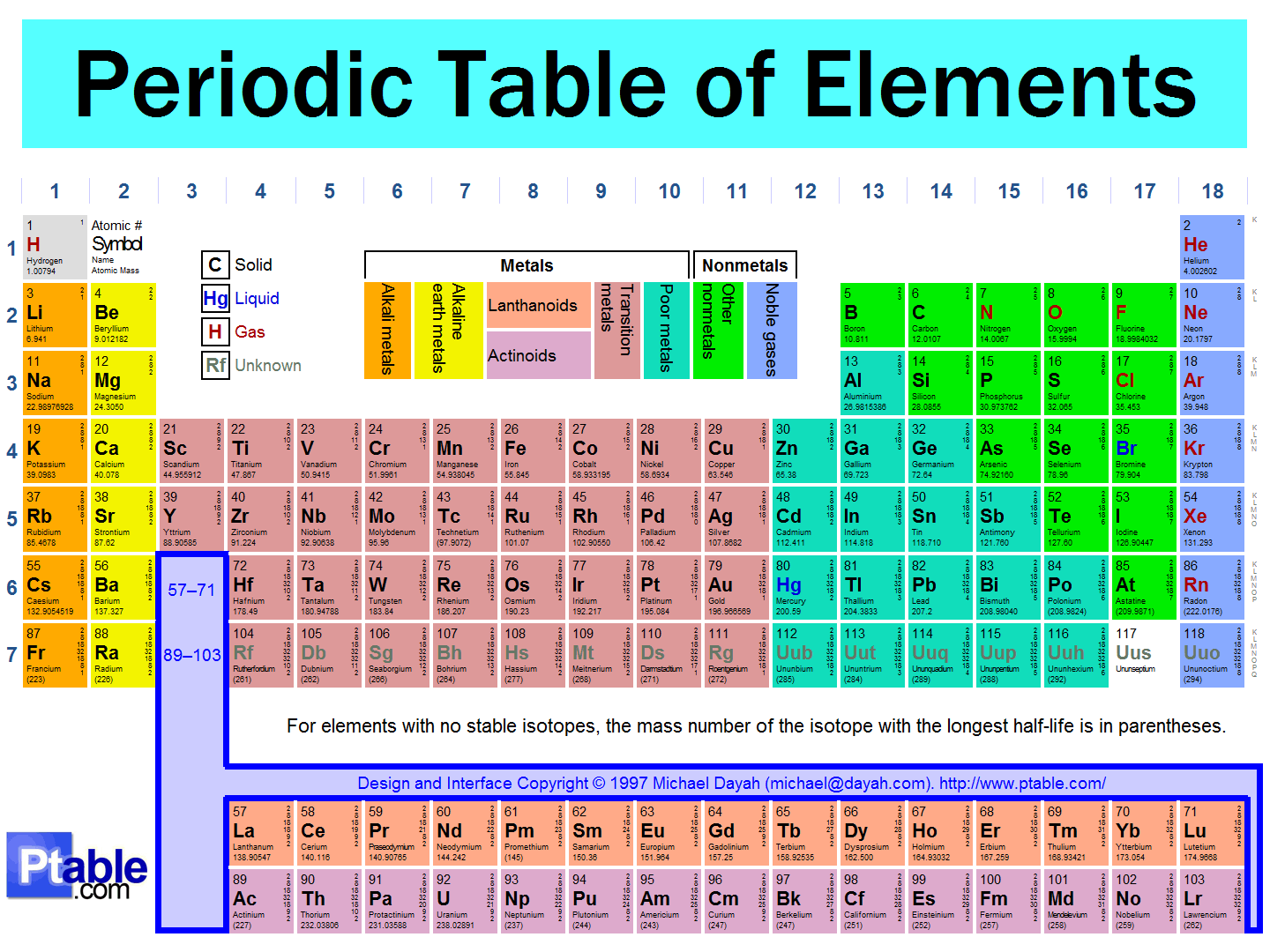
The vertical (up and down) columns in the Periodic Table are called
groups
towers
periods
atomic numbers
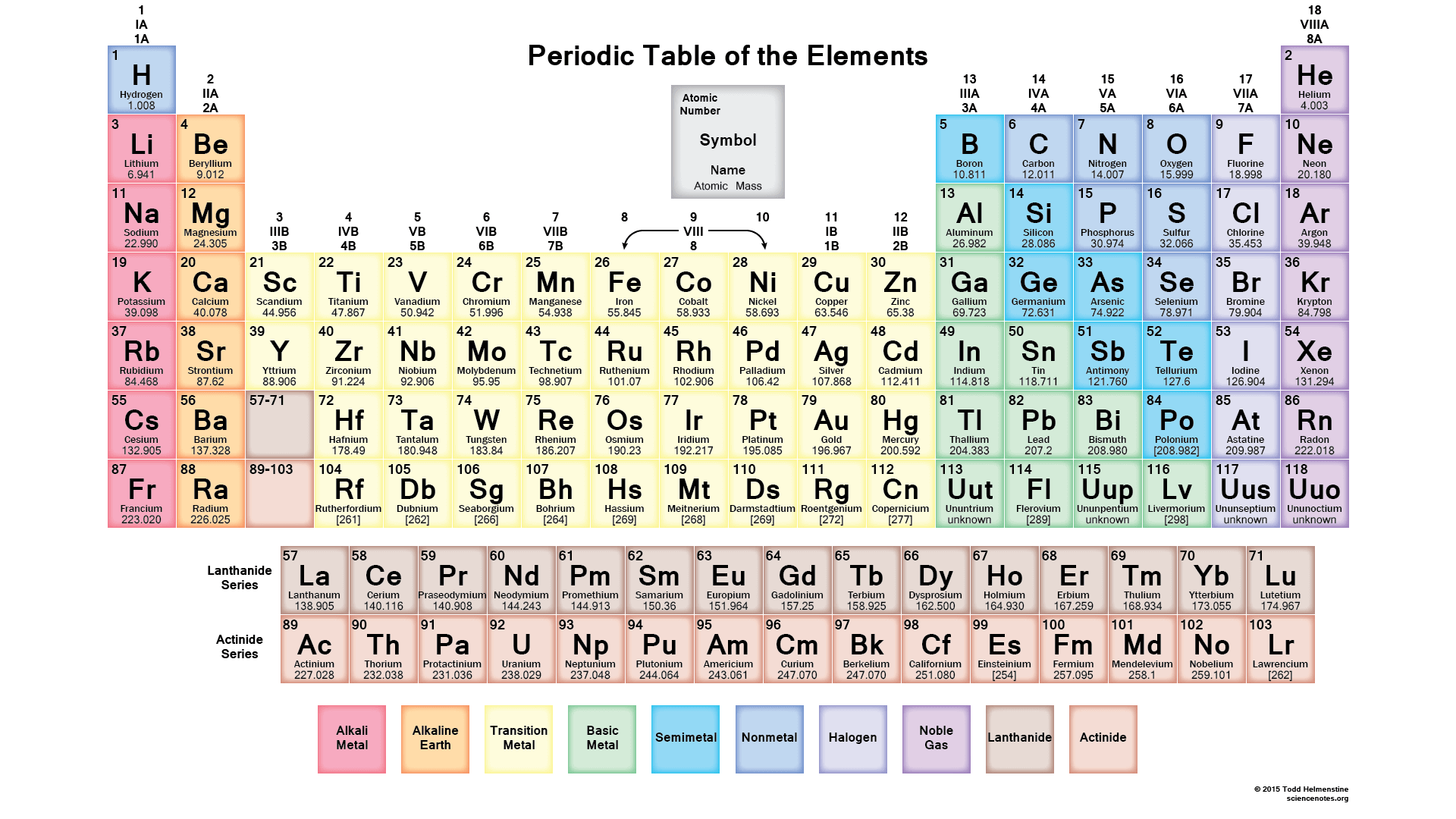
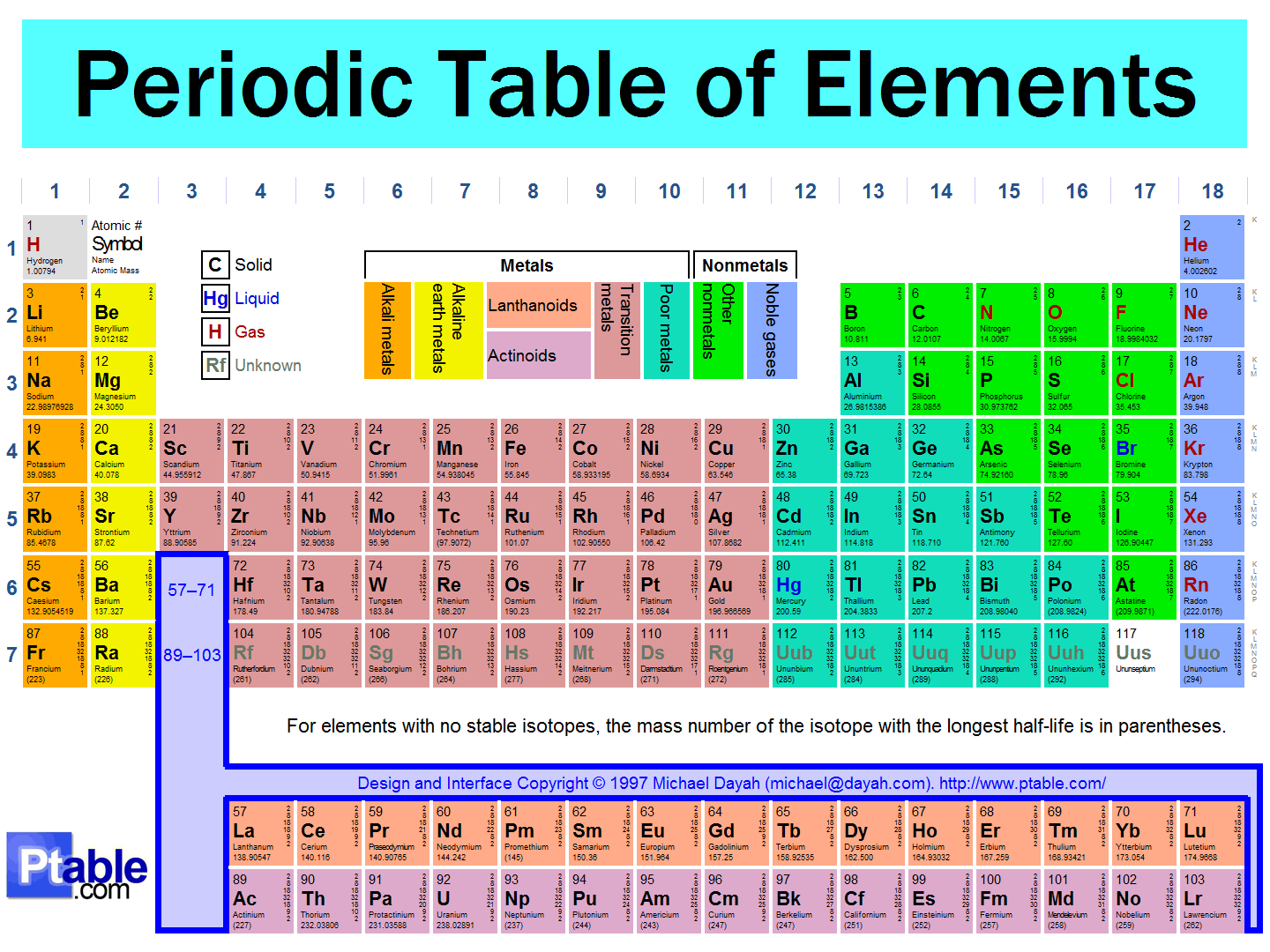
The horizontal (side to side) rows in the Periodic Table are called
groups
families
periods
atomic numbers
A subatomic particle that has a positive charge and that is found in the nucleus of an atom
Proton
elecrtron
groups
neutrons
A subatomic particle that has a negative charge
nobles gases
protons
electrons
neutrons
What changes when an atom becomes an ion?
The number of electrons
The number of protons
The number of neutrons
Both the number of neutrons and electrons

How many neutrons does this bromine atom have?
35
45
80
115

How many electrons does this magnesium ion have?
24
12
10
14

What happened to this Magnesium atom to make it an ion?
It LOST electrons
It GAINED electrons
It GAINED protons
It LOST protons

What is the atomic number of this element?
12
24
23
35
Adding or subtracting neutrons makes the element change into
an ion
a mixture
an isotope
a neutral atom

What is the charge on a lithium atom that loses 1 electron?
+1
0
-1
-2
The nucleus of an atom consists of 8 protons and 6 neutrons. The total number of electrons present in a neutral atom of this element is
2
6
8
14
Which of these choices is a physical property?
solubility
flammability
ability to rust
reaction with water
Which of these best describes physical properties?
Physical properties behave identically for all matter under the same conditions.
Physical properties can be observed without changing the identity of a substance.
Physical properties include flammability.
Physical properties cause atoms and molecules to change structure when substances are mixed.
Which of these is a chemical property of a sheet of paper?
the paper can be burned
the paper can be crumpled
the paper does not attract a magnet
the paper does not conduct electricity
Which of these choices describes a chemical property?
flexibility
boiling point
reactivity with water
electrical conductivity
Which process is an example of of a physical change?
ice melting
milk souring
metal rusting
wood burning
Which of the following can be signs that a chemical change has occurred?
color change
formation of a gas (bubbles)
energy change
All of the above
Each row on the periodic table represents:
an energy level
a sublevel
an electron
an orbital

How many electrons can the 2nd shell hold?
0
up to 2
up to 4
up to 8
Shiny (luster) and good conductors of electricity:
Nonmetal
Lightning
Metal
Semi-metal
1s22s22p63s2
What do you start all electron configurations with?
1s2
1d10
1f14
1p6
The 4 orbitals are
s, p, d, f
a, b, c, d
2, 4, 6, 8

1s22s22p63s2
What atom matches this electron configuration? 1s22s22p63s23p1

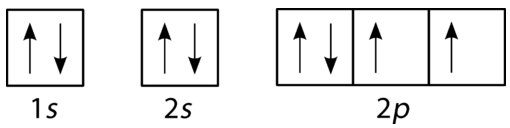
What is incorrect about this orbital diagram?
Both arrows in the 2p box should be pointing up
There are too many electrons in the 1s orbital
In the 2p boxes, there should only be 1 electron in the first 2p box and one in the 2nd 2p box
All the arrows should be pointing up

