Wayground logo

Free Printable Worksheets

Font size

S
M
L
XL
Worksheets

LIfe Science Biochemistry Review

Total questions: 73

Worksheet time: 53mins

Name
Class
Date
1.

Protons are located in the nucleus of the atom. A proton has

a)

No charge

b)

A negative charge

c)

A positive and a negative charge

d)

A positive charge

2.

Neutrons are in the nucleus of the atom. A neutron has

a)

A positive charge

b)

No charge

c)

A negative charge

d)

Twice as much positive charge as a proton

3.

Neutrons are in the nucleus of the atom. A neutron has

a)

A positive charge

b)

No charge

c)

A negative charge

d)

Twice as much positive charge as a proton

4.

An electron is in a region outside the nucleus. An electron

a)

Is larger than a proton and has no charge

b)

Has less mass than a proton and has a negative charge

c)

Is smaller than a proton and has no charge

d)

Has a positive charge

5.

The atomic number of an atom is

a)

The mass of the atom

b)

The number of protons added to the number of neutrons

c)

The number of protons in the atom's nucleus

d)

Negatively charged

6.

The periodic table shows that a carbon atom has six protons. This means that a carbon atom also has

a)

Six electrons

b)

Six neutrons

c)

More protons than electrons

d)

An atomic mass that equals six

7.
Why are macromolecules also known as "polymers?"
a)
They are large molecules made up of many monomers. 
b)
They are large molecules added together. 
c)
There are many types of macromolecules. 
d)
Many organisms have macromolecules.
8.
Which of the following is NOT a biological macromolecule?
a)
Water
b)
Lipid
c)
Carbohydrate
d)
Nucleic Acid
9.
All biological macromolecules are organic, meaning they have ________ and hydrogen bonds.
a)
Carbon
b)
Hydrogen
c)
Nitrogen
d)
Oxygen
10.
What are the monomers (building blocks) of PROTEINS?
a)
Monosaccharides (simple sugars)
b)
Amino Acids
c)
Nucleotides
d)
Triglycerides/No true monomer
11.
What are the monomers (building blocks) of CARBOHYDRATES?
a)

Monosaccharides/Glucose (simple sugars)

b)
Amino Acids
c)
Nucleotides
d)
Triglycerides/No true monomer
12.
True or False: The building blocks of macromolecules are also known as "monomers".
a)
True
b)
False
13.
What are the monomers (building blocks) of LIPIDS?
a)
Monosaccharides (simple sugars)
b)
Amino Acids
c)
Nucleotides
d)

Triglycerides(made of 3 fatty acids)/No true monomer

14.
What is the primary function of PROTEINS?
a)
Source of energy
b)
Long term storage of energy
c)
Transmitting genetic information
d)
Cell processes and cell signaling
15.
What is the primary function of NUCLEIC ACIDS?
a)
Source of energy
b)
Long term storage of energy
c)
Transmitting genetic information
d)
Cell processes and cell signaling
16.
The food in the image is full of which macromolecule?
a)
Carbohydrates
b)
Lipids
c)
Proteins
17.
The food in the image is full of which macromolecule?
a)
Carbohydrates
b)
Lipids
c)
Proteins
18.
The food in the image is full of which macromolecule?
a)
Carbohydrates
b)
Lipids
c)
Proteins
19.
The food in the image is full of which macromolecule?
a)
Carbohydrates
b)
Lipids
c)
Proteins
20.
Examples of which biological macromolecule include glucose, fructose, starch, and glycogen?
a)
Lipids
b)
Carbohydrates
c)
Nucleic Acids
d)
Proteins
21.

What elements are in a carbohydrate

a)

CHO

b)

CHON

c)

CHOP

d)

CHONP

22.

What elements are in a Lipid

a)
Carbon, Hydrogen, Oxygen, Nitrogen
b)
Carbon, Hydrogen, Oxygen
c)
Carbon, Hydrogen, Oxygen, Phosphorus
d)
Carbon, Hydrogen, Oxygen, Sulfur
23.

What elements are in a protein?

a)

CHO

b)

CHOP

c)

CHON

d)

CHONP

24.

What elements are in a nucleic acid?

a)

CHO

b)

CHOP

c)

CHONP

d)

CHON

25.

What is the monomer of a carbohydrate?

a)
Amino Acid
b)
Nucleotide
c)
Monosaccharide
d)
Fatty Acid
26.

What is the monomer of a nucleic acid?

a)
Nucleotide
b)
Amino Acid
c)
Polysaccharide
d)
Lipid
27.

Which is the job of a carbohydate?

a)

Quick energy

b)

Build body tissues

c)

Instructions for traits

d)

Insulation

28.

Which is NOT a job of a Lipid?

a)

Make up cell membranes

b)

Make up cell walls

c)

Store energy

d)

Insulation

29.

Which is NOT a job of a protein?

a)

Enzymes

b)
Build and repair tissues
c)

Transport substances

d)

Instructions for traits

30.
Which biomolecule is a main source of quick energy?
a)
Nucleic Acid
b)
Protein
c)
Lipid
d)
Carbohydrate
31.
Which biomolecule has sugars and starches?
a)
Lipids
b)
Proteins
c)
Carbohydrates
d)
Nucleic Acid
32.

Matter can not be created nor destroyed: it can only be

a)

Transformed

b)

Destroyed

c)

Eliminated

d)

Forgotten

33.

Which of these IS NOT a chemical reaction?

a)

Burning Paper

b)

A strawberry Molding

c)

Water turning into Ice

d)

An unexpected color change

34.

If reaction starts with 30g of reactants it should produce how many grams in the products?

a)

10 grams

b)

20 grams

c)

30 grams

d)

40 grams

35.

Is baking cookies a chemical or physical change?

a)

Chemical

b)

Physical

c)

Neither

36.

Is boiling water a chemical or physical change?

a)

Chemical

b)

Physical

c)

neither

37.

Is your stomach acid digesting food a chemical or physical change?

a)

Chemical

b)

Physical

c)

Neither

38.

Which one is NOT a characteristic of a chemical change?

a)

Light

b)

Precipitant

c)

Color Change

d)

Melting

39.

Is wood burning a chemical or physical change?

a)

Chemical

b)

Physical

c)

Neither

40.
The left side of the equation below is called
a)
Products
b)
Reactants
41.

Two chemicals were combined in a flask and the flask turned cold. This indicates what type of chemical reaction?

a)

Endothermic reaction

b)

Exothermic reaction

c)

Temperature reaction

d)

Physical reaction

42.

_____ reactions usually feel hot!

a)

endothermic

b)

exothermic

43.

In an endothermic reaction, energy is _________.

a)

absorbed

b)

released

44.

____ reactions usually feel cold.

a)

endothermic

b)

exothermic

45.

Endo means in or _______.

a)

absorbed

b)

released

46.

Exo means out or ________.

a)

absorbed

b)

released

47.
What is the purpose  of an enzyme?
a)
give permission for the reaction
b)
raise activation energy
c)
speed up reactions
d)
control how many reactions occur
48.

Where do substrates bind on an enzyme?

a)

substrate

b)

cell membrane

c)

protein channel

d)

active site

49.
Enzymes are considered to be 
a)
Lipids
b)
Carbohydrate
c)
Protein
d)
Nucleic Acid
50.
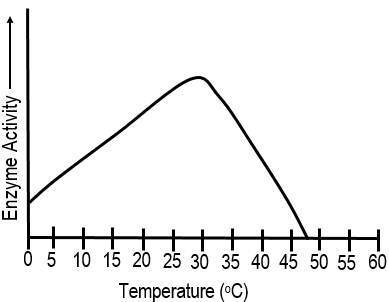
Based on the graph, what temperature does this enzyme work best? 
a)
15 C
b)
40 C
c)
30 C
d)
47 C
51.
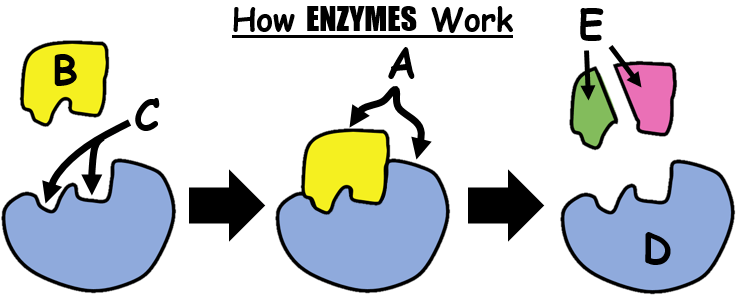
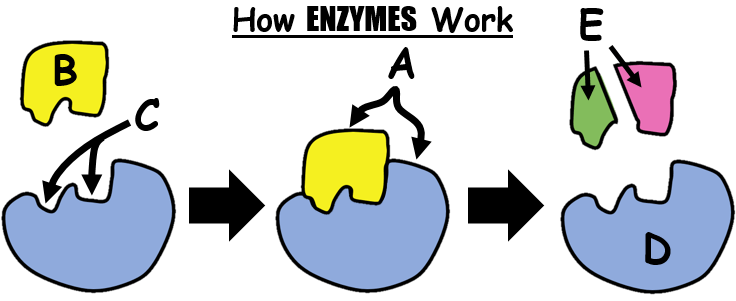
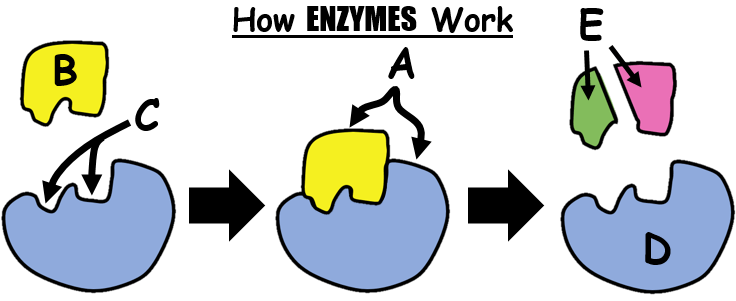
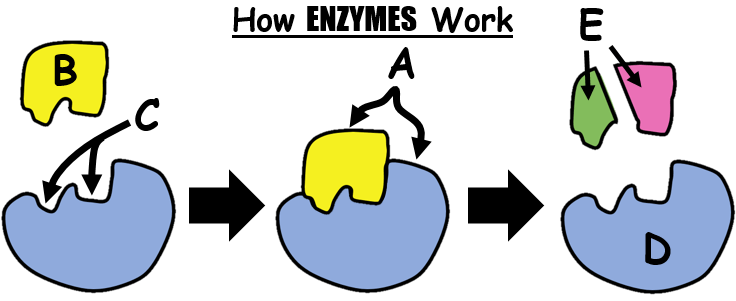
Letter D...
a)
active site
b)
enzyme
c)
substrate
d)
products
52.
Letter B...
a)
active site
b)
enzyme
c)
substrate
d)
products
53.
Letter C...
a)
active site
b)
enzymes
c)
substrate
d)
products
54.
Letter E...
a)
active site
b)
enzyme
c)
substrate
d)
products
55.

the substance on which an enzyme acts upon

a)

protein

b)

enzyme

c)

substrate

d)

active site

56.

What pH does a neutral substance have?

a)

5

b)

6

c)

7

d)

8

57.

Which of the following is the weakest acid?

a)

bananas (pH 5)

b)

tomatoes (pH 4)

c)

cheese (pH 6)

d)

orange juice (pH 3)

58.

What is pH a measure of?

a)

Density

b)

Mass

c)

Hydrogen Ion Concentraion

d)

Polarity

59.
The pH scale is a range from:
a)
1-7
b)
0-14
c)
1-14
d)
1-20
60.
This substance releases OH- into solution
a)
Acid
b)
Base
c)
Neutral
61.

What does "homeo" mean?

a)

same

b)

different

c)

equal

d)

frozen

62.

How does your body maintain homeostasis when it's hot out?

a)

You shiver

b)

You sweat

c)

You cry

d)

You breathe

63.

How does your body maintain homeostasis when it's cold out?

a)

You sweat

b)

You shiver

c)

Your skin gets goose bumps

d)

Both shivering and getting goose bumps

64.

Which body system controls the body to maintain homeostasis?

a)

excretory

b)

nervous

c)

circulatory

d)

skeletal

65.
What word describes when water is attracted to other substances?
a)
cohesion
b)
adhesion
c)
capillary action
d)
surface tension
66.
Attractions between the negative Oxygen atom of one water molecule and the positive Hydrogen atom of another water molecule are called
a)
Covalent bonds
b)
Ionic bonds
c)
Polar bonds
d)
Hydrogen bonds
67.
 Small insects can walk across the surface of calm water. Their feet push the surface of the water down slightly, somewhat like a person walking across a trampoline, but they do not break the surface. What is the best explanation for why this happens?
a)
The insects are light enough so that they do not break the hydrogen bonds holding the water molecules together
b)
The insects actually use their wings to hover slightly above the water's surface and they only skim it with their feet
c)
The insects' feet are non-polar, so they are repelled by the polar water molecules and are pushed away from the water's surface
d)
The insects are small enough to see the individual water molecules, so they are able to step carefully from one molecule to the next
68.
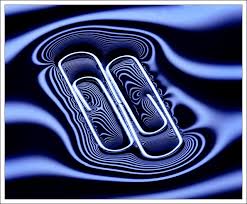
The tightness across the surface of water that enables paper clips to float is ____________.
a)
adhesion
b)
capillary action
c)
surface tension
d)
polarity
69.

The ability of water molecules to stick to each other, creating surface tension is called:

a)

Cohesion

b)

Adhesion

c)

Insulation

d)

Ph

70.

What is the chemical symbol of water?

a)

H2O

b)

CO2

c)

O2

d)

N2

71.
Why does water move from the roots to the leaves of plants through the plants' tiny tubes?
a)
specific heat 
b)

capillary action

c)

atoms

d)
density
72.

Which property of water allows water to climb up a tree's root system to the leaves?

a)

Cohesion

b)

Adhesion

c)

Polarity

d)

Capillary Action

73.
What word describes when water is attracted to other substances?
a)
cohesion
b)
adhesion
c)
capillary action
d)
surface tension